
Your cart is currently empty!
Electric Motorcycle vs Gas Bike: What Wins?
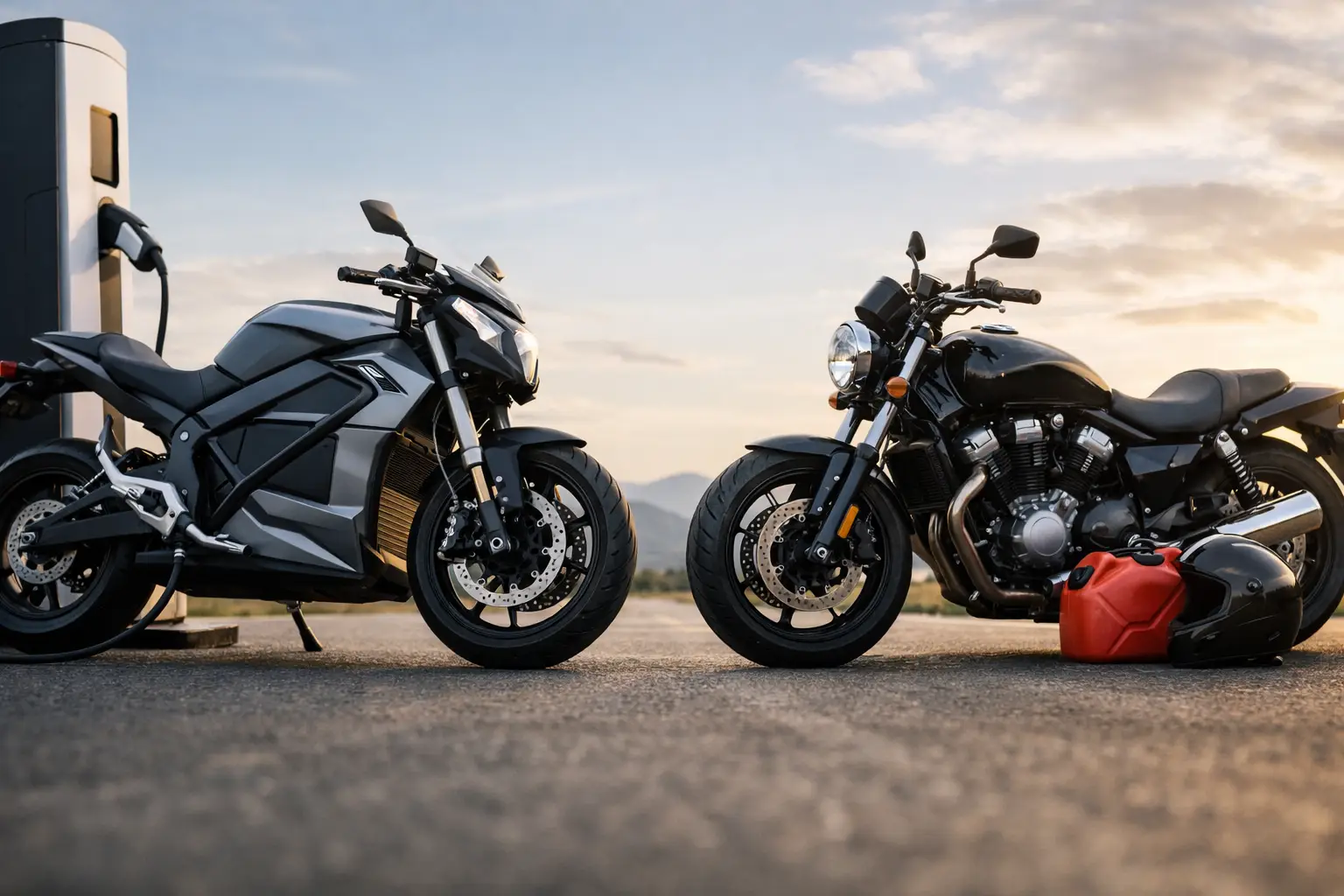
The real question in an electric motorcycle vs gas bike debate is not which one is louder, older, or more familiar. It is which one fits the way you actually ride. If your week looks like city commutes, short escapes, stoplights, traffic, and the occasional weekend run through clean backroads, the answer can shift fast once you move past habit and start looking at performance, cost, and feel.
For a long time, gas bikes owned the story. Sound, smell, vibration, shifting, heat – all of it became part of the mythology. But mythology is not the same as a better ride. Electric motorcycles have changed the terms. They bring instant torque, near-silent acceleration, lower maintenance, and a different kind of presence. Less noise. More intent. For many riders, that is not a compromise. It is the upgrade.
Electric motorcycle vs gas bike: the ride itself
Start with the moment that matters most – twist the throttle.
A gas bike builds power through revs and gearing. That can be engaging, especially if you enjoy managing the machine as much as moving through space. There is ritual in it. Clutch work, engine note, powerband, downshifts before a corner. For some riders, that mechanical conversation is the point.
An electric motorcycle answers differently. Power arrives now. No waiting for revs to climb. No hunting for the right gear. In urban riding, that changes everything. Pulling away from a light feels clean and immediate. Gaps open up faster. Traffic becomes less of a chore because the bike responds with almost no delay.
That instant delivery also makes electric feel deceptively quick. On paper, a gas bike may still post a higher top speed or longer highway range in some categories. In real city use, though, electric torque can feel sharper, smoother, and easier to access. You are not working to reach the performance. It is simply there.
Where gas still holds ground
Gas bikes still make a strong case in a few specific scenarios.
If you ride long distances often, especially in areas where charging is limited, gas remains more convenient. A quick fuel stop is hard to beat when your route stretches far beyond the city. Riders who spend most of their time touring, crossing states, or covering rural miles may still find internal combustion more practical.
There is also the emotional side. Some riders want the soundtrack. They want the mechanical pulse and the old-school connection of engine, clutch, and gearshift. That feeling is real. It should not be dismissed just because a new technology has arrived.
But practicality cuts both ways. Plenty of owners think they need maximum range when most of their riding happens within a much smaller daily radius. In those cases, gas bike advantages can be more theoretical than useful.
Cost is not just about the sticker price
The up-front price often leads the conversation, but ownership is where the difference gets interesting.
A gas bike may look more affordable at purchase, depending on model and class. But then come fuel, oil changes, filters, spark plugs, chain service, and more frequent mechanical attention. None of that is shocking to experienced riders. It is just part of the package.
Electric motorcycles typically ask less from you after the sale. Charging is usually cheaper than filling a tank. Maintenance is lighter because there are fewer moving parts, no oil changes, and less routine engine service. Over time, that can narrow the gap or even flip it.
Insurance, registration, and tire wear still exist on both sides, of course. Electric is not free. But for commuters and daily riders, reduced operating costs are one of the strongest arguments in the electric motorcycle vs gas bike conversation.
The smartest way to compare the two is by looking at a three-year or five-year ownership window, not just the purchase contract.
Maintenance changes the relationship
Gas bikes ask for attention. Some riders enjoy that. Garage time can be part of the culture. Tuning, checking fluids, adjusting components, listening for changes in the engine – it all builds familiarity.
Electric motorcycles shift that relationship. There is less wrenching, less routine servicing, and fewer systems to monitor. That makes ownership feel cleaner and more direct. You spend less time managing the machine and more time riding it.
For urban professionals, that matters. Not everyone wants their motorcycle to become a side project. Sometimes premium means less drama. Charge it, ride it, park it, repeat.
There is also a reliability argument here. Simpler drivetrains can mean fewer maintenance variables. That does not eliminate issues entirely, but it changes the ownership rhythm in a meaningful way.
Range anxiety versus real life
Range is the point critics return to first, and fair enough. It matters.
A gas bike usually offers longer distance before refueling, and refueling is faster than charging. If your riding regularly pushes beyond an electric bike’s usable range, that is not a small detail. It is the detail.
But range panic often says more about imagination than routine. Most urban riders commute well below the range capabilities of modern electric motorcycles. They ride to work, to dinner, to a studio, to a meeting, across town, home again. They are not crossing deserts every Tuesday.
Charging also fits differently into life than fueling. With gas, you stop when empty. With electric, you often start full if you charge at home or at work. That changes the whole equation. Instead of detouring to a station, the bike is ready when you are.
So yes, range still matters. But context matters more. For city use and short-to-medium rides, electric often makes more sense than the headline debate suggests.
Sound, presence, and the culture of riding
This is where the split gets personal.
Gas bikes announce themselves. For some riders, that sound is emotion, identity, and tradition. It signals history. It carries a certain kind of swagger.
Electric motorcycles move with more restraint. You hear wind, tires, the city around you. That creates a different kind of immersion. More calm, less theater. And in a crowded world, silence can be its own statement.
That is part of the appeal for riders who want classic lines without old noise. They are not looking for a machine that shouts. They want one that arrives with confidence and leaves without a scene. The silent minority has grown because style no longer needs an exhaust note to feel authentic.
Design matters more than many buyers admit
Motorcycles are emotional purchases. Always have been.
People talk specs because specs are measurable. But aesthetics decide more purchases than spreadsheets do. A bike has to look right parked outside your apartment, outside your office, outside the places where your life actually happens. It has to feel like an extension of your taste, not a compromise you rationalized.
That is one reason electric has matured so quickly in the premium category. Once manufacturers stopped making every EV look like a science project, a bigger audience started paying attention. A well-designed electric motorcycle can offer classic lines, refined materials, and real performance without dragging old mechanical baggage behind it.
That combination is exactly why brands like RGNT exist – to prove that modern propulsion does not require abandoning motorcycle soul.
Which rider should choose what?
If you want cross-country flexibility, easy refueling in remote areas, and you love the mechanical ritual of combustion, a gas bike still makes sense. It remains a strong tool for long-range riding and for riders who value engine character above convenience.
If you ride in and around the city, care about operating costs, want immediate torque, and prefer a cleaner ownership experience, electric starts to look very compelling. Add a strong eye for design and a desire for something less common, and the case gets stronger still.
There is also a middle truth here. Not every rider is choosing based on pure utility. Some are choosing the machine that best reflects how they want to move through the world. Gas can still feel visceral and nostalgic. Electric can feel intelligent, modern, and quietly radical.
That is why the electric motorcycle vs gas bike decision is ultimately less about ideology and more about alignment. Your route. Your taste. Your expectations. Your sense of what performance should feel like.
The best bike is not the one that wins every argument online. It is the one that makes you want to take the longer way home.