
Your cart is currently empty!
Motorcycle Sustainability, Without the Compromise
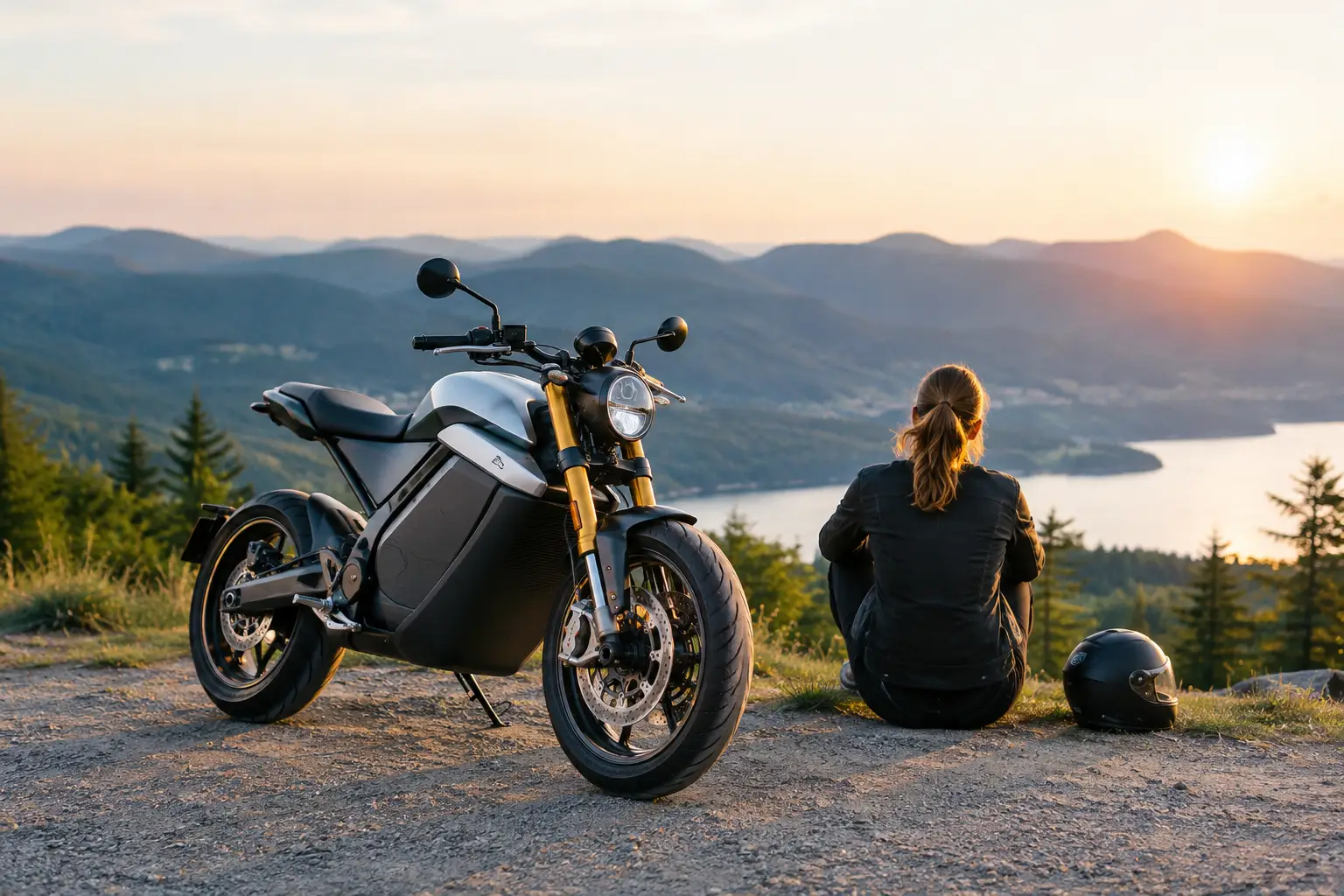
A motorcycle has always been a declaration of independence. But in a crowded city, that freedom should not come with a cloud of exhaust, a wall of noise, or a disposable mindset. Motorcycle sustainability is not about stripping away the feeling that makes riding matter. It is about building a better version of it – cleaner in motion, quieter in the streets, and made to stay desirable long after the first ride.
For riders who care about design as much as displacement, the real question is not whether sustainability belongs in motorcycling. It is whether the industry can make it feel as compelling as a perfectly proportioned tank, a sharp launch from a traffic light, or an empty street at night. It can. But it takes more than replacing fuel with a battery.
What Motorcycle Sustainability Really Means
Tailpipe emissions are the obvious starting point. An electric motorcycle produces no exhaust while it rides, which changes the air quality equation where it matters most: dense neighborhoods, daily commutes, school zones, and the streets outside your favorite coffee shop. For urban riders, short trips with frequent stops are exactly where internal-combustion motorcycles can be least efficient and most intrusive.
Still, a serious view of motorcycle sustainability has to look beyond the tailpipe. Electricity has a footprint, and that footprint depends on the local grid. Charging from a grid supplied largely by renewables has a different impact than charging from one powered predominantly by fossil fuels. The direction is clear, though: as grids get cleaner, an electric motorcycle gets cleaner without changing a single part.
There is also the matter of energy use. Electric drivetrains convert a far greater share of stored energy into forward motion than combustion engines. They do not idle at red lights. They do not burn fuel while waiting in traffic. Regenerative braking can return a portion of energy during deceleration, especially useful in stop-and-go city riding. None of this makes energy free. It makes every mile more deliberate.
The Battery Is a Trade-Off, Not a Footnote
The battery is the most scrutinized part of an electric motorcycle, and rightly so. Mining, processing, manufacturing, and transporting battery materials require energy and resources. Pretending otherwise is not progress. Better motorcycle sustainability comes from confronting that reality with smarter chemistry, responsible sourcing, long service life, and credible plans for repair, reuse, and recycling.
The most sustainable battery is not simply the largest one. It is one sized for how the motorcycle is actually used. A commuter who rides across town, charges overnight, and returns home does not necessarily need the weight, material intensity, and cost of a long-distance touring pack. A thoughtfully matched battery can make a bike lighter, more agile, and more efficient while avoiding excess capacity that spends much of its life unused.
Battery care matters, too. Extreme heat, chronic deep discharge, and long storage at very high charge levels can accelerate degradation. Riders do not need to treat their motorcycle like a laboratory instrument, but good charging habits and proper storage help preserve capacity. A battery that remains useful for years is better for the rider and better for the material footprint behind it.
When a battery eventually reaches the end of its vehicle life, that should not be the end of its value. Cells may have a second life in stationary energy storage before recycling recovers materials for future products. The circular system is still developing, but its destination should be clear: fewer raw materials wasted, fewer components treated as disposable.
Build for Years, Not Seasons
The fastest route to waste is a product designed around novelty. A motorcycle earns its place over time through reliability, serviceability, and a design that does not look dated the moment the next trend arrives.
That is where classic proportion has an advantage. A motorcycle with honest materials, clean lines, and mechanical visual balance does not need theatrical bodywork to make an impression. It can age with character. It can be maintained, personalized, and ridden well past the point when a disposable product would be replaced.
Longevity also depends on what sits beneath the surface. Quality fasteners, durable finishes, protected electrical systems, and access to parts may sound less romantic than torque figures, but they determine whether a motorcycle stays on the road. Software should support the ownership experience, not turn the machine into an obsolete screen on two wheels. Updates can improve diagnostics, ride settings, and charging behavior, while the core machine remains built to be serviced.
Hand-built, limited-batch production brings another perspective. It is not automatically lower impact than high-volume manufacturing, because scale can reduce waste when managed well. But smaller-batch craftsmanship can encourage closer quality control, more careful assembly, and a stronger relationship between owner and machine. The relevant measure is not a marketing label. It is whether the bike is made to be ridden, repaired, and kept.
Quiet Is Part of the Performance
Noise pollution is easy to overlook because it leaves no visible residue. Yet it shapes how cities feel. The bark of an engine may be part of motorcycling mythology, but in the wrong place and at the wrong hour, it becomes someone else’s problem.
An electric motorcycle changes that social contract. It delivers immediate torque with a different kind of presence: the low mechanical hum of movement, the rush of air, the clean response of the throttle. Silence does not mean absence of character. It means the rider can move through a city without demanding that everyone else hear it.
That restraint can expand where and when a motorcycle fits into daily life. An early commute does not have to wake a block. A late return does not have to announce itself from three intersections away. For many riders, that is not a compromise. It is a more sophisticated form of performance.
There is a safety nuance here. At low speeds, pedestrians may not hear an electric motorcycle as easily as a gasoline bike. Responsible riders should account for that with anticipation, controlled speed, clear positioning, and attention in shared spaces. Quiet riding asks more of the rider’s awareness. That is a fair trade.
Better Mobility Starts With the Right Ride
A motorcycle is not sustainable simply because it is electric. If it replaces walking, cycling, or public transit on trips where those options work well, its benefit is less clear. If it replaces a solo car commute, particularly a large and heavy vehicle moving one person through traffic, the case becomes much stronger.
This is why city-focused electric motorcycles make sense. They take up less space than cars, consume less energy than most four-wheeled vehicles, and can make everyday movement feel less like a compromise. The right machine is not the one with the loudest claim. It is the one that naturally earns a place in a rider’s routine.
Range should be evaluated the same way. Chasing an enormous headline number can lead to more battery weight and cost than daily life requires. Real sustainability is often found in right-sizing: enough range for the week’s rhythm, enough performance for the ride to feel alive, and simple charging that fits the hours when the bike is parked anyway.
For the rider, the payoff is tangible. Fewer moving parts can mean less routine maintenance. No oil changes, no exhaust system, no fuel stops, and no heat radiating from an engine in summer traffic. Electricity costs vary by location, but home charging can make the everyday economics of ownership more predictable than repeated visits to the pump.
The Standard Is Higher Than Zero Emissions
The future of motorcycling should not be sterile, generic, or apologetic. It should be more exacting. Better materials. Longer ownership. Energy used with intent. Design worth preserving. Performance that makes the city feel closer, not louder.
RGNT Motorcycles approaches that proposition with classic lines and an electric heart: a motorcycle designed for riders who want their values visible in the machine they choose, without turning the ride into a lecture.
The next meaningful choice is rarely dramatic. It might be charging overnight instead of filling up on the way home. It might be keeping a well-made bike for years. It might be arriving quietly, looking sharp, and leaving the street a little better than you found it.