
Your cart is currently empty!
Category: Uncategorized
-
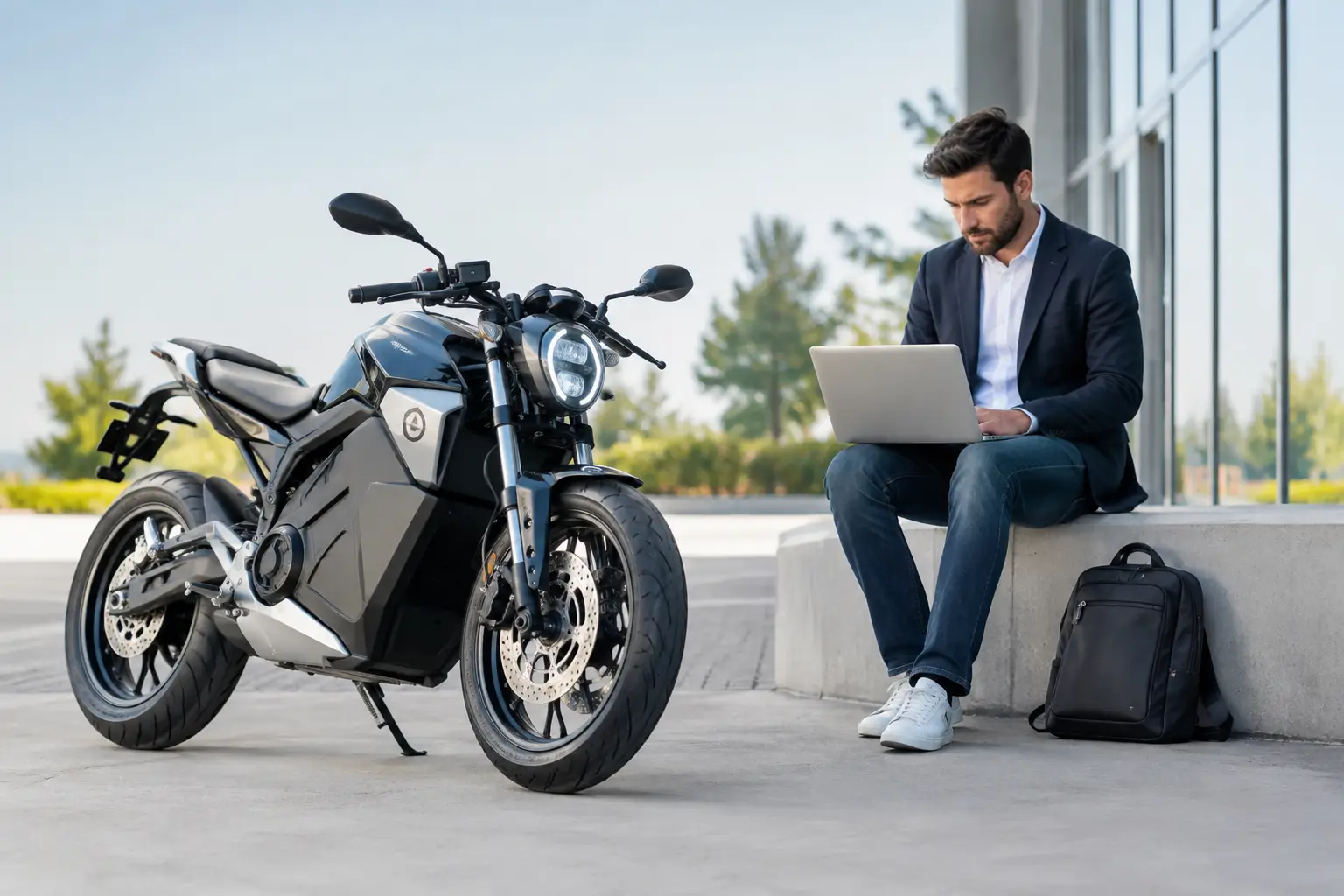
Are Electric Motorcycles Tax Deductible?
The cleanest commute can still create a messy tax question. Are electric motorcycles tax deductible? In the U.S., they can be – but only when the motorcycle serves a legitimate business purpose and you can support the deduction with credible records. The electric drivetrain does not make a bike automatically deductible. How, where, and why you ride it matters far more.
For a design professional moving between client sites, a real estate agent visiting properties, or a business owner making local deliveries, an electric motorcycle may be a smart business asset. For the rider traveling from home to the office each morning, it is generally personal commuting – silent, stylish, and not deductible.
When are electric motorcycles tax deductible?
A business can generally deduct expenses that are ordinary and necessary for its work. That standard is practical, not glamorous. Your electric motorcycle should have a clear connection to earning income, operating the business, or serving customers.
Think of a photographer riding to shoots, an architect traveling between active project sites, or a consultant going from one client meeting to another. Those business miles may qualify. So might trips to buy supplies, make deliveries, attend qualifying business events, or travel from a regular office to a temporary work location.
The motorcycle does not need to wear a company logo to count. It does need a defensible business role. A premium electric bike can be a rational choice in dense urban environments where parking, traffic, fuel, and noise all carry a cost. The tax treatment, however, follows the business use – not the bike’s price, performance, or electric credentials.
If you are self-employed, the deduction may flow through your business tax return. If your company owns the motorcycle, the business may claim eligible costs instead. Employees face a different situation: unreimbursed employee vehicle expenses are generally not deductible on federal returns, though narrow exceptions and state rules can apply. Ask a qualified tax professional how your employment status affects the result.
Commuting is the line most riders miss
The ride from home to your regular workplace is typically commuting. That remains true whether you ride a gas-powered machine, an EV, a bicycle, or a motorcycle with classic lines and an electric heart. Commuting expenses are ordinarily personal expenses under federal tax rules.
That distinction can feel counterintuitive. You may choose an electric motorcycle because it gets you to work efficiently, quietly, and with less environmental impact. Those are excellent ownership reasons. They do not, on their own, turn the journey into a deductible business trip.
A workday can contain both personal and business travel. Riding from home to your studio is usually commuting. Riding from that studio to a client presentation across town may be business travel. Riding from the presentation to lunch with friends is personal again. Clean categories make clean records.
There are exceptions in specialized circumstances, including certain qualifying home-office arrangements and temporary work locations. These rules are fact-specific. Do not build a tax position around a social-media shortcut or a broad claim that “all work travel” is deductible.
Deducting the motorcycle itself: depreciation and Section 179
When a motorcycle is purchased for business, you may not deduct the full purchase price immediately by default. Usually, the cost is recovered over time through depreciation. Depreciation reflects that a business asset provides value across multiple years, rather than only on the day it is bought.
Depending on your business, tax year, income, and how the vehicle is used, Section 179 expensing or bonus depreciation may allow a faster deduction. Both can be useful, but neither should be treated as automatic. Eligibility and limits can change, and vehicle-related rules are detailed.
The key issue for mixed-use motorcycles is the business-use percentage. If the bike is ridden 70% for documented business travel and 30% for personal riding, generally only the business portion of eligible costs can be deducted. If business use later drops significantly, part of an earlier accelerated deduction may need to be recaptured. That is one reason disciplined mileage tracking matters from the first ride.
Financing does not prevent a deduction. A business may still depreciate the qualifying business portion of the motorcycle’s cost, while the business share of loan interest may potentially be deductible. Principal payments themselves are not an operating expense deduction. Leasing can produce a different pattern, with the business share of lease payments potentially deductible instead.
The right choice is not always the biggest first-year write-off. A larger immediate deduction may be attractive, but depreciation, cash flow, financing terms, and expected resale value should be considered together. Tax strategy should support the business, not dictate the entire purchase.
Actual expenses or the mileage method
For eligible business riding, taxpayers commonly consider two ways to calculate vehicle deductions: actual expenses or the standard mileage method. The method available and most favorable depends on the facts, as well as the rules in force for the year.
The actual-expense method looks at the business percentage of costs such as electricity for charging, insurance, registration, maintenance, repairs, tires, interest where applicable, and depreciation. This can make sense for a high-quality motorcycle with meaningful operating and ownership costs.
The standard mileage method uses an IRS-set rate per qualifying business mile. It can be simpler, but it is not always available or best, especially if you want to claim depreciation deductions or have already chosen a treatment that restricts later options. The rate changes periodically, so use the rate for the relevant tax year rather than an old figure found in a forum thread.
Choose deliberately before filing. A tax advisor can model both methods using your estimated business miles, purchase structure, and annual costs. The quieter the machine, the less visible some expenses may feel. They still need to be tracked.
The records that make a deduction credible
A deduction is only as strong as the evidence behind it. Keep a contemporaneous mileage log showing the date, destination, business purpose, and miles ridden for each business trip. A digital log can work well, provided it is maintained consistently and you retain supporting records.
Keep purchase agreements, finance documents, insurance invoices, charging receipts, maintenance records, registration costs, and any repair invoices. If charging happens at home, separate the motorcycle’s electricity use as accurately as practical rather than estimating from a household bill alone.
For an owner-operated business, the purpose of each ride deserves a plain-English explanation: “Visited client project site,” “Delivered samples to retailer,” or “Met supplier for inventory pickup.” “Work stuff” is not a useful record six months later, and it is even less useful in an audit.
Electric incentives are separate from business deductions
Do not confuse a business expense deduction with a federal EV tax credit. The federal clean vehicle credit for personal vehicles has vehicle requirements that generally do not fit two-wheeled motorcycles. Electric motorcycle incentives have also changed over time, with some former federal provisions expiring and potential commercial incentives subject to specific rules.
State, city, utility, and local programs may offer rebates, charging incentives, or other support, but availability varies sharply by location and funding cycle. An incentive may also affect the tax basis used for depreciation. Treat it as a separate analysis, not a bonus you can assume at checkout.
Put the business case before the tax case
A motorcycle should earn its place in your business before it earns a place on your return. If it reduces time in traffic, makes client visits easier, lowers operating costs, or gives a mobile business a sharper urban edge, the case may be strong. If it is mainly for the ride home and the long way back on Sunday, call it what it is: personal enjoyment with excellent taste.
RGNT riders understand that understatement can still make an entrance. Keep that same discipline with taxes. Ride for the work you actually do, document it with care, and let a tax professional translate your specific facts into the right filing position.
-
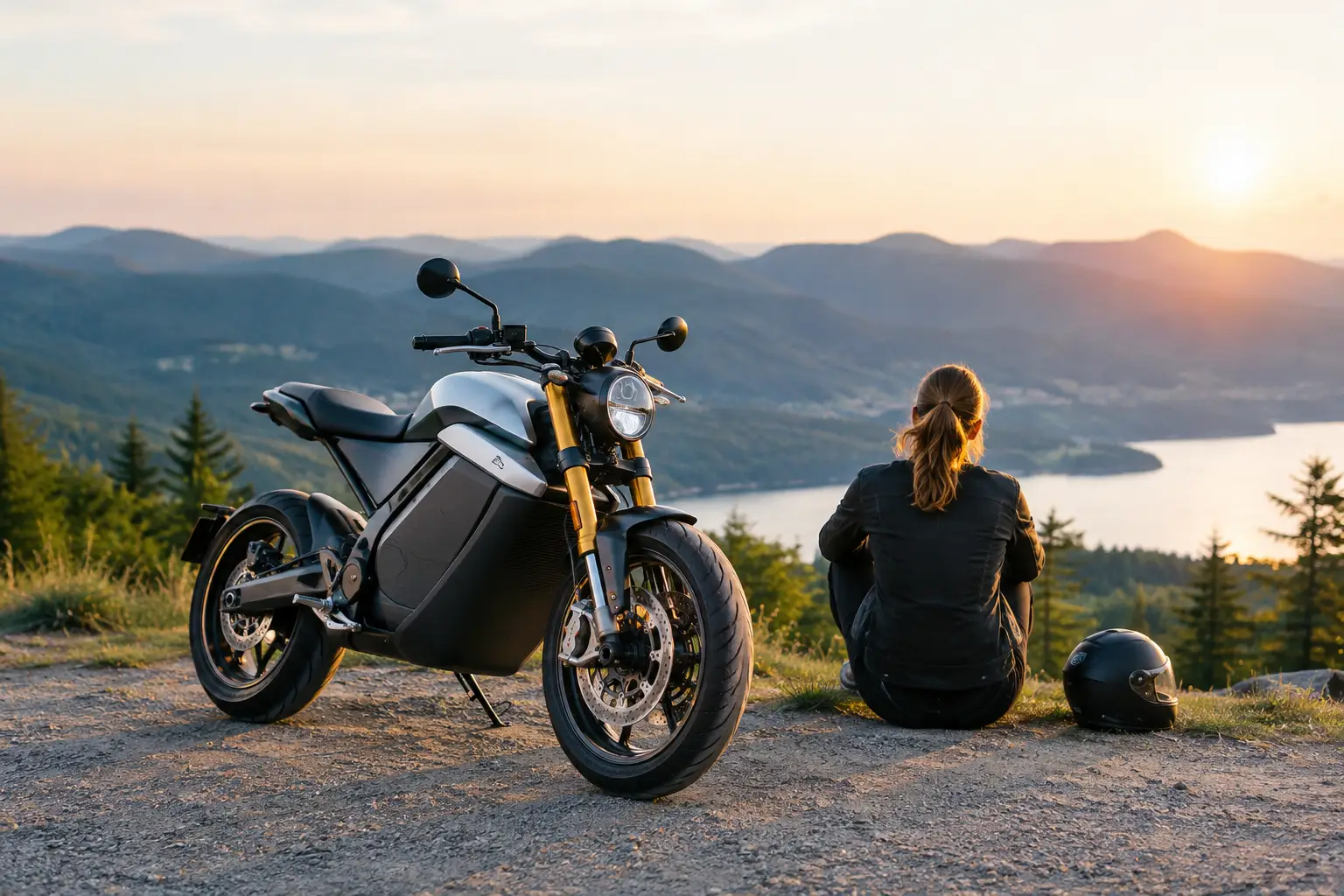
Motorcycle Sustainability, Without the Compromise
A motorcycle has always been a declaration of independence. But in a crowded city, that freedom should not come with a cloud of exhaust, a wall of noise, or a disposable mindset. Motorcycle sustainability is not about stripping away the feeling that makes riding matter. It is about building a better version of it – cleaner in motion, quieter in the streets, and made to stay desirable long after the first ride.
For riders who care about design as much as displacement, the real question is not whether sustainability belongs in motorcycling. It is whether the industry can make it feel as compelling as a perfectly proportioned tank, a sharp launch from a traffic light, or an empty street at night. It can. But it takes more than replacing fuel with a battery.
What Motorcycle Sustainability Really Means
Tailpipe emissions are the obvious starting point. An electric motorcycle produces no exhaust while it rides, which changes the air quality equation where it matters most: dense neighborhoods, daily commutes, school zones, and the streets outside your favorite coffee shop. For urban riders, short trips with frequent stops are exactly where internal-combustion motorcycles can be least efficient and most intrusive.
Still, a serious view of motorcycle sustainability has to look beyond the tailpipe. Electricity has a footprint, and that footprint depends on the local grid. Charging from a grid supplied largely by renewables has a different impact than charging from one powered predominantly by fossil fuels. The direction is clear, though: as grids get cleaner, an electric motorcycle gets cleaner without changing a single part.
There is also the matter of energy use. Electric drivetrains convert a far greater share of stored energy into forward motion than combustion engines. They do not idle at red lights. They do not burn fuel while waiting in traffic. Regenerative braking can return a portion of energy during deceleration, especially useful in stop-and-go city riding. None of this makes energy free. It makes every mile more deliberate.
The Battery Is a Trade-Off, Not a Footnote
The battery is the most scrutinized part of an electric motorcycle, and rightly so. Mining, processing, manufacturing, and transporting battery materials require energy and resources. Pretending otherwise is not progress. Better motorcycle sustainability comes from confronting that reality with smarter chemistry, responsible sourcing, long service life, and credible plans for repair, reuse, and recycling.
The most sustainable battery is not simply the largest one. It is one sized for how the motorcycle is actually used. A commuter who rides across town, charges overnight, and returns home does not necessarily need the weight, material intensity, and cost of a long-distance touring pack. A thoughtfully matched battery can make a bike lighter, more agile, and more efficient while avoiding excess capacity that spends much of its life unused.
Battery care matters, too. Extreme heat, chronic deep discharge, and long storage at very high charge levels can accelerate degradation. Riders do not need to treat their motorcycle like a laboratory instrument, but good charging habits and proper storage help preserve capacity. A battery that remains useful for years is better for the rider and better for the material footprint behind it.
When a battery eventually reaches the end of its vehicle life, that should not be the end of its value. Cells may have a second life in stationary energy storage before recycling recovers materials for future products. The circular system is still developing, but its destination should be clear: fewer raw materials wasted, fewer components treated as disposable.
Build for Years, Not Seasons
The fastest route to waste is a product designed around novelty. A motorcycle earns its place over time through reliability, serviceability, and a design that does not look dated the moment the next trend arrives.
That is where classic proportion has an advantage. A motorcycle with honest materials, clean lines, and mechanical visual balance does not need theatrical bodywork to make an impression. It can age with character. It can be maintained, personalized, and ridden well past the point when a disposable product would be replaced.
Longevity also depends on what sits beneath the surface. Quality fasteners, durable finishes, protected electrical systems, and access to parts may sound less romantic than torque figures, but they determine whether a motorcycle stays on the road. Software should support the ownership experience, not turn the machine into an obsolete screen on two wheels. Updates can improve diagnostics, ride settings, and charging behavior, while the core machine remains built to be serviced.
Hand-built, limited-batch production brings another perspective. It is not automatically lower impact than high-volume manufacturing, because scale can reduce waste when managed well. But smaller-batch craftsmanship can encourage closer quality control, more careful assembly, and a stronger relationship between owner and machine. The relevant measure is not a marketing label. It is whether the bike is made to be ridden, repaired, and kept.
Quiet Is Part of the Performance
Noise pollution is easy to overlook because it leaves no visible residue. Yet it shapes how cities feel. The bark of an engine may be part of motorcycling mythology, but in the wrong place and at the wrong hour, it becomes someone else’s problem.
An electric motorcycle changes that social contract. It delivers immediate torque with a different kind of presence: the low mechanical hum of movement, the rush of air, the clean response of the throttle. Silence does not mean absence of character. It means the rider can move through a city without demanding that everyone else hear it.
That restraint can expand where and when a motorcycle fits into daily life. An early commute does not have to wake a block. A late return does not have to announce itself from three intersections away. For many riders, that is not a compromise. It is a more sophisticated form of performance.
There is a safety nuance here. At low speeds, pedestrians may not hear an electric motorcycle as easily as a gasoline bike. Responsible riders should account for that with anticipation, controlled speed, clear positioning, and attention in shared spaces. Quiet riding asks more of the rider’s awareness. That is a fair trade.
Better Mobility Starts With the Right Ride
A motorcycle is not sustainable simply because it is electric. If it replaces walking, cycling, or public transit on trips where those options work well, its benefit is less clear. If it replaces a solo car commute, particularly a large and heavy vehicle moving one person through traffic, the case becomes much stronger.
This is why city-focused electric motorcycles make sense. They take up less space than cars, consume less energy than most four-wheeled vehicles, and can make everyday movement feel less like a compromise. The right machine is not the one with the loudest claim. It is the one that naturally earns a place in a rider’s routine.
Range should be evaluated the same way. Chasing an enormous headline number can lead to more battery weight and cost than daily life requires. Real sustainability is often found in right-sizing: enough range for the week’s rhythm, enough performance for the ride to feel alive, and simple charging that fits the hours when the bike is parked anyway.
For the rider, the payoff is tangible. Fewer moving parts can mean less routine maintenance. No oil changes, no exhaust system, no fuel stops, and no heat radiating from an engine in summer traffic. Electricity costs vary by location, but home charging can make the everyday economics of ownership more predictable than repeated visits to the pump.
The Standard Is Higher Than Zero Emissions
The future of motorcycling should not be sterile, generic, or apologetic. It should be more exacting. Better materials. Longer ownership. Energy used with intent. Design worth preserving. Performance that makes the city feel closer, not louder.
RGNT Motorcycles approaches that proposition with classic lines and an electric heart: a motorcycle designed for riders who want their values visible in the machine they choose, without turning the ride into a lecture.
The next meaningful choice is rarely dramatic. It might be charging overnight instead of filling up on the way home. It might be keeping a well-made bike for years. It might be arriving quietly, looking sharp, and leaving the street a little better than you found it.
-
Belt Drive Comparison for Modern Motorcycles
The sound of a motorcycle leaving a traffic light is part of its character. But for riders drawn to electric torque, clean design, and a quieter route through the city, mechanical noise can feel like clutter. A proper belt drive comparison looks beyond the familiar chain-versus-belt argument and asks a sharper question: what kind of ride do you want to live with every day?
A final-drive system shapes more than maintenance intervals. It affects sound, visual balance, efficiency, response, and how a motorcycle feels in the moments between home and wherever the night leads. Belt drive, chain drive, and shaft drive each carry a different philosophy. None wins everywhere.
Belt Drive Comparison: The Essential Differences
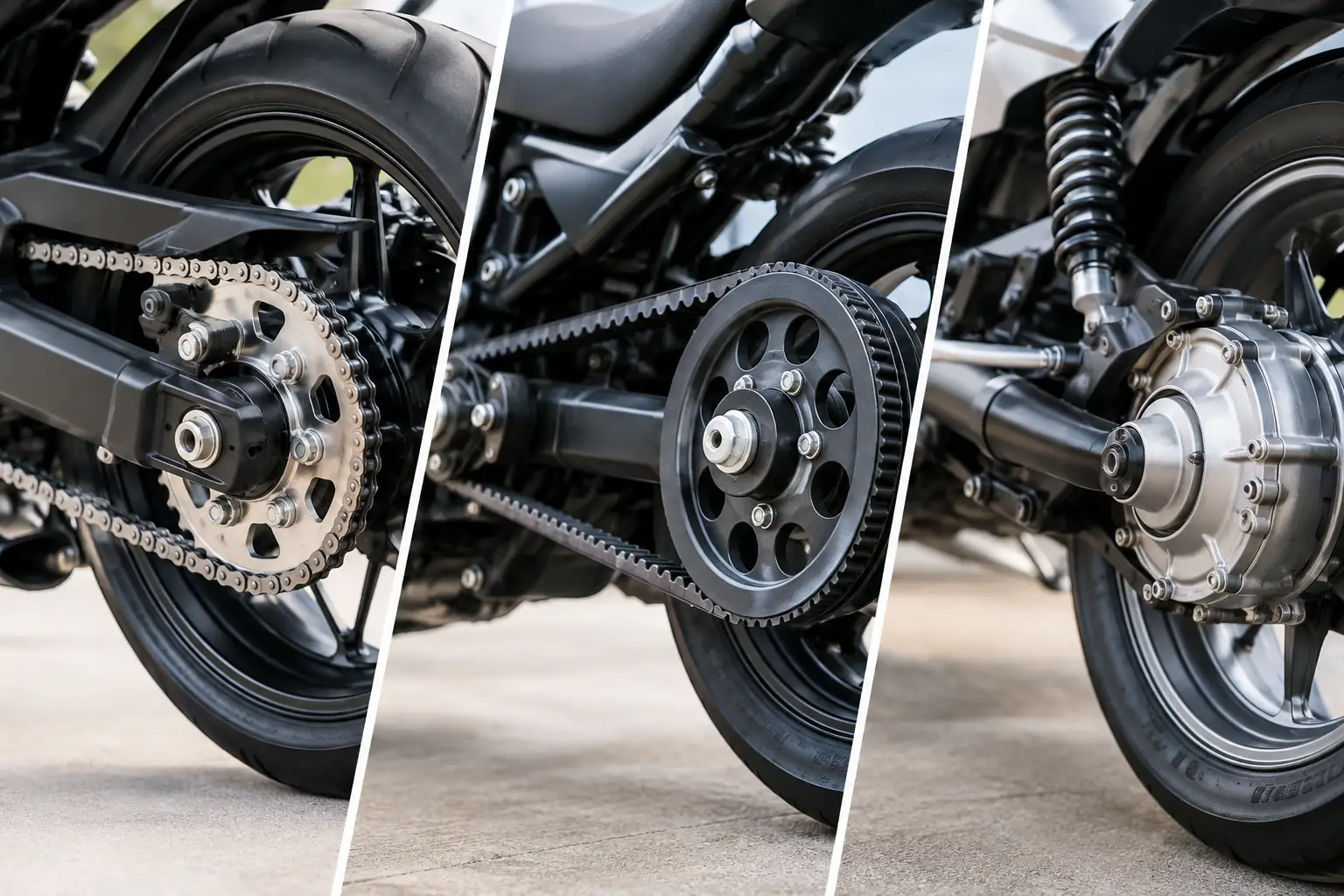
A belt drive transfers power from the motor or gearbox to the rear wheel through a reinforced toothed belt, usually made from high-strength synthetic compounds with carbon-fiber cords. Unlike a metal chain, it runs dry. Unlike a shaft, it does not require a heavy enclosed gear assembly.
That simple construction gives belts their defining appeal: quiet, low-maintenance propulsion with a clean visual profile. For an urban rider, those qualities are not minor luxuries. They change the ownership experience.
A chain uses metal links and sprockets. It is compact, strong, widely serviceable, and highly adaptable to different gear ratios. Its compromise is attention. Chains require regular cleaning, lubrication, tension checks, and eventual replacement. Ignore that routine and the chain gets louder, dirtier, and less efficient.
A shaft drive encloses its moving parts in a housing and sends power through gears. It is tidy and durable, with limited day-to-day care. The trade-off is weight, complexity, and a riding feel that can be less direct. Shaft systems are often at home on large touring motorcycles, where long-distance durability matters more than minimalist mass.
A belt sits between them. It is lighter and cleaner than a shaft, calmer and less demanding than a chain, but it comes with its own limits around packaging, damage, and peak-load use.
Why a Belt Suits the Quiet Side of Performance
For electric motorcycles, the argument for belt drive becomes especially compelling. An electric motor delivers torque immediately and without the combustion soundtrack that usually masks mechanical sounds. Every component has a voice. A dry belt keeps that voice restrained.
There is no chain rattle at low speed, no fling of lubricant onto the rear wheel or garage floor, and no metallic chatter competing with the calm of electric propulsion. The result is a more composed ride – one that lets the rider notice tire feedback, city movement, and the clean pull of instant torque.
The visual advantage matters, too. A chain has an honest industrial look, but it can make a carefully considered motorcycle appear busy. A belt creates a cleaner rear profile, especially on a machine built around classic lines and an electric heart. It does not demand attention. That is precisely why it works.
For a commuter, reduced maintenance is equally persuasive. A belt does not need routine lubrication, so wet roads and dusty parking lots do not automatically become weekend workshop tasks. It still needs inspection for tension, alignment, debris, cracking, and tooth wear. Low maintenance is not no maintenance. It is simply a more elegant ownership rhythm.
Where Chain Drive Still Has the Edge
The best belt drive comparison has to give the chain its due. Chain drive remains the performance default for serious reasons.
Chains handle high loads exceptionally well. They are relatively easy to replace, tolerate a wide range of motorcycle designs, and make gearing changes straightforward for riders tuning a machine for a particular use. Track riders, off-road riders, and builders chasing maximum power often choose chains because they are proven, compact, and flexible.
A chain is also easier to address after damage in remote conditions. If a stone, branch, or impact compromises a belt, replacement can be more involved and may require removing part of the rear assembly. A damaged chain is hardly convenient, but its components are common and familiar to most shops.
Then there is cost. Belts and their pulleys can cost more than a basic chain-and-sprocket set. For riders who are comfortable with regular maintenance and want the broadest possible service options, chain drive remains a sensible choice.
The difference comes down to intent. A chain rewards hands-on riders who enjoy mechanical involvement and need maximum adaptability. A belt rewards riders who would rather spend their free time riding than cleaning lubricant from the wheel.
Belt Drive Limits Worth Knowing
Belts are not fragile, but they ask for respect. Sharp debris can damage them. Misalignment can shorten their life. Extreme torque, aggressive launches, and harsh off-road terrain place greater demands on any final-drive system, but belts are generally less suited to those punishing conditions than quality chains.
Packaging can also influence motorcycle design. A belt has a larger diameter than a chain and cannot simply be split and rejoined in the same way. Depending on the bike, replacing it may require more disassembly. This is rarely a concern during normal ownership, but it is worth understanding before calling any system maintenance-free.
Weather is less dramatic than many riders assume. Modern belts are built to handle rain and ordinary road grime. They do not rust, and water does not wash away essential lubricant because there is none. Still, a belt should be checked after riding through deep debris, construction zones, or conditions where stones can be caught between belt and pulley.
For most paved-road riders, these are manageable boundaries, not deal-breakers. For someone routinely crossing rocky trails or chasing lap times, they are a reason to look harder at chain drive.
Efficiency, Feel, and Real-World Range
Final drive affects efficiency, although the difference is rarely the single deciding factor in a purchase. A properly adjusted belt can transmit power very efficiently, and its smooth operation supports the refined character many electric riders want. A clean, lubricated chain can also be highly efficient. Let it get dry or dirty, and friction increases.
Shaft drive typically loses more energy through its gear changes and adds rotational mass, though modern systems have improved considerably. On a large touring machine, that penalty may be acceptable. On a lighter city-focused motorcycle, every pound and every watt deserves scrutiny.
The feel is more noticeable than the spreadsheet. Chain drive feels mechanical and immediate. Belt drive feels smooth and quiet, with a controlled connection between throttle and road. Shaft drive feels substantial, sometimes with a distinct response as load changes.
That is why the right system depends on the motorcycle’s mission. A stripped-back electric street machine should feel precise, silent, and free of unnecessary fuss. A belt supports that brief naturally. It belongs to the same design language as hidden wiring, balanced proportions, and power delivered without theatrics.
RGNT Motorcycles understands that performance does not have to announce itself at every intersection. The strongest engineering choices are often the ones riders feel more than they hear.
Choosing the Drive That Matches Your Ride
Choose a belt if your riding is primarily urban or suburban, you value low upkeep, and you want a clean, quiet motorcycle that still delivers direct response. It is an especially natural fit for riders who treat their bike as part of their personal style rather than a weekend mechanical project.
Choose a chain if you prioritize hard use, tuning flexibility, easy ratio changes, or off-road capability. It asks more of you, but it gives plenty back to the rider who enjoys that relationship.
Choose a shaft when long-distance durability and minimal exposure to the elements outweigh concerns about weight and sharp response. It is a confident solution for a different kind of motorcycle.
The right final drive is not the loudest claim on a specification sheet. It is the one that disappears into the ride, leaving you with clean acceleration, a clear head, and a motorcycle that feels like it was built for your streets.
-
Electric Torque Management, Made for the City
A traffic light turns green. There is no clutch work, no rising revs, no hesitation while an engine finds its power band. Electric torque management is what makes that immediate response feel composed rather than abrupt. It decides how much force reaches the rear wheel, how quickly it arrives, and whether a quiet motorcycle feels calm, sharp, or unruly beneath you.
For riders who move through dense streets, wet intersections, uneven pavement, and open stretches beyond the city, that distinction matters. Instant torque is one of electric riding’s great pleasures. Managing it well is what turns that pleasure into confidence.
What electric torque management actually does
An electric motor can deliver meaningful torque from the first rotation. That changes the character of acceleration completely. Instead of building momentum through gears and engine speed, the motorcycle can respond the instant the rider opens the throttle.
That response still needs interpretation. The rider’s throttle input is only one part of the equation. The motorcycle’s control system considers requested power, motor speed, battery state, traction conditions, temperature, and the selected ride mode. It then delivers torque in a controlled curve rather than treating every twist of the throttle as an all-or-nothing command.
Think of it as the difference between a perfectly weighted switch and a light switch that flickers wildly. Both can turn on a lamp. Only one feels considered.
On an electric motorcycle, good calibration makes low-speed traffic precise, launches decisive, and mid-corner throttle changes predictable. It gives the rider access to the motor’s immediacy without asking the rear tire to do more than the surface allows.
Why instant torque needs restraint
More torque is not automatically better torque. On dry, clean asphalt, a hard launch can feel exhilarating. On painted road markings after rain, cobblestones, loose gravel, or a cold tire, the same request can upset traction quickly.
Electric torque management moderates this relationship between rider demand and available grip. In practical terms, it can soften the first part of throttle travel, limit peak output in a conservative ride mode, or release power progressively as the motorcycle gathers speed. The effect should not feel like a lecture from the electronics. It should feel natural, as though the motorcycle understands the road a fraction before you need it to.
There is a trade-off. A system tuned too cautiously can make a motorcycle feel distant and overly filtered. One tuned too aggressively may feel thrilling in a straight line but tiring in urban riding, where smoothness is speed and confidence is control. The best approach preserves the direct connection of electric propulsion while leaving enough margin for real streets.
The rear tire is part of the system
Software cannot create traction. It can only make smarter use of the traction available. Tire compound, tread depth, temperature, pressure, road surface, suspension setup, rider position, and payload all affect how much torque the rear contact patch can accept.
That is why the rider still matters. A gradual throttle roll-on when exiting a turn gives the system and tire time to work together. A sudden, full-throttle request over a slick surface asks for intervention before it asks for speed.
The quiet nature of an electric motorcycle can make this even more noticeable. Without exhaust note and vibration to signal rising effort, a rider feels acceleration more directly through the chassis, bars, and seat. Refined torque delivery keeps those signals clean.
The city is where calibration earns its place
Urban riding rarely offers a predictable surface for long. One block may be smooth asphalt. The next has steel utility covers, delivery vans, cracked pavement, pedestrians, and a tight gap between changing lights. Power delivery has to be useful at 15 mph as much as it is at 50 mph.
At low speeds, carefully managed torque makes slow maneuvers less jerky. That helps in stop-and-go traffic, parking garages, and tight turns where a small throttle movement can otherwise feel exaggerated. At city speeds, it makes merging and passing feel immediate without becoming dramatic for its own sake.
This is also where ride modes have real value. A more relaxed setting can make sense in rain, on unfamiliar roads, or when carrying a passenger. A more responsive setting belongs on a clear route when the rider wants a stronger connection to the motor. Neither mode is universally superior. The right one is the one that matches the conditions and the rider’s intent.
For a modern-classic electric motorcycle, this is part of the appeal. The silhouette may recall a machine built around fuel, cylinders, and mechanical theater. The riding experience is different: clean response, quiet urgency, and control delivered without unnecessary noise.
Torque management and range are connected
Every hard acceleration request draws energy from the battery. That does not mean an electric motorcycle should feel restrained at every green light. It means the way power is delivered affects how efficiently that energy becomes forward motion.
A smooth torque curve can help prevent wheelspin and wasted energy. It can also make it easier for riders to maintain a consistent pace, especially in variable traffic. Aggressive acceleration followed by hard braking is rarely the friend of range, whether the motorcycle runs on electrons or gasoline.
Battery temperature and charge level can influence available performance too. When a battery is cold, very hot, or at a low state of charge, a well-designed system may adjust power delivery to protect long-term battery health and maintain reliable operation. That can be disappointing only if it arrives without warning. When the information is clear, it becomes part of riding with mechanical sympathy, just expressed through software rather than oil pressure and engine temperature.
Regenerative braking belongs in the same conversation. It governs how much deceleration the motor provides when the rider rolls off the throttle or applies braking, depending on the motorcycle’s setup. Strong regeneration can return some energy and reduce brake use in traffic. But if it is too abrupt, it can make weight transfer feel unsettled. Like acceleration, deceleration should feel measured.
What a rider should look for
Spec sheets can tell you peak torque and power, but they do not reveal the whole experience. Two motorcycles with similar numbers can feel entirely different because of how their software shapes the first inch of throttle travel and the transition from low to mid-speed acceleration.
During a test ride, pay attention to the details. Does the motorcycle pull away smoothly from a stop? Can you hold a steady pace through a slow corner without hunting for the throttle? Does acceleration build predictably when you ask for more? When you roll off, does the response feel settled or abrupt?
Also test it in the environments where you will actually ride. A brief wide-open run on dry pavement is entertaining, but it says less about daily control than a few minutes of traffic, a rough street, and a tight low-speed turn. Premium engineering is often easiest to recognize when it removes friction from ordinary moments.
A design decision, not just a software setting
Electric torque management is sometimes described as invisible technology. That is partly true. You should not need to think about it at every intersection. But its influence is present in nearly every movement the motorcycle makes.
It shapes the motorcycle’s personality. A machine can be tuned to feel soft and effortless, direct and athletic, or deliberately intense. At RGNT, the compelling balance is not about making electric power louder than it is. It is about giving classic lines an electric heart that responds with discipline when the road gets complicated.
The silent minority does not need drama to make an entrance. Choose a motorcycle whose torque feels as intentional as its design, then let the city reveal what controlled power can do.
-
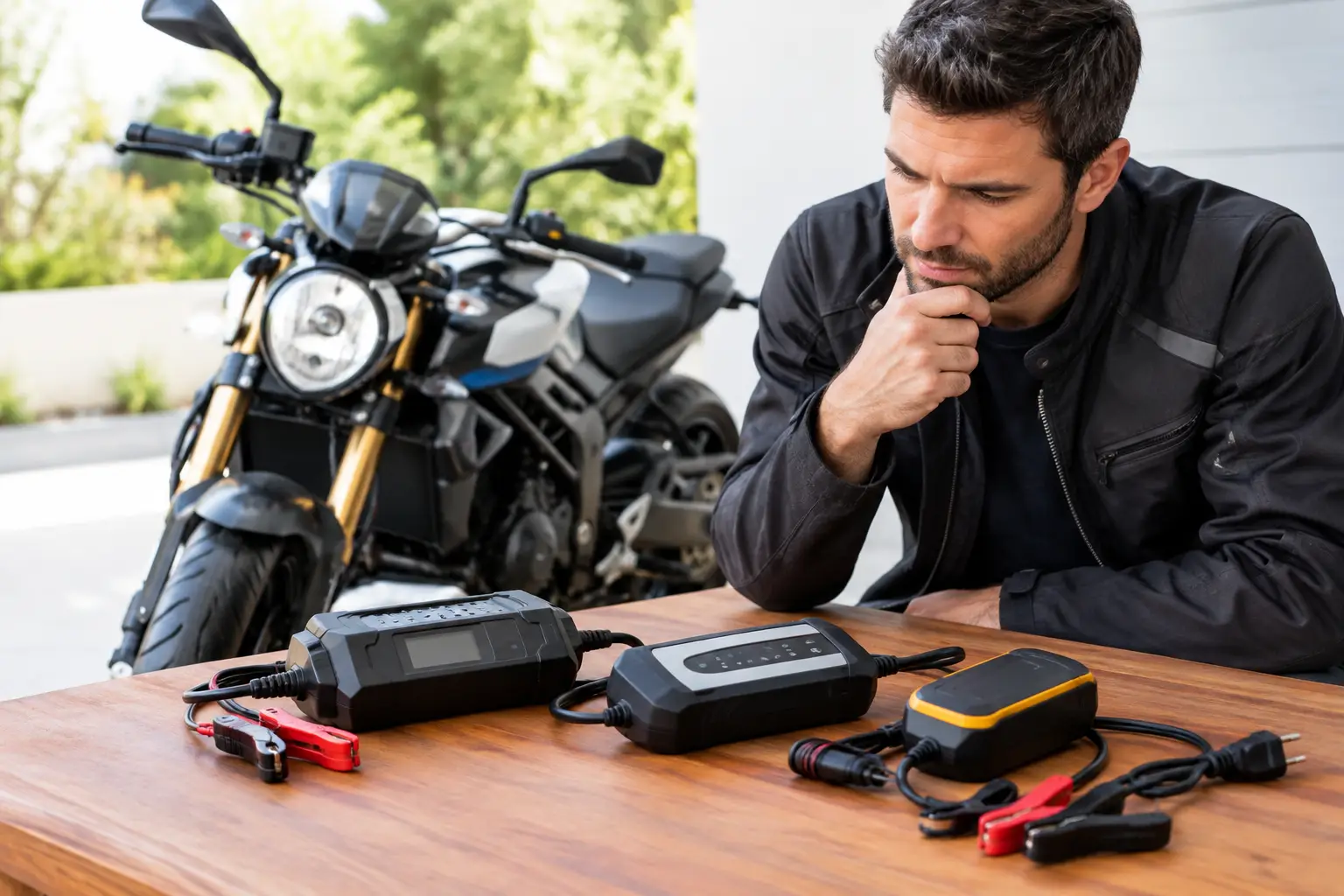
Motorcycle Charger Selection Without Guesswork
A silent ride begins long before the throttle turns. It begins in the place where your motorcycle rests: a city garage, a clean corner of the workshop, or a private parking space beneath your apartment. The right charging setup keeps an electric motorcycle ready without becoming another piece of daily friction.
Motorcycle charger selection is not about buying the biggest unit or chasing the highest number on the box. It is about matching your bike, your battery, your electrical supply, and the way you actually ride. Get those four things right and charging becomes almost invisible. Plug in, step away, return ready.
Motorcycle Charger Selection Starts With Your Bike
The first rule is simple: use charging equipment approved for your motorcycle’s battery system. Voltage, connector design, communication protocols, and maximum current are not interchangeable details. They determine whether the battery charges correctly, how quickly it charges, and whether its protection systems can do their job.
Electric motorcycles commonly use lithium-ion battery packs, managed by a battery management system, often called a BMS. This system monitors cell voltage, temperature, current, and charge state. A compatible charger works with those limits. An incompatible or poorly made charger can create nuisance faults at best and battery damage at worst.
Before comparing chargers, confirm three specifications in your owner’s documentation: the required input voltage, the charging connector, and the motorcycle’s maximum accepted charging power. The final figure matters more than the charger’s advertised output. If your bike can only accept a certain rate, a more powerful unit will not make it charge faster.
This is where restraint pays. The best setup is not the most aggressive one. It is the one engineered to suit the machine.
Understand the Difference Between the Charger and the Cable
People often use the word charger for everything between the wall outlet and the motorcycle. That can be misleading. Some motorcycles carry the charging hardware onboard, while the device connected to the wall functions mainly as a safe power supply and communication point. Others use an external charger that converts AC power into the DC power the battery needs.
That distinction affects what you need to buy. A replacement cable is not automatically a replacement charger. A public charging adapter is not automatically suitable for home use. If there is any uncertainty, check the motorcycle manufacturer’s guidance before connecting new equipment.
Choose Charging Speed Around Real Life
Charging speed should match your routine, not your impatience. For many urban riders, standard overnight charging is exactly right. Ride to work, take the long route home, plug in after dinner, and wake to a full battery. Quiet ownership has its own kind of performance.
A 120-volt household outlet, often referred to as Level 1 charging, can be enough for riders with modest daily mileage and consistent overnight access. It is the simplest route, but it is also the slowest. If you arrive home with a deeply depleted battery and need to ride again in a few hours, it may feel restrictive.
A dedicated 240-volt circuit, commonly described as Level 2 charging, can provide a more capable home setup when the motorcycle supports it. This is a strong choice for frequent riders, shared motorcycles, or anyone who wants more flexibility between rides. The motorcycle still sets the ceiling. A high-capacity Level 2 unit does not override the bike’s onboard charging limit.
Think in terms of recovery time. If your normal day uses 30 percent of the battery, you only need a setup that reliably returns that energy before the next ride. If you often use 80 percent, ride multiple times in a day, or have unpredictable schedules, faster compatible charging earns its place.
Do Not Confuse Faster With Better
High charging power can be useful, but it comes with trade-offs. It may require electrical work, a dedicated circuit, a more expensive unit, and more attention to installation. Depending on the motorcycle and battery design, routine high-rate charging can also generate more heat than slower charging.
For a design-led electric motorcycle, the goal is not to turn the garage into a pit lane. It is to create a dependable rhythm that preserves the freedom of spontaneous riding. Fast charging is valuable when it solves a real problem. Overnight charging is excellent when it does not.
Confirm the Connector Before You Buy
Connector compatibility deserves more than a quick glance at product photos. Motorcycle charging connections vary by market, model, and charging architecture. A plug may look familiar yet be electrically or mechanically wrong for your bike.
Start with the port on the motorcycle, then identify the connector on the charger or charging station. Confirm whether you need a fixed cable, a detachable cable, or a manufacturer-approved adapter. Also check cable length. A charger that reaches in a showroom may not reach in a real garage, especially when the outlet is behind the bike or beside a parking pillar.
Avoid relying on improvised adapters unless they are specifically approved for the motorcycle and charging equipment involved. An adapter must do more than physically connect two shapes. It must preserve safe electrical operation and, where required, the communication between the bike and the supply equipment.
In the United States, public and home charging infrastructure can vary widely. A rider who charges only at home may value simplicity. A rider who uses workplace or destination charging should consider what stations are common on their routes before committing to a connector strategy.
Build a Home Setup That Feels Effortless
A premium motorcycle deserves more than a loose cable crossing a damp garage floor. Home charging should feel composed: protected from impact, easy to reach, and simple to use in low light.
Choose a location where the cable can reach the motorcycle without stretching, pinching, or becoming a trip hazard. Keep the charging equipment away from standing water, direct spray, and places where a car door or moving bicycle can strike it. If the unit is installed outdoors, verify its weather rating for the conditions it will face year-round.
For a permanent 240-volt installation, use a qualified electrician. The circuit should be correctly rated for the equipment and local electrical code. A dedicated circuit is often the cleanest option, particularly when charging will be frequent. It reduces the chance of overload from tools, appliances, or other garage equipment sharing the same line.
Skip lightweight extension cords for regular charging. They can introduce voltage drop, heat, and unnecessary risk, especially over long runs. If a temporary solution is unavoidable, follow the motorcycle and charger instructions exactly and treat it as temporary.
Small Details Make Charging Better
Good charging habits are deliberately unglamorous. Inspect the cable occasionally for cuts, crushed sections, damaged pins, or discoloration around the plug. Keep connector caps clean and dry. Do not force a connector that will not seat smoothly.
It also helps to think about security. In a shared parking area, a lockable charger, cable management, or a protected outlet enclosure can prevent tampering and keep the setup looking intentional. The best electric motorcycle experience is calm, not cluttered.
Consider Battery Care Alongside Convenience
Most modern battery systems are built to manage daily charging intelligently, but every battery ages with time, heat, and use. Follow the motorcycle manufacturer’s recommendations for long-term storage and routine charging. If the bike will sit for weeks, the ideal charge level may differ from the level you use for daily riding.
Temperature changes the equation. Charging a battery immediately after a hard ride in extreme heat, or when the battery is very cold, may cause the system to reduce charging power or delay charging. That is protection, not failure. Give the machine the conditions it needs to look after itself.
If your charger offers scheduling, it can be useful for aligning charging with your departure time or household energy habits. But convenience features should remain secondary to compatibility and safety. A basic, approved charger on a proper circuit beats a feature-packed unit that does not suit the motorcycle.
A Better Way to Make the Decision
Start with the motorcycle’s official charging requirements. Then measure your daily mileage, where the bike parks, and how many hours it normally sits between rides. From there, choose the slowest setup that reliably fits your life, unless faster charging gives you a clear and frequent advantage.
That approach avoids overbuying while leaving room for the rides that matter. A short charge before an evening escape, a full battery before the morning commute, and the confidence to take the longer way home. Choose charging equipment with the same instinct you bring to the motorcycle itself: clean design, honest capability, and nothing unnecessary.
-
Hub Motor vs Chain Drive: Which Is Right?
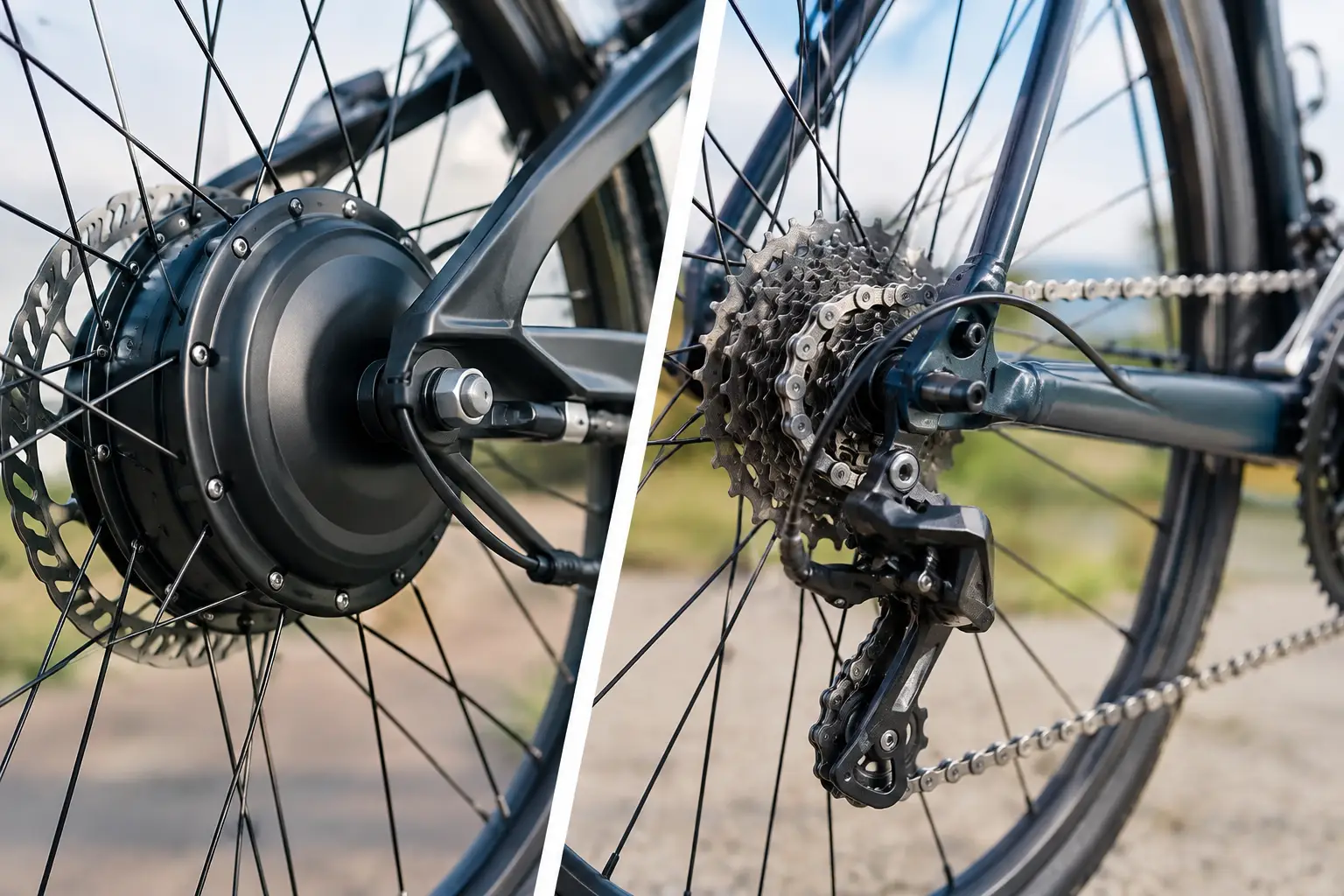
A silent electric motorcycle can hide a great deal of engineering beneath its classic lines. The hub motor vs chain drive question is not merely about where the power comes from. It shapes the way a bike launches from a light, moves through a corner, wears over time, and looks when parked outside your favorite coffee shop.
For urban riders, the right answer is rarely the loudest or most complicated one. It is the system that makes every mile feel composed, immediate, and true to the kind of motorcycle you want to ride.
Hub Motor vs Chain Drive: The Essential Difference
A hub motor sits inside the rear wheel. It drives the wheel directly, with no external chain, sprockets, or belt required. The design is visually clean and mechanically simple from the rider’s perspective: twist the throttle, and the motor delivers torque straight to the pavement.
A chain-drive electric motorcycle places the motor closer to the center of the chassis and sends power to the rear wheel through a chain and sprockets. On many electric motorcycles, this still means a single-speed setup. There is no clutch to work and no gearbox to shift through, but the chain creates a reduction ratio between motor and wheel.
Both arrangements can deliver the instant response electric riders expect. Their differences show up in the details: weight distribution, maintenance, low-speed behavior, styling freedom, and the kind of road feel a rider values.
The Hub Motor Appeal: Clean, Quiet, and Direct
A hub motor makes a strong case for urban riding because it removes a series of traditional components. No chain needs lubrication. No sprockets need replacement. No exposed final-drive hardware interrupts the visual line of the bike.
That simplicity suits a motorcycle designed around restraint. A hub-drive bike can leave more visual space around the rear wheel, allowing the frame, fender, and classic silhouette to carry the design. For riders drawn to vintage proportions but unwilling to accept vintage maintenance, that matters.
There is a practical advantage, too. With fewer external moving parts, daily ownership can feel refreshingly uncomplicated. A rider commuting across town does not need to check chain slack after a wet weekend or clean road grit from the drivetrain. Routine attention shifts toward tires, brakes, suspension, and battery care.
Hub motors also deliver their torque with a distinctive directness. There is no chain lash or driveline movement to feel at the throttle. In stop-and-go traffic, that can make the motorcycle feel exceptionally smooth. The power arrives quietly, and the bike moves with the controlled confidence that makes electric riding addictive.
Where a Hub Motor Makes Compromises
The central trade-off is unsprung weight. Because the motor is part of the rear wheel assembly, more mass moves with the wheel over potholes, broken pavement, and expansion joints. Suspension has a harder job keeping a heavier wheel controlled when the surface gets rough.
On a smooth city street, this may be far less noticeable than it sounds. On uneven roads or during more aggressive cornering, a centrally mounted motor can offer suspension engineers greater freedom to tune the chassis for comfort and precision.
Heat management can also be a consideration. A motor housed within a wheel has less opportunity for airflow and is positioned close to the ground, where heat, dirt, and water are part of the daily environment. Modern hub systems are designed to manage these conditions, but sustained high-load riding can place different demands on them than it does on a centrally mounted motor.
This does not make hub drive a lesser choice. It simply makes it a focused one. It favors elegant packaging, low-maintenance ownership, and a refined experience over the mechanical theater of a conventional drivetrain.
Chain Drive: A More Traditional Performance Layout
Chain drive remains familiar for good reason. Moving the motor toward the center of the motorcycle concentrates weight lower and closer to the chassis. That can improve balance and reduce the mass carried by the rear wheel, helping suspension respond more precisely to imperfect pavement.
For riders who push harder through fast sweepers, carry a passenger often, or encounter rougher roads beyond the city grid, that layout can bring a tangible benefit. The rear wheel is lighter, the suspension has an easier task, and the motorcycle may feel more settled when the road loses its polish.
A chain reduction also lets engineers match motor speed to wheel speed with more flexibility. Electric motors are efficient across a broad range, but a carefully selected reduction ratio can sharpen acceleration, improve hill-climbing behavior, or support a targeted top speed. The rider still gets one clean, uninterrupted surge of power. The difference is in how the system is optimized beneath them.
There is an emotional side as well. An exposed chain, sprocket, and swingarm create a visual link to the motorcycles that came before electric power. For some riders, that mechanical honesty is part of the appeal. A chain-drive electric motorcycle can feel thoroughly modern without looking detached from motorcycling culture.
The Price of the Chain
A chain asks for care. It needs periodic cleaning, lubrication, and tension checks. It will wear, particularly in wet, dusty, or salty conditions, and eventually it will need replacement along with its sprockets. None of this is difficult for an engaged rider, but it is a real ownership task.
Chains also introduce a small amount of mechanical noise. On a gasoline motorcycle, it disappears beneath combustion and exhaust. On an electric motorcycle, where silence is part of the experience, the whir of a chain can become more noticeable. It is still discreet compared with an internal-combustion engine, but it is not the near-silent purity of direct hub drive.
There are also efficiency losses in any mechanical final drive. A well-maintained chain is highly efficient, so the real-world difference is often modest. Yet a direct-drive system eliminates that point of friction altogether. For city riders who value simplicity and low ongoing maintenance, the appeal is obvious.
Handling Is About More Than the Motor
It is tempting to treat hub drive as a commuter choice and chain drive as a performance choice. Reality is more nuanced. Battery placement, frame geometry, suspension calibration, wheel size, tire choice, and total motorcycle weight often have a greater influence on the ride than drivetrain layout alone.
A beautifully engineered hub-motor motorcycle can feel stable, quick, and composed in its intended environment. A poorly tuned chain-drive motorcycle will not become engaging simply because its motor sits in the frame. The system matters, but so does the way every component works together.
For an A1-class electric motorcycle used primarily in the city, immediate torque, manageable weight, and predictable control usually matter more than chasing track-day specifications. The best bike is the one that feels natural filtering through traffic, carving around a roundabout, and rolling up to a destination with presence rather than noise.
Which Setup Fits Your Ride?
Choose a hub motor if you prioritize low maintenance, visual purity, quiet operation, and effortless city use. It is a compelling answer for riders who want their motorcycle to feel like a finished object, not a weekend service project. Its direct, self-contained design aligns naturally with the clean confidence of electric power.
Choose chain drive if you value central weight distribution, want a more conventional motorcycle layout, or regularly ride roads where suspension response matters. It is also a persuasive choice for riders who enjoy the visible mechanics of a performance-oriented machine and do not mind giving the drivetrain occasional attention.
Neither setup is automatically superior. A hub motor is not a shortcut, and a chain is not a badge of seriousness. They are two engineering responses to the same goal: turning battery power into a ride that feels alive.
RGNT Motorcycles approaches that question through a distinctly modern-classic lens: timeless form, electric response, and technology that serves the ride rather than shouting about itself. The strongest drivetrain choice is the one that supports that same clarity of purpose.
When you are deciding, look beyond the spec sheet. Think about the streets you ride, the maintenance you are willing to do, and the feeling you want when the light turns green. The right motorcycle should not ask you to admire its engineering from a distance. It should make you want to take the long way home.
-
Motorcycle Finance Comparison Without the Noise
A motorcycle should make the city feel wider, not make your monthly budget feel tighter. A smart motorcycle finance comparison starts with more than the number on the payment screen. It asks what that payment costs over time, how it fits your riding life, and whether the bike still feels like yours long after the first silent pull away from a red light.
For riders choosing a premium electric motorcycle, the decision has another dimension. You are not simply financing transportation. You are choosing design, immediate torque, low-maintenance ownership, and a different relationship with the street. The right financing structure should support that choice without hiding its real cost behind an attractive monthly figure.
Start With the Total Cost, Not the Monthly Payment
A low monthly payment can be useful, but it is never the whole story. Lenders can reduce the payment by stretching the loan over more months. That may protect short-term cash flow, yet it usually increases the total interest paid and can keep you in debt longer than you intend.
When comparing offers, put the out-the-door motorcycle price beside the amount financed, the loan term, the annual percentage rate (APR), and the total of all payments. The out-the-door price matters because taxes, registration, documentation charges, delivery, and any financed accessories can move the final figure well beyond the advertised vehicle price.
APR deserves special attention. It reflects the yearly cost of borrowing, including certain lender fees, and gives you a clearer basis for comparing loans than an interest rate alone. Two offers with similar payments can have very different APRs and total costs.
A longer term is not automatically wrong. It can be a sensible choice if it leaves room for rent, savings, insurance, and the rest of life. But choose it deliberately. A premium motorcycle is built to be enjoyed, not to become an obligation that limits every other plan.
Motorcycle Finance Comparison: Four Numbers to Put Side by Side
A clean comparison begins when every lender is measured against the same four numbers: APR, term, down payment, and total repayment. Get pre-approval or a written quote where possible, then compare like with like. A 48-month offer and a 72-month offer are not competing on equal terms, even when their monthly payments look close.
APR and credit profile
Your credit profile has a direct effect on your rate. Strong credit can open access to lower APRs, while a thinner or rebuilding credit history may mean a higher rate or a larger required down payment. Checking your credit report before applying gives you time to correct errors and understand what lenders will see.
Avoid submitting applications everywhere at once. Rate-shopping within a focused period may be treated differently by credit scoring models than applications spread over months, but lender practices vary. Ask each provider whether it uses a hard inquiry and how long its rate quote is valid.
Loan term and flexibility
Shorter terms generally mean higher monthly payments but less total interest. Longer terms lower the payment, which can make a carefully chosen motorcycle accessible without draining your cash reserves. The better choice depends on your income stability, savings, and how long you plan to keep the bike.
Read the early-payoff terms. A loan without a prepayment penalty lets you select a manageable term, then make additional principal payments when your budget allows. That flexibility can be worth more than a slightly lower payment alone.
Down payment and equity
A meaningful down payment reduces the amount you borrow, often lowers your monthly payment, and may improve the rate you receive. It also helps you build equity from day one. That matters if your plans change and you decide to sell or trade the motorcycle before the loan ends.
There is a balance. Do not empty an emergency fund just to create the largest possible down payment. Keeping cash for insurance deductibles, gear, charging needs, or the ordinary surprises of city life can be the more confident move.
Fees and add-ons
Ask for a full itemization. Some costs are legitimate parts of a purchase, but others are optional products that may be folded into the loan with little discussion. Extended coverage, theft products, service plans, and accessories each deserve their own decision. Financing an add-on means paying interest on it too.
If a quote is vague, ask for the exact amount financed and the total payment amount in writing. Clarity is not an extra. It is the standard.
Compare Financing Sources on More Than Rate
Dealer-arranged financing can be convenient, especially when it is integrated with the purchase process. A manufacturer or dealer may also offer promotional terms that a bank cannot match. Convenience, however, is not a reason to skip comparison. Request the full terms and place them next to an offer from your bank or credit union.
Banks can work well for riders who already have a strong relationship and want a predictable process. Credit unions are often worth considering because they may offer competitive rates and more personal underwriting. Online lenders can provide speed and broad availability, though fees, eligibility rules, and customer service standards differ widely.
The best lender is not always the one with the lowest advertised rate. A slightly higher APR with no prepayment penalty, transparent fees, and a term that protects your monthly budget may be the better ownership experience. Style is personal. The math should be exact.
Account for Electric Motorcycle Ownership
Financing is only one line in the ownership picture. Electric motorcycles can change the economics of riding through lower routine maintenance needs and lower energy costs than gasoline, depending on local electricity and fuel prices. There is no oil to change, no exhaust system to maintain, and fewer moving parts in the drivetrain.
Those savings are real, but they should not be treated as guaranteed income. Tire wear, insurance, registration, protective gear, storage, and charging arrangements remain part of ownership. Insurance quotes can vary materially by rider profile, location, coverage limits, and motorcycle value, so obtain one before finalizing a loan.
Also consider how and where you charge. Home charging may be the simplest path for many riders, while apartment living can require more planning. Public charging availability, parking access, and your daily mileage all shape the practical value of the machine.
For an urban rider, the point is not merely spending less at the pump. It is leaving with a full charge, moving through traffic with instant torque, and arriving without the mechanical noise that has defined motorcycling for decades. Classic lines, electric heart – that distinction is worth understanding in both emotional and financial terms.
Keep the Purchase Clean
Before you sign, make sure the contract matches the quote you approved. Verify the vehicle price, APR, term, monthly payment, total of payments, due date, fees, and any optional products. If a figure has changed, stop and ask why. Pressure belongs on the pavement, not at the signing table.
A premium bike should feel considered at every stage. RGNT Motorcycles is built around that same idea: hand-built Scandinavian character, modern electric performance, and a ride with nothing to prove through noise. Financing should carry the same restraint.
The strongest choice is the one that leaves you room to ride. Choose a payment you can make comfortably, a term you understand completely, and a motorcycle that still turns your head when it is waiting at the curb.
-
A Rider’s Guide to Electric Motorcycle Insurance
The first silent pull away from a city light changes the equation. Your motorcycle is not simply a commuter tool or a weekend accessory. It is a carefully chosen expression of taste, technology, and freedom. This guide to electric motorcycle insurance helps you protect that choice without paying for coverage that does not fit the way you actually ride.
Electric motorcycles are insured much like gas-powered bikes, but their value profile is different. The battery, control electronics, specialized repairs, and replacement-part availability can all shape a policy and a claim. The right coverage respects the details behind classic lines and an electric heart.
A Guide to Electric Motorcycle Insurance That Fits Your Ride
In most states, motorcycle liability insurance is mandatory before you can register and legally ride. Liability pays for injuries or property damage you cause to others in a covered accident. It does not pay to repair your own motorcycle.
That distinction matters. A low-cost policy built around state minimums may get you legal, but it can leave a premium electric motorcycle almost entirely exposed after a crash, theft, or vandalism claim. State requirements are a starting line, not a measure of adequate protection.
The policy you need depends on where you live, whether you finance the bike, where it is parked, and how often it is ridden. A rider who covers a few calm miles across town has a different risk profile from someone who rides daily through dense traffic, parks curbside, and takes fast weekend routes beyond the city.
Liability: protect what happens beyond the bike
Liability coverage is usually written as three numbers, such as 50/100/25. Those figures generally represent the maximum paid for bodily injury per person, bodily injury per accident, and property damage per accident, expressed in thousands of dollars.
Higher limits cost more, but the gap is often smaller than riders expect. In a serious collision, medical bills and modern vehicle repairs can climb quickly. If your assets, income, or future earnings matter to you, higher liability limits are worth considering. The quietest ride still deserves a serious safety net.
Collision and comprehensive: protect the motorcycle itself
Collision coverage pays for damage to your motorcycle after an impact with another vehicle or object, subject to your deductible. If a delivery van clips your parked bike, or a wet painted line catches you at low speed, collision is the coverage that addresses your repair bill.
Comprehensive coverage handles many non-collision losses: theft, vandalism, fire, weather damage, falling objects, and often animal strikes. For urban riders, this can be essential. Street parking, shared garages, and overnight storage create risks that are not tied to how skillfully you ride.
If you finance or lease your motorcycle, the lender will commonly require both collision and comprehensive coverage. Even without a lender, dropping them only makes sense if you could comfortably replace the motorcycle from your own funds. For a hand-built, limited-batch machine, that is not a casual decision.
Uninsured and underinsured motorist coverage: protect yourself from someone else’s shortfall
Not every driver carries enough insurance. Some carry none at all. Uninsured and underinsured motorist coverage can help with your injuries, and in some states damage to your bike, when the at-fault driver has inadequate coverage.
The rules vary by state, so read the policy language rather than assuming every insurer handles this coverage the same way. Medical payments coverage, or personal injury protection where available, may also help with medical expenses regardless of fault. Health insurance remains central, but these motorcycle-policy options can close costly gaps.
Why Electric Motorcycle Coverage Needs a Closer Look
An electric motorcycle is not just a gas bike with fewer moving parts. Its drivetrain has fewer routine service items, yet it concentrates a meaningful share of the vehicle’s value in the battery pack, motor, onboard charger, software, and control systems.
Ask an insurer how it evaluates battery damage after a collision. A superficial impact does not always mean a simple cosmetic repair, and a damaged high-voltage component may require inspection by a qualified technician. The insurer should be prepared to authorize proper diagnostics, not treat the bike as a generic small motorcycle.
Parts sourcing matters, too. A premium model may use specific bodywork, display components, or electrical hardware that cannot be substituted without affecting fit, finish, or function. Confirm whether the policy pays for original equipment manufacturer parts, aftermarket parts, or parts of like kind and quality. The answer can influence both the repair result and the time your motorcycle spends off the road.
If you ride an RGNT motorcycle, or another design-led electric model, make sure the declared vehicle identification number, trim, and value are correct on the quote. A mistaken classification can create friction when it is time to make a claim. Keep purchase documents, photos, records of approved accessories, and any valuation information in a safe place.
The Details That Change Your Premium
Insurance pricing is personal, but several factors appear on nearly every quote. Your location is one of the largest. A bike kept in a dense urban ZIP code may cost more to insure than the same bike stored in a locked suburban garage because theft frequency, traffic density, repair costs, and claim history differ.
Your riding record and prior claims matter, as do age, experience, annual mileage, coverage limits, and deductible. A higher deductible can reduce your premium, but it shifts more of the financial hit back to you after a loss. Choose a deductible you could pay without turning an already frustrating incident into a financial stall.
Storage and security can also affect your rate or eligibility. A locked garage, monitored parking area, disc lock, alarm, or approved tracking device may be viewed favorably by some carriers. Do not assume a modification earns a discount. Ask before you buy it, and keep receipts.
Accessories deserve a direct conversation. A custom seat, upgraded mirrors, luggage, riding camera, security hardware, or premium helmet may not be fully covered under the standard policy limit. Some policies include a small amount of accessory coverage; others require you to schedule higher-value equipment. If an item would sting to replace, make sure it is accounted for in writing.
How to Compare Quotes Without Chasing the Cheapest Number
A quote comparison only works when each quote has the same foundation. Use the same liability limits, medical coverage, comprehensive and collision deductibles, annual mileage, and listed accessories. Otherwise, the lowest price may simply be the thinnest policy.
When speaking with an insurer or agent, ask clear questions about electric-specific repairs. Can the shop of your choice perform the work? Is towing available if the motorcycle is disabled? Does the policy cover transport to a qualified electric motorcycle repair facility if local options are limited? Are original manufacturer parts available when they are necessary for a safe, correct repair?
Also ask about actual cash value versus agreed value. Most standard policies settle a total loss based on actual cash value, which reflects depreciation and local market data. An agreed-value policy, when available, sets a value upfront under defined conditions. It can be appealing for a distinctive motorcycle, but it may cost more and may require documentation. Neither is automatically better. The useful choice is the one that reflects your bike’s real replacement situation.
Rental reimbursement is another practical detail. It may be worthwhile for a daily commuter, though finding a comparable electric motorcycle rental is not guaranteed. Some riders would rather put that premium toward stronger liability limits or a lower deductible. That is a fair trade-off if you have another way to get around.
Charging, Storage, and the Fine Print
Home charging is generally part of ordinary ownership, not a separate motorcycle insurance category. Still, safe charging habits protect both your bike and your claim history. Use properly installed equipment, follow the manufacturer’s instructions, avoid damaged cables, and keep charging areas dry and clear of clutter.
Your homeowners or renters policy may respond differently to damage involving your residence, charger, or personal property than your motorcycle policy does. The two policies should work alongside each other, but they are not interchangeable. If you rent a garage space or live in a multi-unit building, check the rules around charging and storage before assuming coverage applies exactly as it would in a detached home garage.
Seasonal storage can be another opportunity to reassess coverage. Some riders reduce certain protections when the bike is off the road, but keeping comprehensive coverage is often wise. Theft, fire, and weather do not pause for winter. Before changing anything, confirm whether your state, lender, or insurer has restrictions on laying up a policy.
Make the Policy Part of the Ownership Experience
The best insurance policy is rarely the one with the smallest monthly payment. It is the one that lets you ride with clarity: meaningful liability limits, protection for the motorcycle’s real value, a deductible you can handle, and a claims process that understands what an electric machine requires.
Review your policy once a year and after any meaningful change – a move, a new parking arrangement, a financed purchase, a major accessory, or a shift from occasional rides to daily commuting. Then put the documents away, charge up, and leave the noise behind. Protection should sit quietly in the background, just like the best kind of performance.
-
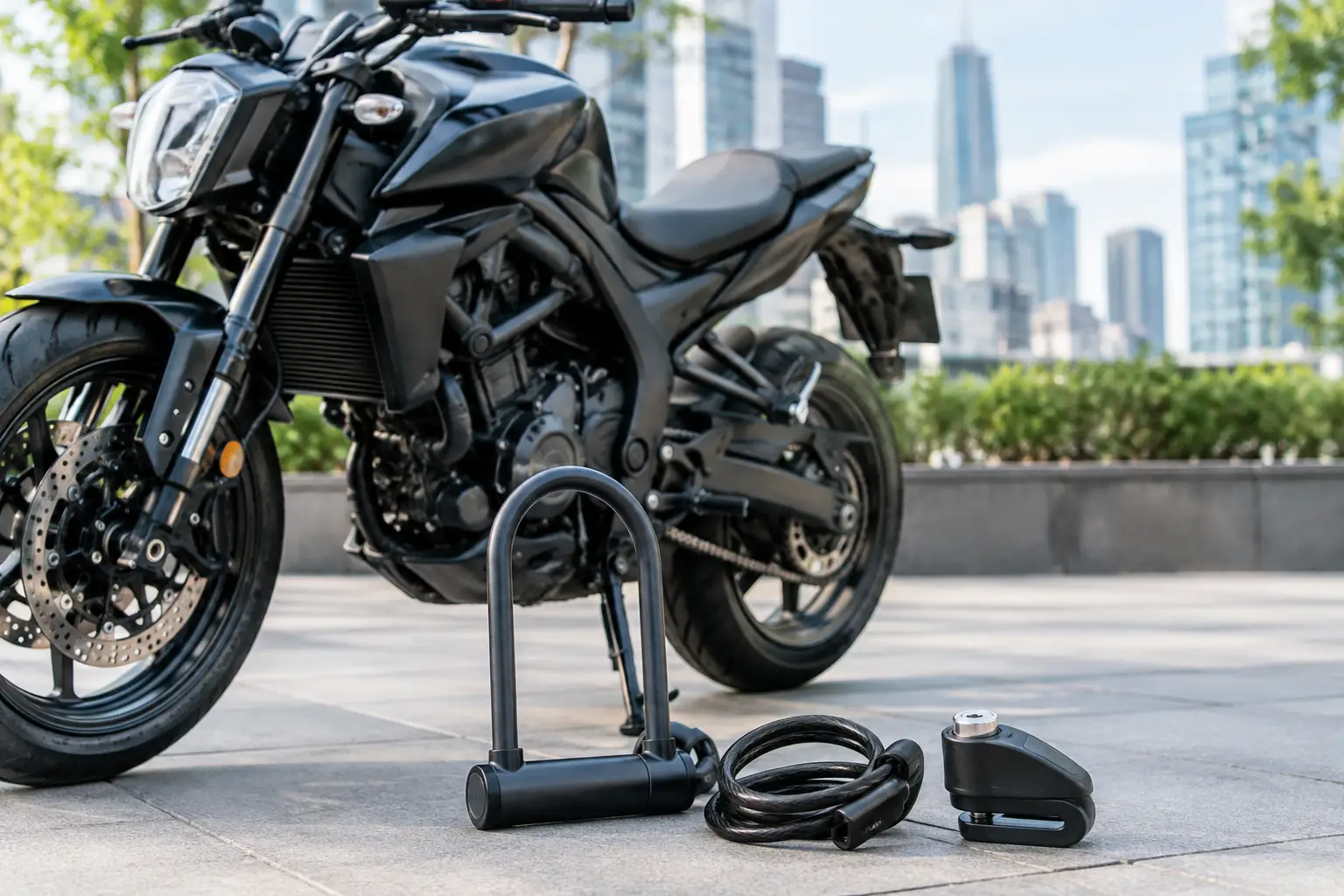
Best Motorcycle Anti Theft Devices for Urban Riders
A beautiful motorcycle parked on a city street draws the right kind of attention until it draws the wrong kind. The best motorcycle anti theft devices do not rely on one dramatic deterrent. They make a thief spend time, make noise, use more tools, and take more risk. That is usually enough to send them looking elsewhere.
For a design-led electric motorcycle, security should protect the ride without turning every departure into a ritual of heavy chains, flashing alarms, and cluttered accessories. The right setup is discreet, considered, and hard to defeat. Like the machine itself.
What the Best Motorcycle Anti Theft Devices Actually Do
No lock makes a motorcycle impossible to steal. A determined thief with time, privacy, and power tools can defeat nearly any physical barrier. The goal is to change the equation: increase the difficulty of moving the bike, increase the chance of being noticed, and preserve a way to recover it if the worst happens.
Think in layers. A visible device creates hesitation. A hardened lock resists attack. An anchor prevents a lift-and-load theft. A tracker gives you a location after the event. Each layer addresses a different weakness, which is why a modest combination is often stronger than one expensive gadget.
Your parking routine matters as much as the product. A bike left overnight on a quiet curb needs a different approach than one stored in a secured garage or ridden to a busy office district. Urban riders should prioritize portability during the day and serious immobilization at home.
Start With a Serious Disc Lock
A disc lock is often the easiest security upgrade to carry every day. It prevents the wheel from rotating, making a quick ride-away theft impossible. Models with an integrated motion alarm add a sharp audible warning when the bike is moved or disturbed.
Choose a lock made from hardened steel, with a quality locking cylinder and a pin sized for your brake disc. Measure the holes in the disc before buying. A lock that does not fit properly is not security, it is dead weight in your bag.
An alarmed disc lock is especially useful for street parking because it announces interference early. But it has limits. The alarm may be ignored on a loud street, and a disc lock alone does not stop two people from lifting the motorcycle into a van. Use it as a daily first layer, not your entire plan.
A bright reminder cable from the lock to the handlebar is worth using. It is not elegant, but neither is dropping your bike after trying to ride away with the lock still fitted.
Choose a chain when the bike will be left for hours
For longer stops, a hardened chain and closed-shackle padlock offer a meaningful step up. The chain should be thick enough to resist hand tools and difficult to hold steady for an angle grinder. More importantly, it should secure the motorcycle to something immovable.
Pass the chain through a solid part of the frame or swingarm where possible, rather than only through a wheel. A wheel can be removed. Avoid looping a chain around a component that can be unbolted or cut more easily than the chain itself.
The trade-off is obvious: real chains are heavy. That makes them impractical for some commutes, but excellent for overnight parking. Keep one at home or work rather than carrying it everywhere. A purpose-built chain bag or floor stand can keep it from marking the motorcycle’s finish.
A Ground Anchor Is the Home Advantage
A high-quality lock is only as good as what it is locked to. At home, a floor or wall anchor turns your chain into a far more serious obstacle. Installed into concrete with tamper-resistant fixings, it prevents the simple lift-and-load theft that defeats disc locks and steering locks.
For garage parking, position the anchor so the chain remains off the floor as much as possible. A chain lying flat can give a thief a stable surface for cutting. Keep it tight, elevated, and awkward to attack.
Renters should check their lease before drilling into a garage floor or wall. If permanent installation is not possible, seek a secure structural point, such as a substantial steel post, but inspect it carefully. Decorative railings, lightweight fencing, and many bicycle racks are not worthy partners for a premium motorcycle lock.
A covered, locked parking space is valuable, but it is not a substitute for an anchor. Privacy can give thieves more time to work. The quieter the setting, the more physical resistance your setup should provide.
GPS Trackers Add a Recovery Layer
A GPS tracker cannot prevent theft, but it can turn a disappearance into a location. That distinction matters. Recovery is never guaranteed, and riders should not attempt to confront thieves themselves, but a tracker gives law enforcement and insurers more to work with than a last known parking spot.
Look for a compact unit with reliable cellular coverage, a backup battery, motion alerts, and geofencing. Geofencing lets you create a virtual boundary around your home, workplace, or regular parking area. If the motorcycle moves beyond it, you receive an alert.
Most worthwhile trackers require a subscription. That ongoing cost is part of the ownership decision, along with battery life and app quality. A tracker that is difficult to charge, frequently disconnected, or buried in notifications will not help when it matters.
Placement is equally important. Do not hide it in the first obvious place a thief would check. A professional installer can place a hardwired unit discreetly without compromising weather protection or service access. On an electric motorcycle, avoid improvised wiring. Have any electrical installation approved or completed by a qualified technician, especially near high-voltage systems.
Alarms and Immobilizers: Useful, Not Magical
A standalone alarm can deter casual interference, particularly in a garage or outside a window. Tilt sensors and vibration sensors react when a bike is moved, while a siren draws attention. The weakness is alarm fatigue. In dense cities, many people hear an alarm and assume it is someone else’s problem.
An immobilizer is more meaningful because it prevents the motorcycle from powering on without the correct key, fob, or authorization. Factory security systems are generally preferable to poorly installed aftermarket electronics. They are integrated with the motorcycle rather than added as another potential point of failure.
For electric motorcycles, this is particularly relevant. The silent, immediate response that makes electric riding so satisfying should remain controlled by secure authentication. Choose solutions that do not introduce parasitic battery drain or interfere with charging routines. A motorcycle that will not start after a week away is not protected if it cannot be ridden.
RGNT riders should treat any accessory installation with the same care given to the bike’s hand-built details: clean fitment, qualified work, and no shortcuts behind the panels.
Do Not Underestimate Visible Deterrence
A motorcycle cover is not a lock, but it changes the theft calculation. It conceals the make, accessories, and exact lock setup. It also adds one more awkward, time-consuming task before a thief can assess the bike.
Use a cover that fits closely enough not to flap in the wind, and avoid advertising the motorcycle model across it. At night, park in a well-lit, visible area with natural foot traffic when possible. A camera-facing spot can help, though cameras alone are rarely a deterrent unless someone is actively monitoring them.
Steering locks, parking near larger vehicles, and removing a portable battery where applicable can add friction. None should be treated as a primary defense, but security is often decided by accumulated inconvenience. Thieves prefer easy work.
Build the Right Setup for Where You Park
For a brief daytime stop, an alarmed disc lock and thoughtful parking location are a practical baseline. If you regularly leave the bike outside for several hours, add a portable chain attached to a fixed object where available and use a tracker for recovery support.
For overnight home storage, the strongest balance is a ground anchor, hardened chain, disc lock, tracker, and cover. That may sound excessive until you compare it with the disruption of losing a motorcycle that is part transport, part personal statement, and part escape route.
Notify your insurer about approved security equipment and retain receipts, serial numbers, photos, and tracker details. These records can support a claim and help identify a recovered motorcycle. Check your coverage before assuming accessories or custom parts are included.
The best setup is the one you will use every time. Choose devices with real resistance, make them part of your arrival routine, and let your motorcycle remain what it should be: classic lines, electric heart, and yours to ride when the city wakes up.
-
Do Electric Motorcycles Need Oil? The Real Answer
A gas motorcycle’s oil change is a familiar ritual: warm engine, drain pan, fresh filter, clean oil. An electric motorcycle changes that picture completely. So, do electric motorcycles need oil? Not engine oil, because there is no internal-combustion engine to lubricate. But that does not mean an electric bike is maintenance-free, or that every fluid has disappeared.
The better answer is this: electric motorcycles eliminate the messiest, most frequent oil service while retaining a small number of components that still need attention. That is part of the appeal. More time riding through the city in near silence, less time dealing with hot engine oil and scheduled filter changes.
Do Electric Motorcycles Need Oil for Their Motor?
No. An electric motorcycle motor does not need engine oil in the way a gasoline engine does.
A conventional motorcycle engine has pistons, valves, cams, crankshafts, clutch plates, and gears moving at high speed inside a hot metal case. Engine oil cools, cleans, and lubricates those parts. It is essential, and it eventually breaks down. That is why gas bikes need regular oil and filter changes.
An electric motor works differently. It uses electromagnetic force to turn the motor shaft. There are far fewer moving parts, and the motor’s critical bearings are generally sealed and designed for a long service life. No combustion means no fuel dilution, no soot buildup, no oil filter, and no routine engine-oil change on the maintenance calendar.
That difference is more than a technical footnote. It changes ownership. A quiet electric motorcycle removes one of the most recurring jobs associated with traditional motorcycling without sacrificing the direct connection between rider, throttle, and road.
Where Lubricants Still Matter
Electric power does not mean friction disappears. It simply moves the maintenance conversation away from the engine.
Many electric motorcycles use a reduction drive to translate the motor’s high rotational speed into usable wheel speed. Depending on the engineering, that system may contain gear oil or use sealed, lifetime-lubricated components. Some designs also use a chain or belt final drive. A chain needs cleaning, adjustment, and lubrication; a belt usually requires less routine attention but still needs periodic inspection for wear and correct tension.
The exact answer depends on the motorcycle. Do not assume that an electric bike needs gear oil because a gas bike does, and do not assume it never needs lubricant because it runs on a battery. The owner’s manual is the final word on service intervals, lubricant type, and inspection points.
There are other fluids worth remembering, too. Hydraulic brakes use brake fluid, and conventional telescopic forks contain fork oil. If an electric motorcycle uses liquid cooling for its motor, controller, or battery system, it may also have coolant that requires inspection or replacement at specified intervals. These are not engine-oil services, but they are still part of caring for a performance machine.
The Maintenance You Trade Oil Changes For
The low-maintenance promise of electric riding is real, but it should never be confused with neglect. Electric motorcycles still ask for a rider who pays attention to the fundamentals.
Tires matter even more than many new riders expect. Instant electric torque can be addictive, and tire pressure has a direct effect on grip, range, handling, and wear. Check pressures regularly, especially when temperatures shift. Inspect tread and sidewalls before longer rides, and replace tires based on condition rather than waiting for a vague feeling that they are “probably fine.”
Brakes deserve the same respect. Regenerative braking can reduce how often the friction brakes are used, particularly in stop-and-go urban riding. Yet pads, rotors, calipers, and brake fluid still need inspection. In fact, lightly used brakes can sometimes develop surface corrosion or sticky components if they are ignored. Regeneration is a useful partner, not a substitute for a properly maintained braking system.
Suspension is another area where premium feel is preserved through care. Fork seals, fork oil, rear shock hardware, steering bearings, and suspension fasteners all benefit from scheduled checks. The bike may be silent, but chassis feedback remains loud and clear. A motorcycle that feels planted, composed, and precise is one that has been looked after.
Finally, there is the electrical side. Keep charging connectors clean and dry, inspect visible cables for damage, and follow the manufacturer’s charging and storage guidance. The battery pack and power electronics are sophisticated systems, but the rider’s role is mostly straightforward: charge intelligently, avoid obvious damage, and use qualified service support when a warning light or unusual behavior appears.
Chain Drive Versus Belt Drive
If your electric motorcycle has a chain, it is likely the closest thing to the old-school lubrication ritual you will keep. Road grit, rain, and city dust wear away at chain lubricant. Clean and lube it at the interval specified for your riding conditions, then check slack and alignment. A neglected chain can become noisy, inefficient, and expensive surprisingly quickly.
A belt drive makes a strong case for riders who want a cleaner, quieter routine. There is no chain lube flinging onto the rear wheel, and regular cleaning is simpler. The trade-off is that belts need to be kept free of stones and debris, and they should be inspected for cracking, damage, and proper tension. Neither system is universally better. The right choice comes down to design priorities, riding conditions, and the character of the motorcycle.
Why No Engine Oil Changes Matter
Skipping engine oil is not just about saving money on a bottle of lubricant. It removes a category of ownership friction.
There is no oil level to check before a ride. No filter to source. No used oil to dispose of responsibly. No concern about an engine sitting through a cold season with contaminated oil inside it. For urban riders with limited garage space, tight schedules, and a preference for riding over wrenching, that simplicity has real value.
It also helps electric motorcycles make sense as daily machines. The traditional maintenance schedule of a combustion bike can be rewarding for riders who love mechanical rituals. But for others, it is a barrier. Electric power keeps the physicality and freedom of motorcycling while making routine ownership cleaner and more direct.
That said, fewer service items do not automatically mean lower costs in every situation. Tires, brake parts, suspension service, software diagnostics, and specialized electrical repairs can still carry meaningful costs. High-voltage systems should never be opened or repaired casually at home. The smart approach is simple: enjoy the reduced routine maintenance, then use trained technicians for the work that requires specialized tools or knowledge.
A Simple Electric Motorcycle Care Rhythm
Before rides, glance over the tires, brakes, lights, and any visible damage. Every few weeks, check tire pressures and inspect the final drive. At the manufacturer’s scheduled service intervals, have the brake system, suspension, chassis hardware, and electrical systems evaluated.
Riders who commute through rain, ride near the coast, or encounter salted winter roads should inspect more frequently. Water and road salt do not care whether a motorcycle is powered by gasoline or electrons. Clean the bike carefully, dry exposed metal, and give extra attention to the chain if your model has one.
For long-term storage, follow the battery manufacturer’s recommended state of charge rather than leaving the bike fully charged or fully depleted for months. Store it in a dry place, protect it from extreme temperatures where possible, and keep tires off cold concrete or move the motorcycle periodically. Small habits protect the parts that still work hard, even when the motor itself asks for very little.
RGNT motorcycles represent the appeal clearly: classic lines, an electric heart, and less mechanical noise between you and the ride. The goal is not to erase motorcycle character. It is to remove the maintenance that does not add to it.
A well-kept electric motorcycle will not ask you for an oil change. It will ask you to stay present: listen for new sounds, feel for changes in handling, keep the tires right, and respect the systems that deliver that silent, immediate pull. That is a fair trade for more miles with your hands on the bars and your attention on the road.