
Your cart is currently empty!
Hub Motor vs Chain Drive: Which Is Right?
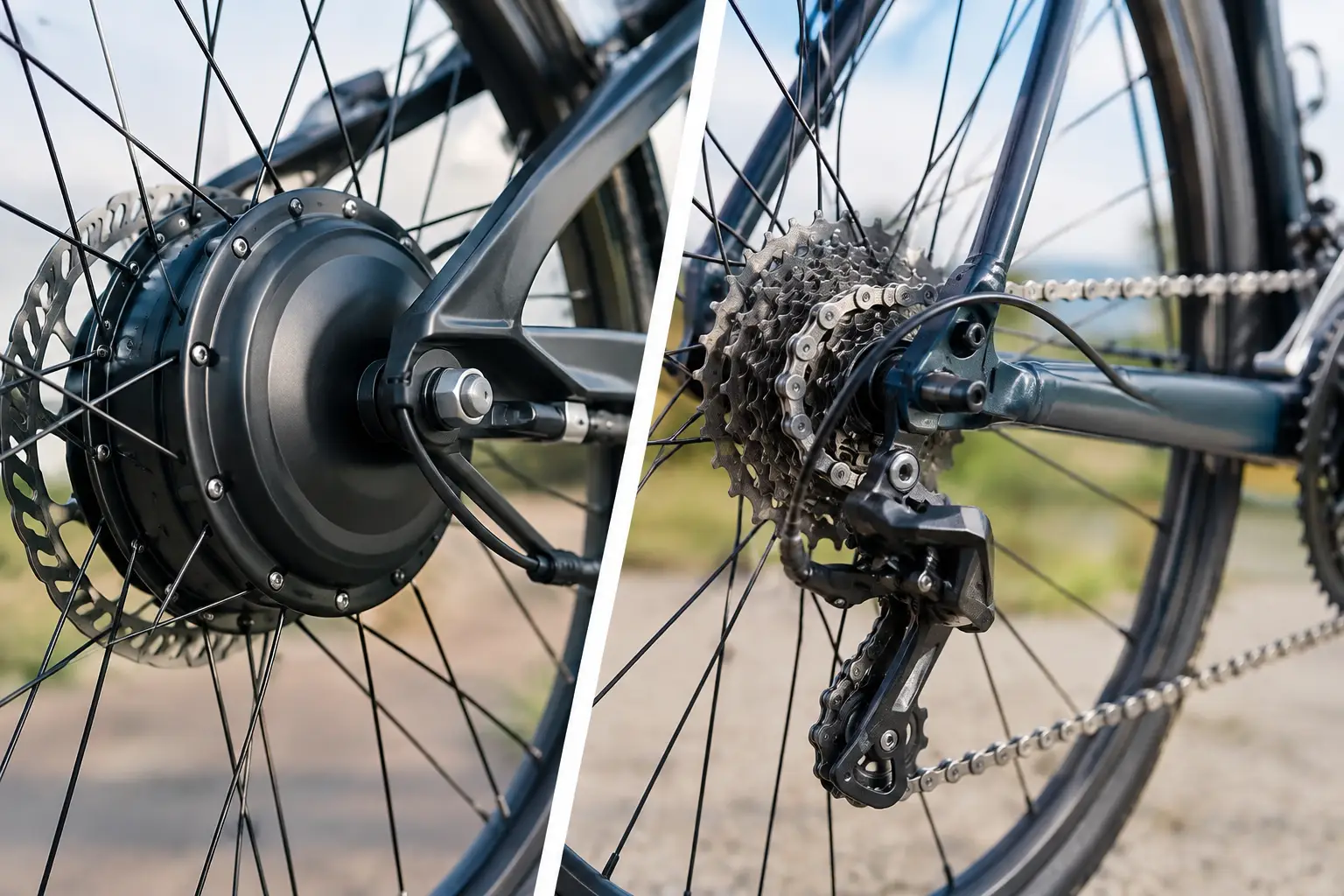
A silent electric motorcycle can hide a great deal of engineering beneath its classic lines. The hub motor vs chain drive question is not merely about where the power comes from. It shapes the way a bike launches from a light, moves through a corner, wears over time, and looks when parked outside your favorite coffee shop.
For urban riders, the right answer is rarely the loudest or most complicated one. It is the system that makes every mile feel composed, immediate, and true to the kind of motorcycle you want to ride.
Hub Motor vs Chain Drive: The Essential Difference
A hub motor sits inside the rear wheel. It drives the wheel directly, with no external chain, sprockets, or belt required. The design is visually clean and mechanically simple from the rider’s perspective: twist the throttle, and the motor delivers torque straight to the pavement.
A chain-drive electric motorcycle places the motor closer to the center of the chassis and sends power to the rear wheel through a chain and sprockets. On many electric motorcycles, this still means a single-speed setup. There is no clutch to work and no gearbox to shift through, but the chain creates a reduction ratio between motor and wheel.
Both arrangements can deliver the instant response electric riders expect. Their differences show up in the details: weight distribution, maintenance, low-speed behavior, styling freedom, and the kind of road feel a rider values.
The Hub Motor Appeal: Clean, Quiet, and Direct
A hub motor makes a strong case for urban riding because it removes a series of traditional components. No chain needs lubrication. No sprockets need replacement. No exposed final-drive hardware interrupts the visual line of the bike.
That simplicity suits a motorcycle designed around restraint. A hub-drive bike can leave more visual space around the rear wheel, allowing the frame, fender, and classic silhouette to carry the design. For riders drawn to vintage proportions but unwilling to accept vintage maintenance, that matters.
There is a practical advantage, too. With fewer external moving parts, daily ownership can feel refreshingly uncomplicated. A rider commuting across town does not need to check chain slack after a wet weekend or clean road grit from the drivetrain. Routine attention shifts toward tires, brakes, suspension, and battery care.
Hub motors also deliver their torque with a distinctive directness. There is no chain lash or driveline movement to feel at the throttle. In stop-and-go traffic, that can make the motorcycle feel exceptionally smooth. The power arrives quietly, and the bike moves with the controlled confidence that makes electric riding addictive.
Where a Hub Motor Makes Compromises
The central trade-off is unsprung weight. Because the motor is part of the rear wheel assembly, more mass moves with the wheel over potholes, broken pavement, and expansion joints. Suspension has a harder job keeping a heavier wheel controlled when the surface gets rough.
On a smooth city street, this may be far less noticeable than it sounds. On uneven roads or during more aggressive cornering, a centrally mounted motor can offer suspension engineers greater freedom to tune the chassis for comfort and precision.
Heat management can also be a consideration. A motor housed within a wheel has less opportunity for airflow and is positioned close to the ground, where heat, dirt, and water are part of the daily environment. Modern hub systems are designed to manage these conditions, but sustained high-load riding can place different demands on them than it does on a centrally mounted motor.
This does not make hub drive a lesser choice. It simply makes it a focused one. It favors elegant packaging, low-maintenance ownership, and a refined experience over the mechanical theater of a conventional drivetrain.
Chain Drive: A More Traditional Performance Layout
Chain drive remains familiar for good reason. Moving the motor toward the center of the motorcycle concentrates weight lower and closer to the chassis. That can improve balance and reduce the mass carried by the rear wheel, helping suspension respond more precisely to imperfect pavement.
For riders who push harder through fast sweepers, carry a passenger often, or encounter rougher roads beyond the city grid, that layout can bring a tangible benefit. The rear wheel is lighter, the suspension has an easier task, and the motorcycle may feel more settled when the road loses its polish.
A chain reduction also lets engineers match motor speed to wheel speed with more flexibility. Electric motors are efficient across a broad range, but a carefully selected reduction ratio can sharpen acceleration, improve hill-climbing behavior, or support a targeted top speed. The rider still gets one clean, uninterrupted surge of power. The difference is in how the system is optimized beneath them.
There is an emotional side as well. An exposed chain, sprocket, and swingarm create a visual link to the motorcycles that came before electric power. For some riders, that mechanical honesty is part of the appeal. A chain-drive electric motorcycle can feel thoroughly modern without looking detached from motorcycling culture.
The Price of the Chain
A chain asks for care. It needs periodic cleaning, lubrication, and tension checks. It will wear, particularly in wet, dusty, or salty conditions, and eventually it will need replacement along with its sprockets. None of this is difficult for an engaged rider, but it is a real ownership task.
Chains also introduce a small amount of mechanical noise. On a gasoline motorcycle, it disappears beneath combustion and exhaust. On an electric motorcycle, where silence is part of the experience, the whir of a chain can become more noticeable. It is still discreet compared with an internal-combustion engine, but it is not the near-silent purity of direct hub drive.
There are also efficiency losses in any mechanical final drive. A well-maintained chain is highly efficient, so the real-world difference is often modest. Yet a direct-drive system eliminates that point of friction altogether. For city riders who value simplicity and low ongoing maintenance, the appeal is obvious.
Handling Is About More Than the Motor
It is tempting to treat hub drive as a commuter choice and chain drive as a performance choice. Reality is more nuanced. Battery placement, frame geometry, suspension calibration, wheel size, tire choice, and total motorcycle weight often have a greater influence on the ride than drivetrain layout alone.
A beautifully engineered hub-motor motorcycle can feel stable, quick, and composed in its intended environment. A poorly tuned chain-drive motorcycle will not become engaging simply because its motor sits in the frame. The system matters, but so does the way every component works together.
For an A1-class electric motorcycle used primarily in the city, immediate torque, manageable weight, and predictable control usually matter more than chasing track-day specifications. The best bike is the one that feels natural filtering through traffic, carving around a roundabout, and rolling up to a destination with presence rather than noise.
Which Setup Fits Your Ride?
Choose a hub motor if you prioritize low maintenance, visual purity, quiet operation, and effortless city use. It is a compelling answer for riders who want their motorcycle to feel like a finished object, not a weekend service project. Its direct, self-contained design aligns naturally with the clean confidence of electric power.
Choose chain drive if you value central weight distribution, want a more conventional motorcycle layout, or regularly ride roads where suspension response matters. It is also a persuasive choice for riders who enjoy the visible mechanics of a performance-oriented machine and do not mind giving the drivetrain occasional attention.
Neither setup is automatically superior. A hub motor is not a shortcut, and a chain is not a badge of seriousness. They are two engineering responses to the same goal: turning battery power into a ride that feels alive.
RGNT Motorcycles approaches that question through a distinctly modern-classic lens: timeless form, electric response, and technology that serves the ride rather than shouting about itself. The strongest drivetrain choice is the one that supports that same clarity of purpose.
When you are deciding, look beyond the spec sheet. Think about the streets you ride, the maintenance you are willing to do, and the feeling you want when the light turns green. The right motorcycle should not ask you to admire its engineering from a distance. It should make you want to take the long way home.