
Your cart is currently empty!
Motorcycle Battery Warranty Guide for EV Riders
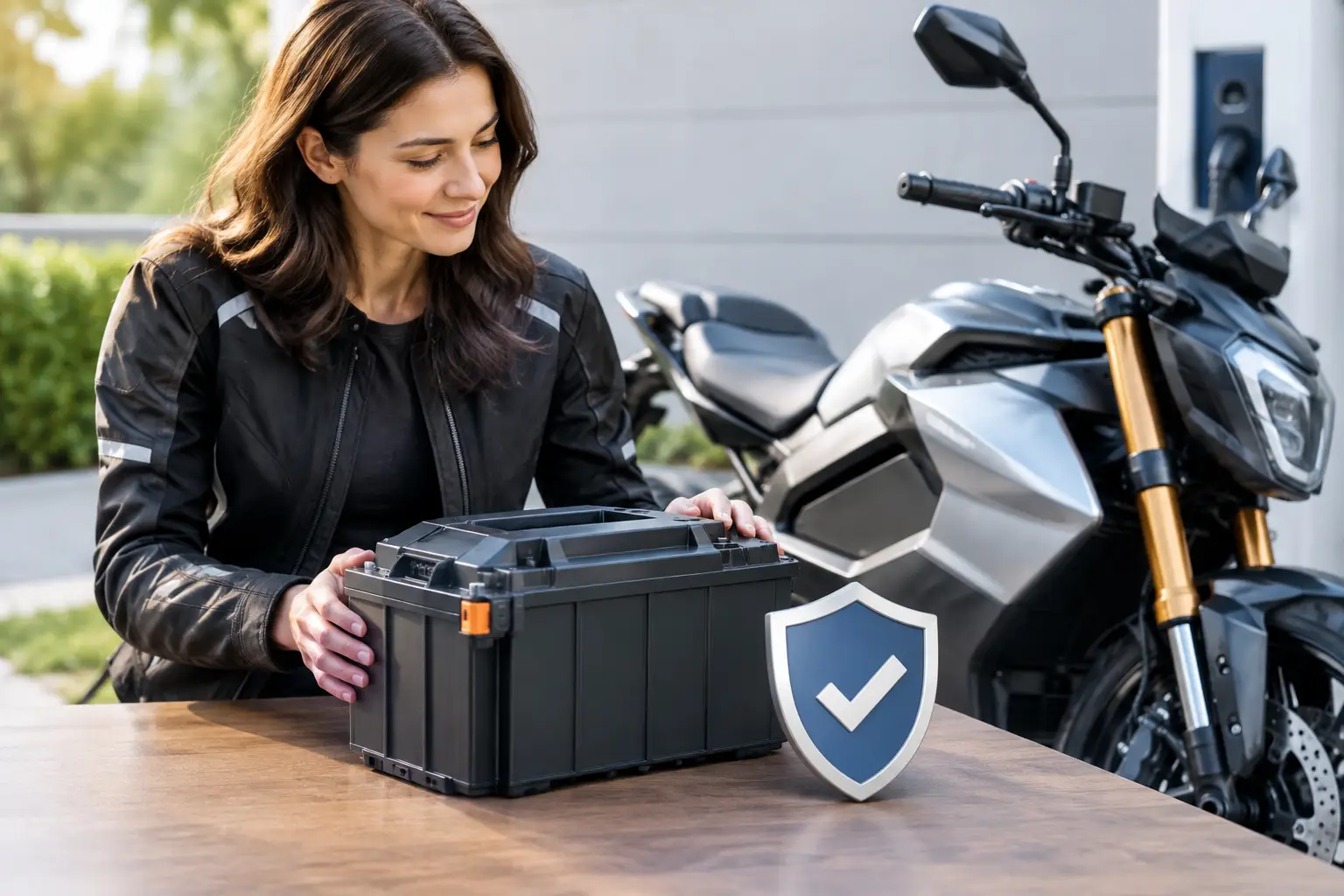
A battery warranty is not the glamorous part of choosing an electric motorcycle. The lines, the silence, the instant torque – those make the first impression. But a clear motorcycle battery warranty guide belongs in every serious rider’s decision process, because the traction battery is the heart of an electric bike and one of its most valuable components.
The right warranty does more than promise a repair if something fails. It tells you how a manufacturer stands behind its engineering, what ownership habits matter, and how confidently you can ride into the years ahead. For city riders who expect their motorcycle to be both a daily tool and a personal statement, that clarity is worth more than fine print.
What a motorcycle battery warranty actually covers
Start by separating the battery systems on an electric motorcycle. The large high-voltage traction battery powers the motor and determines usable range. A smaller 12-volt battery may support accessories, lighting, displays, or control systems. They are different parts with different jobs, and they may have different warranty terms.
A traction-battery warranty commonly addresses defects in materials or workmanship. In plain language, it is designed to cover a battery that fails because a cell, module, connection, battery-management system, or related component was built incorrectly or develops an unexpected fault under normal use.
That is not the same thing as a blanket promise that the battery will perform forever at its original capacity. Every rechargeable lithium-ion battery gradually loses some capacity over time. Heat, charging behavior, storage conditions, age, and mileage all play a role. A strong warranty should explain whether capacity loss is covered, how it is measured, and at what point it is considered abnormal.
Look for language around a capacity-retention threshold. Some manufacturers warrant against capacity dropping below a stated percentage during a stated period. Others cover functional failure but treat gradual range reduction as normal wear unless it is severe. Neither approach is automatically better. The key is knowing which promise is being made before the bike is in your garage.
The terms worth reading before you buy
Warranty length is usually the first number riders notice. It matters, but it is only one part of the picture. A longer term with broad exclusions can offer less real protection than a shorter, clearly defined warranty backed by accessible service.
Read the coverage period alongside the mileage limit, if one applies. For an urban commuter, mileage can accumulate faster than expected. A weekend rider may reach the calendar limit long before the odometer becomes relevant. The useful question is not simply, “How many years?” It is, “Will this cover how I genuinely ride?”
Also check when coverage begins. It may start on the retail delivery date, the original purchase date, or vehicle registration. Demo bikes, showroom bikes, and pre-owned motorcycles can have different start dates. If a warranty transfers to a new owner, find out whether a registration step, dealer inspection, or service record is required.
The most revealing section is often the definition of a covered repair. Does the manufacturer repair the faulty battery, replace a module, replace the full pack, or supply a refurbished equivalent? Is labor included? Are diagnostics, transport, and shipping covered when the motorcycle cannot be ridden? A battery may be technically covered, yet getting the bike to an authorized service location could still involve time and expense.
For a premium electric motorcycle, service competence matters as much as the wording. High-voltage systems require trained technicians, proper diagnostic equipment, and procedures that respect both safety and the motorcycle’s electrical architecture. A warranty has greater value when there is a credible path from problem report to professional resolution.
Battery capacity and real-world range are not identical
A capacity warranty is not a range warranty. Range changes with speed, rider weight, tire pressure, road surface, temperature, cargo, elevation, and riding style. Fast acceleration is one of the quiet pleasures of electric torque, but it uses energy differently than a measured ride through the city.
That distinction protects both rider and manufacturer from false expectations. If a battery test confirms normal capacity but winter temperatures reduce your range, that may not be a warranty issue. If range suddenly collapses in mild conditions and the battery-management system reports a fault, it deserves investigation.
Ask how capacity is tested. A meaningful process uses manufacturer-approved diagnostics and controlled criteria, rather than a single estimate from the display after one ride. The display is useful. It is not the final word on battery health.
What can void or limit battery coverage
Most exclusions are not traps. They are boundaries around risks the manufacturer cannot control. Still, riders should understand them before modifying a motorcycle or improvising a charging setup.
Common exclusions include crash damage, water intrusion caused by improper use, unauthorized repairs, altered wiring, misuse, commercial use beyond the warranty’s definition, and damage from non-approved charging equipment. Neglect can also matter. Leaving a motorcycle deeply discharged for an extended period, ignoring warning messages, or storing it in punishing conditions may affect a claim.
Modifications deserve particular care. Custom touches are part of motorcycle culture, and classic lines invite personal expression. But accessories that draw from the electrical system, aftermarket controllers, non-standard chargers, or changes to protective enclosures can create faults that are difficult to diagnose. They can also give a warranty provider legitimate reason to deny coverage if the modification contributed to the issue.
This does not mean every accessory voids an entire warranty. Usually, the relationship matters. A changed mirror has no meaningful connection to battery performance. An altered charging circuit might. Before making electrical changes, ask for written confirmation of what is approved and keep the answer with your vehicle records.
Care that protects the battery and your claim
Good battery care is understated ownership. It is not complicated, and it does not require treating your motorcycle like a museum piece. It means following the charging and storage guidance supplied for your specific model.
For everyday use, charge with the approved equipment and keep connectors clean, dry, and undamaged. Avoid repeated exposure to extreme heat where possible. If the motorcycle will sit for weeks or months, follow the manufacturer’s recommended state of charge and storage temperature. A battery left empty for too long can enter deep discharge, which may cause permanent damage.
Do not chase rigid charging folklore. Advice such as never charging to 100 percent or never using public charging can be too simplistic. Battery-management systems are designed around the motorcycle’s intended charging behavior. The better rule is to use the bike as designed, avoid unnecessary extremes, and follow the owner’s manual when your riding pattern changes.
Keep a simple record of service, software updates, warning lights, and unusual charging behavior. You do not need a spreadsheet for every ride. But if the bike begins charging slowly, loses charge unexpectedly, displays a fault, or behaves differently after an impact, document the date, mileage, temperature, and what happened. That turns a vague concern into useful diagnostic information.
How to make a battery warranty claim without friction
If you suspect a battery issue, stop trying to diagnose high-voltage components yourself. Photograph any dashboard messages, note the vehicle identification number and current mileage, and contact the manufacturer or authorized service point promptly. Continuing to ride with a warning can sometimes worsen a problem and may complicate the repair process.
Before handing over the motorcycle, gather the essentials:
- Proof of purchase and vehicle registration details
- Service and maintenance records, including software updates where available
- Photos or video of warning messages and charging behavior
- Details of the charger used, recent storage conditions, and any incident that may be relevant
Be direct and factual when describing the concern. “Range feels bad” is hard to test. “The motorcycle charged to 82 percent, displayed a battery fault, and lost 25 percent over six city miles at 65 degrees” gives a technician a starting point. Precision speeds up good service.
Ask what the diagnostic process involves, whether the bike is safe to ride, and what costs may apply if the issue is found to be outside warranty coverage. A reputable service team should explain the next step without theater or ambiguity.
A warranty is part of the ownership design
Electric motorcycles ask riders to think differently about the machine beneath them. There is less routine mechanical maintenance, but more software, thermal management, and energy storage working quietly in the background. That is not a compromise. It is a different kind of craftsmanship – classic lines, electric heart, and engineering that earns trust through miles rather than noise.
When comparing motorcycles, place the battery warranty beside performance, charging time, range, and finish quality. Read it while you are still excited about the bike, not after a warning light appears. Then ride with confidence, care for the machine with intention, and let the silent miles do what they do best.