
Your cart is currently empty!
Why Electric Motorcycles Lose Range on Real Rides
A range figure is a useful promise. Your ride is the reality. The reason why electric motorcycles lose range is rarely a fault or a mystery: it is physics meeting traffic lights, temperature swings, fast roads, steep streets, and the way you use the throttle. An electric motorcycle delivers its best feeling the moment you twist your wrist. That immediate torque is part of the appeal. It also means the conditions around every ride matter.
For city riders, this is not a reason to obsess over the battery gauge. It is a reason to understand it. Range is not a fixed distance stored inside the pack. It is the distance your particular ride asks the motorcycle to cover on a particular day.
Why electric motorcycles lose range at higher speeds
Air is the quiet thief of range. At urban speeds, an electric motorcycle moves through relatively modest aerodynamic resistance. Once the road opens up, that resistance rises sharply. Doubling speed does not simply double the effort needed to cut through the air. It demands substantially more power.
That is why a calm ride through city streets can return very different range than a sustained run at 65 mph or more. The motor is not becoming less capable. It is being asked to hold a higher output continuously, and the battery is supplying that energy without the pauses that stop-and-go riding can provide.
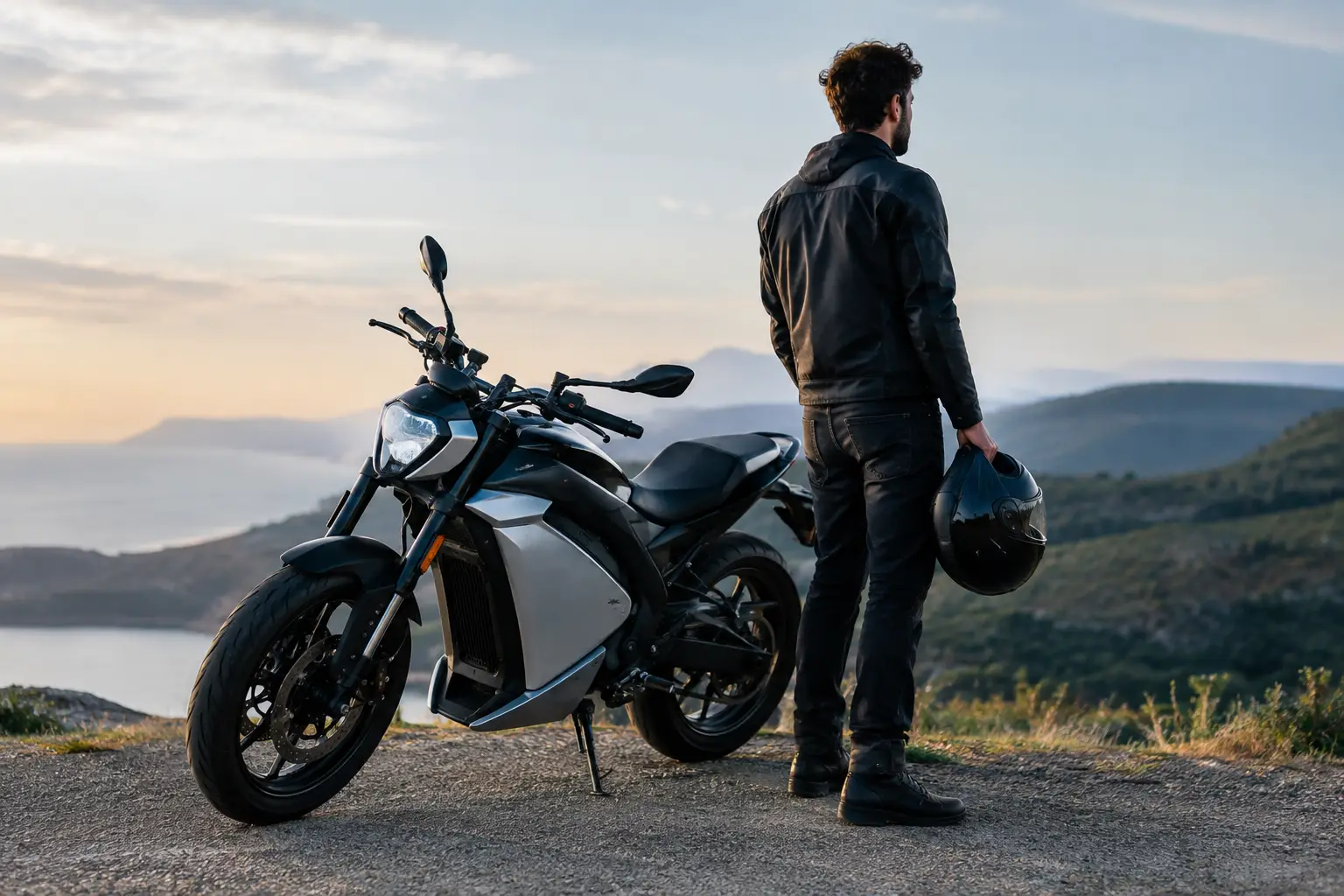
This is also where motorcycle design becomes personal. A rider sitting upright in a jacket, backpack, and open helmet creates more drag than a tucked rider behind a fairing. A retro-inspired, naked motorcycle makes a deliberate statement about riding position and presence. The trade-off is simple: classic lines meet more wind. On the right road, that is part of the experience. On a long high-speed commute, it belongs in the range calculation.
Acceleration has a cost, even when it feels effortless
Electric torque is addictive because it is immediate, silent, and clean. Hard launches draw high power from the battery. A few confident bursts will not erase half a charge, but repeated full-throttle acceleration between every light can noticeably raise energy use over a ride.
The smarter approach is not to ride timidly. It is to be intentional. Accelerate decisively when the gap calls for it, then let speed settle rather than constantly adding and shedding momentum. Smoothness looks good on a motorcycle and gives the battery less work to do.
Cold weather changes what the battery can deliver
Lithium-ion batteries prefer moderate temperatures. Cold conditions slow the chemical reactions inside their cells, reducing available energy and limiting how quickly power can move in and out of the pack. That is why an electric motorcycle that feels generous on a warm afternoon may show less range during a near-freezing morning commute.
Cold weather also creates a second demand: warming the battery to an efficient operating temperature. Depending on the motorcycle and its battery-management system, some energy may be used before the ride really begins. The result can be a lower estimated range, especially after the bike has been parked outside overnight.
Do not confuse a temporary cold-weather reduction with permanent battery loss. Once temperatures rise, much of that missing usable range returns. For riders who face winter regularly, parking in a garage when possible and charging after a ride can help keep the battery closer to a favorable temperature.
Heat deserves respect too. A hot battery does not always mean more range. High ambient temperatures, direct sun, and repeated rapid charging can put stress on the pack over time. Modern battery management is designed to protect the system, but protection may include limiting performance or charging speed when conditions are extreme.
Hills, cargo, and tire pressure add up
Gravity is honest. Climb a hill and the motorcycle must use energy to lift the combined weight of rider, bike, gear, and cargo. Descend that hill and regenerative braking may recover some energy, but never all of it. There are always losses in the system, and a descent cannot fully repay the energy spent climbing.
For riders in hilly cities, this means the first half of a route can be misleading. A battery percentage that drops quickly on a long ascent may level out once the road descends and regenerative braking has room to work. Regeneration is valuable, particularly in urban traffic, but it is not free range. Think of it as recovering a portion of energy that would otherwise become brake heat.
Extra weight has an effect as well, although it is usually smaller than the effect of speed. A passenger, loaded backpack, panniers, or a week’s worth of groceries all require more energy to get moving and to carry uphill. For most daily use, the difference is manageable. Combine that weight with cold weather, aggressive acceleration, and freeway speed, however, and the battery gauge will tell the full story.
Tire pressure is less glamorous but equally real. Underinflated tires increase rolling resistance, making the motor work harder mile after mile. Check pressure when the tires are cold, follow the motorcycle manufacturer’s recommendation, and inspect tires for wear or damage. It is one of the simplest range habits because it also supports handling, braking, and tire life.
The route can matter more than the distance
A 20-mile commute is not one thing. Twenty flat miles at a steady moderate pace, twenty miles of steep city blocks, and twenty miles of fast highway each place a different demand on the battery.
Traffic can work in either direction. Frequent stops require repeated acceleration, but slower average speeds reduce aerodynamic drag and create opportunities for regenerative braking. A congested highway may consume less energy than an empty one at high speed. On the other hand, crawling traffic in extreme heat can leave the motorcycle and rider with little airflow. Context matters.
Wind is another overlooked variable. A stiff headwind acts much like riding faster. You may see a meaningful drop in range on the outbound leg, then a welcome improvement on the way home. Crosswinds can have an effect too, especially for upright motorcycles and riders wearing loose clothing.
If your motorcycle provides ride modes, use them as part of your route planning rather than as a permanent identity. A more responsive mode suits a short, spirited ride. A calmer setting can be the right choice for a longer commute when charging at the destination is uncertain. The point is not to remove character from the ride. It is to choose where you want the motorcycle’s energy to go.
How to preserve electric motorcycle range without dulling the ride
Range-conscious riding should still feel like riding. Start with a properly charged battery, correct tire pressure, and a realistic view of weather and route. If a fast section is unavoidable, ease into your speed instead of treating every on-ramp like a starting grid. Hold a consistent pace where safe, look farther ahead, and use natural deceleration rather than rushing toward every red light.
Charge planning matters more than chasing the last possible mile. Leaving home with a buffer turns range from a source of tension into a quiet advantage. If you can charge at work, at home, or during an extended stop, the practical range of the motorcycle expands around your actual life.
Battery health benefits from a similarly composed approach. Follow the manufacturer’s charging guidance, avoid leaving the motorcycle at an extremely low state of charge for long periods, and give it sensible storage conditions when it will not be ridden for weeks. Daily charging habits vary by battery system, so the owner’s manual remains the authority.
A motorcycle such as an RGNT is built for the rhythm of the city: immediate response, silent movement, and enough style to make the route part of the occasion. Its range will still change with the road, because every electric motorcycle answers to the same physical laws. The difference lies in riding with enough awareness to make those laws work in your favor.
The best range estimate is the one you build from your own miles. Ride the commute, watch how weather and speed affect the battery, and learn the character of your usual routes. Soon, the gauge becomes less of a question mark and more of a familiar instrument – one more detail in a ride that feels entirely your own.