
Your cart is currently empty!
Do Electric Motorcycles Need Maintenance? Yes.
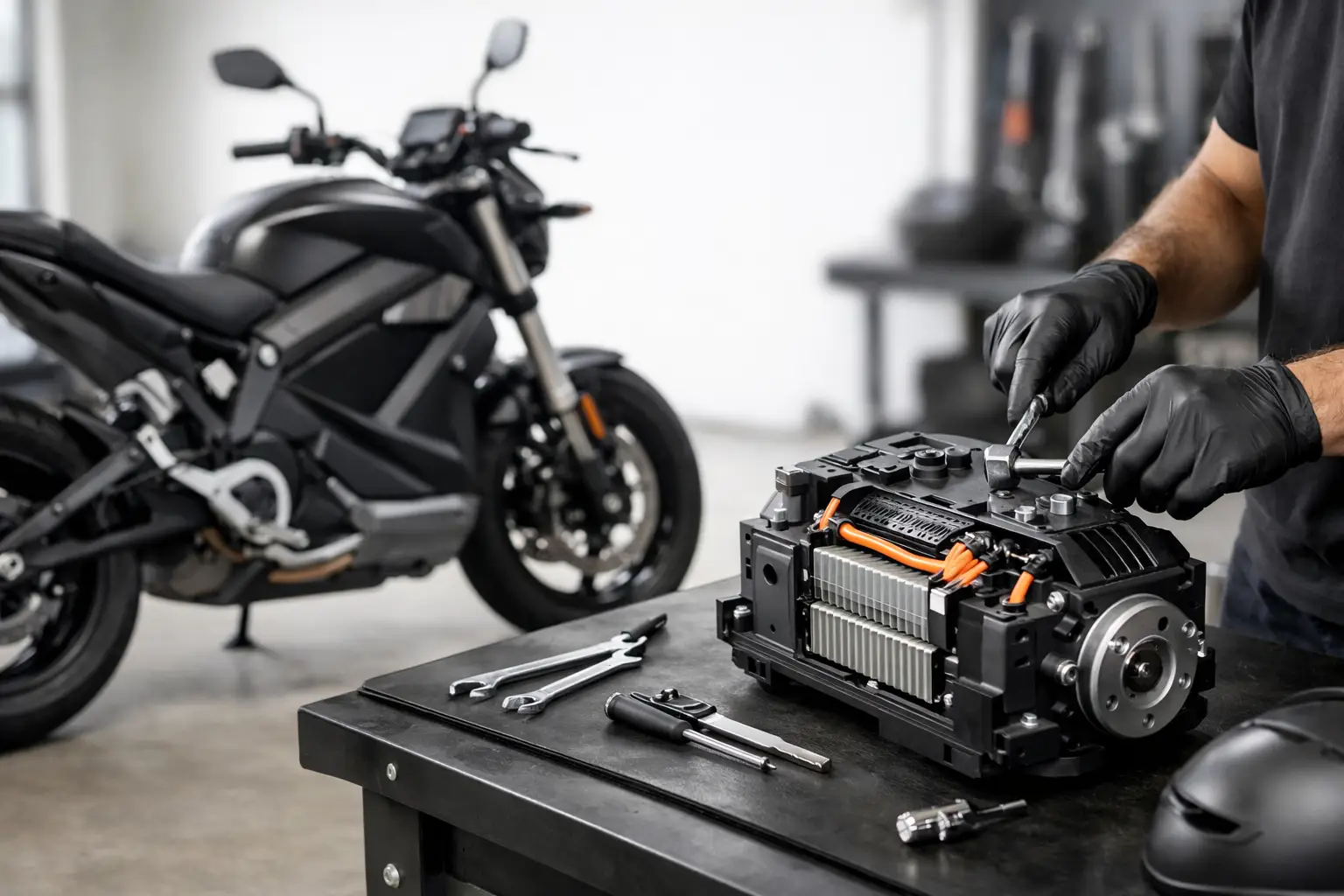
The short answer: less maintenance, not no maintenance
Do electric motorcycles need maintenance? Absolutely. They simply trade the messy, frequent rituals of combustion for a smaller set of checks that protect safety, performance, and the long life of the bike.
There is no oil filter to change, no spark plugs to foul, no valves to adjust, and no exhaust system to corrode. That is a meaningful shift, especially for riders who would rather spend a Saturday riding than stripping panels off a conventional engine. But silent power still meets rough pavement, rain, heat, potholes, and time. Tires wear. Brake fluid ages. Fasteners need inspection. A battery deserves intelligent care.
Think of electric motorcycle maintenance as ownership with less noise – in every sense. The work is lighter, but it is not optional.
What an electric motorcycle does not need
A gas motorcycle has hundreds of moving engine parts working under heat, pressure, and vibration. Its routine maintenance schedule is built around managing that complexity: engine oil and filters, air filters, fuel delivery, clutch wear, valve clearances, cooling-system service, and exhaust inspections.
An electric motor has dramatically fewer moving parts. Instant torque comes without combustion, and there is no gearbox demanding regular oil changes in the way riders expect from many traditional motorcycles. For an urban rider, that means fewer consumables, fewer workshop visits, and less chance that a neglected service item becomes a costly engine problem.
That lower workload is one reason electric ownership feels so composed. Start, ride, charge, repeat. Classic lines, electric heart.
The trade-off is that the remaining maintenance items matter even more. A quiet bike can make a worn tire or dragging brake easier to overlook because there is no engine soundtrack covering it up.
The maintenance electric motorcycles still need
Tires are still your contact with the road
Electric torque is immediate. It makes city riding responsive and addictive, but enthusiastic launches can wear a rear tire faster than a rider expects. Check tire pressure when the tires are cold, follow the pressure specification for your motorcycle, and inspect tread and sidewalls regularly.
Look for embedded debris, cuts, uneven wear, and cracking caused by age or sun exposure. A motorcycle with plenty of tread is not automatically road-ready if its tires are old and hardened. For a design-led machine built to move through the city with confidence, fresh rubber is not a detail. It is the foundation of the ride.
Brakes need attention, even with regenerative braking
Regenerative braking can reduce the use of the friction brakes, especially in stop-and-go traffic. That often means pads and rotors may last longer. It does not mean the braking system is maintenance-free.
In fact, lighter brake use can allow moisture, dirt, and surface corrosion to build up. Inspect pads, rotors, calipers, hoses, and lever feel. Brake fluid absorbs moisture over time and should be replaced according to the manufacturer’s service interval, regardless of how few miles you ride.
If you notice a soft lever, pulsing under braking, a grinding sound, or the bike pulling to one side, stop treating it as a minor annoyance. Brakes are a professional-service item when anything feels wrong.
Suspension, steering, and chassis checks keep the ride sharp
Road impacts do not care what powers the motorcycle. Fork seals can leak, suspension components can wear, steering-head bearings can develop play, and wheel bearings can loosen or become rough. Periodic inspections identify those issues before they change the handling.
Pay attention to changes in the ride: a front end that feels vague, a clunk over bumps, bouncing after a pothole, or a bike that no longer tracks cleanly through a corner. These are not traits of electric power. They are signals from the chassis.
Fasteners also deserve a scheduled check. Motorcycles live with vibration, thermal changes, and imperfect pavement. A qualified technician can inspect critical bolts, controls, footpegs, suspension mounts, and other safety-related hardware to the correct torque specifications.
The drive system depends on the bike
Electric motorcycles may use a belt, chain, or other final-drive arrangement. The service needs depend on the system fitted to your model.
A chain generally needs cleaning, lubrication, tension checks, and eventual replacement. A belt is cleaner and typically requires less regular attention, but it should still be inspected for damage, alignment, and correct tension. Never assume that “electric” means every drivetrain component can be ignored. Consult the owner’s manual for the correct inspection intervals and approved products.
Battery care is mostly about good habits
The traction battery is the center of an electric motorcycle, and it is engineered with monitoring and protection systems. Your role is not to service the high-voltage pack. Leave battery repairs, high-voltage cables, and internal electrical work to trained technicians.
Your role is simpler: charge thoughtfully, use approved equipment, and avoid extremes when possible. Plug in with dry, undamaged connectors. Keep the charge port clean and capped when not in use. If a cable is frayed, a connector is hot, or the motorcycle reports a charging fault, do not improvise a fix.
Battery longevity is influenced by heat, time spent at very high or very low charge, charging behavior, and storage conditions. The best routine depends on the motorcycle and its battery-management system, so follow the manufacturer’s guidance rather than treating one internet rule as universal. Daily riders may charge differently from a bike parked for a winter month.
For extended storage, do not simply leave the motorcycle forgotten in a cold garage or baking outside. Store it in a dry, moderate environment, maintain the recommended state of charge, and check it at the interval specified in the manual.
Software and electrical systems deserve a check-in
Modern electric motorcycles use software to manage power delivery, charging, displays, diagnostics, and sometimes connected features. Updates may improve functionality or address known issues, so include software checks in scheduled service.
Also inspect the practical electrical items: lights, turn signals, brake light, horn, display, switches, charging-port cover, and wiring visible around the chassis. A failed turn signal is not glamorous, but neither is explaining it after a close call in traffic.
A practical maintenance rhythm
A quick pre-ride glance takes less than a minute. Check tire condition, brake feel, lights, and the ground beneath the motorcycle for anything unusual. If the bike has been parked outdoors, look over the charge port and controls before setting off.
Every few weeks, or more often if you ride daily, check tire pressure and inspect the tires closely. Clean the motorcycle carefully, avoiding aggressive high-pressure spray around bearings, seals, connectors, and the charge port. Cleanliness is not just cosmetic. It makes leaks, loose hardware, and damage easier to spot.
At the service intervals set by the manufacturer, book a professional inspection. That appointment should cover the brakes, tires, suspension, steering, final drive, chassis hardware, charging system, diagnostic codes, and applicable software updates. Mileage matters, but so does time. A motorcycle that covers only a few miles each season still has aging brake fluid, tires, seals, and a battery that has been sitting.
When should you call a technician?
Do not wait for a scheduled service if the motorcycle changes character. Warning lights, reduced power, unusual charging behavior, a burning smell, fluid leaks, damaged cables, new vibration, or a sudden change in braking all deserve prompt attention.
The same goes for crash damage, even after a low-speed drop. A scraped cover may be cosmetic, but an impact can also affect a lever, wheel, fork, sensor, cable, or battery enclosure. High-voltage systems are not the place for trial-and-error repairs.
Lower maintenance is part of the appeal
Electric motorcycles do not erase ownership responsibilities. They remove much of the old burden and leave the parts that genuinely shape a safe, satisfying ride. Less time with oil, filters, fuel, and engine adjustments means more room for the reasons you chose a motorcycle in the first place: the line of the tank, the clean pull of torque, and the city opening up ahead.
Treat the essentials with care, keep the service schedule honest, and your electric motorcycle can stay as sharp as the first silent departure.