
Your cart is currently empty!
Guide to Electric Motorcycle Ownership Costs
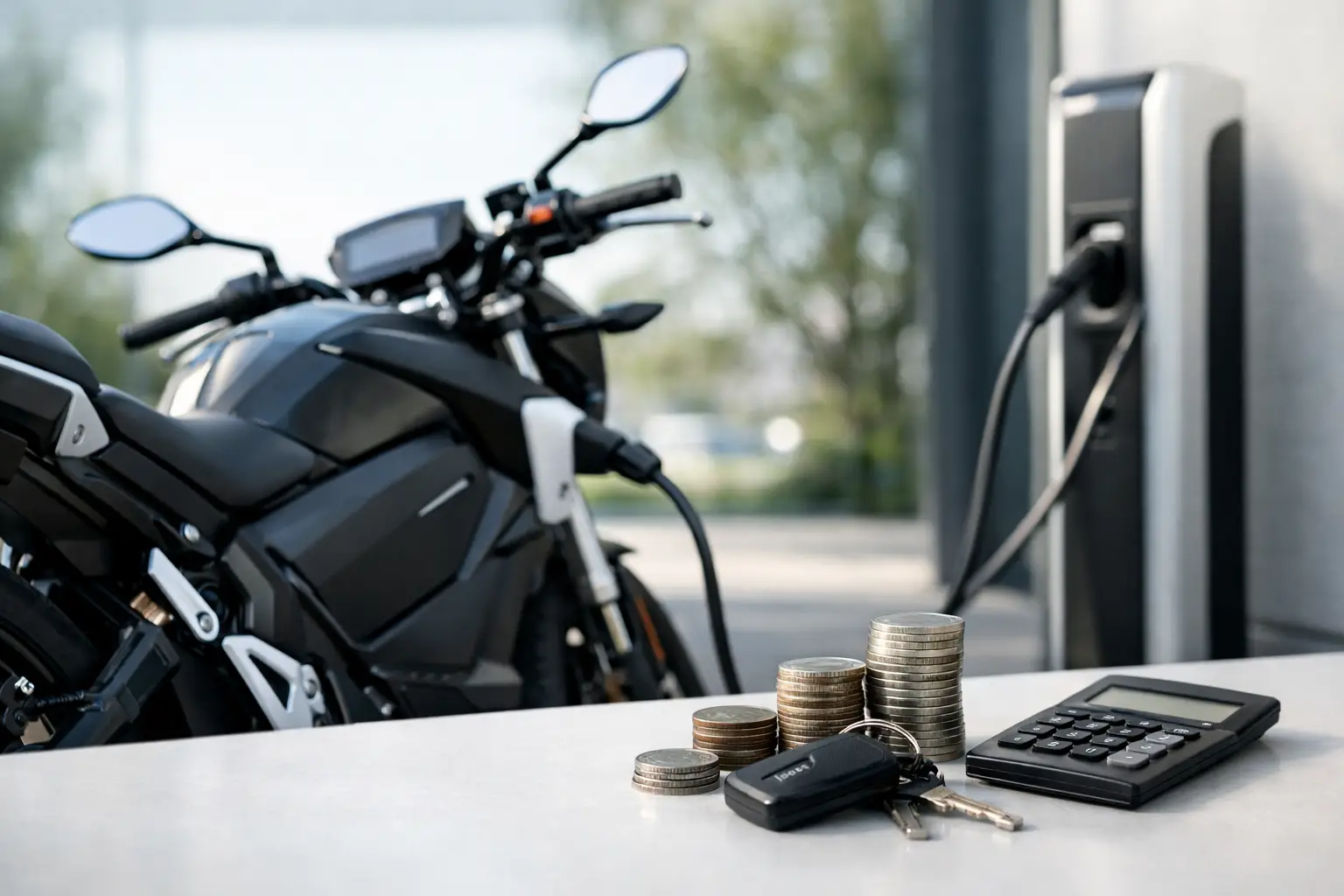
The price on the tag is only the first number. A proper guide to electric motorcycle ownership costs looks beyond the purchase moment – to the quiet charge at home, the insurance quote, the tires that meet the road, and the choices that shape what riding really costs over time. For city riders, an electric motorcycle can replace more expensive daily miles with something cleaner, sharper, and far more satisfying.
Start With the Real Purchase Price
The purchase price is the foundation, but it is not always the final amount paid before the bike reaches your garage. Sales tax, registration, title fees, documentation charges, destination costs, and optional accessories can materially change the out-the-door figure. The exact mix depends on your state, dealer arrangement, and whether you buy directly or through a retail partner.
For a premium electric motorcycle, also think about what is already included. A lower-priced machine may require upgrades to reach the finish, charging setup, security, or riding position you want. A hand-built motorcycle with strong component quality can cost more upfront while reducing the temptation to immediately replace the parts that define the experience.
Financing changes the monthly picture rather than the total cost disappearing. Compare the annual percentage rate, loan term, down payment, and any early repayment conditions. A longer term can make a premium bike feel more accessible each month, but interest adds up. The right structure leaves room in your budget for insurance, protective gear, and the occasional weekend ride that reminds you why you bought a motorcycle in the first place.
Charging Costs: Usually the Quiet Advantage
Electricity is where ownership can feel distinctly different from gasoline. Most riders do the majority of their charging at home, where electricity rates are usually more predictable and less expensive per mile than fuel. Your actual cost depends on local utility pricing, battery capacity, charging losses, and how often you ride.
A simple way to estimate it is to multiply your battery capacity in kilowatt-hours by your home electricity rate. If a full charge uses roughly 8 kWh from the wall and your electricity costs $0.18 per kWh, that charge costs about $1.44. Real-world charging draws slightly more energy than the battery stores, so leave a little margin rather than assuming laboratory-perfect efficiency.
Annual mileage matters more than almost any other variable. A rider covering 2,000 urban miles will see a different savings profile than a commuter riding 7,000 miles a year. Stop-and-go city riding can favor electric power because there is no idling fuel burn, while aggressive acceleration, cold weather, steep climbs, and sustained highway speed will use more energy.
Public charging can add convenience, not always savings. Per-kWh pricing, session fees, parking charges, and membership plans vary widely. For most owners, public charging is best treated as a useful option for longer days, while home charging remains the financial center of ownership.
Home Charging Setup
Many electric motorcycles can charge from a standard household outlet. That keeps the initial setup simple, especially for riders with a secure garage or private parking space. If you want faster charging, a dedicated circuit or upgraded equipment may be worthwhile, but factor in electrician labor and local permitting.
Apartment living requires a more deliberate plan. Ask about outlet access, parking rules, billing, and whether the building intends to add shared charging. A motorcycle’s relatively modest battery can make the conversation easier than it is for a full-size electric car, but access is still more valuable than theoretical charging speed.
Insurance, Registration, and Taxes
Insurance is one of the least predictable electric motorcycle ownership costs. Your age, riding record, ZIP code, coverage limits, deductible, annual mileage, storage situation, and motorcycle value all influence the premium. Urban riders may pay more because of theft and collision exposure, while experienced riders with secure parking may see more favorable rates.
Get quotes before committing to a specific model. Make sure the insurer understands that the vehicle is an electric motorcycle, not a low-speed scooter or e-bike. Ask how the policy handles battery damage, charging equipment, accessories, roadside assistance, and replacement-value coverage. Those details matter when the motorcycle is both a daily machine and a design object worth protecting.
Registration and licensing depend on your state. Many electric motorcycles require the same motorcycle endorsement, registration process, and road-use compliance as their gasoline counterparts. Some states and municipalities offer EV incentives, reduced fees, or parking advantages, but policies change. Treat incentives as a welcome possibility, not a reason to stretch your budget.
Service Costs: Less Routine, Not Maintenance-Free
Electric power removes several familiar expenses. There are no oil changes, spark plugs, air filters, clutch adjustments, or exhaust-system repairs. That is a meaningful advantage for riders who want more time moving through the city and less time scheduling routine engine service.
But an electric motorcycle is still a motorcycle. Tires, brake pads, brake fluid, suspension checks, wheel bearings, steering components, chain or belt care where applicable, and general inspections remain part of responsible ownership. Immediate torque can be addictive, and a rider who uses it often may reach the tire shop sooner than expected.
Premium machines deserve proper attention. Follow the manufacturer’s service schedule, keep software current when applicable, and use technicians familiar with high-voltage systems. A well-maintained motorcycle protects safety, resale value, and the composed feel that separates a considered ride from a merely functional one.
The Battery Question
The battery is the major long-term component riders rightly think about. Its life is shaped by age, charge cycles, heat exposure, storage habits, and charging behavior. Warranty coverage should be read carefully before purchase: look at the term, capacity-retention language, exclusions, and what support looks like in your market.
You do not need to obsess over every percentage point. For most riders, the sensible approach is simple: avoid leaving the motorcycle fully depleted for long periods, follow the storage guidance for winter, and protect it from extreme heat where possible. Modern battery management systems are designed to help, but good ownership habits still matter.
Do Not Forget the Costs Around the Motorcycle
The most overlooked expenses are often the ones that make ownership easy and secure. A helmet, jacket, gloves, pants, boots, lock, cover, and security solution can add a substantial amount, particularly if you choose gear with genuine protective credentials. This is not the category to reduce to an afterthought.
If you commute, include luggage or a practical carrying solution in the budget. If you park outside, think about a weatherproof cover, a ground anchor where permitted, and theft protection. If you store the bike for winter, account for a clean, dry space and the small amount of preparation required to keep it ready for spring.
There is also the value of your time. An electric motorcycle can simplify the weekly routine: no fuel-station detours, fewer consumables, and a silent departure that does not announce itself to the block. That convenience is hard to place in a spreadsheet, yet it is part of the ownership equation.
A Guide to Electric Motorcycle Ownership Costs Over Five Years
The most useful calculation is not a single monthly payment. It is a five-year ownership view that includes purchase price, financing interest if applicable, insurance, registration, electricity, service, tires, gear, accessories, and expected resale value. Subtracting resale value at the end gives you a clearer sense of what the motorcycle truly cost to own.
Your result will depend on how you ride. A low-mileage weekend rider may spend more on insurance and depreciation than on electricity. A daily commuter may see the value shift toward reduced fuel and routine service costs. A rider who keeps a motorcycle for many years may place more weight on build quality, battery warranty, parts support, and timeless design than on the lowest possible entry price.
That is where a motorcycle such as an RGNT earns its place in the conversation. The appeal is not simply that electric power can lower running costs. It is that classic lines, an electric heart, and Swedish craftsmanship can make every necessary mile feel chosen.
Buy the motorcycle that fits your roads, your charging reality, and your style of riding. Then budget for the parts of ownership that protect the experience. The best cost calculation leaves you with a machine you still want to see waiting outside after the numbers are done.