
Your cart is currently empty!
How to Finance an Electric Motorcycle
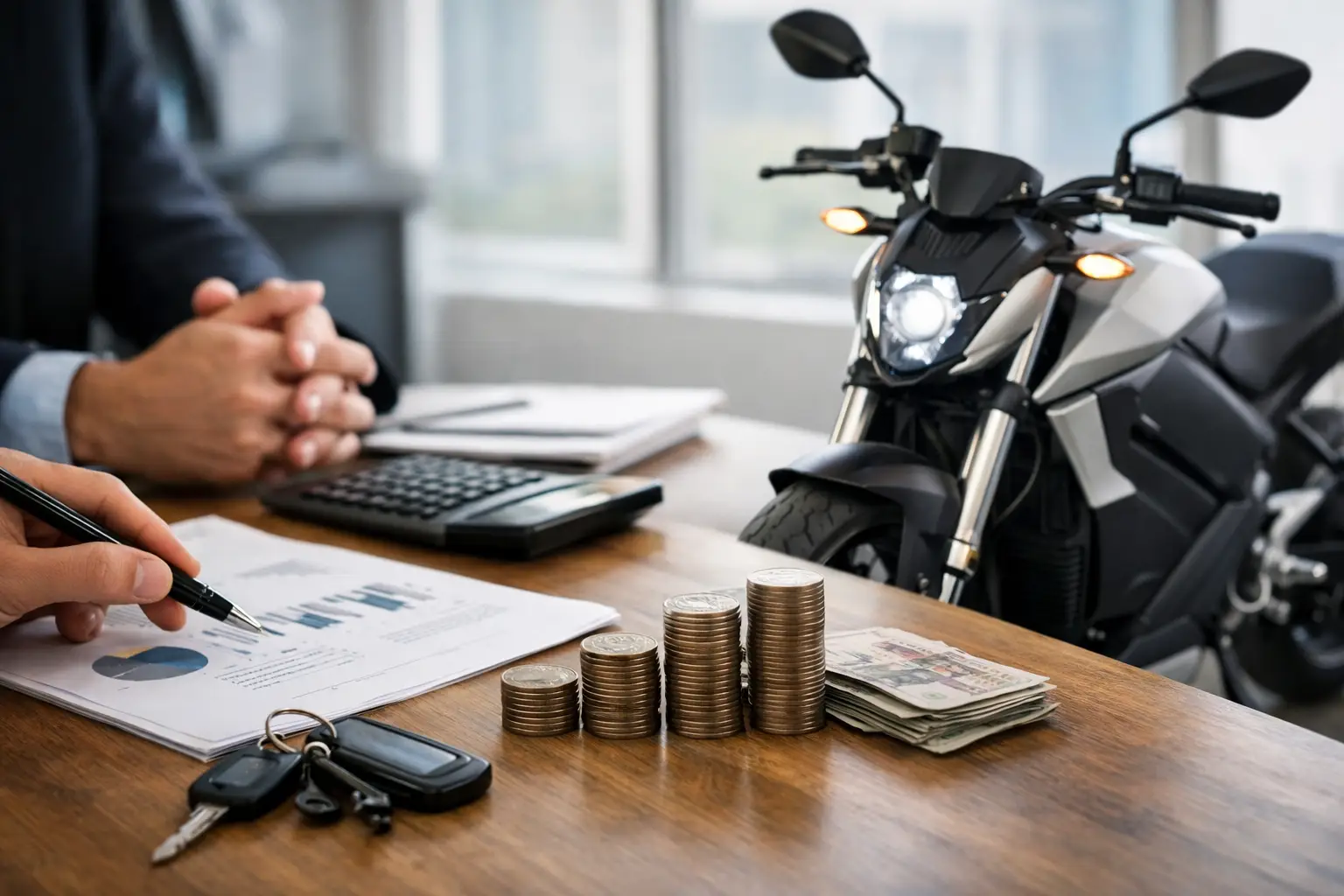
The price tag gets your attention. The monthly payment decides whether the bike actually ends up in your garage.
That is the real question behind how to finance an electric motorcycle. Not just whether you can get approved, but whether the numbers support the way you want to ride. A premium electric bike is part commuting tool, part design object, part identity. Finance it badly, and the ownership experience feels tight from day one. Finance it well, and the bike fits your life as cleanly as it fits the road.
How to finance an electric motorcycle without guessing
Most buyers have three realistic paths: dealer financing, a motorcycle loan through a bank or credit union, or paying with cash and avoiding financing altogether. Cash is simple, but it is not always the smartest move. If tying up that much money limits your flexibility, financing can make more sense, especially if you can secure a competitive rate and keep your monthly cost aligned with your actual budget.
Dealer financing is often the most convenient option. The process is streamlined, approval can be fast, and promotional terms may be available depending on the brand, the market, and your credit profile. Convenience matters, but it should not replace comparison. A polished checkout experience can still hide a higher APR, extra fees, or a longer loan term that costs more over time.
Banks and credit unions usually offer a more traditional route. If you already have a strong relationship with your lender, this can be a smart place to start. Credit unions in particular can be competitive on rates, though some are more conservative about newer vehicle categories like electric motorcycles. You may need to confirm that the lender treats the bike as a motorcycle rather than a powersports outlier.
Personal loans are another possibility, but they tend to carry higher interest rates than secured vehicle loans. They can work if the bike or seller does not fit a lender’s standard vehicle criteria, yet the trade-off is usually cost. For most buyers, a dedicated motorcycle loan is the cleaner move.
What lenders actually look at
Lenders are not financing your taste. They are financing risk.
Your credit score is the obvious starting point, but it is only part of the picture. Income, debt-to-income ratio, employment history, down payment, and the total amount financed all influence your approval odds and your rate. If you are self-employed or your income varies month to month, expect more documentation. Premium buyers often have strong earnings but less conventional income structures, and that can slow the process if you are not prepared.
The down payment matters more than many buyers expect. Put more down, and you reduce both the lender’s risk and your monthly payment. That sounds basic, but it changes the shape of the entire deal. A smaller financed balance may also help you qualify for a better rate, particularly if the bike sits at the higher end of the market.
Loan term matters too. Stretching a loan from 36 months to 72 months can make the payment look dramatically better, but you are buying that lower payment with more total interest and a longer period before you own the bike outright. If you like to change vehicles often, a long term can leave you upside down for longer than you expected.
The monthly payment is not the real monthly cost
This is where buyers get careless.
The payment is only one line in the ownership picture. Insurance, registration, taxes, charging costs, protective gear, and possible home charging setup all belong in the same calculation. Electric motorcycles can lower routine running costs compared with gas bikes, especially when it comes to fuel and some maintenance items, but lower operating costs do not give you permission to overfinance the bike itself.
A good benchmark is to decide on your all-in monthly comfort zone first, then work backward. If your ideal number is $350 a month, that should include more than the loan. Once insurance and charging are added, your acceptable loan payment might be closer to $250 or $275. That distinction keeps excitement from doing the budgeting for you.
The trade-off between down payment and flexibility
A larger down payment usually improves the deal. That part is easy. The harder question is whether it is the right use of your cash.
If putting 20 percent down still leaves you with a healthy emergency cushion, it is often a strong move. It reduces the financed amount, lowers interest paid over time, and can make approval easier. But if a large down payment drains liquidity, the cleaner-looking loan may leave you financially brittle. Premium ownership should feel effortless, not fragile.
There is no perfect universal number. Some riders prefer to keep more cash available and accept a slightly higher payment. Others want to reduce interest as aggressively as possible. The right answer depends on how stable your income is, how much you already spend on transportation, and whether this motorcycle is replacing a car, adding to a garage, or becoming your primary urban machine.
Incentives, rebates, and tax angles
When thinking about how to finance an electric motorcycle, buyers often focus on rates and ignore incentives. That is a mistake.
Depending on where you live, there may be state or local rebates, EV incentives, registration benefits, or utility programs tied to charging equipment. Availability changes often, and not every electric motorcycle qualifies in the same way. Some programs are brand-specific, class-specific, or limited by battery size, price, or purchase timing.
These incentives can affect your financing strategy. If a rebate comes later rather than at the point of sale, you may choose to apply it to the principal after funding. That can shorten the loan or reduce future interest, depending on your lender’s terms. If the incentive is immediate, it may reduce the amount financed from the beginning. Either way, it is worth understanding the timing before you sign.
Tax treatment is another area where details matter. For personal use, benefits may be limited or location-specific. For business use, there may be additional considerations. This is one of those moments where style meets paperwork. Do not assume. Verify.
How to compare offers like an adult
The elegant mistake is choosing the offer with the lowest monthly payment. The smarter move is comparing four numbers: APR, loan term, total amount financed, and total cost over the life of the loan.
A lower APR on a shorter term often beats a lower payment on a longer one, even if the monthly number feels less comfortable at first glance. Watch for fees folded into the contract, prepayment penalties, and add-ons that raise the financed amount without adding meaningful value.
If two offers are close, ask how interest is calculated and whether there is flexibility for early payoff. You want a financing structure that rewards discipline, not one that punishes it. The best loan is not just affordable on paper. It gives you room to move.
Should you finance through a brand or bring your own lender?
There is no rule here. A brand-backed finance offer can be excellent if it is competitive and transparent. It can also be less attractive than outside financing if promotional language hides a mediocre rate.
The best approach is simple: arrive with a benchmark. Get pre-approved or at least rate-qualified through your bank or credit union before you shop. That gives you leverage, speed, and perspective. If the in-house offer is better, great. If not, you know it immediately.
For design-led electric motorcycles, the buying experience is often smoother than old-school powersports retail. That is a good thing. Just make sure smooth does not become automatic.
Financing a premium electric bike is different
Not every motorcycle purchase is emotional. This one probably is.
If you are shopping for a hand-built, style-forward electric motorcycle, you are not only comparing horsepower and monthly payment. You are comparing how the machine fits your city, your routine, and your eye. The right bike can replace a lot of dead time in traffic with something sharper, quieter, and far more intentional.
That is exactly why discipline matters. Premium products have a way of making people rationalize upward. Better trim, better finish, better performance, slightly higher payment. Sometimes that stretch is worth it. Sometimes it is just excitement wearing a tailored jacket.
If you are considering a bike like an RGNT, think beyond the purchase moment. Consider how often you will ride, whether home charging is practical, how much value you place on silent urban performance, and whether the bike genuinely replaces another transportation cost. A beautiful machine that gets used every day is easier to justify than a cheaper one that never quite becomes part of your life.
A practical way to decide
Start with a realistic total budget, not a dream payment. Check your credit before applying. Compare at least two financing sources. Decide how much cash you are comfortable putting down without compromising flexibility. Then model the real ownership cost, including insurance and charging, before you commit.
If the numbers work and the bike still feels right after the spreadsheet has had its say, you are in a good position. That is the sweet spot – classic lines, electric heart, and a payment that does not follow you around like regret.
Buy the motorcycle that fits your life with the same precision it fits your taste. The road feels better when the math is quiet.