
Your cart is currently empty!
Best Motorcycles for Urban Commuters in 2026
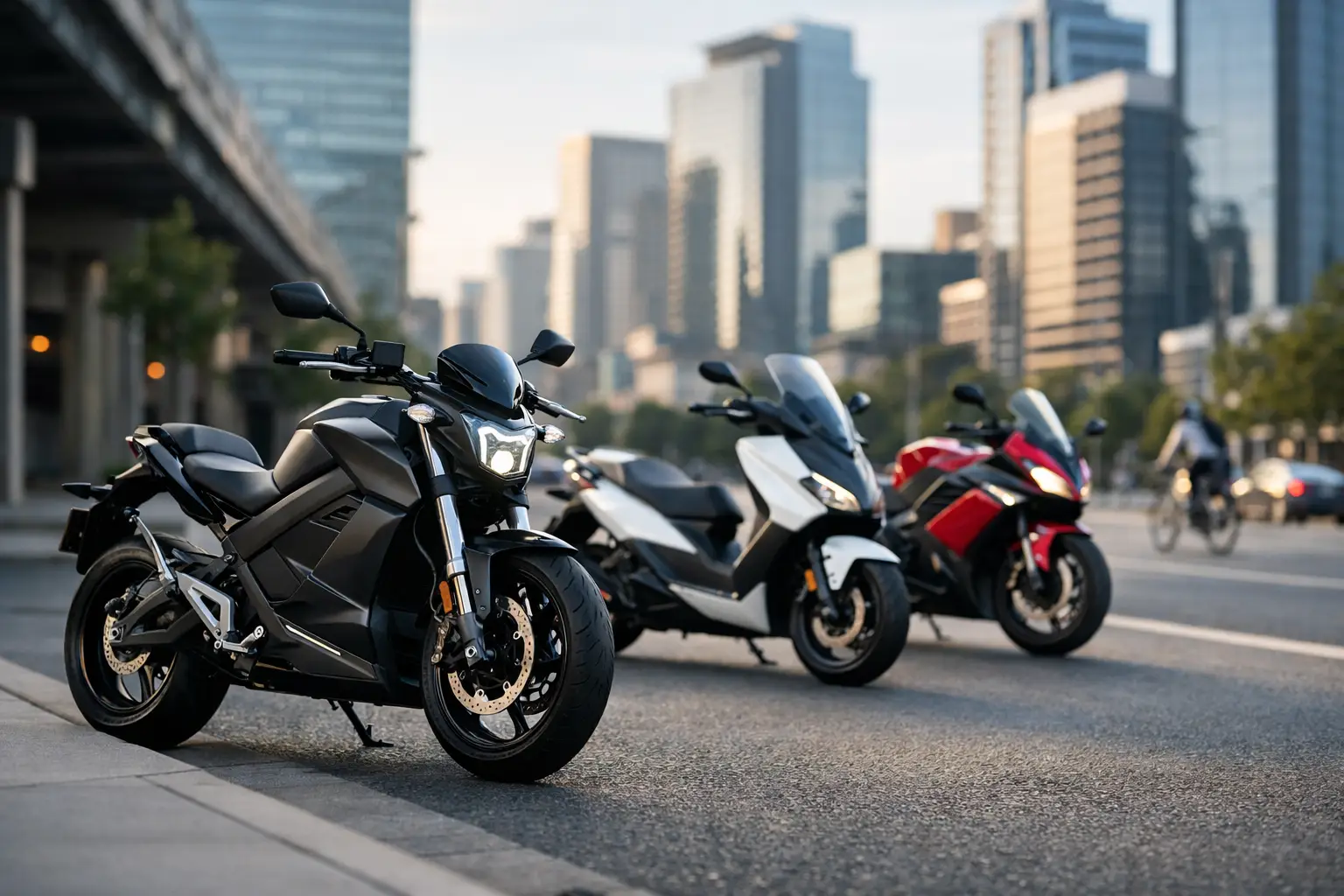
A city motorcycle earns its place before the first coffee stop. It has to slip through traffic without feeling nervous, pull cleanly away from lights, fit into real parking spaces, and still look right outside a restaurant after work. The best motorcycles for urban commuters do more than reduce travel time. They make the daily ride feel like a choice rather than a compromise.
For riders who care about design as much as destination, the answer is rarely the biggest engine or the longest spec sheet. It is a machine with the right proportions, immediate response, manageable weight, and enough range for the rhythm of the week. Electric power has made that equation especially compelling: quiet movement, instant torque, and no heat building beneath you in stop-and-go traffic.
What Makes a Motorcycle Right for the City?
Urban riding rewards precision. Tight corners, uneven pavement, delivery vans, wet crosswalk paint, and constant changes in pace all expose a motorcycle that is too large, too heavy, or too aggressive for its setting. A commuter bike should feel composed at 15 mph as well as 50 mph.
Weight matters, but balance matters more. A low center of gravity and a narrow profile make low-speed turns, U-turns, and parking-lot maneuvers less demanding. Seat height also deserves more attention than it gets. Being able to plant a foot confidently at a red light changes how relaxed a bike feels in dense traffic, particularly for newer riders or anyone carrying a bag through a long workday.
Power delivery should be usable, not theatrical. City riders need quick acceleration to merge, clear an intersection, or move ahead of a bus, but they do not need a machine that demands constant restraint. Smooth throttle response builds confidence. On an electric motorcycle, torque arrives without clutch work, shifting, or engine vibration. That calm, direct response is not a novelty. It is an advantage when every block asks for another decision.
Range Is About Your Actual Week
A massive range figure can look reassuring, but commuting decisions should begin with the routes you actually ride. Add your round-trip distance, a realistic buffer for detours, colder weather, and the occasional evening plan. Then consider charging access at home, in a garage, or at work.
For many urban riders, charging overnight is more useful than chasing the highest possible range. A motorcycle that comfortably handles several days of commuting can be a better fit than a larger, heavier model built for frequent highway touring. The right range gives you freedom without making you haul around battery capacity you rarely use.
Riding style changes the calculation. Repeated hard acceleration, high speeds, steep streets, cold temperatures, and a passenger all reduce real-world range. Treat published figures as a starting point, then choose with headroom. Range anxiety has little to do with numbers alone. It comes from buying a bike that does not match the life around it.
The Best Motorcycles for Urban Commuters Share Five Traits
Whether you choose electric or gasoline, retro or minimal, the strongest city motorcycles tend to get the fundamentals right.
- Agile dimensions: A slim tank area or battery enclosure, sensible wheelbase, and easy steering help the bike move through compact streets without feeling twitchy.
- Practical performance: Strong midrange acceleration matters more than top speed. You want pace that feels available, not intimidating.
- Predictable braking: Urban riders brake often and sometimes suddenly. Quality brakes, well-calibrated ABS, and a controlled front-end feel are non-negotiable.
- Everyday comfort: An upright or lightly forward riding position offers visibility and reduces strain. A seat that looks beautiful but punishes a 35-minute ride is not a commuter feature.
- Low-friction ownership: Simple charging or fueling, manageable maintenance, secure parking options, and practical accessories all determine whether a bike gets ridden every day.
A sixth trait is harder to quantify: presence. Your commute is part of your public life. The motorcycle you arrive on says something before you remove your helmet. That does not mean it needs to be loud. The strongest design often has no need to shout.
Electric Motorcycles Make a Strong Urban Case
Electric motorcycles are particularly well suited to the city because their strengths appear exactly where gas motorcycles are most compromised. There is no clutch to feather in crawling traffic, no exhaust heat rising in summer, and no idling engine filling the space around you. The ride is clean, focused, and unexpectedly intimate. You hear the tires, the wind, and the city itself.
Instant torque is another reason. An electric motor delivers decisive acceleration from a standstill, which makes traffic gaps easier to manage and starts from red lights feel effortless. Riders coming from scooters may appreciate the simplicity; experienced motorcyclists often appreciate how much attention is freed up for line choice, braking, and traffic awareness.
The trade-off is planning. Public charging is not as universal or as predictable for motorcycles as it is for cars, and apartment residents without dedicated parking need a realistic charging plan before buying. Electric motorcycles also vary widely in charge times, battery capacity, and cold-weather performance. A beautiful bike is only a practical commuter if it works where you live.
For riders with dependable overnight charging, however, electric ownership can feel remarkably natural. You come home, plug in, and leave the next morning with a full battery. No fuel stop. No oil change schedule. No engine noise announcing every early departure. Just classic lines, electric heart.
Choose a Style That Will Still Feel Right on Friday Night
Commuter motorcycles are often treated like appliances. That is a mistake. A bike that moves you through the week should also be a bike you want to ride when there is nowhere particular to be.
Modern naked bikes are a sensible choice for riders who value light weight, broad handlebars, and accessible performance. They offer excellent visibility and a direct connection to the road, though some can lean toward sharp, aggressively futuristic styling. Small and midsize standards bring a more relaxed personality, usually with easier ergonomics and enough power for most city duties.
Scooters remain brilliant for riders who prioritize storage, weather protection, and step-through convenience. Their automatic transmissions and compact packaging make them genuinely useful in dense areas. Yet riders who want a full motorcycle stance, a more involving chassis, and a design with lasting character may find a standard or electric roadster more compelling.
Retro-inspired electric motorcycles occupy a distinct space. They pair familiar silhouettes with silent, modern propulsion, avoiding both nostalgia cosplay and gadget-heavy styling. This is where a machine like an RGNT can make sense for the design-led commuter: handcrafted Scandinavian character, immediate electric response, and a visual language that belongs on a city street without looking manufactured for attention.
Do Not Buy for the Fantasy Ride Alone
The wrong commuter bike is often the one bought for a ride that happens twice a year. A towering adventure machine may look ready for every horizon but feel cumbersome in a parking garage. A supersport may feel thrilling on a clear road yet put too much weight on your wrists during a weekday crawl. A huge touring bike may offer comfort at speed while making a tight apartment exit needlessly dramatic.
Be honest about the first five minutes of every ride. Can you get the bike out easily? Is it pleasant at neighborhood speeds? Can you secure your helmet, gloves, and laptop? Does it turn tightly enough for the places you park? These ordinary questions reveal more than a top-speed number ever will.
Test rides matter because urban confidence is physical. Notice how quickly you can put a foot down, how the bike responds to a small steering input, and whether the controls feel intuitive with gloves on. If possible, ride over imperfect pavement rather than only smooth dealership roads. The city will not curate its surface for your motorcycle.
Gear and Security Are Part of the Motorcycle
A city-ready setup includes more than the bike itself. A quality lock or alarm, theft coverage, and a secure place to park deserve space in the budget. So does weather-ready gear. A ventilated jacket works for warm days, but a waterproof outer layer and gloves that remain useful in rain can be the difference between riding regularly and taking a car whenever the forecast turns uncertain.
Storage is equally personal. Some riders need only a compact backpack. Others carry a laptop, gym clothes, camera equipment, or groceries. A cleanly integrated rear rack, small luggage solution, or locking case can make a motorcycle dramatically more useful without overwhelming its shape. Choose accessories that support the design rather than bury it.
The Better Commute Is the One You Want to Repeat
The best urban motorcycle is not defined by a single category, fuel type, or badge. It is the one that fits your streets, your charging or fueling routine, your body, and your sense of style. It should make traffic feel less like dead time and more like a private interval between the demands of the day.
Choose the bike that feels agile at low speed, confident in the rain, easy to live with, and unmistakably yours. The city is loud enough already. Your ride can be part of the silent minority.