
Your cart is currently empty!
How to Store an Electric Motorcycle in Winter
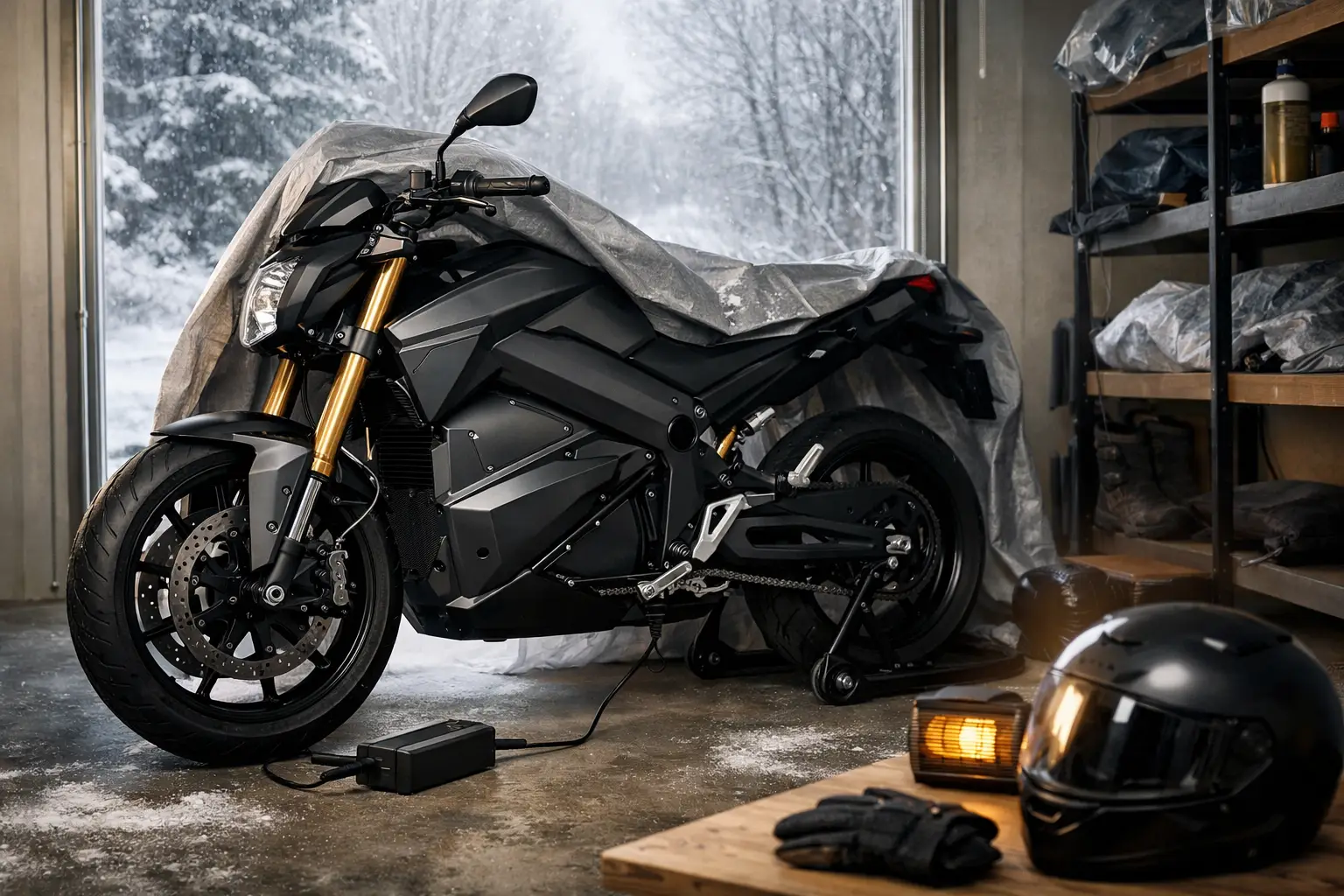
The first dry Saturday of spring is not the time to discover a flat tire, corroded connector, or battery left in the wrong state for months. Knowing how to store electric motorcycle in winter protects the parts that make silent performance feel so effortless. A proper layup is less about elaborate rituals and more about disciplined preparation: clean it, charge it correctly, keep it dry, and give it a calm place to wait.
For a premium electric motorcycle, winter storage is part of ownership. The machine may be quiet, but it is not indifferent to cold, moisture, neglect, or a charger left working without a plan. Treat the off-season as you would a tailored jacket or a favorite analog watch: put it away properly, and it returns ready to make an entrance.
How to Store an Electric Motorcycle in Winter: Start Clean
Road grime is not just cosmetic. Rainwater, road salt, brake dust, and chain lubricant can hold moisture against painted metal, fasteners, wheels, and electrical housings. Before parking the bike for more than a few weeks, give it a careful wash with products suited to motorcycle finishes. Avoid blasting high-pressure water directly at bearings, seals, charge ports, display edges, switches, or electrical connectors.
Dry the motorcycle completely. Use a soft microfiber towel around painted surfaces and compressed air or a gentle blower around tighter areas where water tends to linger. Pay close attention to the underside, calipers, suspension, wheel spokes or rims, and the area around the charging port. A short ride after washing can help evaporate hidden moisture, provided roads are dry and free of salt.
Once the bike is clean and dry, inspect it with intent. Look for chipped paint, loose fasteners, worn brake pads, tire damage, and anything that deserves attention before spring. Wipe exposed metal components with an appropriate protectant, taking care to keep all lubricants away from brake discs, pads, and tires. If your motorcycle uses a drive chain, clean and lubricate it according to the owner’s manual before storage.
Do not cover a dirty bike and call it done. That is how a winter’s worth of road film becomes a spring restoration project.
Give the Battery a Thoughtful Winter Plan
The traction battery is the center of an electric motorcycle’s character. It delivers the immediate torque, quiet movement, and clean response that define the ride. It also deserves a storage plan that follows the motorcycle manufacturer’s guidance, not old habits borrowed from gasoline bikes.
For many lithium-ion systems, long-term storage is best at a partial state of charge rather than completely full or nearly empty. A commonly recommended range is around 40 to 60 percent, but your owner’s manual takes priority. Battery chemistry, software settings, and battery-management systems vary, so use the specified storage level for your model.
Temperature matters as much as charge level. Store the motorcycle in a dry, insulated space that stays reasonably moderate. Extreme cold can reduce available battery performance, while sustained heat is especially hard on lithium-ion cells. A garage that freezes overnight may be workable for some motorcycles, but a temperature-stable garage, workshop, or storage unit is the better choice. Never charge a battery that is extremely cold unless the motorcycle’s instructions explicitly allow it or its system manages battery temperature automatically.
Avoid leaving the motorcycle at 100 percent for the entire winter simply because it feels prepared. Likewise, do not let it sit near empty. Both extremes can put unnecessary strain on a battery during a long layup. If the bike has an app or display that lets you check charge remotely, use it occasionally. Otherwise, schedule a quick inspection every few weeks.
Whether to leave the charger connected depends entirely on the manufacturer. Some electric motorcycles are designed to manage long-term connection through their battery-management system. Others are better checked and topped up periodically. Use the supplied or approved charger, plug it into a properly grounded outlet, and avoid extension cords unless they are rated for the load and conditions. If you have any uncertainty, the manual is more valuable than guesswork.
If your motorcycle has a removable battery, only remove it if the design and manufacturer instructions support it. Carry it carefully, protect terminals from debris, and store it indoors away from direct sun, heat sources, and anything flammable. Never open, modify, or attempt to service a high-voltage battery yourself.
Choose a Space Worthy of the Machine
A dry garage is ideal, but dry matters more than glamorous. Condensation is the enemy. An unheated shed with a leaking roof or a damp concrete floor can age a motorcycle faster than a cold but well-ventilated garage. If the space is humid, consider a dehumidifier or moisture-control solution. Keep the motorcycle away from fertilizer, pool chemicals, solvents, and other corrosive materials.
Park on a clean, level surface. If moisture rises through a concrete floor, place a vapor barrier or thick mat beneath the tires. Inflate the tires to the recommended pressure before storage. For a layup lasting several months, a paddock stand can reduce the chance of tire flat spots and keep the machine upright with a clean, considered stance. If you do not have stands, rolling the motorcycle slightly during periodic checks can help.
Use a breathable motorcycle cover once the bike is fully dry. A soft indoor cover protects paint and upholstery from dust without trapping moisture. Skip plastic tarps. They look protective, but they can hold condensation against the very finishes you want to preserve.
Protect the Small 12-Volt Battery Too
Even an electric motorcycle may rely on a conventional low-voltage battery for accessories, controls, alarms, or startup systems. That small battery can discharge during a long winter, particularly when the motorcycle is parked in cold conditions.
Check your manual for its recommended maintenance procedure. It may call for a compatible battery tender, periodic charging, or disconnecting the battery during extended storage. Do not assume the main traction battery will keep the 12-volt system healthy. They are separate systems with separate needs.
This is also the moment to think about security. A locked garage is only the first layer. Use a quality ground anchor, chain, disc lock, or alarm appropriate for your parking setup. Store keys in a secure place away from the motorcycle, and do not leave the charger, documents, or removable accessories in plain sight. A winter-stored bike is still a desirable bike.
Check In Without Disturbing the Rest
A motorcycle in storage does not need weekly attention, but it should not disappear from your mind until April. Once every three to four weeks, inspect the storage area for leaks, pests, rodent activity, and unusual humidity. Look over the tires, cover, charging equipment, and any visible wiring.
Check the battery state of charge and follow the manufacturer’s instructions if it has dropped below the recommended storage range. This is a check-in, not a reason to repeatedly charge the battery to full. If you use a maintainer for the 12-volt battery, confirm that its indicator lights show normal operation and that cables remain secure.
Resist the urge to start the bike briefly just to hear or see it wake up. Electric motorcycles do not need the same occasional engine run associated with combustion motorcycles, and cycling systems without riding may not provide any real benefit. A quiet winter is perfectly acceptable.
Bring It Back With Intention
When riding weather returns, remove the cover and inspect the motorcycle before heading out. Check tire pressure and condition, brake operation, lights, controls, charging port, fasteners, and fluid levels where applicable. Look for signs of moisture, corrosion, chewed wiring, or damaged insulation. Recharge the traction battery according to the normal charging procedure, not a rushed improvisation.
Take the first ride gently. Tires, brakes, suspension, and your own reflexes may need a few miles to return to form. Confirm that the display, regenerative braking settings, ride modes, and connected features are behaving as expected before asking for full performance.
Winter storage should leave no trace on the ride. When the streets clear and the city starts moving again, your electric motorcycle should be ready to answer with classic lines, an electric heart, and the kind of silence that makes every departure feel deliberate.