
Your cart is currently empty!
Electric Motorcycle for Apartment Living
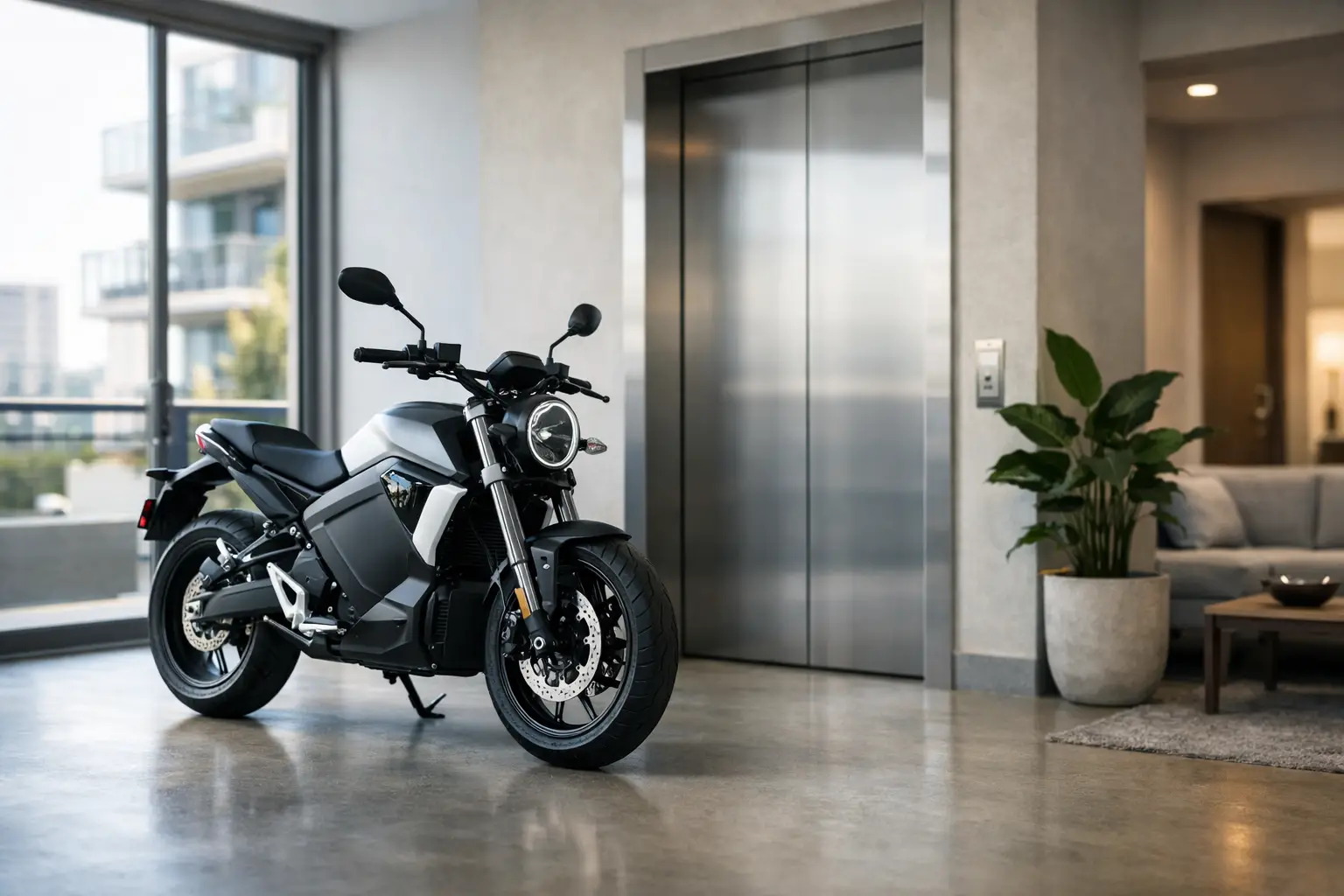
A great electric motorcycle for apartment living does not begin with a spec sheet. It begins downstairs: at the garage door, in the parking bay, beside the elevator, and at the outlet you may or may not be allowed to use. City riding is effortless when the practical details are handled before delivery.
For apartment-based riders, electric power has an obvious appeal. There is no fuel smell in a shared garage, no loud cold start before an early meeting, and no oil-stained ritual attached to every ride. What remains is the part that matters: immediate torque, clean design, and a quiet exit into the city.
What Apartment Riders Actually Need
Range matters, but it is rarely the first constraint. Most urban riders travel predictable distances: a commute, a dinner reservation across town, a weekend ride beyond the city edge. The real question is whether the motorcycle fits the rhythm and rules of the building where it lives.
Start with parking. A dedicated, covered space is ideal, particularly if it is visible, access-controlled, or protected by a camera. Motorcycles occupy little room, but they are still valuable objects. A premium electric bike deserves the same consideration as a performance car: a secure place, a lock appropriate for the environment, and no assumption that a shared garage is automatically safe.
Then consider access. Can you ride directly to your space? Is there a ramp, a gated entrance, or a tight turn that could make maneuvering awkward? If the motorcycle must pass through a service corridor or use an elevator, measure first and check the building rules. An electric motorcycle may be quiet, but it is still a full motorcycle, not something to casually store in a hallway or apartment.
Charging Is the Deciding Detail
An electric motorcycle for apartment living works brilliantly when charging is straightforward. It becomes frustrating when charging is treated as an afterthought.
The best setup is a legal, dedicated outlet at your assigned parking space, installed or approved by the property owner. Depending on the motorcycle and charging equipment, a standard household outlet may be enough for overnight charging. That suits riders whose bike rests at home for several hours between trips. Faster charging can be useful, but the ability to plug in consistently is more valuable than chasing maximum charging speed.
Do not run an extension cord across a garage lane, through a door, down a stairwell, or across a sidewalk. It creates a safety issue, invites damage, and can put you in conflict with building management. It also turns a refined ownership experience into a daily workaround.
Ask the landlord the right questions
Apartment managers are more likely to approve a request that is specific and professional. Instead of asking whether you can charge a motorcycle somewhere, explain where the bike will park, what outlet or charging equipment is required, who will pay for installation, and how energy use will be measured if needed.
Ask whether the garage has available electrical capacity, whether alterations require a licensed electrician, and whether charging is permitted in individual spaces. If the answer is no, ask whether a shared EV charging area is planned or whether a managed solution can be considered. The rules vary by property, city, insurer, and HOA. Get the approval in writing.
If home charging is impossible, look honestly at your routine. Public charging may work for a rider with reliable charging near work or along regular routes, but it is less convenient than plugging in where you sleep. For apartment riders, convenience is not a luxury. It is what makes electric ownership feel natural.
Quiet Power Changes Shared Living
The strongest argument for electric riding in dense neighborhoods is not only efficiency. It is restraint.
A combustion motorcycle can be a beautiful machine, but early departures and late returns are often amplified by concrete garages, narrow streets, and sleeping neighbors. Electric power replaces the startup drama with near silence. You roll out cleanly, ride with instant response, and return without announcing yourself to the entire block.
That quietness does not make the motorcycle less emotional. It shifts the sensation. Instead of waiting for revs, you feel torque arrive immediately. Instead of performing for traffic lights, you move through them with purpose. For riders drawn to classic forms but unwilling to accept old compromises, that contrast has real appeal: classic lines, electric heart.
There is a trade-off. Riders should remain especially alert around pedestrians, cyclists, and cars pulling from curbside spaces. The city is loud enough to hide almost anything, including a silent motorcycle. Good road position, controlled speed, and deliberate use of lighting matter more when people may not hear you approaching.
Choose a Bike for the Ride You Actually Take
Urban motorcycling rewards proportion. The ideal apartment bike is quick enough for highway links, composed in traffic, and manageable at walking pace. It should feel substantial on the road without becoming cumbersome in a crowded garage.
Look beyond headline range. A manufacturer’s stated number is useful, but your real range depends on speed, temperature, rider weight, hills, cargo, and how often you use full acceleration. If your daily ride consumes only a fraction of the battery, you gain a generous margin for detours and spontaneous plans. If every commute pushes the limit, ownership starts to revolve around battery math.
Also consider rider ergonomics. Apartment dwellers often ride in normal clothes, carry a backpack, and stop frequently. A comfortable seat, sensible riding position, predictable low-speed balance, and easy storage for a helmet or riding gear nearby can matter more than an extra increment of top speed.
Models such as the RGNT Street Classic and Turbo speak to this balance in different ways: handcrafted Scandinavian character paired with modern electric performance, designed to feel like motorcycles first rather than anonymous mobility devices. The right choice is personal, but the principle is not. Buy the machine that makes the everyday ride feel considered.
Protect the Bike Without Turning It Into Furniture
Security is part of apartment living because the motorcycle often lives one floor away from strangers. Use a serious lock in addition to the motorcycle’s built-in security features, and attach it to a fixed point when the garage layout allows. A disc lock with an alarm can add another visible layer of deterrence. Covering the bike may help reduce attention, though a cover should be used only where it will stay dry and will not interfere with building access.
A few habits make a difference. Keep the key secure rather than in a nearby storage unit. Photograph the motorcycle and record its vehicle identification information. Confirm that your insurance policy reflects where it is parked, especially if the space is shared, outdoors, or not gated.
Avoid using an apartment as a workshop. Battery systems, charging equipment, and motorcycle maintenance deserve proper ventilation, clear access, and manufacturer-approved conditions. Store riding gear neatly, keep chargers protected from impact and moisture, and follow the motorcycle maker’s guidance without improvisation.
Make the Building Part of the Plan
The smoothest apartment ownership begins before purchase. Visit the parking space at the time you would normally arrive home. Notice the lighting, the traffic flow, the distance to an approved outlet, and whether the gate is open to the street for long periods. Speak to management before you need permission, not after the motorcycle is delivered.
It also helps to think about your next move. If you are likely to change apartments within a year, choose an ownership plan that does not depend on a complicated private installation. A portable, permitted charging arrangement or access to reliable workplace charging may offer more flexibility. If you expect to stay, a properly installed dedicated solution can make the bike part of your daily life for years.
Apartment living does not require smaller ambition. It simply rewards better planning. Find a secure place, establish a legitimate charging routine, and choose a motorcycle whose presence is as refined in the garage as it is alive on the road. Then the city becomes yours before the traffic has fully woken up.