
Your cart is currently empty!
The Future of Electric Motorcycles Is Personal
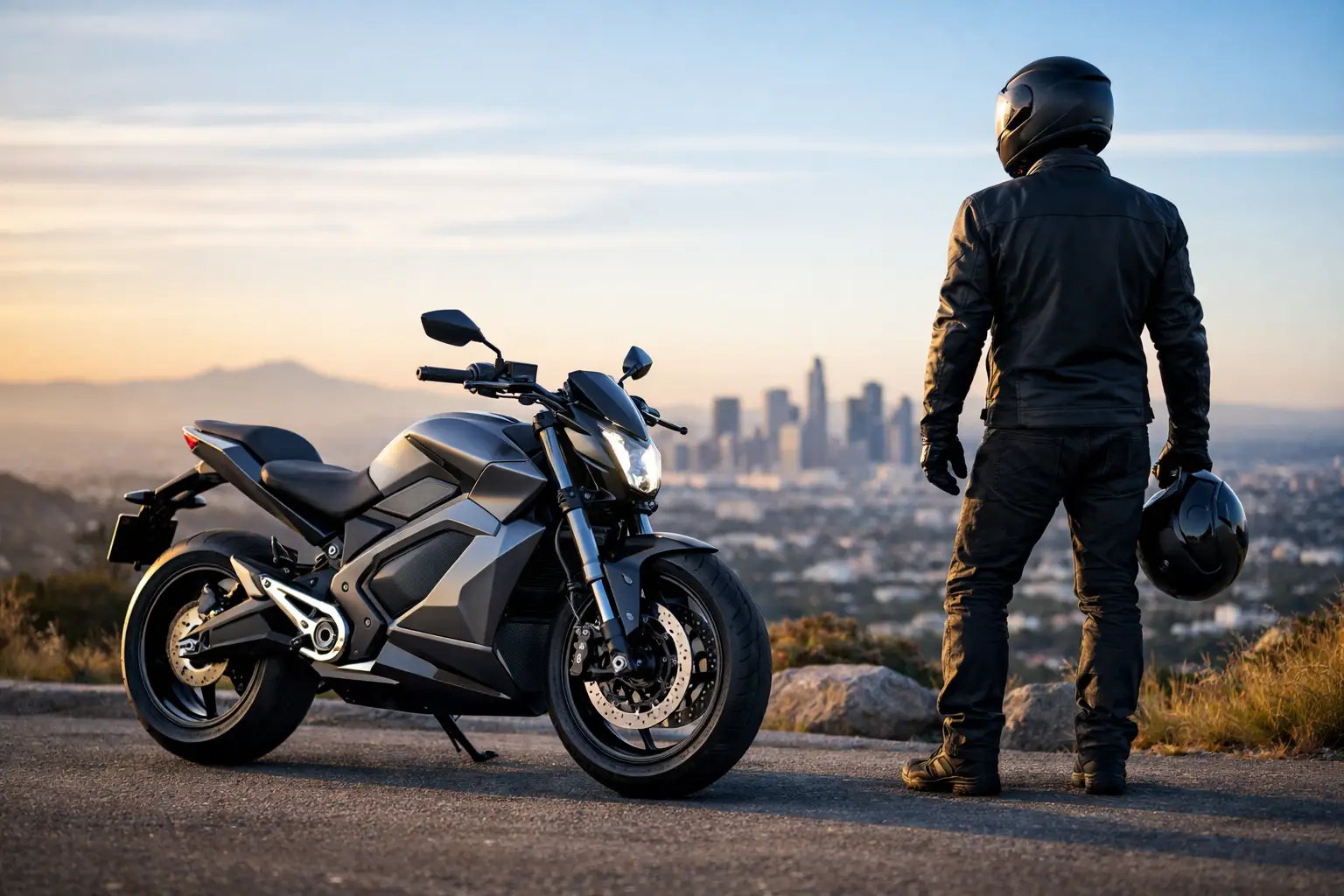
A motorcycle has always said something before the engine starts. The future of electric motorcycles will not change that. It will make the statement more deliberate: less noise, less compromise, more character. For riders who see the city as both a route and a stage, the next generation of electric bikes will be judged not by novelty, but by whether it feels right beneath them.
Electric power is already rewriting the essentials. Immediate torque changes how a bike leaves a light. Near-silent running changes how a rider moves through an early neighborhood. Fewer mechanical parts change the relationship between rider, machine, and maintenance. But battery capacity alone will not decide what comes next. The bikes that endure will combine useful performance with a point of view.
The Future of Electric Motorcycles Is Not Bigger Batteries Alone
Range remains the question every prospective electric rider asks, and it should be. A claimed number means little without context. Speed, temperature, elevation, rider weight, passenger load, tire pressure, and riding mode all influence how far a motorcycle can travel on a charge. Highway miles consume energy differently from stop-and-go urban miles, where regenerative braking may return a small but meaningful amount of power.
The industry will improve battery energy density over time. That means more range from a similarly sized pack, or a lighter motorcycle with the same practical distance. Yet the most compelling progress may be more honest than dramatic: clearer real-world range estimates, smarter battery management, and charging systems that fit the way riders actually live.
For many urban riders, the ideal electric motorcycle does not need to cross three states before lunch. It needs enough range for a week of commuting, an evening ride across town, and the confidence that a charge at home or work restores the plan. This is where electric motorcycles already make a convincing case. The future is not one battery for every rider. It is better alignment between the bike’s intended life and the rider’s real one.
Charging Must Become Effortless, Not Just Faster
Fast charging will matter, particularly as public infrastructure expands. A meaningful top-up while stopping for coffee makes an electric bike more flexible beyond city limits. But speed is only one part of convenience. Charging access at apartments, offices, garages, and destinations matters just as much.
The strongest ownership experience will be quiet in every sense. Plug in at night. Wake up ready. Avoid the ritual of fuel stops without turning charging into a new chore. Manufacturers and cities have work to do here, from compatible hardware to reliable public stations, but the direction is clear: charging must fade into the background.
Performance Will Feel More Refined
Electric motorcycles are often described through torque figures, and for good reason. Electric drive delivers its pull immediately. There is no waiting for revs to rise and no hunting for the right gear before a gap opens in traffic. In the city, that response feels less like a statistic and more like composure.
Still, raw acceleration is not the whole story. The next era of performance will be defined by calibration. Riders need throttle response that is sharp without being abrupt, regenerative braking that supports rather than interrupts corner entry, and ride modes that genuinely alter the motorcycle’s character. A refined electric bike should feel intuitive at low speed, controlled on wet pavement, and alive when the road opens.
Software will play a larger role, but it should remain in service of the ride. Useful features include navigation that accounts for charge, theft alerts, remote diagnostics, and updates that improve battery or motor behavior. A screen packed with distractions is not progress. The best technology does its work quietly, then lets the rider look up.
Weight Is the Next Great Design Challenge
Batteries carry mass, and mass shapes everything from braking to handling. This is one of the defining trade-offs in electric motorcycle design. A larger battery can extend range, but it can also make a motorcycle less agile, more expensive, and harder to manage at a standstill.
That makes intelligent packaging essential. Low-mounted battery placement can create a favorable center of gravity, while careful chassis geometry, suspension tuning, and braking hardware determine whether the bike feels planted or ponderous. The objective is not to make every electric motorcycle featherweight. It is to make the weight disappear in motion.
For A1-class and urban-focused machines, this balance is especially important. A rider navigating traffic, narrow parking spaces, and imperfect pavement values confidence more than excess. The most desirable electric motorcycles will feel compact, balanced, and precise – not like oversized batteries with handlebars attached.
Design Will Separate the Icons From the Gadgets
Early electric mobility often leaned hard into the visual language of the future: sharp plastics, exposed screens, and shapes designed to announce their difference. There is room for that. But a motorcycle is not a smartphone on two wheels. It carries more than a function. It carries memory, proportion, stance, and attitude.
The future will favor designs with enough restraint to age well. Classic lines and an electric heart are not opposing ideas. A round headlight, a purposeful tank silhouette, real metalwork, and a clean tail can feel familiar while housing thoroughly modern technology. That blend gives riders a way to choose electric without giving up the emotional pull that brought them to motorcycles in the first place.
Craftsmanship will become more visible as the market matures. When there is no exhaust note to dominate the experience, other details step forward: the feel of the controls, the finish of a frame, the fit of a seat, the confidence of a switch, the quality of the materials seen every day. Limited-batch production and hands-on quality control will matter to riders who want their motorcycle to feel chosen, not merely purchased.
RGNT Motorcycles represents this direction well: Swedish-built machines that treat silence as a form of sophistication rather than an absence. The appeal is not pretending electric power is vintage. It is preserving the enduring parts of motorcycling while removing the parts that no longer belong.
Ownership Will Become More Accessible, With Conditions
Electric motorcycles can reduce routine maintenance. There are no oil changes, spark plugs, clutch adjustments, or exhaust systems to manage. Regenerative braking can also reduce wear on brake components, depending on how and where the bike is ridden. Over years of commuting, those savings can be meaningful.
But electric ownership is not maintenance-free, and buyers should resist that myth. Tires, brake fluid, suspension, bearings, belts or chains, and general inspection still require attention. Battery health also matters. A well-engineered pack, thoughtful thermal management, sensible charging habits, and a clear warranty are more valuable than vague claims about lifespan.
The purchase price remains a barrier for some riders, particularly when compared with entry-level gas motorcycles. Financing, leasing, insurance costs, local incentives, and lower running costs can shift the equation, but the answer depends on the rider’s location and usage. For a daily commuter with reliable charging, the numbers can be compelling. For someone who regularly rides long distances through areas with sparse charging, the decision may require more compromise.
That is not a weakness to hide. It is the honest state of a category growing into its confidence.
A Quieter Motorcycle Culture, Not a Smaller One
Some riders worry that electric power removes the soul of motorcycling. They are right about one thing: it changes the sensory experience. There is no engine pulse through the pegs, no exhaust crack on downshifts, no familiar mechanical theater at idle.
What replaces it is not emptiness. It is tire noise, wind, road texture, and the direct sensation of acceleration. It is the ability to leave early without waking the block. It is a conversation at a stoplight without shouting over an engine. It is a different kind of presence – subtle, confident, and hard to ignore once experienced.
Motorcycle culture has always evolved through tension between tradition and change. Electric bikes will not erase combustion motorcycles overnight, nor should they need to. Different machines serve different roads, identities, and rituals. But for urban movement, short escapes, and riders drawn to clean design with real performance, electric is becoming less of a statement about the future and more of a natural choice.
Choose the motorcycle that fits the miles you actually ride, the place you can actually charge, and the feeling you want when you turn onto an empty street. The right electric bike should not ask you to lower your expectations. It should give you a new reason to take the long way home.