
Your cart is currently empty!
Can You Ride Electric Motorcycles in Rain?
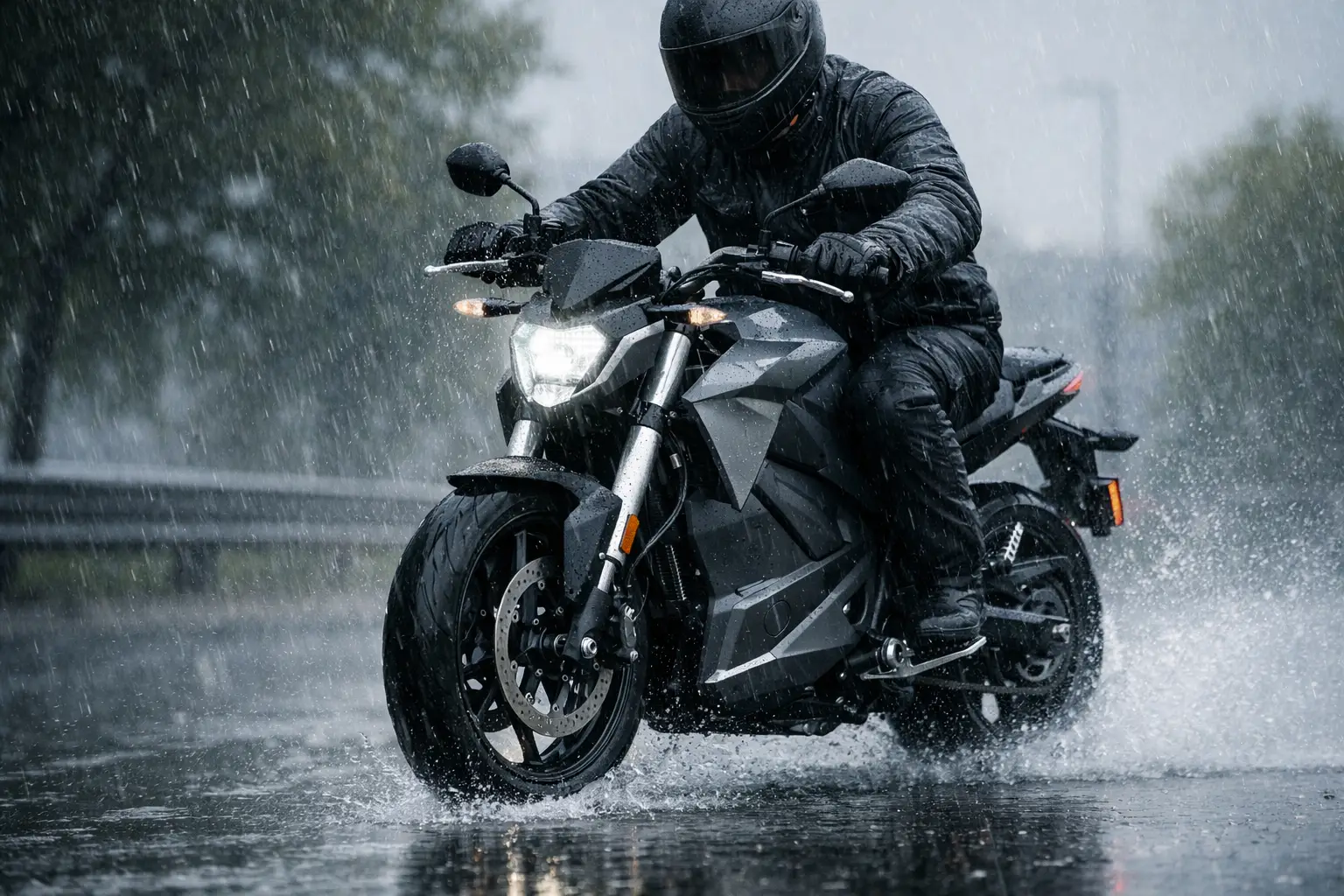
A sudden downpour should not turn a good ride into a call for a trailer. So, can you ride electric motorcycles in rain? Yes. A properly engineered electric motorcycle is built to operate through ordinary wet-weather riding, from a soaked morning commute to a long gray afternoon in the city.
The real question is not whether electricity and rain can coexist. They can. It is whether the motorcycle is designed for the conditions, whether you understand its limits, and whether you ride with the restraint wet pavement demands. Rain does not erase performance. It changes the conversation between rider, tires, brakes, and road.
Can You Ride Electric Motorcycles in Rain Safely?
Electric motorcycles are not exposed bundles of wires. Their battery packs, controllers, connectors, and motor systems are enclosed and sealed to withstand the weather they are intended to encounter on the road. Rain riding is an expected part of owning a street motorcycle, not an exotic test.
Still, water resistance is not the same as invincibility. The level of protection varies by model and component, and manufacturers define operating limits for a reason. Heavy rain is one thing. Riding through standing water deep enough to submerge electrical components, force water into seals, or hide a pothole is another.
Treat an electric motorcycle as you would any premium machine: capable, refined, and not interested in being abused for a dramatic shortcut. If floodwater reaches the lower battery area, turn around. The risk is not only electrical. Hidden curbs, open drains, oil, debris, and sudden changes in depth can end a ride quickly.
What Rain Changes on the Road
The bike may feel familiar in the wet, but traction is never identical. Rain lifts oil, rubber residue, dust, and fuel film to the surface, especially during the first minutes of a shower. Painted lane markings, manhole covers, steel bridge plates, wet leaves, and polished stone are all far slicker than they look.
Electric torque arrives immediately. That is part of the appeal: clean, silent acceleration with no waiting for revs. In rain, it is also a reason to be deliberate with the throttle. Roll on power progressively as you leave lights and corners. A smooth hand is faster, safer, and more composed than a sharp burst of torque that asks too much from the rear tire.
Braking deserves the same discipline. Modern braking systems and ABS offer meaningful support, but they do not create grip. Leave more room ahead, apply the brakes gradually, and avoid braking hard while leaned over. Finish as much of your braking as possible before the turn, enter at a measured speed, then accelerate gently once the bike is more upright.
Your tires matter more than almost anything else. Adequate tread depth, correct pressure, and a tire compound suited to street use make a real difference when roads go glossy. Check pressures when the tires are cold. An underinflated tire can feel vague and generate excess heat, while an overinflated tire may reduce the contact patch you need on slick surfaces.
Regenerative Braking Requires a Light Touch
Regenerative braking can feel elegantly controlled in dry conditions, particularly in urban traffic. In the rain, its deceleration effect can arrive more firmly than expected if you abruptly close the throttle. The rear tire still has a finite amount of traction to share between slowing down and holding its line.
Use a softer throttle transition before corners, intersections, and downhill sections. Learn how your motorcycle applies regenerative braking in a quiet, low-traffic area before relying on that feeling in a storm. Precision is the point. The best wet-weather rider is rarely the loudest or the most aggressive.
Protect the Motorcycle Without Overthinking It
After a ride in normal rain, there is no need for ceremony. Park the motorcycle somewhere sheltered if possible, wipe down the seat and controls, and let the machine dry. If road spray included grit or salt, rinse it with low-pressure water and clean it sooner rather than later. Salt is more persistent than rain and much less forgiving to metal finishes, fasteners, and chain components.
Avoid aiming a pressure washer directly at seals, bearings, electrical connectors, the dash, or charging hardware. High-pressure water can go places rain never will. For routine cleaning, a gentle rinse, motorcycle-safe cleaner, soft cloth, and careful drying are enough.
Pay attention to the chain, if your motorcycle uses one. Wet roads wash away lubrication and carry abrasive grime toward the drivetrain. Check it after sustained rain riding, clean it as needed, and apply the manufacturer-recommended lubricant. A quiet electric powertrain makes neglected mechanical noise easier to notice, which is useful if you listen.
Before the next ride, give the bike a brief visual check. Look for debris around the wheels and brakes, inspect the tires, confirm the lights work, and make sure the charge port cap is closed securely. It takes less than a minute and reinforces the kind of ownership that keeps a beautiful machine looking sharp.
Charging After Riding in the Rain
Riding in rain and charging in rain are different situations. Your motorcycle’s charge port and charging equipment should be kept clean and dry before connecting. If the bike has been sitting in heavy weather, wipe the port area, inspect the cable and connector for moisture or damage, and charge in a covered, dry location.
Do not charge with a compromised cable, a loose connection, or visible water inside the connector. Do not improvise with extension cords across wet ground. These are simple rules, but premium ownership is often defined by the habits that do not make for exciting stories.
Follow the instructions supplied with your motorcycle and charger, including any guidance on operating temperature, charging location, and connector care. The electronics are sophisticated. Your approach should be simple: clean, dry, deliberate.
Visibility Is Part of Performance
Rain shrinks the world around you. Car windows fog, mirrors fill with droplets, and drivers are already managing glare from wet asphalt. Being technically right about who has the right of way offers little protection when someone has not seen you.
Use your headlight, even in daylight. Wear a helmet visor treatment designed for rain or keep a clean microfiber cloth accessible for stops. Waterproof gloves with enough feel at the controls are worth more than bulky gloves that leave you clumsy on the throttle. A jacket and pants with real weather protection keep your focus on traffic instead of the cold trickle down your back.
Choose gear with thoughtful reflective details rather than turning yourself into a billboard. The objective is clear presence, not noise. That idea fits the electric ride itself: less disruption, more intention.
When It Is Better Not to Ride
There are conditions where good judgment means leaving the motorcycle parked. Thunderstorms with frequent lightning, flood warnings, strong crosswinds, icy temperatures, and roads covered in storm debris are not tests of commitment. Neither is riding when your tires are worn, your lights are not working, or you cannot see clearly through your visor.
If you are new to riding, use the first wet days as practice rather than a performance. Take familiar streets, reduce speed, and give yourself extra time. Avoid the pressure to keep pace with faster traffic. Rain rewards riders who preserve options.
For an urban electric motorcycle, wet-weather confidence comes from the same qualities that make every ride better: considered engineering, responsive controls, quality tires, and a rider who understands that style has nothing to do with taking unnecessary risks. A motorcycle such as an RGNT is made for the rhythm of real streets, where weather is part of the landscape, not a reason to lose the day.
The next time the forecast turns dark, check your tires, close the charge port, zip the waterproof layer, and ride with a lighter hand. The rain can stay. So can the pleasure of moving through the city in near silence.