
Your cart is currently empty!
Category: Uncategorized
-
Belt Drive Versus Hub Motor for City Riding
A silent electric motorcycle can feel radically different from one model to the next, even when the headline power figures look close. The reason often sits lower in the chassis: belt drive versus hub motor is not simply a question of how power reaches the rear wheel. It shapes suspension response, service needs, visual balance, and the way a bike carries itself through the city.
For riders who care about both engineering and presence, it is worth separating the terms. A belt drive is a method of transferring power. A hub motor is a motor location. They are not exact opposites, but they represent two very different approaches to electric motorcycle design.
Belt Drive Versus Hub Motor Starts With Architecture
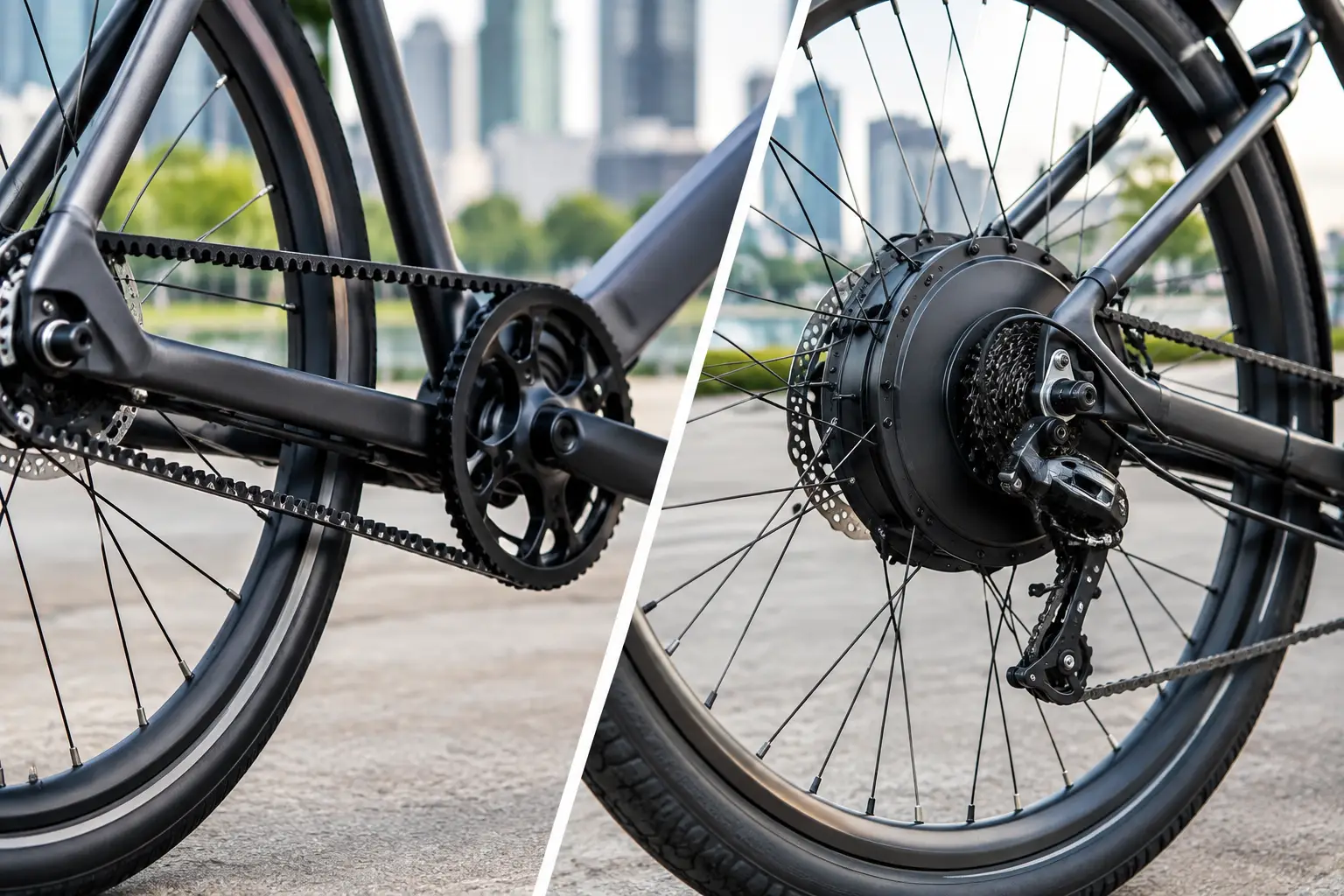
A belt-driven electric motorcycle typically places its motor in the frame, then sends power to the rear wheel through a toothed belt and pulleys. The motor is part of the motorcycle’s central mass, protected within the chassis and away from the wheel itself. Many designs use a fixed reduction ratio, taking advantage of electric torque without the complexity of a conventional gearbox.
A hub motor sits inside the rear wheel. Its torque goes straight into the wheel, eliminating the need for a belt, chain, sprockets, and the associated alignment. It is a clean, compact idea: fewer external moving parts, fewer mechanical noises, and a remarkably direct power path.
Neither layout wins in every situation. The right choice depends on what the machine is designed to do and what the rider expects when the pavement gets rough, the traffic gets dense, or the road opens beyond city limits.
What a Belt Drive Brings to the Ride
The defining advantage of a centrally mounted motor is mass placement. Keeping motor weight low and near the middle of the motorcycle leaves the rear wheel and swingarm lighter. That matters because the wheel is unsprung mass – weight the suspension must move every time it meets a cracked road surface, expansion joint, or pothole.
Less unsprung mass generally gives the rear suspension a better chance of following imperfect pavement. The tire can maintain more consistent contact, while the chassis feels calmer rather than busy. On a well-surfaced boulevard, the difference may be subtle. On real urban streets, it can become part of the motorcycle’s character.
A belt also supports a traditional motorcycle proportion. The rear wheel can remain visually open, while the motor becomes part of the bike’s engineered center. For a design rooted in classic lines, that separation matters. It preserves the familiar silhouette of a motorcycle while replacing combustion with an electric heart.
There is a maintenance trade-off. Belt drives are far cleaner and quieter than chains, and they do not require routine lubrication. But belts do wear over time. Correct tension, pulley alignment, and inspection for damage are still part of responsible ownership. Replacing a belt is not a daily concern, but it is a service item.
What a Hub Motor Changes
The hub motor’s appeal is elegant simplicity. With no final-drive belt, there is less hardware between the motor and the road. Fewer components can mean fewer adjustment points, less drivetrain upkeep, and a very clean visual presentation.
Hub motors also deliver the immediate, unfiltered response electric riders expect. Roll on the throttle at a stoplight and the rear wheel receives torque with no clutch, shifting, or drive belt to manage. The sensation is quiet, swift, and almost improbably calm.
The compromise is weight at the wheel. A hub motor adds substantial mass directly to the rear assembly, which can make it harder for the suspension to respond to sharp bumps. This is not an automatic deal-breaker. A well-tuned motorcycle can still feel composed, especially in lower-speed urban use. But for riders who prioritize refined handling over broken pavement, a central motor can offer more room for the chassis to breathe.
Packaging is another consideration. A hub motor occupies the center of the wheel, influencing wheel design, tire service, and the visual language of the rear end. Some riders appreciate the technical statement. Others prefer the lighter, more traditional look of an exposed rear wheel and a discreetly integrated motor.
Handling Is More Than a Spec Sheet
Motorcycle handling is a conversation between weight distribution, suspension tuning, tire choice, frame geometry, and rider input. The belt drive versus hub motor decision affects only one part of that conversation, but it affects a meaningful one.
A central motor can help designers concentrate mass near the motorcycle’s center. This often benefits turn-in feel and keeps the suspension from carrying extra weight at the wheel. It is an approach that suits riders who want a machine to feel planted in fast corners yet polished across uneven streets.
A hub motor can make the rest of the motorcycle mechanically simpler, but it asks more from the suspension setup. The result can be highly effective for short, smooth commutes and relaxed city riding. It may feel less composed when speeds rise or pavement becomes unpredictable.
Do not confuse motor position with acceleration alone. Torque at the tire depends on motor output, controller calibration, reduction ratio, battery capability, traction, and the motorcycle’s overall weight. A belt-driven bike can be startlingly quick, while a hub-motor bike can be tuned for smooth, approachable response. The layout does not dictate the personality. The calibration does.
Range, Efficiency, and Regenerative Braking
A direct hub motor removes a mechanical stage from the drivetrain, which can reduce transmission losses. In theory, that is an efficiency advantage. In practice, real-world range is influenced much more by battery capacity, riding speed, wind, rider weight, tire pressure, temperature, and how often full torque is used.
A belt drive introduces another component, but modern belts are efficient when correctly tensioned. The practical range difference between two motorcycles is rarely explained by the belt alone. Look at the complete powertrain instead of treating one component as a verdict.
Regenerative braking is also not exclusive to hub motors. Both systems can recover energy when decelerating because regeneration is primarily a function of the motor controller and battery system. The sensation, strength, and usefulness of regen depend on the tuning. In city traffic, thoughtful calibration matters more than the motor’s address.
Ownership Looks Different With Each System
For riders who value low-fuss ownership, a hub motor has a persuasive argument. There is no belt to inspect or replace, and the drive system is enclosed within the wheel. That can be ideal for a rider whose priority is simple transportation with minimum mechanical attention.
A belt-driven motorcycle asks for occasional inspection, but it offers its own ownership advantages. The motor is separate from the wheel, which can make certain wheel and tire tasks more conventional. A centered motor can also be easier to access for some service work, depending on the motorcycle’s design.
Durability is not a simple hub-motor-versus-belt-drive contest. A belt can last a long time with proper setup and sensible care. A hub motor eliminates belt wear but places a critical electrical component in the wheel assembly, where it must cope with road shock, heat, water, and tire-service realities. Quality engineering and thoughtful sealing count more than marketing shorthand.
Choose the Character You Want to Ride
Choose a hub motor if the appeal is directness, mechanical minimalism, and an exceptionally clean drivetrain. It is a strong fit for riders whose routes are short, predictable, and centered on urban streets where simplicity leads the brief.
Choose a belt-driven, centrally mounted motor if ride quality, balanced handling, and a classic motorcycle stance sit higher on the list. It suits the rider who sees the daily commute as more than a transfer between addresses – someone who notices the line through a corner, the feel of the rear tire over weathered asphalt, and the quiet confidence of a carefully resolved machine.
At RGNT, that balance of classic form and electric performance is part of the point. Technology should sharpen the experience, not dominate the view.
The best setup is the one that makes you look for the longer route home. Test the suspension on the streets you actually ride, pay attention to throttle response at low speed, and choose the machine whose engineering feels as considered as its design.
-
Are Electric Motorcycles Waterproof? Rain Explained
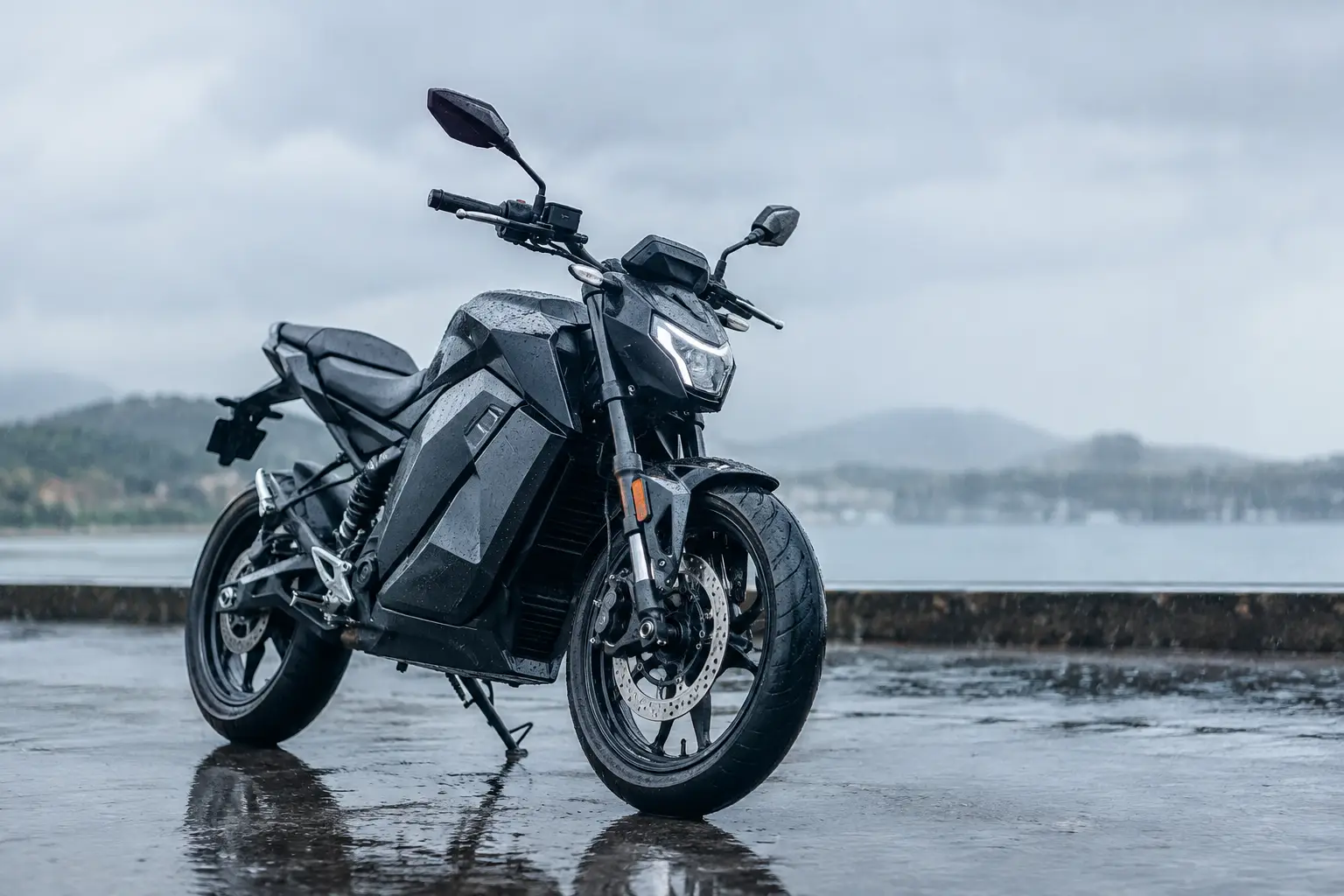
A silent ride home through a summer downpour should feel cinematic, not risky. So, are electric motorcycles waterproof? Not completely. A properly engineered electric motorcycle is designed to handle normal rain, wet roads, and the spray that comes with everyday riding. But water resistance has limits, and treating any motorcycle like a submarine is an expensive kind of confidence.
The distinction matters because an electric motorcycle carries its performance in places a gas bike does not: a high-voltage battery, motor, controller, wiring harnesses, display, and charging hardware. On a well-built machine, these systems are enclosed and protected for real-world weather. Still, protection against rain is not the same thing as permission to wade through floodwater or aim a pressure washer at every seam.
Are Electric Motorcycles Waterproof in Rain?
For normal riding, most road-legal electric motorcycles are made to operate in wet conditions. Tires move water. Fenders catch it. The underside of the bike sees road spray. Manufacturers know this, so critical electrical components use sealed housings, protected connectors, gaskets, and carefully managed cable routing.
That is why a rainy commute is generally not a reason to leave an electric bike at home. In fact, the absence of an exhaust, fuel tank ventilation, and many of the fluid-related concerns of an internal-combustion motorcycle can make electric ownership feel refreshingly straightforward.
But “waterproof” suggests absolute protection at any depth, pressure, and duration. That is rarely the right word. Even components with strong environmental sealing have defined test conditions. A bike that is comfortable in sustained rain may not be designed for deep standing water, saltwater exposure, repeated high-pressure washing, or long-term outdoor storage without cover.
Think of it this way: rain is part of the road. Submersion is not.
What Protects an Electric Motorcycle From Water?
Water protection is not one feature. It is a system of decisions, from the battery enclosure to the way a connector faces beneath the frame. The best designs protect the parts that matter while keeping the motorcycle clean, compact, and true to its lines.
The battery pack is the central concern. It should sit inside a sealed enclosure that resists spray, dust, and ordinary weather. The motor and controller also need environmental protection because they manage the immediate torque that defines an electric ride. Their housings, seals, and connectors must continue doing their job through heat cycles, vibration, and wet-road miles.
Ingress Protection, usually shortened to IP rating, is useful when it is published. The first digit refers to protection against solids such as dust; the second refers to water. A higher water-resistance digit generally indicates stronger protection, but the test method matters. Protection against a water jet is different from protection against temporary immersion. Never assume that a high rating on one component applies to the entire motorcycle.
There is another layer that spec sheets do not always capture: build quality. Consistent panel fit, correctly seated seals, durable connector locks, and intelligent drainage routes all affect how a bike ages in wet weather. This is where considered engineering earns its keep. Classic lines still need modern discipline underneath.
The Real Limits: Floods, Pressure Washers, and Salt
The risky situations are usually more obvious than riders admit. If water is deep enough to reach the battery case, motor, or major electrical connections, turn around. You cannot always judge depth through a reflective puddle, and moving water can destabilize a motorcycle quickly. The danger is not only electrical damage. It is loss of traction, hidden potholes, contaminated water, and corrosion waiting to appear later.
Pressure washers deserve the same restraint. Their force can drive water past seals that rain would never challenge. Avoid directing high-pressure water at the battery enclosure, display, switchgear, charging port, wheel bearings, axle areas, and electrical connectors. A gentle rinse, soft brush, and motorcycle-safe cleaner are usually enough to keep a premium machine looking sharp.
Salt changes the equation too. Coastal air, winter-treated streets, and salty spray accelerate corrosion. Water may not stop a bike immediately, but salt can quietly attack fasteners, connector terminals, brake hardware, and exposed metal over time. After riding on salted or coastal roads, rinse the motorcycle with low-pressure fresh water, dry it carefully, and inspect it more often.
Riding an Electric Motorcycle in the Rain
Electric torque is immediate, which is part of the appeal. On wet pavement, it also asks for a smoother right hand. Roll into acceleration rather than snapping the throttle open at a painted line, metal grate, manhole cover, or patch of leaves. Regenerative braking can feel different in low-grip conditions as well, depending on the bike and its settings. Give yourself room, and learn the response of your machine before the weather demands it.
Tire condition matters more than powertrain type. Proper tread depth and correct tire pressure are your first defenses against standing water and reduced grip. Good lighting, a clear visor, and dry gloves do more for safe wet-weather riding than any claim of waterproofing.
Rain can also reduce visibility for other road users. The quiet character of an electric motorcycle is part of its charm – the silent minority does not need to announce itself at every intersection. But in heavy rain, ride with an extra margin. Position yourself where drivers can see you, use your lights, and assume wet windows make everyone else slower to react.
Charging After Rain: Keep Water Away From the Connection
The charging port is one place where a rider should be deliberate. Do not connect a charger if the port, plug, cable, or your hands are wet. Park under cover when possible, let the connection area dry, and inspect it for dirt or debris before charging. Replace the port cap securely after every use.
Charging equipment should stay dry and off the ground. Do not run a cable through a puddle, use a damaged extension cord, or charge a motorcycle in a location where water can pool around the outlet. These rules are not dramatic. They are simply good electrical habits.
If the motorcycle has been caught in unusually deep water, was dropped into water, or shows warning messages after a storm, do not charge it until it has been inspected by a qualified technician. High-voltage systems are engineered with safety protections, but guesswork is not a maintenance plan.
Storage and Care That Preserve the Details
A covered, ventilated space is the ideal home for an electric motorcycle. If outdoor parking is unavoidable, use a breathable motorcycle cover and avoid trapping moisture against the paint, seat, and metal surfaces. Check that drainage areas remain clear of leaves and grime.
After a wet ride, take a minute for the details. Wipe down the display and switchgear, dry the charging-port area, and look over the chain or belt drive, brake discs, and suspension components. Lubricate a chain as recommended after washing or sustained wet use. If the brakes squeal briefly after rain, that can be normal while surface moisture clears, but persistent noise or reduced braking feel deserves attention.
Seasonal service is also a chance to have seals, connectors, and firmware checked where applicable. Electric motorcycles ask for less routine mechanical upkeep than their gasoline counterparts, yet they still reward owners who notice the small things before they become expensive ones.
Questions Worth Asking Before You Buy
If wet-weather riding is part of your life, ask specific questions rather than accepting a broad assurance that the bike is “waterproof.” Ask whether the battery, motor, controller, and charging port have published IP ratings. Ask what riding conditions are covered by the warranty, whether the motorcycle can be left outdoors, and what the manufacturer recommends after flood exposure.
Also consider the whole machine. Does it have useful fender coverage? Are its tires suited to your roads? Is the charging arrangement practical for your garage or building? The right motorcycle is not just beautiful under streetlights. It is composed when the streetlights shimmer on wet asphalt.
Rain should not dilute the pleasure of electric riding. Choose a motorcycle engineered for the conditions you actually face, respect the boundary between weatherproofing and abuse, and let the ride stay what it should be: classic lines, electric heart, and nothing unnecessary between you and the road.
-
Why Electric Motorcycles Lose Range on Real Rides
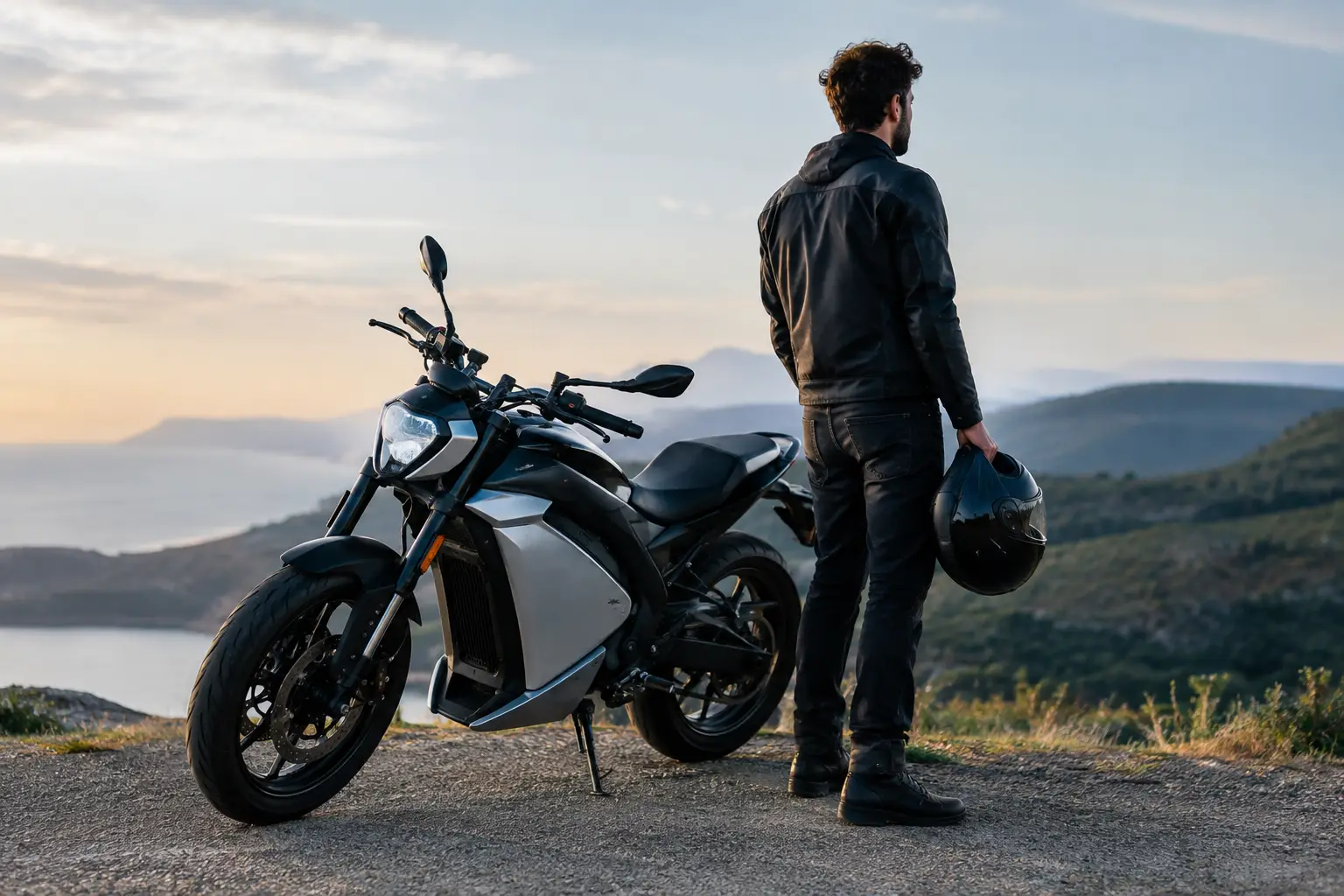
A range figure is a useful promise. Your ride is the reality. The reason why electric motorcycles lose range is rarely a fault or a mystery: it is physics meeting traffic lights, temperature swings, fast roads, steep streets, and the way you use the throttle. An electric motorcycle delivers its best feeling the moment you twist your wrist. That immediate torque is part of the appeal. It also means the conditions around every ride matter.
For city riders, this is not a reason to obsess over the battery gauge. It is a reason to understand it. Range is not a fixed distance stored inside the pack. It is the distance your particular ride asks the motorcycle to cover on a particular day.
Why electric motorcycles lose range at higher speeds
Air is the quiet thief of range. At urban speeds, an electric motorcycle moves through relatively modest aerodynamic resistance. Once the road opens up, that resistance rises sharply. Doubling speed does not simply double the effort needed to cut through the air. It demands substantially more power.
That is why a calm ride through city streets can return very different range than a sustained run at 65 mph or more. The motor is not becoming less capable. It is being asked to hold a higher output continuously, and the battery is supplying that energy without the pauses that stop-and-go riding can provide.
This is also where motorcycle design becomes personal. A rider sitting upright in a jacket, backpack, and open helmet creates more drag than a tucked rider behind a fairing. A retro-inspired, naked motorcycle makes a deliberate statement about riding position and presence. The trade-off is simple: classic lines meet more wind. On the right road, that is part of the experience. On a long high-speed commute, it belongs in the range calculation.
Acceleration has a cost, even when it feels effortless
Electric torque is addictive because it is immediate, silent, and clean. Hard launches draw high power from the battery. A few confident bursts will not erase half a charge, but repeated full-throttle acceleration between every light can noticeably raise energy use over a ride.
The smarter approach is not to ride timidly. It is to be intentional. Accelerate decisively when the gap calls for it, then let speed settle rather than constantly adding and shedding momentum. Smoothness looks good on a motorcycle and gives the battery less work to do.
Cold weather changes what the battery can deliver
Lithium-ion batteries prefer moderate temperatures. Cold conditions slow the chemical reactions inside their cells, reducing available energy and limiting how quickly power can move in and out of the pack. That is why an electric motorcycle that feels generous on a warm afternoon may show less range during a near-freezing morning commute.
Cold weather also creates a second demand: warming the battery to an efficient operating temperature. Depending on the motorcycle and its battery-management system, some energy may be used before the ride really begins. The result can be a lower estimated range, especially after the bike has been parked outside overnight.
Do not confuse a temporary cold-weather reduction with permanent battery loss. Once temperatures rise, much of that missing usable range returns. For riders who face winter regularly, parking in a garage when possible and charging after a ride can help keep the battery closer to a favorable temperature.
Heat deserves respect too. A hot battery does not always mean more range. High ambient temperatures, direct sun, and repeated rapid charging can put stress on the pack over time. Modern battery management is designed to protect the system, but protection may include limiting performance or charging speed when conditions are extreme.
Hills, cargo, and tire pressure add up
Gravity is honest. Climb a hill and the motorcycle must use energy to lift the combined weight of rider, bike, gear, and cargo. Descend that hill and regenerative braking may recover some energy, but never all of it. There are always losses in the system, and a descent cannot fully repay the energy spent climbing.
For riders in hilly cities, this means the first half of a route can be misleading. A battery percentage that drops quickly on a long ascent may level out once the road descends and regenerative braking has room to work. Regeneration is valuable, particularly in urban traffic, but it is not free range. Think of it as recovering a portion of energy that would otherwise become brake heat.
Extra weight has an effect as well, although it is usually smaller than the effect of speed. A passenger, loaded backpack, panniers, or a week’s worth of groceries all require more energy to get moving and to carry uphill. For most daily use, the difference is manageable. Combine that weight with cold weather, aggressive acceleration, and freeway speed, however, and the battery gauge will tell the full story.
Tire pressure is less glamorous but equally real. Underinflated tires increase rolling resistance, making the motor work harder mile after mile. Check pressure when the tires are cold, follow the motorcycle manufacturer’s recommendation, and inspect tires for wear or damage. It is one of the simplest range habits because it also supports handling, braking, and tire life.
The route can matter more than the distance
A 20-mile commute is not one thing. Twenty flat miles at a steady moderate pace, twenty miles of steep city blocks, and twenty miles of fast highway each place a different demand on the battery.
Traffic can work in either direction. Frequent stops require repeated acceleration, but slower average speeds reduce aerodynamic drag and create opportunities for regenerative braking. A congested highway may consume less energy than an empty one at high speed. On the other hand, crawling traffic in extreme heat can leave the motorcycle and rider with little airflow. Context matters.
Wind is another overlooked variable. A stiff headwind acts much like riding faster. You may see a meaningful drop in range on the outbound leg, then a welcome improvement on the way home. Crosswinds can have an effect too, especially for upright motorcycles and riders wearing loose clothing.
If your motorcycle provides ride modes, use them as part of your route planning rather than as a permanent identity. A more responsive mode suits a short, spirited ride. A calmer setting can be the right choice for a longer commute when charging at the destination is uncertain. The point is not to remove character from the ride. It is to choose where you want the motorcycle’s energy to go.
How to preserve electric motorcycle range without dulling the ride
Range-conscious riding should still feel like riding. Start with a properly charged battery, correct tire pressure, and a realistic view of weather and route. If a fast section is unavoidable, ease into your speed instead of treating every on-ramp like a starting grid. Hold a consistent pace where safe, look farther ahead, and use natural deceleration rather than rushing toward every red light.
Charge planning matters more than chasing the last possible mile. Leaving home with a buffer turns range from a source of tension into a quiet advantage. If you can charge at work, at home, or during an extended stop, the practical range of the motorcycle expands around your actual life.
Battery health benefits from a similarly composed approach. Follow the manufacturer’s charging guidance, avoid leaving the motorcycle at an extremely low state of charge for long periods, and give it sensible storage conditions when it will not be ridden for weeks. Daily charging habits vary by battery system, so the owner’s manual remains the authority.
A motorcycle such as an RGNT is built for the rhythm of the city: immediate response, silent movement, and enough style to make the route part of the occasion. Its range will still change with the road, because every electric motorcycle answers to the same physical laws. The difference lies in riding with enough awareness to make those laws work in your favor.
The best range estimate is the one you build from your own miles. Ride the commute, watch how weather and speed affect the battery, and learn the character of your usual routes. Soon, the gauge becomes less of a question mark and more of a familiar instrument – one more detail in a ride that feels entirely your own.
-
Motorcycle Battery Warranty Guide for EV Riders
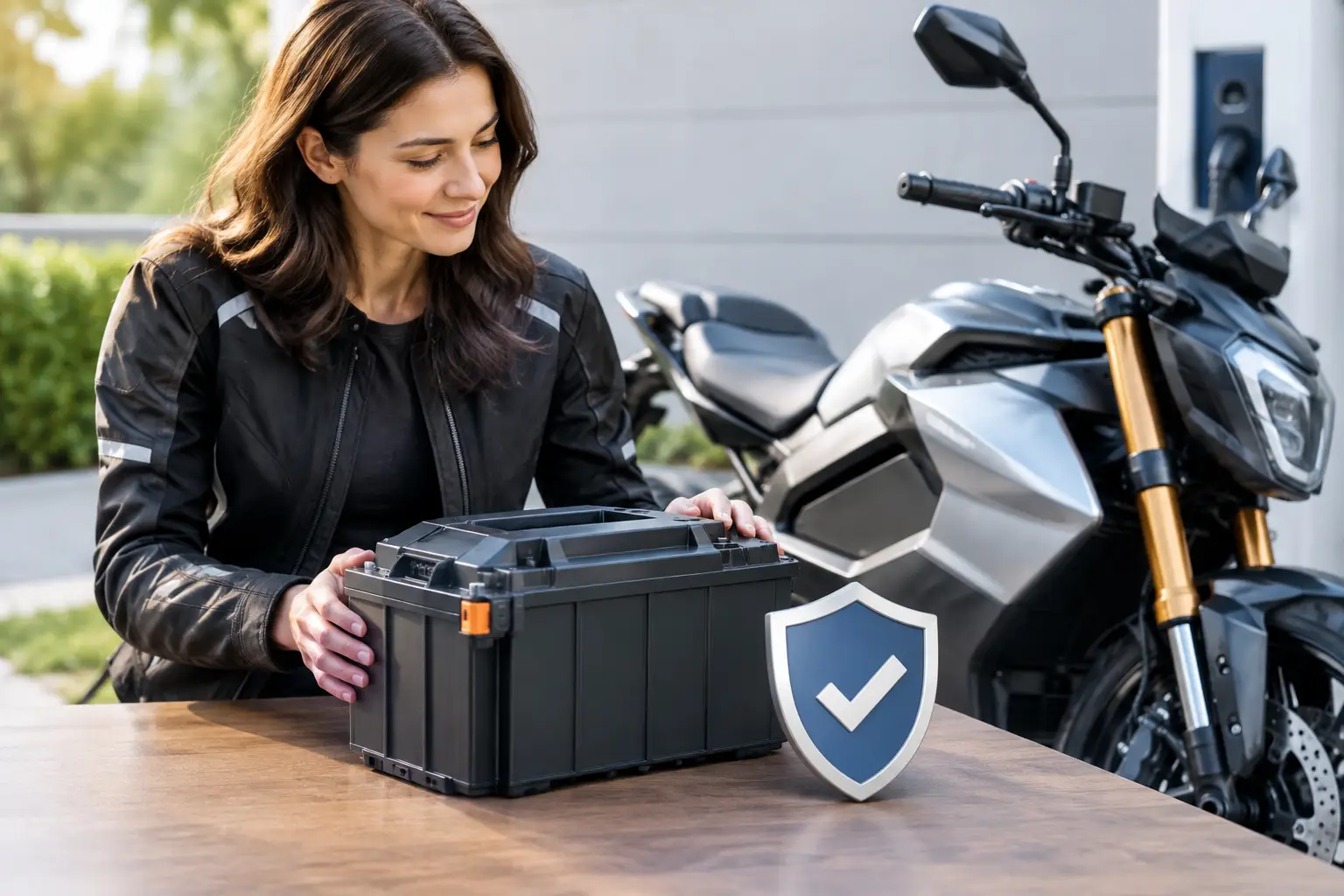
A battery warranty is not the glamorous part of choosing an electric motorcycle. The lines, the silence, the instant torque – those make the first impression. But a clear motorcycle battery warranty guide belongs in every serious rider’s decision process, because the traction battery is the heart of an electric bike and one of its most valuable components.
The right warranty does more than promise a repair if something fails. It tells you how a manufacturer stands behind its engineering, what ownership habits matter, and how confidently you can ride into the years ahead. For city riders who expect their motorcycle to be both a daily tool and a personal statement, that clarity is worth more than fine print.
What a motorcycle battery warranty actually covers
Start by separating the battery systems on an electric motorcycle. The large high-voltage traction battery powers the motor and determines usable range. A smaller 12-volt battery may support accessories, lighting, displays, or control systems. They are different parts with different jobs, and they may have different warranty terms.
A traction-battery warranty commonly addresses defects in materials or workmanship. In plain language, it is designed to cover a battery that fails because a cell, module, connection, battery-management system, or related component was built incorrectly or develops an unexpected fault under normal use.
That is not the same thing as a blanket promise that the battery will perform forever at its original capacity. Every rechargeable lithium-ion battery gradually loses some capacity over time. Heat, charging behavior, storage conditions, age, and mileage all play a role. A strong warranty should explain whether capacity loss is covered, how it is measured, and at what point it is considered abnormal.
Look for language around a capacity-retention threshold. Some manufacturers warrant against capacity dropping below a stated percentage during a stated period. Others cover functional failure but treat gradual range reduction as normal wear unless it is severe. Neither approach is automatically better. The key is knowing which promise is being made before the bike is in your garage.
The terms worth reading before you buy
Warranty length is usually the first number riders notice. It matters, but it is only one part of the picture. A longer term with broad exclusions can offer less real protection than a shorter, clearly defined warranty backed by accessible service.
Read the coverage period alongside the mileage limit, if one applies. For an urban commuter, mileage can accumulate faster than expected. A weekend rider may reach the calendar limit long before the odometer becomes relevant. The useful question is not simply, “How many years?” It is, “Will this cover how I genuinely ride?”
Also check when coverage begins. It may start on the retail delivery date, the original purchase date, or vehicle registration. Demo bikes, showroom bikes, and pre-owned motorcycles can have different start dates. If a warranty transfers to a new owner, find out whether a registration step, dealer inspection, or service record is required.
The most revealing section is often the definition of a covered repair. Does the manufacturer repair the faulty battery, replace a module, replace the full pack, or supply a refurbished equivalent? Is labor included? Are diagnostics, transport, and shipping covered when the motorcycle cannot be ridden? A battery may be technically covered, yet getting the bike to an authorized service location could still involve time and expense.
For a premium electric motorcycle, service competence matters as much as the wording. High-voltage systems require trained technicians, proper diagnostic equipment, and procedures that respect both safety and the motorcycle’s electrical architecture. A warranty has greater value when there is a credible path from problem report to professional resolution.
Battery capacity and real-world range are not identical
A capacity warranty is not a range warranty. Range changes with speed, rider weight, tire pressure, road surface, temperature, cargo, elevation, and riding style. Fast acceleration is one of the quiet pleasures of electric torque, but it uses energy differently than a measured ride through the city.
That distinction protects both rider and manufacturer from false expectations. If a battery test confirms normal capacity but winter temperatures reduce your range, that may not be a warranty issue. If range suddenly collapses in mild conditions and the battery-management system reports a fault, it deserves investigation.
Ask how capacity is tested. A meaningful process uses manufacturer-approved diagnostics and controlled criteria, rather than a single estimate from the display after one ride. The display is useful. It is not the final word on battery health.
What can void or limit battery coverage
Most exclusions are not traps. They are boundaries around risks the manufacturer cannot control. Still, riders should understand them before modifying a motorcycle or improvising a charging setup.
Common exclusions include crash damage, water intrusion caused by improper use, unauthorized repairs, altered wiring, misuse, commercial use beyond the warranty’s definition, and damage from non-approved charging equipment. Neglect can also matter. Leaving a motorcycle deeply discharged for an extended period, ignoring warning messages, or storing it in punishing conditions may affect a claim.
Modifications deserve particular care. Custom touches are part of motorcycle culture, and classic lines invite personal expression. But accessories that draw from the electrical system, aftermarket controllers, non-standard chargers, or changes to protective enclosures can create faults that are difficult to diagnose. They can also give a warranty provider legitimate reason to deny coverage if the modification contributed to the issue.
This does not mean every accessory voids an entire warranty. Usually, the relationship matters. A changed mirror has no meaningful connection to battery performance. An altered charging circuit might. Before making electrical changes, ask for written confirmation of what is approved and keep the answer with your vehicle records.
Care that protects the battery and your claim
Good battery care is understated ownership. It is not complicated, and it does not require treating your motorcycle like a museum piece. It means following the charging and storage guidance supplied for your specific model.
For everyday use, charge with the approved equipment and keep connectors clean, dry, and undamaged. Avoid repeated exposure to extreme heat where possible. If the motorcycle will sit for weeks or months, follow the manufacturer’s recommended state of charge and storage temperature. A battery left empty for too long can enter deep discharge, which may cause permanent damage.
Do not chase rigid charging folklore. Advice such as never charging to 100 percent or never using public charging can be too simplistic. Battery-management systems are designed around the motorcycle’s intended charging behavior. The better rule is to use the bike as designed, avoid unnecessary extremes, and follow the owner’s manual when your riding pattern changes.
Keep a simple record of service, software updates, warning lights, and unusual charging behavior. You do not need a spreadsheet for every ride. But if the bike begins charging slowly, loses charge unexpectedly, displays a fault, or behaves differently after an impact, document the date, mileage, temperature, and what happened. That turns a vague concern into useful diagnostic information.
How to make a battery warranty claim without friction
If you suspect a battery issue, stop trying to diagnose high-voltage components yourself. Photograph any dashboard messages, note the vehicle identification number and current mileage, and contact the manufacturer or authorized service point promptly. Continuing to ride with a warning can sometimes worsen a problem and may complicate the repair process.
Before handing over the motorcycle, gather the essentials:
- Proof of purchase and vehicle registration details
- Service and maintenance records, including software updates where available
- Photos or video of warning messages and charging behavior
- Details of the charger used, recent storage conditions, and any incident that may be relevant
Be direct and factual when describing the concern. “Range feels bad” is hard to test. “The motorcycle charged to 82 percent, displayed a battery fault, and lost 25 percent over six city miles at 65 degrees” gives a technician a starting point. Precision speeds up good service.
Ask what the diagnostic process involves, whether the bike is safe to ride, and what costs may apply if the issue is found to be outside warranty coverage. A reputable service team should explain the next step without theater or ambiguity.
A warranty is part of the ownership design
Electric motorcycles ask riders to think differently about the machine beneath them. There is less routine mechanical maintenance, but more software, thermal management, and energy storage working quietly in the background. That is not a compromise. It is a different kind of craftsmanship – classic lines, electric heart, and engineering that earns trust through miles rather than noise.
When comparing motorcycles, place the battery warranty beside performance, charging time, range, and finish quality. Read it while you are still excited about the bike, not after a warning light appears. Then ride with confidence, care for the machine with intention, and let the silent miles do what they do best.
-
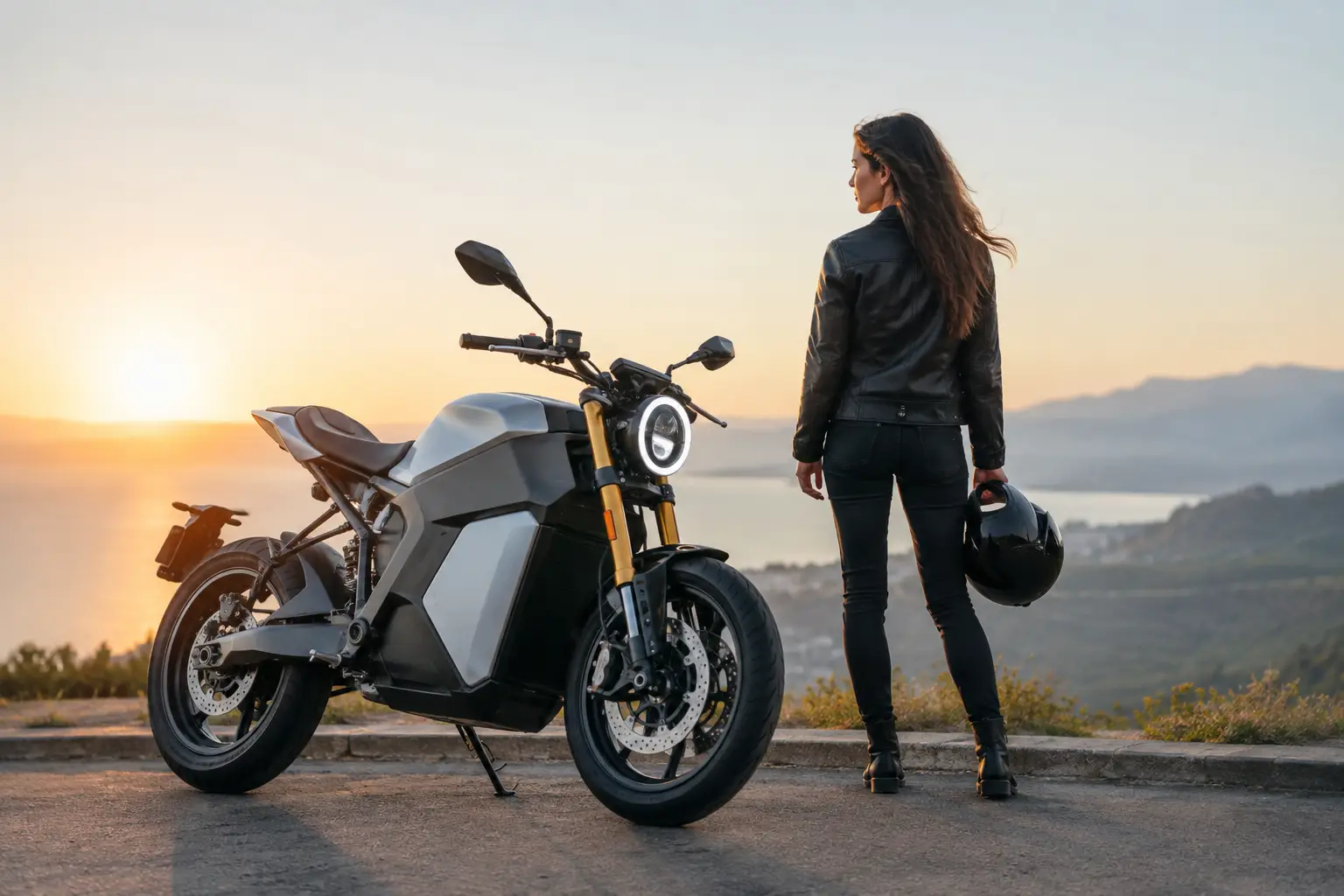
What Makes an Electric Motorcycle Lifestyle Brand?
The phrase electric motorcycle lifestyle brand can sound like marketing until the light changes, the city opens ahead, and you pull away without the usual mechanical theater. No exhaust note asking for attention. No vibration filling your hands. Just immediate torque, classic proportions, and the rare feeling that your ride reflects your taste before it says anything at all.
That is the difference between selling electric transport and building a motorcycle brand with a point of view. A motorcycle has always been more than a way to get from one place to another. It is an object of desire, a personal uniform, and a reason to take the long way home. Electric power does not erase that culture. Done well, it gives it a sharper, quieter form.
An Electric Motorcycle Lifestyle Brand Starts With Identity
Most urban mobility is designed to disappear into the background. It solves a practical problem, then asks very little of the rider. That has value. But a motorcycle is different. Riders notice the radius of a fender, the stance of a frame, the finish of a tank, and the way a machine looks parked outside a coffee shop or studio.
A true lifestyle brand understands that design is not decoration applied after engineering. It is part of the engineering brief. The battery, motor, wiring, display, and controls must belong to the whole silhouette. If the technology fights the form, the bike can feel like a gadget on wheels. If it is integrated with intention, the result feels inevitable: classic lines, electric heart.
This is why retro-inspired electric motorcycles matter. Their appeal is not nostalgia for nostalgia’s sake. Familiar proportions make advanced technology feel human. A round headlight, a clean bench seat, and a balanced tank line carry decades of motorcycle language without forcing the rider to accept decades-old compromises.
The goal is not to imitate the past. It is to carry forward what was worth keeping: presence, simplicity, and the satisfaction of a machine made with restraint.
Silence Is a Different Kind of Performance
For generations, loudness has been treated as proof of performance. More noise meant more power, more character, more attention. Electric motorcycles challenge that assumption with a better question: What if performance did not need to announce itself?
Instant torque changes the first few feet of every ride. In city traffic, that response is more relevant than theatrical acceleration figures alone. A rider needs confident pull away from lights, predictable throttle control, and enough power to merge cleanly into moving traffic. Electric drive delivers its force without waiting for revs, clutch work, or gear changes.
Silence changes the atmosphere around the ride, too. You hear tires on pavement, wind at speed, and the small sounds of a city waking up. Early departures become less intrusive. A late-night ride can feel composed rather than confrontational. For riders who prefer presence over spectacle, quiet is not an absence of character. It is character with discipline.
That does not mean electric is the answer for every kind of motorcyclist. Riders who live for long cross-country days, roadside fuel stops, and the ritual of a combustion engine may find current charging patterns limiting. Range, access to charging, weather, and parking all remain real ownership considerations. The electric motorcycle lifestyle is strongest when it fits the rhythm of your actual life, not an imagined one.
For commuting, city routes, and purposeful weekend rides, however, electric power has a particular elegance. Charge where you park. Leave with a full battery. Ride without planning your day around a gas station.
Craftsmanship Makes Technology Feel Worth Keeping
A premium motorcycle should age with dignity. That is harder to achieve than it sounds.
Screens date quickly. Fashion-led details can lose their appeal after one season. Cheap finishes reveal themselves in the places riders touch most: grips, switches, fasteners, seat material, and paint. A lifestyle brand earns loyalty when the machine feels considered after the first photograph and after the hundredth commute.
Craftsmanship is not a vague luxury claim. It appears in fit, finish, quality control, and the choices a maker makes when there is an easier, faster option available. Limited-batch production can support that standard because it leaves room for attention. Hand-built work matters when it produces consistency, not merely a romantic story.
Swedish design has long understood the value of restraint. It favors clarity over ornament and materials that speak without shouting. Applied to an electric motorcycle, that approach creates a bike that can live in different settings without trying too hard. It belongs outside an apartment building, beside an office, or on a quiet road beyond the city limits.
RGNT Motorcycles builds from that idea: an electric machine with the stance and soul of a classic motorcycle, shaped and assembled in Sweden for riders who refuse to choose between design and daily usability.
Lifestyle Must Hold Up on Monday Morning
The strongest brand stories survive contact with real life. A beautiful bike that is difficult to charge, awkward to park, or uninspiring in traffic is only a beautiful object. A credible electric motorcycle lifestyle includes the unglamorous details because those details determine whether the motorcycle becomes part of your week.
For urban riders, the practical test is simple. Can the bike handle the commute without drama? Can it be charged around existing routines? Does its vehicle class suit the roads you actually use? Does its range allow room for detours, meetings, and a ride after work without turning every mile into a calculation?
The right answer depends on the rider. Someone with secure home charging and a predictable city commute may find electric ownership remarkably easy. Someone in a building without charging access, or with frequent highway-heavy trips, should be more deliberate. Premium does not mean pretending trade-offs do not exist. It means being clear about where a machine excels.
For the rider whose life is centered around the city, that fit can be compelling. Lower routine maintenance, no fuel stops, quiet operation, and immediate response make the motorcycle feel less like a weekend project and more like a natural extension of daily movement.
Why Style Still Matters
There is a tendency to treat aesthetics as superficial, especially in conversations about electric vehicles. But style influences behavior. When a motorcycle feels personal, riders want to use it. They care for it. They choose it over less engaging ways to travel.
Style also signals independence. Not the loud kind built on attention, but the quieter confidence of choosing something because it is right for you. The silent minority does not need to perform rebellion. It simply declines the ordinary.
That attitude is especially relevant as cities become more crowded, regulated, and visually repetitive. The future of mobility cannot be a row of identical appliances. It should leave room for objects with emotion, engineering with personality, and riders who see the journey as part of the point.
An electric motorcycle can be clean without looking clinical. It can be technologically advanced without dressing like a prototype. It can offer performance without turning every street into a stage. Those are not contradictions. They are the foundation of a more mature motorcycle culture.
The Motorcycle as a Personal Standard
The best lifestyle brands do not tell people who to be. They give people a well-made way to express what they already value.
For one rider, that may mean arriving at work without the smell of fuel on a jacket. For another, it is the pleasure of riding a machine with a shape that will still look right years from now. For many, it is the combination: the satisfaction of modern performance delivered through an object with genuine visual soul.
Choose the motorcycle that suits your routes, charging reality, and riding ambitions. Then choose the one that makes you look back at it after you park. The practical decision gets you moving. The emotional one is what makes you ride.
-
7 Benefits of Quiet Motorcycle Riding in Cities
A motorcycle does not need to announce itself before it arrives. The benefits of quiet motorcycle riding begin the moment the traffic light turns green: no exhaust bark bouncing between buildings, no vibration-heavy ritual, just immediate movement and the clean pull of electric torque.
For riders who value classic lines and an electric heart, silence is not an absence of character. It is a different kind of presence. It changes what you hear, how you move through a city, and how the people around you experience your ride.
The benefits of quiet motorcycle riding go beyond noise
A quieter motorcycle is often discussed as a courtesy to neighbors. That matters, especially in dense neighborhoods where an early departure can carry through an entire block. But the real appeal runs deeper. Reduced powertrain noise reshapes the riding experience from inside the helmet.
On a combustion bike, the engine is always part of the conversation. Its revs, mechanical vibration, intake sound, and exhaust note can be exhilarating. For many riders, that soundtrack is inseparable from motorcycling. A quiet electric motorcycle offers a deliberate alternative, not a substitute pretending to be the same thing.
Without the constant mechanical layer, the city becomes more legible. You can hear a car approaching from a side street, the change in tire noise as pavement shifts, a bicycle bell, or the subtle warning note of traffic moving unexpectedly. That does not make riding risk-free, and silence should never replace mirror checks, lane positioning, or defensive awareness. It does give you more room to listen.
1. More awareness in the streets that matter
Urban riding is a fast-reading exercise. Delivery vans stop without much notice. Pedestrians step from behind parked SUVs. Drivers drift toward their next turn while looking for an address, not a motorcycle.
Quiet riding can make these moments feel less cluttered. With less engine and exhaust noise competing for attention, surrounding sound is easier to process. The result is not supernatural awareness. It is simply a calmer sensory environment, one that can support better decisions when the street gets complicated.
There is a useful trade-off to respect. Some people assume loud pipes make a rider more visible to drivers. At close range or from certain angles, a motorcycle may be heard. Yet a closed car cabin, road noise, music, and air conditioning can blunt that signal quickly. Visibility still comes from smart riding: appropriate speed, bright gear where it makes sense, clear lane placement, lighting, and the expectation that others may not see you.
2. A stronger connection to the road
Quiet does not mean detached. In fact, many riders find the opposite. Electric propulsion removes the delay between intention and response. Twist the throttle and torque arrives with direct, controlled urgency.
That clean response is particularly satisfying in city traffic, where riding is less about chasing top speed and more about timing. A gap opens. The light changes. A short on-ramp appears. Smooth, immediate acceleration helps the motorcycle feel alert without demanding a dramatic build of revs.
The sensation is refined rather than muted. You still feel the surface through the chassis, the grip through the tires, and the shift of weight under braking. What disappears is the unnecessary commotion. The ride becomes about line, balance, and momentum.
3. Better mornings and better arrivals
There is a marked difference between leaving home at 6:30 a.m. with an exhaust-heavy machine and rolling away with near-silent electric power. One makes an entrance before the day has started. The other lets you slip out with intention.
That discretion has practical value. Apartment garages, shared driveways, office courtyards, and quiet residential streets are all places where a lower-noise motorcycle fits more naturally. You can leave early, return late, or take the long route home without turning every departure into a neighborhood event.
It also changes how you arrive. You are less likely to step off the bike with your ears ringing or your body carrying the fatigue of persistent vibration. On a daily commute, that quieter finish can be a genuine luxury. The motorcycle still feels like a choice, not another source of friction.
4. The city sounds better when every engine is not competing
Noise pollution is easy to dismiss because it is everywhere. But it shapes how a place feels. Repeated acceleration, idling, and aggressive exhaust noise make a street feel harder, more crowded, and less human.
Quiet motorcycles do not solve urban noise on their own. Tires, wind, buses, construction, and passenger cars remain part of the soundscape. At speed, tire and wind noise become significant for electric motorcycles too. Still, removing combustion and exhaust noise from each acceleration is a meaningful shift, especially at the lower speeds where people live, walk, eat, and sleep.
The advantage is cultural as much as technical. A motorcycle can be expressive without treating public space as a stage. For the silent minority, restraint is not compromise. It is style with manners.
5. Less vibration, more composure
A combustion engine creates a physical signature even at a standstill. Some riders love it. Others would rather keep their hands, feet, and attention free from the pulse of an idling motor.
Electric motorcycles deliver a different kind of composure. With fewer moving powertrain parts and no need to hold an engine at idle, the experience can feel notably smoother in stop-and-go riding. That is especially welcome on a commute full of lights, traffic queues, and short bursts of acceleration.
The benefit is subtle until you spend time with it. Less vibration can make the bike feel more precise, and it can reduce the small accumulations of fatigue that turn a 30-minute ride into a draining one. Silence supports that composure. Together, they create a ride that feels modern without becoming sterile.
6. A more distinctive kind of performance
For decades, performance has been marketed at maximum volume. The louder machine was assumed to be the more serious one. Electric motorcycles challenge that old equation.
A quiet bike with immediate torque makes a confident statement because it does not need to over-explain itself. The performance is there in the response from a stop, the ease of filtering through urban flow where legal, and the controlled pace through a sequence of corners. It is felt first, heard second.
That is why a retro-inspired electric motorcycle can feel so compelling. The silhouette carries the familiarity of a classic machine. The power delivery belongs to a different era. At RGNT, that tension is part of the point: handcrafted Scandinavian character, modern electric performance, and no need for excess noise to prove either.
7. A ride that fits more of your life
The best commuter motorcycle is not necessarily the one that produces the biggest reaction at a weekend meet. It is the one you want to use on an ordinary Tuesday, when the route includes a garage ramp, a few busy intersections, a coffee stop, and a ride home after dark.
Quiet riding broadens those moments. It makes a motorcycle easier to live with in shared spaces and more comfortable to return to day after day. It can also make the transition from car to motorcycle feel less intimidating for new riders, because there is no clutch work, no shifting routine, and no engine heat building beneath them in traffic. Experienced riders may miss those mechanical rituals. Others will see their absence as freedom.
Range, charging access, local regulations, and your typical riding distance still matter. Electric ownership works best when the motorcycle matches the rhythm of your real life, not an imagined one. For city-based riders with reliable charging and a taste for clean design, the case is increasingly hard to ignore.
Quiet riding is not silent riding
An electric motorcycle is not invisible, and it is not perfectly silent. Tire noise rises with speed. Wind becomes part of the experience. Pedestrians and drivers may not hear you approaching at low speeds, which is another reason to ride with patience and anticipation.
The goal is not to erase the motorcycle from the street. It is to remove the noise that does not add to the ride. What remains is motion, control, design, and the satisfying awareness that you can move quickly without making a spectacle of it.
Choose the machine that makes you want to take the ride, not just start the engine. For some, that will always mean the mechanical theater of combustion. For others, the better soundtrack is the city opening up ahead.
-
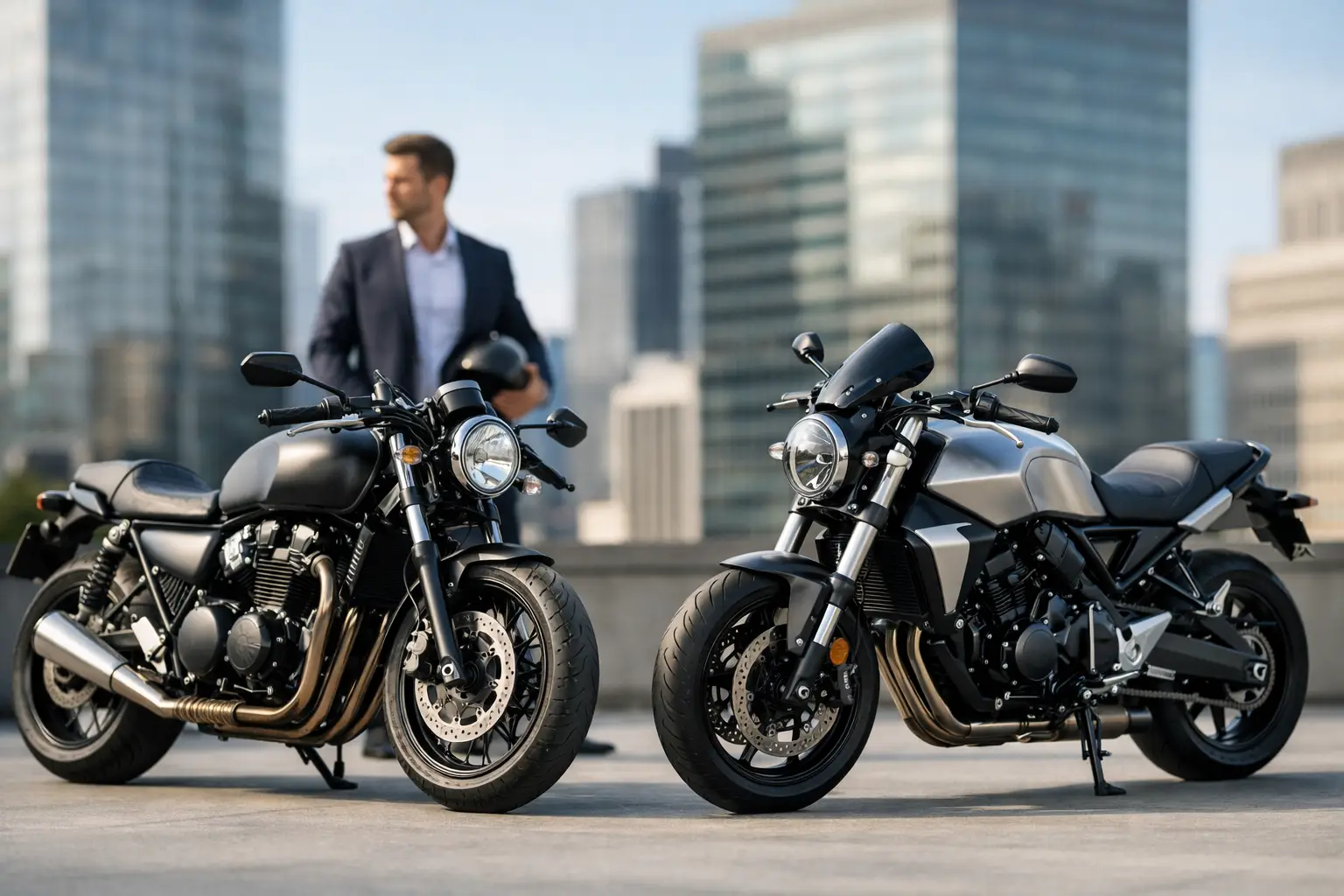
Best Stylish Motorcycles for Professionals
A motorcycle parked outside your office says something before the first meeting begins. The best stylish motorcycles for professionals avoid the usual compromise: they look considered, ride with purpose, and fit real life beyond the weekend photo. They are not loud for the sake of attention. They are the silent minority – distinct because every line, material, and movement has a reason.
For a design-conscious commuter, style is not an accessory added after the engineering is done. It is the result of proportion, finish, performance, and the confidence to leave excess behind. The right bike should feel as appropriate arriving at a client dinner as it does cutting through city traffic before sunrise.
What professionals should demand from a stylish motorcycle
A sharp-looking motorcycle is easy to find. One that remains compelling after six months of commuting is harder. Daily riding exposes weak ergonomics, impractical range, excessive heat, awkward maneuvering, and finishes that do not age well. A professional rider needs more than a beautiful tank or a fashionable badge.
Start with the riding environment. Dense urban streets reward light, controlled handling and immediate response at low speeds. Longer suburban routes put greater value on wind protection, stable chassis behavior, and a comfortable riding position. If the bike will replace a car for most workdays, storage, charging or fueling access, and weather readiness become part of the design brief.
The best choices also feel intentional when stationary. Look for clean cable routing, balanced wheel and seat proportions, high-quality switchgear, and lighting that complements the bike rather than competing with it. A well-resolved motorcycle does not need visual noise to make an impression.
The best stylish motorcycles for professionals by riding character
There is no single perfect professional motorcycle. The right choice depends on where you ride, how far you travel, and whether you want your machine to feel tailored, athletic, traditional, or quietly radical.
Modern-classic electric motorcycles
For professionals who move through cities and value a calmer daily ritual, an electric modern classic makes a persuasive case. The format combines familiar motorcycle posture and timeless silhouette with instant torque, low running noise, and fewer routine mechanical demands. It feels less like adopting a gadget and more like choosing a better-made object.
Electric power changes the character of a commute. There is no clutch work in stop-and-go traffic, no engine heat rising at a red light, and no exhaust note announcing every departure from a quiet street. The trade-off is planning. Range, charging time, battery access, and local public charging availability should be assessed honestly against your weekly mileage.
RGNT Motorcycles occupies this territory with hand-built Swedish machines that pair classic lines with an electric heart. For the rider who wants a motorcycle to be an extension of personal taste, not a piece of consumer electronics, that combination has real appeal.
Premium roadsters
A roadster remains one of the strongest all-around choices for professionals who want a traditional motorcycle experience without the bulk of a touring bike. Its upright ergonomics make city riding manageable, while exposed mechanical elements give it a purposeful, architectural presence. A roadster can look elegant in dark, restrained colors and still feel alive on a winding road after work.
The trade-off is wind exposure. A naked or lightly faired bike is ideal for urban and regional rides, but frequent highway travel can become tiring. Choose one with a seat that supports more than short hops and suspension that remains composed over broken pavement. The polished showroom image means little if the bike beats you up on the way home.
Neo-retro standards
Neo-retro motorcycles are for riders who appreciate heritage without wanting to maintain history. They borrow the visual grammar of classic machines – round lamps, sculpted tanks, visible metal, simple silhouettes – while delivering modern brakes, electronics, and reliability. Done well, this is the most versatile style for a professional wardrobe and a varied riding calendar.
Not every retro-inspired bike is refined. Some rely on cosmetic details while carrying awkward proportions or budget finishes. Pay attention to the negative space around the engine or battery, the relationship between the seat and rear fender, and whether modern components have been integrated with restraint. The strongest designs feel coherent from every angle.
Sporty middleweights
A sporty middleweight suits professionals whose commute is part transportation, part reset button. These motorcycles are typically quicker, lighter-feeling, and more aggressive in stance than a standard. They offer a more focused ride without requiring the extreme posture or social volume of a full supersport machine.
This category demands self-awareness. If your regular ride includes long freeway stretches, business attire, or frequent passengers, a committed sport position may become a liability. But for a solo rider with a short-to-medium commute and a taste for precise handling, a cleanly designed middleweight can be the right kind of rebellion.
Compact premium commuters
Smaller-displacement and A1-class motorcycles deserve more respect than they often receive. In city traffic, manageable weight and usable acceleration frequently matter more than headline horsepower. A compact premium motorcycle is easier to park, less intimidating in tight spaces, and often more enjoyable at the speeds that define urban life.
The difference lies in execution. Choose a compact bike that feels deliberately engineered, with strong brakes, composed suspension, and materials that do not feel disposable. Professional style is not about buying the largest machine available. It is about selecting the machine that makes sense with conviction.
Design details that keep their relevance
Trends are cheap. Good proportions are not. If you want a motorcycle that will still look right several years from now, favor a restrained palette, quality metalwork, and a silhouette that is clear without being theatrical. Black, deep gray, brushed aluminum, rich leather, and carefully used color tend to age better than novelty graphics or oversized logos.
Lighting deserves close attention. A round headlight can be timeless, but only when its size and placement suit the rest of the bike. LED technology can add visibility and precision, yet it should not turn a motorcycle into a rolling light show. The same principle applies to digital displays: useful information belongs in the cockpit, while visual clutter does not.
Fit matters as much as finish. A bike that looks elegant under studio lighting may feel wrong if your knees are sharply bent, your wrists carry too much weight, or your feet cannot reach the ground with confidence. Sit on it in the gear you actually wear. A tailored ride begins with posture.
Make the motorcycle work with your professional life
The most stylish choice is often the one that removes friction from your day. Before committing, think through the unglamorous details: where it will be parked, how you will secure your helmet, whether your laptop can travel safely, and what happens when rain arrives fifteen minutes before your first appointment.
A compact lock, discreet luggage, and a weatherproof overshell can preserve both convenience and presentation. If your workplace has charging access, an electric motorcycle may be especially compelling. If you routinely cover unpredictable distances without reliable charging, a gas-powered roadster or standard may better match the reality of your schedule. Taste includes knowing where compromise is unnecessary and where it is sensible.
Maintenance support should also influence the decision. A limited-production motorcycle can offer exceptional character and craftsmanship, but confirm that service access works in your area. Mass-market models may be easier to maintain, while boutique machines can feel more personal. Neither is automatically superior; ownership should suit the way you live.
Choose presence, not noise
The best professional motorcycle does not need to imitate anyone else’s idea of success. It should move through the city with composure, look right against the architecture of your life, and give you a reason to take the longer route when the day allows.
Choose the bike whose design stays quiet when you are not looking at it – then becomes unforgettable when you are. That is style with mileage.
-
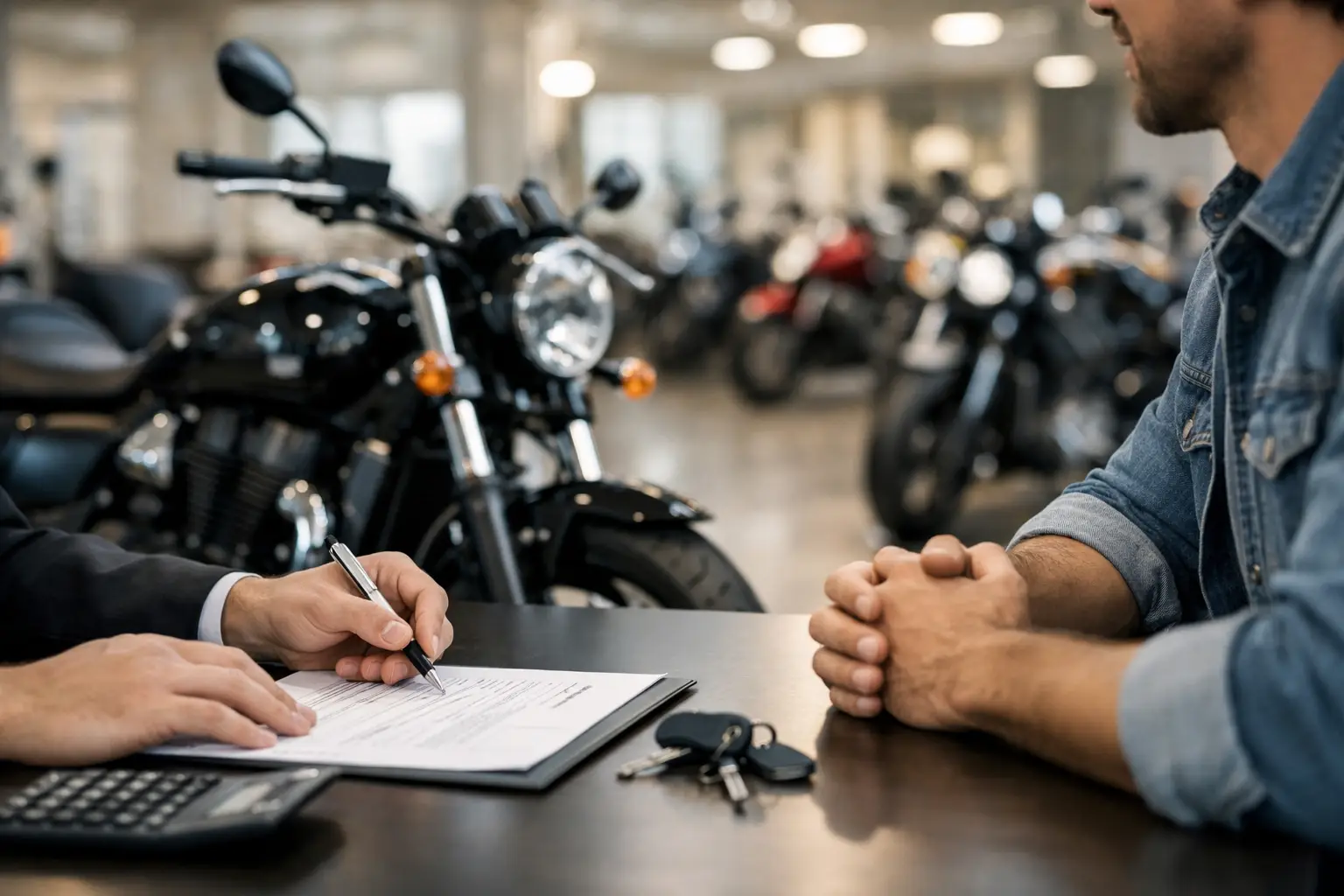
A Guide to Motorcycle Financing That Fits
The right motorcycle should feel immediate: the line of the tank, the pull of the throttle, the quiet confidence of leaving traffic behind. But the purchase should feel just as considered. This guide to motorcycle financing is for riders who want the numbers to support the feeling, not dilute it.
A premium electric motorcycle is more than a monthly payment. It is a design object, a commuter, a weekend escape, and a choice to ride differently. Finance it with the same clarity you bring to choosing range, performance, and style.
Start With the Real Cost of Ownership
The price on the motorcycle is only the first figure. Your financed amount may also include sales tax, title and registration fees, documentation charges, insurance, accessories, and, depending on the agreement, a down payment or extended protection plan. Ask for an itemized out-the-door price before comparing any financing offer.
Electric motorcycles can change the ownership equation in useful ways. There is no fuel tank to fill, no oil to change, and fewer routine mechanical service items than on a combustion bike. That does not make ownership cost-free. Tires, brake components, insurance, charging, and scheduled inspections still belong in the picture. The advantage is that the ongoing costs can be easier to anticipate.
Treat your budget as a complete riding budget, not a payment target. A low monthly number can look attractive while quietly extending the loan long enough to increase the total amount you pay.
How Motorcycle Financing Actually Works
Most motorcycle loans are installment loans. A lender pays the seller, and you repay the borrowed balance in fixed monthly installments over an agreed term. Each payment includes principal, which reduces what you owe, and interest, which is the lender’s charge for providing the money.
Your annual percentage rate, or APR, is the number to watch. It expresses the yearly cost of borrowing and can include certain mandatory fees, making it more useful than an interest rate alone when comparing similar loans. Your APR is shaped by your credit profile, income, debt obligations, loan amount, term length, and sometimes the age or type of motorcycle.
The loan term matters just as much. A 36-month loan generally carries higher payments but less interest overall. A 60- or 72-month term lowers the monthly commitment, which can preserve room in your budget, but it usually raises the total financing cost. Neither is automatically right. The better choice is the shortest term that leaves you enough breathing room to insure, maintain, and enjoy the bike without strain.
For example, financing $12,000 at the same APR over five years instead of three years may make the payment feel more approachable. Yet those additional 24 months mean more interest accrues. Always ask for the total of payments, not only the payment due each month.
A Guide to Motorcycle Financing Offers
There are several ways to finance a motorcycle in the United States. The best route depends on your credit, desired term, cash position, and whether you value simplicity or maximum flexibility.
A dealer-arranged loan can be convenient because the application and vehicle purchase happen together. It may also provide access to promotional offers when available. Still, convenience is not a reason to skip comparison. Review the lender, APR, term, fees, and whether the loan allows early payoff without a penalty.
A bank or credit union loan lets you arrange funding before you buy. A preapproval gives you a clear ceiling and can make the purchase conversation more straightforward. Credit unions, in particular, may offer competitive rates to eligible members, though their vehicle rules and application process vary.
An unsecured personal loan does not use the motorcycle as collateral. It can offer flexibility, especially for a private-party purchase or a bike that falls outside a lender’s standard criteria. The trade-off is that rates may be higher than a secured motorcycle loan, particularly for borrowers with limited credit history.
Before signing, place every offer side by side and compare these four details:
- The APR and whether it is fixed for the entire term
- The monthly payment and the exact number of payments
- The total of all payments over the life of the loan
- Origination fees, late fees, and any prepayment penalty
If an offer is unclear, it is not ready to sign. Premium ownership should not begin with fine print you have not read.
Decide What to Put Down
A down payment reduces the amount you borrow from day one. It can lower your monthly payment, reduce total interest, and make approval easier. For many riders, 10% to 20% is a sensible target, but the right amount depends on what you can comfortably keep in reserve after the purchase.
Do not empty your savings simply to create an impressive down payment. You still need a buffer for insurance, riding gear, registration, and the ordinary surprises that arrive with city life. A smaller down payment with a stable emergency fund can be healthier than a larger one that leaves no margin.
A trade-in can function like a down payment too, but focus on two numbers separately: the value offered for your current motorcycle and the final out-the-door price of the new one. Blending them into a single monthly payment makes it harder to see whether either figure is working in your favor.
Protect Your Credit Before You Apply
Lenders use your credit report to judge how reliably you have managed borrowed money. Before applying, review your reports for inaccurate balances, missed payments that do not belong to you, or accounts listed in error. Correcting a problem can take time, so do it before the motorcycle you want is ready to ride home.
Paying down revolving credit card balances may improve your credit utilization ratio, which can help your application. Avoid opening new accounts or taking on significant debt immediately before financing if you can. Consistency tends to read well to lenders.
When shopping for rates, keep applications within a focused window. Credit scoring models often recognize that multiple auto or motorcycle loan inquiries close together may reflect one purchase decision rather than repeated borrowing. The precise treatment depends on the scoring model, but concentrated shopping is generally cleaner than spreading applications across several months.
If your credit history is thin, a larger down payment or a qualified co-signer may improve access to financing. A co-signer is not a formality. They become legally responsible for the loan if you do not pay, so it deserves a direct conversation and a payment plan you can carry on your own.
Do Not Finance the Emotion Alone
A motorcycle earns its place in your life through feeling. That is the point. Immediate electric torque, classic lines, and the absence of engine noise can turn an ordinary route into the best part of the day. But the finance agreement should survive a less romantic moment: an unexpected rent increase, a reduced work schedule, or an insurance renewal that costs more than expected.
Before you commit, run a simple pressure test. Could you make the payment for three months if your discretionary spending had to tighten? Could you still cover insurance and secure parking? Would a shorter term feel satisfying, or would it make your monthly budget too rigid? Honest answers are more valuable than stretching for a specification you cannot comfortably support.
This is also where total cost becomes personal. Some riders prioritize the lowest possible payment. Others prefer a larger down payment and a quicker payoff so the motorcycle is theirs sooner. Neither approach is more stylish. The right one gives you freedom to ride without a financial shadow following every mile.
Read the Agreement Like a Rider
The loan contract should identify the vehicle, the amount financed, APR, payment schedule, late-payment terms, and any security interest the lender holds in the motorcycle. Check that the final documents match the offer you accepted. If a number changed, stop and ask why.
Look closely at optional products added during checkout, such as service contracts, tire coverage, payment protection, or guaranteed asset protection coverage. Some can be worthwhile for a particular rider, but they should stand on their own value. Do not accept them because they were folded into a monthly payment that still appears manageable.
For an electric motorcycle, ask practical questions before purchase as well: where will you charge, what does your insurance carrier require, and how does your planned mileage fit the bike’s range and your routine? A beautifully financed machine still needs to fit the life you actually lead.
RGNT Motorcycles was built for riders drawn to classic lines and an electric heart. Whether you finance through a preferred lender or arrive with approval already in hand, let the decision preserve what brought you to the motorcycle in the first place: the pleasure of moving through the city on your own terms.
Choose the payment that lets the ride stay quiet in every sense. When the numbers are clean, the road feels wider.
-
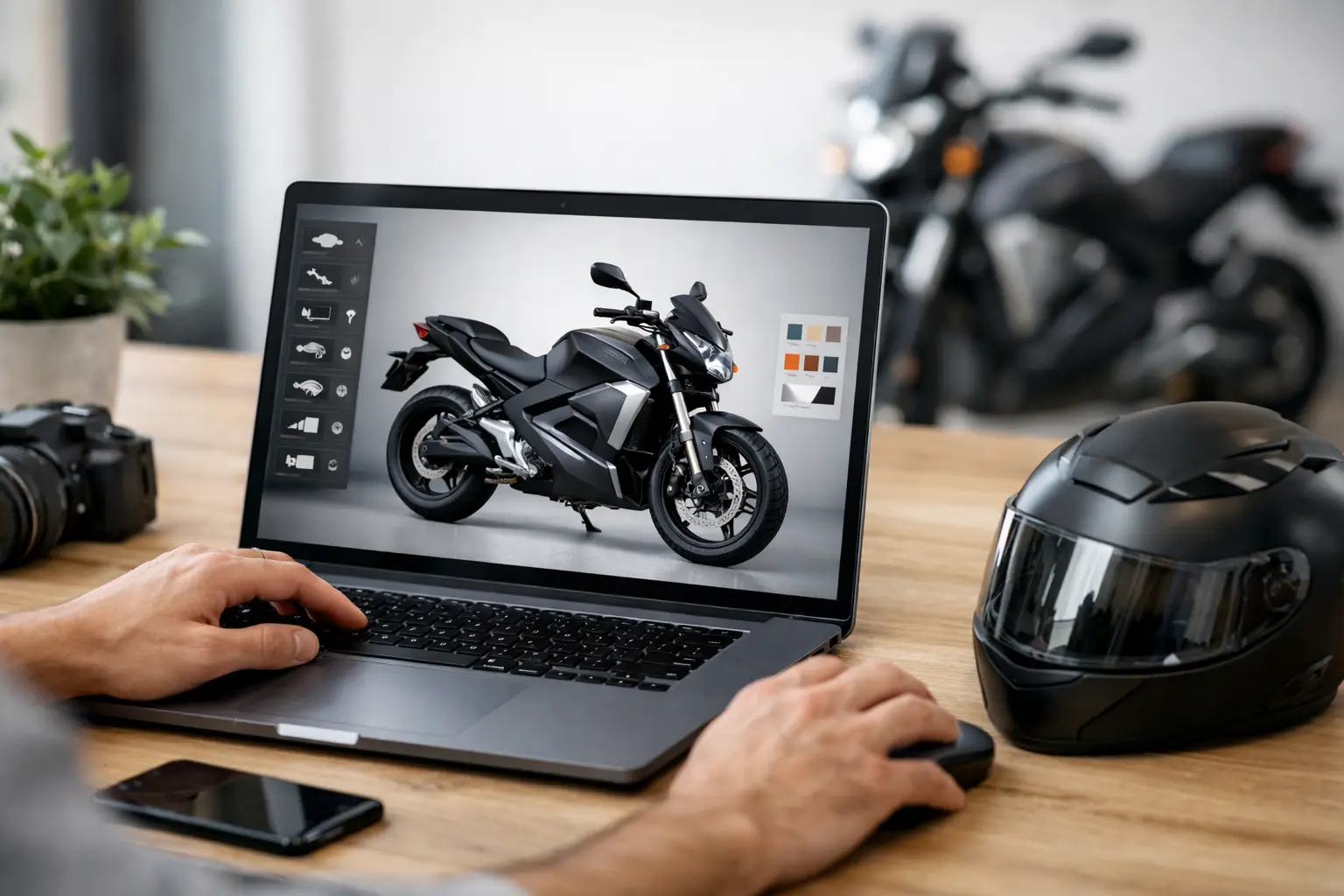
How to Configure an Electric Motorcycle Online
The best motorcycle is rarely the one with the longest spec sheet. It is the one you look back at after parking it. When you learn how to configure an electric motorcycle online, the goal is not to add every available option. It is to shape a machine around your route, your riding rhythm, and your sense of style.
A good digital configurator should feel less like filling out a form and more like standing beside the bike in a quiet workshop. You make a few considered choices. Each one changes the character of the finished machine. Classic lines, electric heart, and no wasted noise.
Start With the Ride You Actually Take
Before choosing a color or accessory, picture a normal Tuesday. Are you crossing a dense city from apartment to studio? Riding a few miles to the train? Leaving town on weekends when the streets finally open up? Your real use case should lead every configuration decision.
For most urban riders, immediate torque, confident braking, easy charging, and practical range matter more than headline top speed. Electric motorcycles are at their best when they turn stop-and-go traffic into something calmer and more direct. There is no clutch to manage at red lights, no engine heat pressing upward, and no soundtrack competing with the city.
Range deserves an honest look. Manufacturer estimates are useful, but your result changes with speed, rider weight, temperature, hills, tire pressure, and how aggressively you use that instant electric pull. If your daily round trip is comfortably below the stated urban range, you have room for detours and spontaneity. If your route pushes close to the limit, choose a charging plan before choosing a finish.
Think in Charging Habits, Not Charging Anxiety
The right question is not, “How fast can it charge?” It is, “When will I naturally charge it?” A rider with access to a garage outlet can replenish energy while sleeping. A rider who parks at work can make daytime charging part of the routine. Apartment living requires more thought: confirm outlet access, building rules, cable storage, and whether charging away from the curb is realistic.
Fast charging can be valuable, especially for longer rides, but it is not automatically the deciding feature for a city-focused motorcycle. Home or workplace charging may be more useful than a faster public charging stop you rarely make. Configure around the infrastructure you will use, not the one you hope appears on every block.
Choose Performance That Fits Your License and Streets
Electric performance can feel deceptively quick. Torque arrives the moment you roll on, which makes low- and mid-speed response especially meaningful in traffic. A motorcycle built for the A1 or equivalent category can still feel sharp and alive when its power delivery is well calibrated.
For US riders, check local licensing, registration, insurance, and vehicle classification requirements before finalizing an order. Rules differ by state, and an electric motorcycle is not treated like an e-bike simply because it has a battery. Confirm the model’s top speed, power rating, and street-legal status against the rules where you live.
Then consider the roads you ride. If your commute includes freeway stretches, make sure the motorcycle’s sustained speed and usable range match that reality. If your miles are mostly city avenues and connected suburban roads, a lighter, agile setup with strong urban acceleration can be the more satisfying choice. More power is not always more freedom. Sometimes it is just more cost, more weight, and less relevance to your day.
Configure the Look With a Clear Point of View
An electric motorcycle does not need to look like a gadget to be advanced. The strongest designs let the technology support the silhouette rather than dominate it. Tank-like forms, clean fenders, round lighting, and restrained finishes can carry decades of motorcycle culture without pretending the machine is powered by gasoline.
When selecting color, resist the urge to treat it as a safe afterthought. The finish changes how the bike sits in the street and how it wears over time. A dark, muted color can make the form feel compact and purposeful. A lighter or brighter finish can put the craftsmanship on display and make the motorcycle part of your visual identity.
Consider your surroundings too. A bike parked outside a brick warehouse, a glass office, or a coastal café tells a different story. The right configuration should feel considered in all three places. RGNT approaches this balance as Swedish craftsmanship rather than decoration: every visible detail should earn its place.
Accessories Should Solve a Real Problem
Accessories are where a clean build can either become more useful or lose its line. Start with what you carry and where you park. A rear rack or luggage solution makes sense if you commute with a laptop, gym clothes, or groceries. Security additions deserve priority if the bike will spend time on the street. Weather protection is worth considering if you ride through colder or wetter months.
Do not add equipment simply because the configurator offers it. Extra pieces can change the visual balance, add weight, and raise the final price. The best accessory setup looks inevitable, as if it belonged on the bike from the first sketch.
Get the Fit Right Before You Commit
Online configuration cannot replace your body. Seat height, reach to the bars, foot position, and overall weight affect confidence from the first stoplight onward. Study the dimensions carefully, but do not rely on numbers alone if you can avoid it.
If there is an opportunity to sit on the model at a dealer, showroom, or riding event, take it. Wear the shoes or boots you would actually ride in. Put both feet down. Reach for the controls. Imagine backing it out of a tight parking spot on a wet morning. A motorcycle can be technically manageable and still not feel natural to you.
Rider height is only one part of fit. Inseam, torso length, arm reach, mobility, and experience all matter. A lower seat may build confidence for a newer rider, while a more open position can be more comfortable for longer daily distances. If you are between sizes in your riding gear or unsure about ergonomic options, ask before the order is placed rather than treating comfort as an upgrade for later.
Understand the Final Price, Not Just the Starting Price
A configuration is only complete when the ownership picture is clear. The purchase price is one part of it. Add sales tax, registration, insurance, delivery, approved charging equipment, riding gear, and any accessory installation. Financing can make a premium electric motorcycle more accessible, but compare the monthly payment with the term length and total amount paid.
Electric ownership can shift costs in your favor. Charging is generally less expensive than fueling a comparable gas motorcycle, and electric drivetrains have fewer routine service items. But tires, brake pads, insurance, storage, and repairs still exist. Premium design should be bought with clear eyes, not wishful math.
Check the warranty terms and understand what support looks like in your area. Ask how service is handled, what routine maintenance is expected, and where qualified work can be performed. A refined purchase experience matters, but dependable support after delivery matters more.
How to Configure an Electric Motorcycle Online With Confidence
Once your choices are in place, pause before the final click. Review the configuration as one complete object rather than a set of boxes. Does the range suit your week? Does the charging plan work where you live? Does the performance match your license and roads? Would you still choose that color after six months, not just six minutes?
Save or print the final specification and compare it against the standard model. This makes it easier to spot an accessory you do not need or a practical detail you missed. Confirm the estimated delivery timeline, deposit terms, cancellation policy, and exactly what is included at handover. A helmet, registration, or home charging solution should not become an afterthought during delivery week.
The point of configuring online is not to make a motorcycle feel virtual. It is to make the eventual first ride feel familiar. Build with restraint, choose with purpose, and let the silent ride do the talking.
-
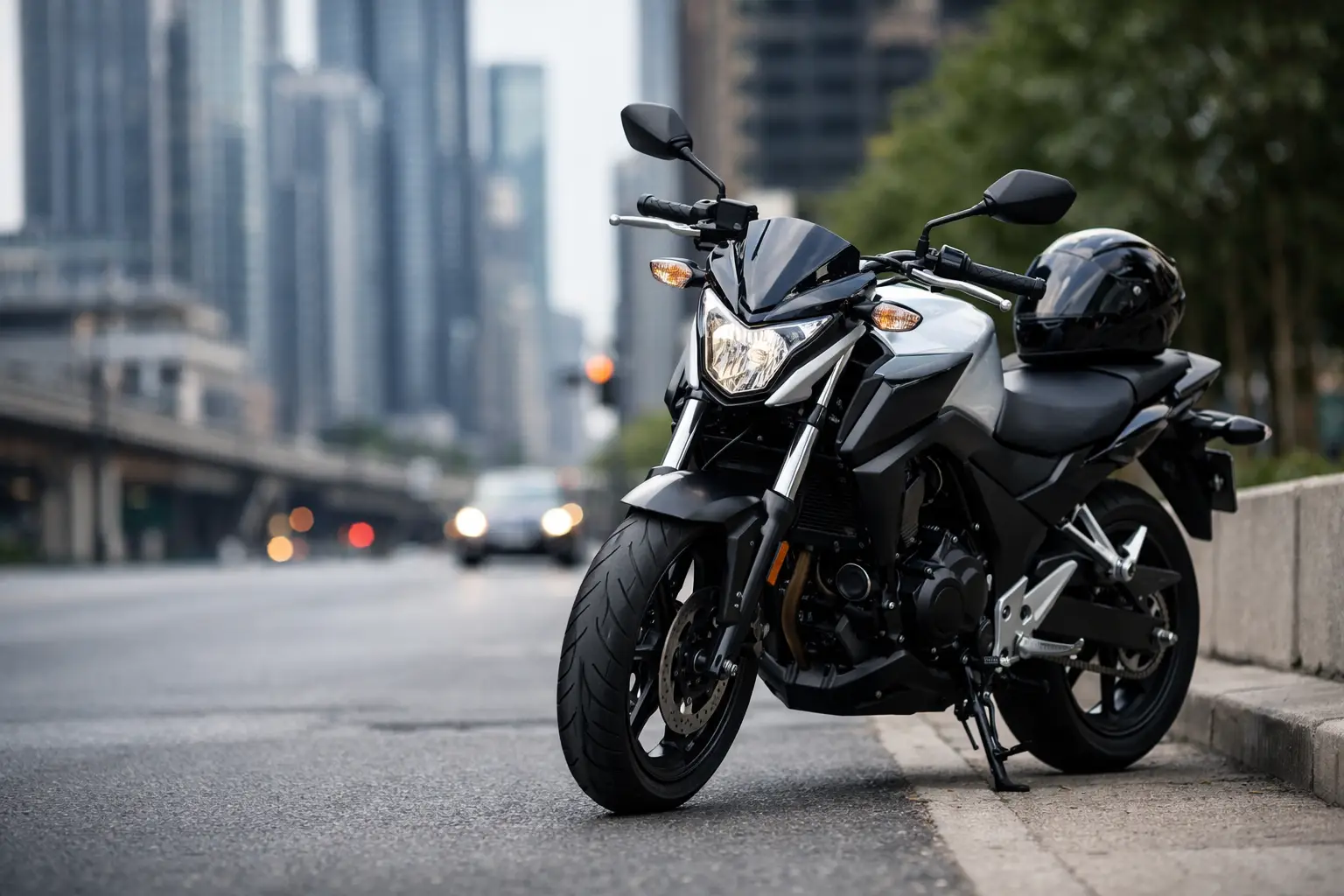
Urban Commuter Motorcycle Review for City Riders
The city does not reward excess. It rewards a motorcycle that leaves the line cleanly, slips into the gap without drama, and turns a daily ride into the best part of the day. This urban commuter motorcycle review looks at what actually separates a compelling city bike from one that merely looks good parked outside a coffee shop.
For urban riders, the question is rarely about outright top speed. It is about response, confidence, range that fits real routines, and a design worth arriving on. The best commuter motorcycle is not a compromise between style and function. It is a machine that makes the two inseparable.
What a City Motorcycle Must Do Well
A commuter motorcycle lives in a tighter, messier environment than a weekend canyon bike. Traffic lights come fast. Potholes appear late. Parking is scarce. A good urban machine needs to feel composed at low speeds, quick when a space opens, and light enough to place precisely between cars and curbs.
That makes immediate power delivery more valuable than a headline top-speed figure. Electric torque is especially well suited to this rhythm. There is no clutch work at every stoplight, no waiting for revs to build, and no unnecessary noise announcing your arrival. Twist the throttle and move. In dense traffic, that directness can make a ride feel calmer as well as faster.
Weight still matters, even with an electric drivetrain. A motorcycle can have impressive acceleration and still become tiring if it feels awkward while backing out of a parking spot or filtering through a narrow lane. Look for balanced mass, a manageable seat height, and steering that feels natural at walking pace. These are the details that determine whether you ride every day or leave the bike at home.
Performance That Makes Sense in Traffic
City performance is about usable speed. Most commutes ask for repeated acceleration from 0 to 35 mph, confident merging, and enough reserve to stay ahead of the flow when necessary. A smooth, predictable throttle matters more here than aggressive calibration intended for racetrack theatrics.
Electric motorcycles have a distinct advantage: their strongest response is available from the moment you move. That changes the character of a commute. Pulling away from an intersection becomes clean and decisive, while short gaps in traffic require less planning. The absence of shifting also lets the rider keep more attention on pedestrians, delivery vans, cyclists, and the unpredictable choreography of city streets.
There is a trade-off. Immediate torque needs thoughtful control. A bike that reacts too sharply can feel nervous on wet pavement or broken asphalt. The best systems deliver urgency without becoming abrupt, giving the rider a direct connection to the road rather than a digital sensation detached from it.
Range Should Fit Your Life, Not a Laboratory
Range claims only become meaningful when measured against your own routine. A 12-mile commute each way, office charging, weekend errands, and the occasional longer ride create a very different requirement than a 40-mile daily run with no place to plug in.
Urban riding can be kind to electric range because average speeds are lower and regenerative braking may recover some energy. It can also be demanding because frequent hard acceleration, cold weather, and high-speed stretches consume more power. Treat a manufacturer’s stated range as a starting point, then leave a sensible buffer for detours, changing temperatures, and the days when you do not want to think about charging.
Charging habits matter as much as charging time. For many city riders, the ideal setup is simple: plug in at home overnight and begin each morning with a full battery. If that is not possible, secure workplace charging or public infrastructure can make ownership practical. The right motorcycle fits your charging reality before it fits your aesthetic mood board.
The Design Test Happens Every Time You Park
A city motorcycle is transportation, but it is also visible. It sits outside your building, follows you to dinner, and becomes part of how you move through the world. That does not mean design should be treated as a superficial extra. A motorcycle with a lasting silhouette invites use. It holds its presence long after the first rush of new ownership fades.
Modern electric bikes often chase a futuristic visual language that can feel dated before the first service interval. Classic proportions offer a different kind of confidence: a real tank form, considered metalwork, a strong stance, and details that look intentional rather than ornamental. Classic lines, electric heart. The combination works because it respects what made motorcycles desirable in the first place while removing much of the noise, vibration, and routine maintenance associated with combustion.
Craftsmanship is part of this equation. Consistent panel fit, tactile controls, quality paint, and purposeful finishes are not luxuries when the motorcycle is a daily object. They are reminders that the machine was made to be lived with. A hand-built approach, such as the one behind RGNT Motorcycles, brings particular appeal for riders who would rather own something distinctive than disappear into a row of interchangeable commuter vehicles.
Comfort Is a Performance Feature
Urban rides may be short, but they are rarely smooth. Expansion joints, patched pavement, streetcar tracks, and speed humps all test suspension, seating, and chassis balance. A firm motorcycle can feel exciting for ten minutes and exhausting by Friday. A soft one may float over imperfections but lose precision when traffic demands a quick line change.
The answer is controlled suspension rather than softness for its own sake. A capable urban bike should settle quickly after a bump, stay planted under braking, and communicate what the front tire is doing. Good ergonomics support this control. An upright or slightly forward riding position usually offers the best visibility and leverage in traffic, while a seat that allows easy stops makes rush-hour riding less stressful.
Wind protection depends on the route. For an inner-city commute at moderate speeds, a clean, unfaired profile may be all you need. Riders with regular highway sections may prefer a small screen or a model with more wind management. Neither choice is universally better. The right answer is the one that matches the miles you actually ride.
Ownership Should Feel Lighter Than the Commute
Electric ownership has a practical appeal beyond the ride itself. There is no oil change schedule, no clutch adjustment, and fewer moving parts competing for attention. Regenerative braking can also reduce brake wear in stop-and-go use. These benefits do not eliminate maintenance, of course. Tires, brake components, suspension checks, software updates, and battery care still matter.
Insurance, registration, local incentives, parking rules, and licensing requirements vary by city and state. Riders considering an A1-class electric motorcycle should also confirm how its power and classification translate to local regulations. Do that before making a decision, not after the bike is in the garage.
Security deserves equal attention. City parking exposes any attractive motorcycle to risk. A quality lock, a covered or monitored parking space, and insurance suited to the bike’s value are part of the ownership plan. Premium design earns attention. Be prepared to protect it.
What to Look for Before You Commit
The strongest urban commuter motorcycles make their case in the ordinary moments: the cold early departure, the crowded intersection, the rough alley behind the office, the quick stop on the way home. Test ride with those moments in mind. Pay attention to throttle response at low speed, how easily you can maneuver the bike by hand, how the brakes feel after repeated stops, and whether the riding position still feels right after 30 minutes.
Ask yourself whether the claimed range leaves room for your real life. Consider where it will charge, where it will sleep, and whether its styling will still feel like yours a year from now. The silent minority does not need to be loud to make an entrance. Choose the motorcycle that makes every city block feel less like a chore and more like your own line through the noise.