
Your cart is currently empty!
Category: Uncategorized
-
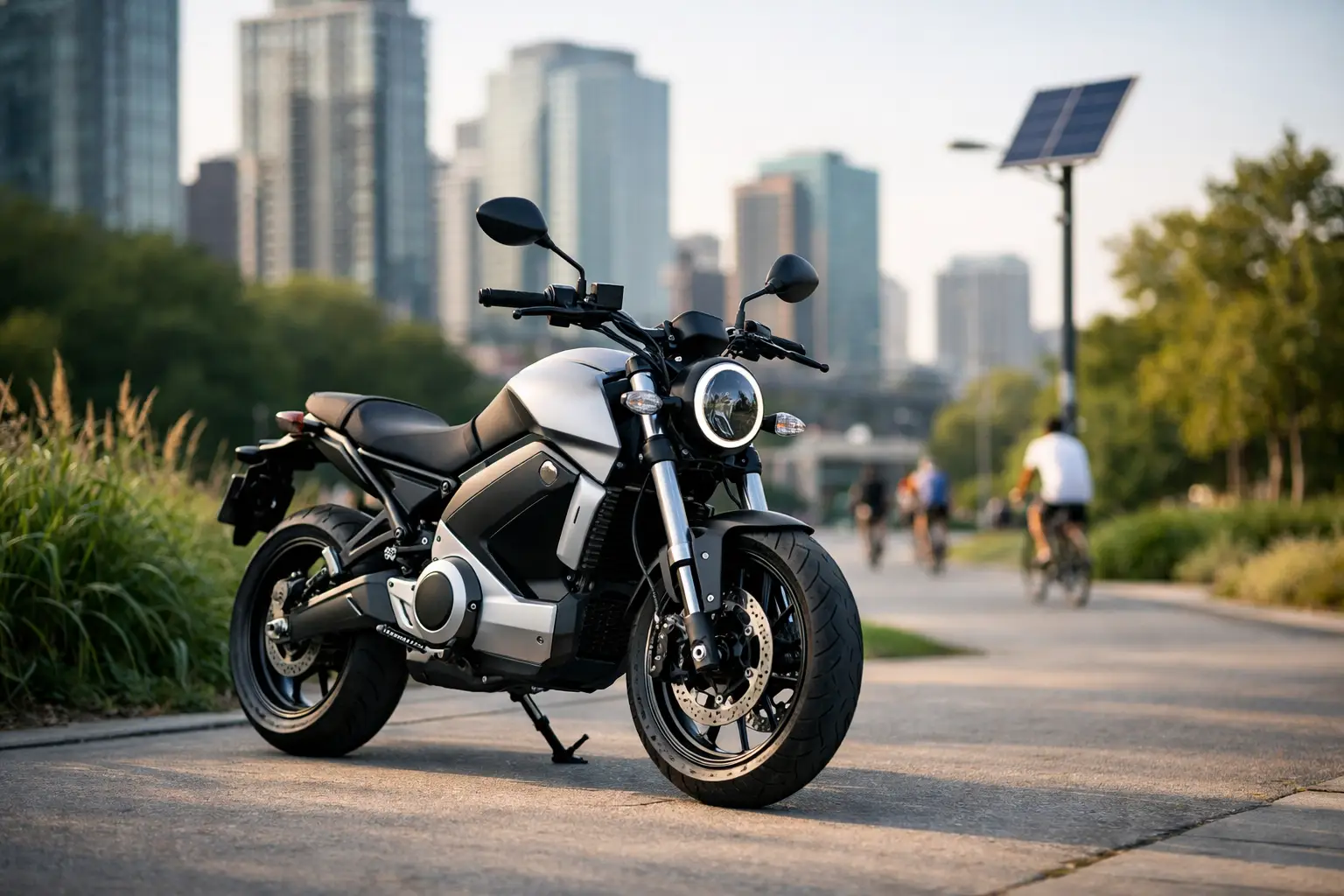
Sustainable Urban Motorcycle, Without the Noise
The city is loud enough already. Tires over broken pavement, buses pulling away from curbs, delivery vans idling beneath apartment windows. A sustainable urban motorcycle offers a different kind of presence: immediate electric torque, classic lines, and a near-silent ride that changes the character of the commute without losing the feeling that makes motorcycles matter.
Sustainability, however, is more than swapping a fuel tank for a battery. The most considered electric motorcycles are designed for the real rhythm of city life: short-to-medium rides, frequent stops, limited parking, home or workplace charging, and a rider who expects their machine to look as deliberate outside a gallery as it does at a red light.
What Makes a Sustainable Urban Motorcycle?
A motorcycle earns the sustainable label through the whole ownership experience, not a single component. Electric propulsion is the starting point. With no tailpipe emissions at the point of use, an electric bike avoids the exhaust produced by gasoline engines in the places where people live, walk, work, and open their windows.
For urban riders, the silence matters too. Lower mechanical and exhaust noise can make early departures, late returns, and tight neighborhood streets feel less intrusive. It also creates a more direct connection between rider and road. You notice the surface, the movement of traffic, the city unfolding around you. The motor is not competing for attention.
But the bigger question is lifecycle. Battery production carries an environmental cost, as does the manufacturing of any motorcycle. Responsible design does not pretend otherwise. It aims to make the bike useful for long enough, efficient enough, and desirable enough that it remains on the road rather than becoming a short-lived tech object.
That places durability, repairability, quality control, and timeless styling in the same conversation as battery capacity. A machine built with care and kept for years is a stronger proposition than one built to chase a single season of novelty.
The grid is part of the ride
The emissions associated with charging depend on where the electricity comes from. In many parts of the United States, the grid is becoming cleaner as renewable generation expands, but the mix differs by state and utility. Charging from solar generation, a green electricity plan, or a cleaner regional grid improves the equation further.
Even where the grid still relies heavily on fossil fuels, electric drivetrains use energy far more efficiently than combustion engines. The practical takeaway is simple: charging choices matter, but electric urban riding begins with a meaningful efficiency advantage.
Designed for the City, Not Just Adapted to It
Cities reward compact dimensions, clean acceleration, and composure at low speeds. They do not reward excess weight, unnecessary heat, or a machine that needs a wide-open highway to feel alive. A well-designed electric motorcycle gives its best performance exactly where many riders spend their time: from the first roll of the throttle to the next signal.
Electric torque arrives immediately. That makes a gap in traffic, a steep parking ramp, or a quick move away from an intersection feel decisive rather than dramatic. There is no clutch work in stop-and-go traffic, no gear hunting, and no engine heat building under the rider when the avenue stalls.
Range deserves a more honest conversation. A claimed maximum range is useful, but it is not the only number that matters. Speed, temperature, rider weight, elevation, tire pressure, and acceleration all change real-world consumption. For city riders, the useful question is whether the motorcycle comfortably covers a typical day, with margin for detours, errands, and an evening ride home.
For many commuters, that answer depends less on headline range than on charging routine. If the bike can charge where it sleeps, a daily commute becomes easy to manage. Apartment dwellers may need public charging access, garage permission, or a workplace outlet. Those constraints should be assessed before purchase, not after the first exhilarating test ride.
Compact mobility has a material benefit
A motorcycle uses less physical space than a car, from parking bays to traffic lanes. It can help a rider reduce the footprint of a daily commute without giving up the independence of personal transport. That does not make every motorcycle trip automatically sustainable. Riding alone for a two-block errand may still be unnecessary. Yet replacing regular car journeys with an efficient electric motorcycle can be a practical shift, especially in cities where transit does not cover every route or schedule.
The strongest use case is not escape from the city. It is moving through it with more intention.
Style Is Part of Long-Term Sustainability
There is a reason disposable products so often look disposable. When design is reduced to a trend cycle, ownership becomes temporary. A premium urban motorcycle should resist that impulse. It should carry visual weight without shouting, pairing familiar proportions with modern engineering rather than using technology as a costume.
Classic lines and an electric heart are not opposing ideas. They are a statement about what deserves to endure. A round headlight, a balanced silhouette, carefully finished metal, and an uncluttered cockpit can feel more current than aggressive plastic panels or forced futurism. The bike becomes an object a rider wants to maintain, photograph, and keep.
That is where craftsmanship becomes practical, not decorative. Clean assembly, considered component choices, and limited-batch quality control influence reliability and serviceability. They also create a relationship between rider and machine that is harder to replace. RGNT Motorcycles approaches electric performance from this perspective: Swedish-built character, restrained design, and the confidence to let silence do some of the talking.
Still, premium construction has a trade-off. Better materials and hand-finished details can raise the purchase price. The value lies in considering total ownership, not simply the number on the window. Electric motorcycles can reduce routine maintenance by eliminating oil changes, spark plugs, exhaust systems, and many engine-related wear items. Tires, brakes, suspension, and insurance remain part of the equation, as does battery health over time.
Choosing the Right Electric Motorcycle for Your Route
The right bike begins with your actual week. Map your round-trip commute, your regular detours, and the distance to the charging point you will realistically use. Then consider how you ride. A calm waterfront route and a fast arterial road ask different things from power delivery, range, and chassis stability.
Check charging time against your schedule rather than treating faster as universally better. Overnight charging may be perfectly sufficient for a rider covering 20 or 30 miles a day. A rider without reliable home charging may place more value on charging flexibility and access to public infrastructure. In either case, verify connector compatibility and local charging options before committing.
Pay attention to the details that affect daily ease: seat height at stoplights, storage for a lock and gloves, turning radius in a tight garage, app functions that are genuinely useful, and dealer or service support within reach. A motorcycle is sustainable only if it remains practical enough to ride often.
Licensing and legal classification also vary. Check your state requirements for motorcycle endorsements, registration, insurance, helmet laws, and power restrictions. Performance should feel liberating, not complicated by surprises at the DMV or your insurer.
The Quiet Advantage
The electric motorcycle is often framed as a compromise for riders willing to trade character for conscience. That view misses the point. Silence can be its own form of performance. Instant torque can feel more alive in city traffic than another 20 horsepower that never gets used. And a bike with real visual presence does not need a loud exhaust to announce itself.
A sustainable urban motorcycle is not for every journey. Long-distance riders may need more range, rapid charging access, or a different type of machine altogether. But for the rider whose world is measured in neighborhoods, bridges, office districts, and late-night streets, it offers an unusually complete answer.
Choose the motorcycle that fits your charging reality, your daily distance, and your standards for design. Then ride it often. The cleanest, most compelling machine is the one that makes leaving the car behind feel less like a sacrifice and more like the obvious move.
-
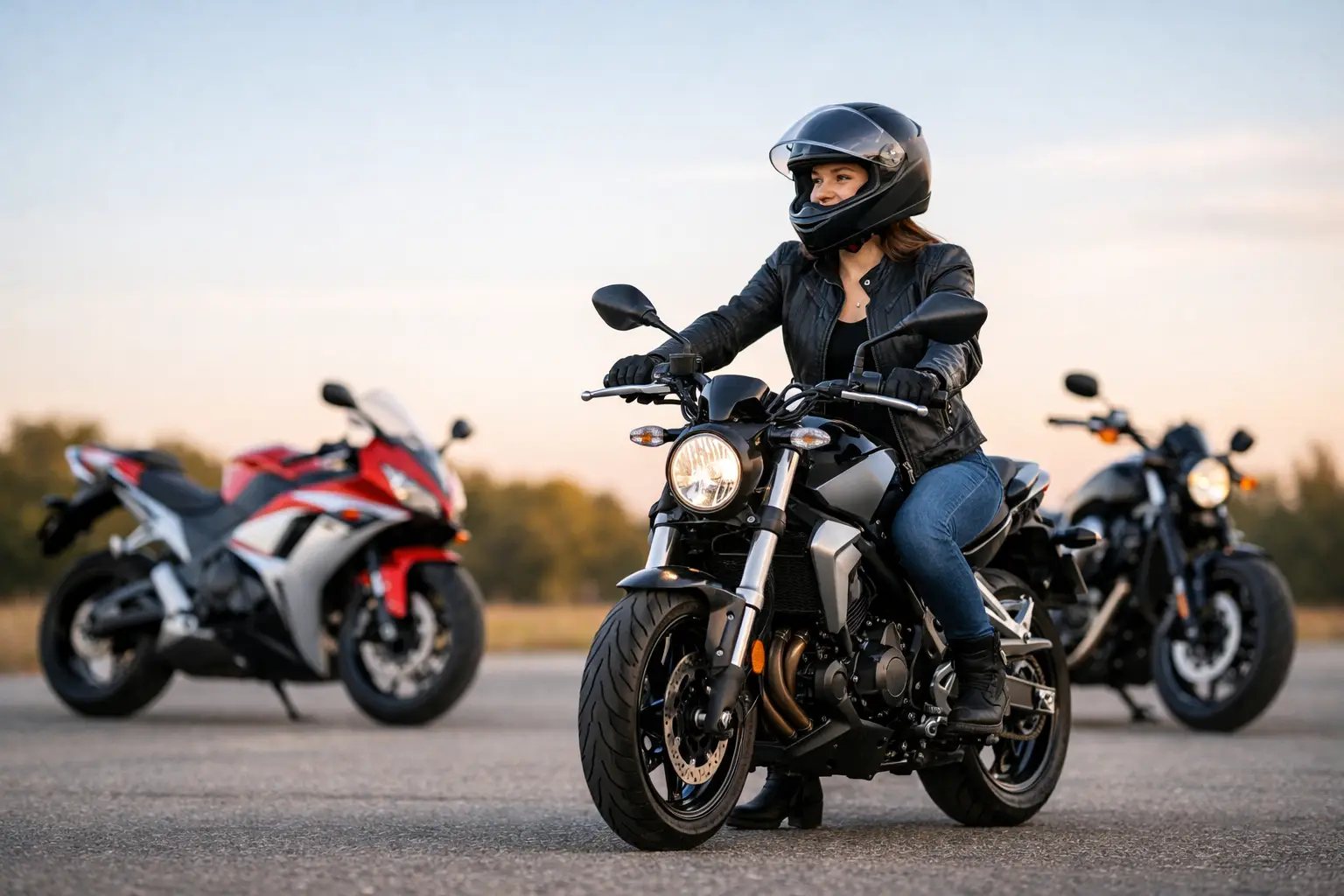
12 Best Motorcycles for Short Riders Chosen Well
A low seat can make the difference between riding with presence and tiptoeing through every red light. The best motorcycles for short riders are not simply the ones with the smallest seat-height number. They are the machines that let you reach the ground confidently, manage their weight at a stop, and ride with the kind of control that makes every corner feel natural.
For city riders especially, fit is performance. Traffic lights, tight parking spaces, uneven pavement, and frequent stop-start riding expose a poor fit fast. A bike that feels composed beneath you is not a compromise. It is the foundation for riding harder, farther, and with more style.
What Makes a Motorcycle Work for a Shorter Rider?
Seat height is the obvious starting point, but it tells only part of the story. A 31-inch seat on a narrow motorcycle can be easier to reach than a 29-inch seat with a broad, heavily padded saddle. The shape where the seat meets the tank matters because it determines how far your legs have to spread before they reach the pavement.
Weight matters just as much. A low cruiser can still be intimidating if its mass feels reluctant during a parking-lot turn or when backing uphill. Look at the bike’s center of gravity, its width, and how easily you can place at least one foot firmly down. For many riders, one solid foot and a controlled lean are more useful than trying to flat-foot both sides.
Suspension travel, handlebar reach, clutch effort, and the way a bike responds at low speed complete the picture. Electric motorcycles add another advantage: immediate, quiet torque with no clutch to manage. That can make dense urban riding feel cleaner and more composed, provided the bike’s weight and ergonomics suit you.
Always sit on the specific motorcycle before making a decision. Published dimensions can vary by model year, trim, suspension setting, tires, and aftermarket seat. Your boots and riding posture change the equation too.
12 Best Motorcycles for Short Riders
These motorcycles earn their place because they offer approachable ergonomics, low or manageable seating, and real-world character. They are not interchangeable. The right one depends on whether your route is a downtown commute, a fast backroad, or a long weekend beyond the city.
- Honda Rebel 300
With a seat height around 27 inches and a low, friendly chassis, the Rebel 300 remains one of the easiest places to start. It is light enough to manage without feeling toy-like, and its relaxed riding position works well for new riders who want classic cruiser proportions without excessive bulk. The trade-off is modest highway power for riders who travel at faster speeds often.
- Honda Rebel 500
The Rebel 500 keeps the same low-slung confidence while adding more usable acceleration and highway composure. It is one of the strongest all-around choices for a shorter rider who wants a first motorcycle they will not outgrow immediately. It is still a cruiser, though, so riders seeking sharp sport-bike lean angles may prefer a different layout.
- Kawasaki Eliminator
The Kawasaki Eliminator blends cruiser accessibility with a more modern, upright feel. Its seat sits under 29 inches, while its parallel-twin engine offers enough pace for daily riding and open-road stretches. It feels leaner and more athletic than many traditional cruisers, a good match for someone who wants low-seat security without the old-school heaviness.
- Royal Enfield Meteor 350
The Meteor 350 carries a calm, unhurried kind of confidence. Its low seat, predictable power delivery, and easygoing ergonomics make it well suited to relaxed commutes and scenic rides. It is not built for aggressive acceleration, but that is part of its appeal. This is a motorcycle for riders who value rhythm, presence, and simple mechanical character.
- Harley-Davidson Nightster
A low seat and muscular stance make the Nightster an attractive option for experienced short riders who want more performance than an entry-level cruiser delivers. Its low center of gravity helps at stops, but it is not a lightweight machine. Riders should be comfortable handling its mass before assuming the seat height alone makes it easy.
- Indian Scout Bobber
The Scout Bobber has one of the lowest seating positions in this group, paired with a compact, stripped-back silhouette. It offers serious V-twin performance and undeniable visual attitude. The caveat is weight and reach: its low stance is welcoming, but its power and physical presence make it better for riders with some confidence under their belt.
- Yamaha MT-03
A seat height around 31 inches may sound less approachable, but the MT-03’s narrow midsection makes it surprisingly manageable for many shorter riders. It is light, responsive, and built for urban movement. If you want an upright naked bike that feels alert rather than cruisery, this is a strong choice. Spend time on the seat first if your inseam is shorter.
- BMW G 310 R
The G 310 R is compact, light on its feet, and confident in city traffic. Its seat is relatively accessible for a standard motorcycle, and its narrow chassis helps riders get their feet down. It has a modern roadster look with practical manners, though taller riders may find its compact dimensions less comfortable on longer rides.
- Kawasaki Ninja 500
For riders who want sport-bike style without an extreme riding position, the Ninja 500 deserves a close look. Its seat height is not cruiser-low, but its manageable weight and relatively narrow profile help it feel less intimidating than larger supersport machines. The fairing offers welcome wind protection, while the engine has enough energy to stay interesting well beyond the commute.
- Triumph Speed 400
The Speed 400 brings modern-classic design into an approachable package. Its seat is just over 31 inches, but its slim shape, modest weight, and neutral posture make it accessible for many riders of shorter stature. It is a better fit for those who want upright roadster handling than feet-forward cruiser ergonomics, with enough visual refinement to feel considered rather than generic.
- Royal Enfield Hunter 350
The Hunter 350 is compact, low enough for many inseams, and especially at home in the city. Its shorter, more playful proportions distinguish it from the brand’s more traditional cruisers. It will not deliver high-speed drama, but it offers an honest, easy rhythm that suits everyday riding. Think neighborhood runs, urban routes, and casual weekend escapes.
- Zero S
The Zero S offers an electric alternative for riders who want instant response and minimal mechanical distraction. Its seat height is not exceptionally low, so it is not an automatic fit for every shorter rider. Still, the absence of a clutch, smooth power delivery, and clean urban performance can make it remarkably easy to live with once the ergonomics work for you.
The Best Electric Motorcycle for a Short Rider Depends on Balance
Electric power changes the feel of a motorcycle at low speed. There is no clutch bite point to negotiate and no engine vibration competing for attention. That makes starts, stop signs, and filtering through city movement feel more direct. But batteries add weight, so a lower seat does not automatically equal an easier motorcycle.
When considering an electric model, pay close attention to how the bike balances when lifted off its side stand. Can you walk it backward without straining? Can you turn the handlebars fully at a slow pace without feeling the weight pull away from you? These small tests reveal more than a spec sheet.
For riders drawn to classic lines with an electric heart, RGNT Motorcycles represents the more design-led end of the category: silent power, handcrafted presence, and an alternative to the loudness that has defined motorcycling for too long. Fit should still lead the decision. A beautiful machine is better when it feels like it was built around your movement.
Make the Motorcycle Fit You, Not the Other Way Around
A lower seat can help, but lowering a motorcycle too far can reduce cornering clearance and upset its handling. Start with reversible changes. A slimmer seat, a professionally reshaped saddle, boots with a modest sole, or suspension preload adjusted for your weight may give you the extra confidence you need without changing the motorcycle’s character.
Be cautious with aftermarket lowering links. They can alter steering geometry, reduce ground clearance, and require corresponding changes at the front of the bike. If you go that route, have the work done by a qualified technician and test the motorcycle in a controlled setting before relying on it in traffic.
The right riding technique matters too. At a stop, shift slightly to one side, plant one foot with purpose, and keep the other foot ready on the rear brake. This is not a workaround reserved for shorter riders. It is a polished, controlled habit used by riders of every height.
Choose the bike that makes you look forward to the next stoplight, not the one that makes you calculate it. Confidence has a posture. Find the motorcycle that lets yours come through.
-
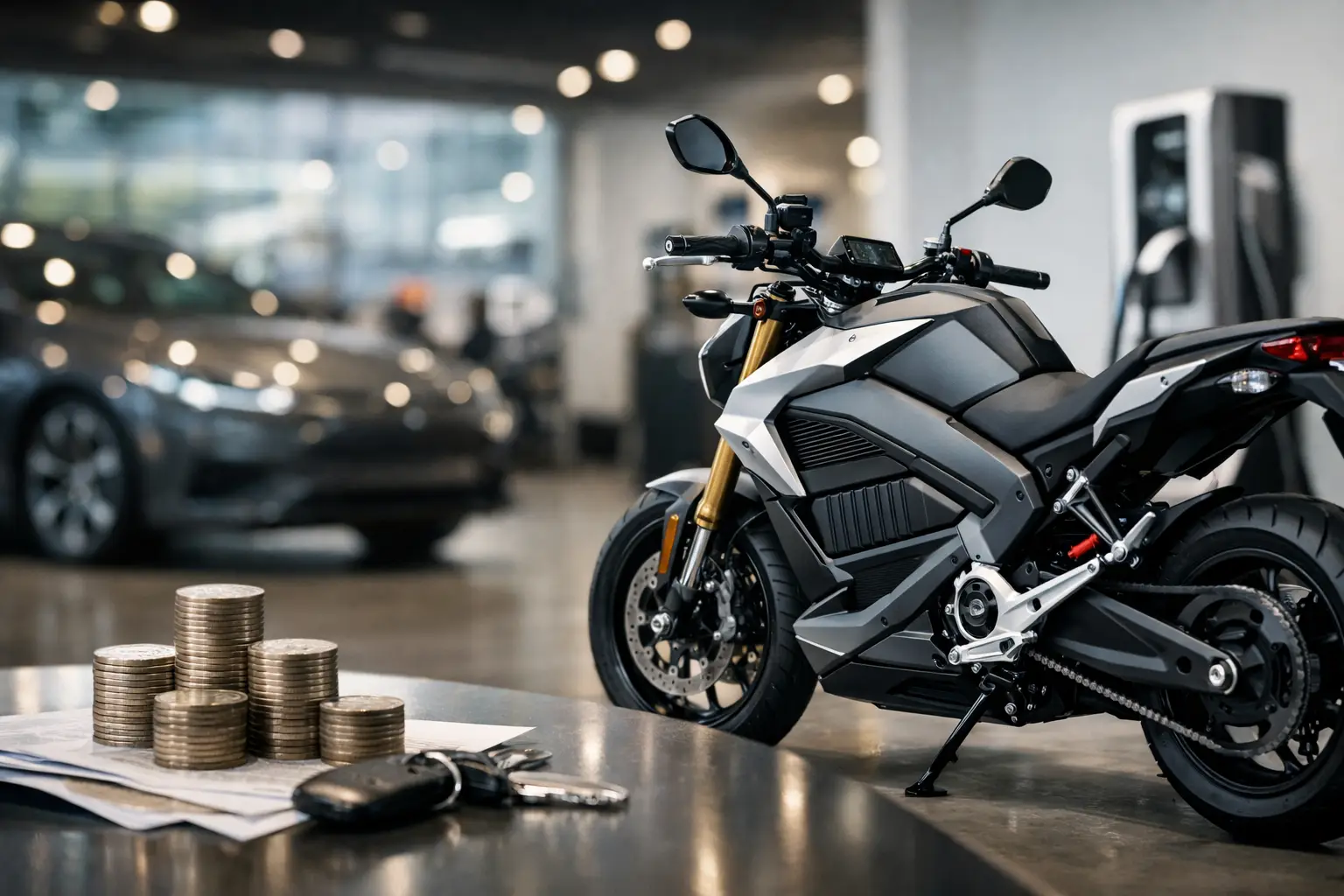
Why Are Electric Motorcycles So Expensive?
A silent launch from a traffic light feels effortless. The work behind that moment is anything but. If you have asked why are electric motorcycles expensive, the short answer is that an electric bike concentrates some of its most sophisticated technology into a small, exposed, performance-critical machine.
A motorcycle cannot hide weight, weak cooling, cheap materials, or awkward packaging beneath a large body shell. Every component has to earn its place. For a premium electric motorcycle, the price reflects more than propulsion. It reflects battery chemistry, software, safety systems, design, and the kind of careful production that turns a vehicle into something you want to ride long after the novelty fades.
Why Are Electric Motorcycles Expensive? Start With the Battery
The battery is the single biggest cost driver in most electric motorcycles. It is not simply a large version of the battery in a phone. It is a tightly managed energy system built to deliver hard acceleration, survive repeated charging cycles, handle changing weather, and operate safely beneath a rider.
High-quality lithium-ion cells are expensive on their own. Then come the battery enclosure, structural protection, high-voltage wiring, contactors, sensors, fuses, and the battery management system that monitors voltage, temperature, and cell balance. Those layers are not optional decoration. They are what allow an electric motorcycle to deliver immediate torque without compromising safety or usable life.
Range raises the bill quickly. More range generally requires more energy capacity, and more capacity means additional cells. Additional cells add weight, which can demand stronger chassis components, revised suspension settings, and more careful weight distribution. On a motorcycle, where balance is part of the pleasure, engineering a larger battery is never as simple as fitting a bigger tank.
There is also a trade-off that riders should welcome: the cheapest cell is not always the right cell. Premium manufacturers select cells and battery architecture around real riding demands, not just a headline range number achieved under perfect conditions. City traffic, cool mornings, rapid acceleration, hills, passenger weight, and charging habits all affect what the battery experiences.
Small Production Runs Change the Math
Internal-combustion motorcycles benefit from more than a century of industrial scale. A popular gas bike may share engines, switchgear, frames, supplier contracts, and factory tooling across tens or hundreds of thousands of units. That scale spreads development costs thinly.
Electric motorcycles are still a younger category, especially at the premium end. Many brands build in comparatively limited volumes. The cost of developing a battery pack, calibrating motor control software, validating charging hardware, and passing regulatory testing is therefore divided across fewer motorcycles.
This is one reason a small-batch electric bike can cost more than a gas motorcycle with similar peak power. The comparison can seem unfair until you consider what is being compared: a mature platform built at industrial volume versus a modern, high-voltage machine developed in a smaller production environment.
Limited production can also be a choice. Hand-built assembly and tighter quality control take more time than a fully automated line. For riders who care about fit, finish, and character, that is part of the proposition. Scandinavian craftsmanship is not the cheapest route to a motorcycle. It is a deliberate one.
The Motor Is Only Part of the Powertrain
Electric motors are mechanically elegant. They have fewer moving parts than combustion engines and do not need oil changes, exhaust systems, or multi-speed gearboxes in the traditional sense. That does not mean the entire powertrain is inexpensive.
The controller is the bike’s conductor. It translates throttle input into power delivery, manages regenerative braking, communicates with the battery, and protects the system under demanding conditions. A refined controller tune is the difference between a bike that feels abrupt and one that feels composed, intuitive, and alive beneath your right hand.
Then there is thermal management. Heat is the enemy of performance and battery longevity. An electric motorcycle needs to manage temperature while preserving clean design, weather resistance, and a compact silhouette. It must do this in traffic, on a fast open road, and while charging. Designing those systems well requires testing, parts, and time.
Fast charging adds another layer. The motorcycle needs compatible hardware, safe charging logic, and durable connectors. Riders rightly want shorter stops and more freedom, but faster energy transfer increases the complexity of the system supporting it.
Design Is Engineering, Especially on a Motorcycle
A motorcycle is one of the few vehicles where the mechanical object remains completely visible. That makes design a serious undertaking, not an afterthought.
Classic lines with an electric heart require careful restraint. The battery needs protection and space. The rider needs natural ergonomics. The frame must carry loads without looking overbuilt. Cables, screens, lights, and controls need to feel intentional rather than like an appliance assembled from unrelated parts.
On a premium machine, materials matter as well. Machined components, quality paint, tailored seat materials, precisely finished controls, and durable weatherproofing add cost. They also shape the ownership experience every time you approach the bike, turn the key, or park it outside a favorite coffee spot.
This is where price becomes personal. A rider looking only for the lowest cost per mile may make a different choice than someone who sees a motorcycle as a daily object of taste. Neither approach is wrong. But it explains why a well-designed electric motorcycle can command more than a stripped-back commuter device.
Safety, Certification, and Software Are Built Into the Price
A premium electric motorcycle must meet demanding safety and certification requirements before it reaches the road. High-voltage systems require insulation, isolation monitoring, fault protection, crash considerations, waterproofing, and rigorous validation. Brakes, lighting, tires, chassis behavior, and electronics all need to perform reliably as a complete vehicle.
Software is increasingly part of that vehicle. Instrument displays, ride modes, diagnostics, battery monitoring, theft protection, and over-the-air capability can improve the experience, but they require development and long-term support. The best software stays quiet when you do not need it and useful when you do.
This investment is easy to overlook because it is not as visible as a painted tank or a polished fork. Yet it is central to confidence. A motorcycle should feel simple to ride because the complicated work has already been done behind the scenes.
Expensive to Buy Does Not Always Mean Expensive to Own
The purchase price is real, and it deserves a clear-eyed assessment. An electric motorcycle may not be the right fit if your budget depends on the lowest upfront cost, if you regularly ride beyond its practical charging range, or if you need the fast refueling flexibility of a long-distance gas tourer.
But ownership costs can tell a different story. Electricity is typically less expensive than gasoline on a per-mile basis, depending on local utility rates. Routine maintenance is often lighter because there are no oil changes, spark plugs, clutch wear, or exhaust components. Regenerative braking can also reduce brake wear in stop-and-go riding.
Depreciation, insurance, tire replacement, charging access, and battery warranty still matter. So does your riding pattern. An electric bike makes its strongest case for urban riders, commuters, and weekend riders who value instant response, quiet movement, and the ability to charge where they live or work.
Financing can change the monthly picture, but it should not disguise the total cost. The better question is not whether an electric motorcycle costs more at the register. It is whether the engineering, design, and lower-maintenance ownership experience justify the difference for the way you actually ride.
What You Are Really Paying For
A premium electric motorcycle is a compact argument against compromise. It asks a battery to deliver range without turning the bike into dead weight. It asks software to be intelligent without becoming intrusive. It asks modern technology to coexist with the emotional pull of a classic motorcycle.
That balance costs money because it takes expertise and restraint. A machine such as an RGNT is not built to mimic the noise and clutter of the past, nor to look like a disposable vision of the future. It is built for riders who want a clean line through the city, immediate torque at the light, and the confidence that every visible detail has a reason to be there.
The price of an electric motorcycle will continue to evolve as battery supply, manufacturing scale, and charging infrastructure mature. Until then, look beyond the sticker. The right bike is not the one with the cheapest technology. It is the one whose technology disappears beneath a ride that feels unmistakably yours.
-
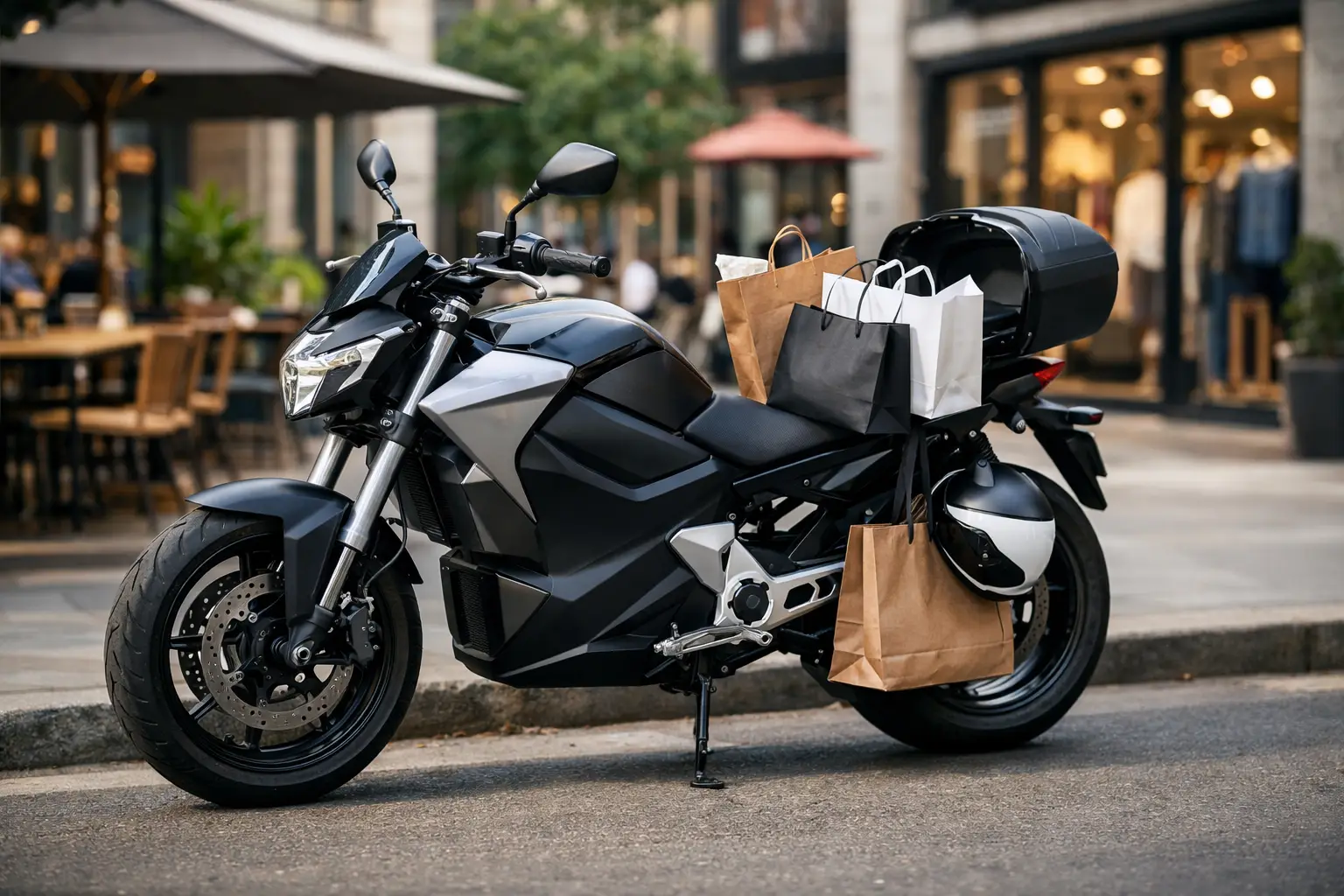
Best Electric Motorcycles for Daily Errands
A grocery run should not require warming an engine, finding a gas station, or accepting that traffic will consume the best part of your afternoon. The best electric motorcycles for daily errands make short urban trips feel lighter: twist the throttle, move quietly through the city, park close, and get on with your day.
That does not mean every electric motorcycle is suited to errand duty. A machine built around headline acceleration or weekend canyon runs can be brilliant, yet frustrating when it is heavy, awkward at low speed, or difficult to charge where you live. The right bike is less about chasing the biggest spec sheet and more about choosing a useful balance of range, size, charging, and character.
What Makes an Electric Motorcycle Good for Errands?
Errands are a different kind of riding. They involve repeated stops, crowded parking lots, a backpack full of groceries, and routes that are usually shorter than a traditional commute. Electric power feels especially at home here. Instant torque makes gaps in traffic easy to take, while the absence of clutch work keeps stop-and-go riding calm rather than tiring.
For this role, usable range matters more than a spectacular maximum number. Consider the distance you actually cover over two or three days: the office, gym, coffee shop, market, and a visit across town. A bike that comfortably covers that routine with a reserve is more valuable than one whose claimed range only appears under ideal conditions.
Weight and seat height deserve equal attention. A lighter, well-balanced motorcycle is easier to reverse out of a tight space, place on a stand, and guide around a curb. Riders who make frequent short trips also benefit from an upright position, a predictable throttle, and a turning radius that does not turn every U-turn into a performance.
The final piece is charging reality. Home charging is the quiet advantage of electric ownership. If you can plug in overnight at home, a daily errand bike is ready each morning without a detour to refuel. Public charging can extend your freedom, but it should be a useful backup, not the only way your routine works.
The Best Electric Motorcycles for Daily Errands: Four Types
There is no single winner for every city or rider. The best choice depends on whether your day is mostly dense downtown streets, faster suburban roads, or a blend of both. These four categories make the decision clearer.
The lightweight urban runabout
A lightweight electric motorcycle or moped-style machine is the natural answer for dense neighborhoods and short city routes. It is easy to park, economical to run, and unintimidating when traffic is tight. For riders whose normal trip is five to 20 miles, this category can be more satisfying than a larger, more expensive bike.
The compromise is speed and carrying capacity. Some lightweight models are not comfortable on faster roads, and a minimal frame leaves little room for cargo beyond a backpack or compact top case. They suit city errands beautifully, but they are not the best one-bike solution for every rider.
The A1-class city motorcycle
An A1-class electric motorcycle occupies a compelling middle ground. It has the presence, chassis, and road manners of a proper motorcycle, but remains approachable enough for frequent urban use. This is the sweet spot for riders who want a machine that can handle weekday errands, a daily commute, and an evening ride without feeling like a stripped-down appliance.
Look for smooth low-speed response, enough real-world range to cover several local trips, and charging that fits an overnight routine. This category also tends to offer the visual confidence many riders want. A motorcycle should still look like an object worth turning around to see after you park it.
RGNT Motorcycles approaches that balance with classic lines, an electric heart, and the kind of Swedish hand-built detail that makes even a routine stop feel intentional. For riders drawn to a modern-classic silhouette rather than a disposable tech product, design is not an extra. It is part of why the bike earns a place in daily life.
The commuter with extra pace
If errands often mean crossing a city, joining a beltway, or riding on roads where traffic moves quickly, step up to an electric motorcycle with stronger acceleration and a higher sustained speed. The added performance gives you margin when merging and makes a 30- to 50-mile day feel less demanding.
This is often the most versatile category, but it comes with a price in weight, cost, and sometimes charging time. More battery can mean more confidence, yet it can also make the motorcycle less graceful in a narrow garage. Choose this route when your real routine requires the pace, not simply because the largest battery sounds reassuring.
The premium all-rounder
A premium electric motorcycle combines refined chassis components, mature software, stronger performance, and a finish that feels built to last. It is the choice for someone who sees errands as one part of a broader riding life. Morning meetings, dinner across town, a Saturday escape, then a quick run for supplies on Sunday – one machine can carry all of it.
The trade-off is obvious: premium motorcycles demand a premium budget. They may also be physically larger than the average errand rider needs. Still, if you value ride quality, visual distinction, and the feeling of owning something made with conviction, the extra investment can make sense long after the practical numbers have been forgotten.
Specs That Matter More Than Marketing Range
Range claims are useful, but city riders should read them with a critical eye. Cold weather, rider weight, speed, hills, tire pressure, and hard acceleration all affect battery consumption. A motorcycle that claims 100 miles in gentle urban conditions may deliver a very different result at sustained higher speeds.
Instead of asking only, “What is the maximum range?” ask, “Can I complete my regular day without planning around the battery?” Build in a buffer. If your typical use adds up to 35 miles, a realistic 50- to 70-mile range is likely more comfortable than a machine that merely matches your average.
Charging time should be viewed the same way. An overnight charge is ideal for most daily errand riders. Faster charging becomes more valuable when you cannot charge at home, use the motorcycle for delivery work, or regularly take longer trips. Check the plug type, the power available where you park, and whether the battery is fixed or removable before making a decision.
Do not overlook regenerative braking, either. It can add control in stop-and-go traffic and recover a small amount of energy, especially on rolling city streets. It is not free range, but a well-tuned system makes urban riding feel composed and deliberate.
Carrying the Things Real Life Requires
A beautiful motorcycle that cannot take a loaf of bread, a laptop, or a light jacket may still be a wonderful weekend machine. It is less convincing as daily transportation. The cleanest solution is often a secure backpack for small items and a purpose-built rear rack or compact top case for everything else.
Cargo additions should match the motorcycle rather than overwhelm it. A slim rack, discreet pannier, or detachable case can preserve the lines of the bike while making it genuinely useful. Keep weight low and centered when possible, and remember that loose bags can interfere with handling, lights, or the rear wheel.
Security also belongs in the errand conversation. Frequent stops mean the motorcycle will spend time outside shops, offices, and apartments. A dependable lock, sensible parking habits, and any available immobilizer or tracking features are practical protection. Silence is elegant, but it also means an electric motorcycle deserves a rider who is deliberate about where it rests.
Test the Routine, Not Just the Motorcycle
A test ride should include more than a fast straight road. Try slow turns, uneven pavement, a hill start, and the kind of parking space you will use every week. Notice whether the seat works after 30 minutes, whether the mirrors provide a clear view, and whether the throttle is easy to modulate at walking pace.
Then picture the ownership routine. Where will you charge? Where will you store your helmet and lock? Can you carry what you buy? Is the motorcycle legal and capable on every road you routinely use? The best electric motorcycle is not the one with the loudest claim. It is the one that removes friction from your day while giving every ride a little more presence.
Choose the bike that makes you look for reasons to leave the house. The pharmacy, the market, the long way home – ordinary destinations become better when you arrive with quiet power and unmistakable style.
-
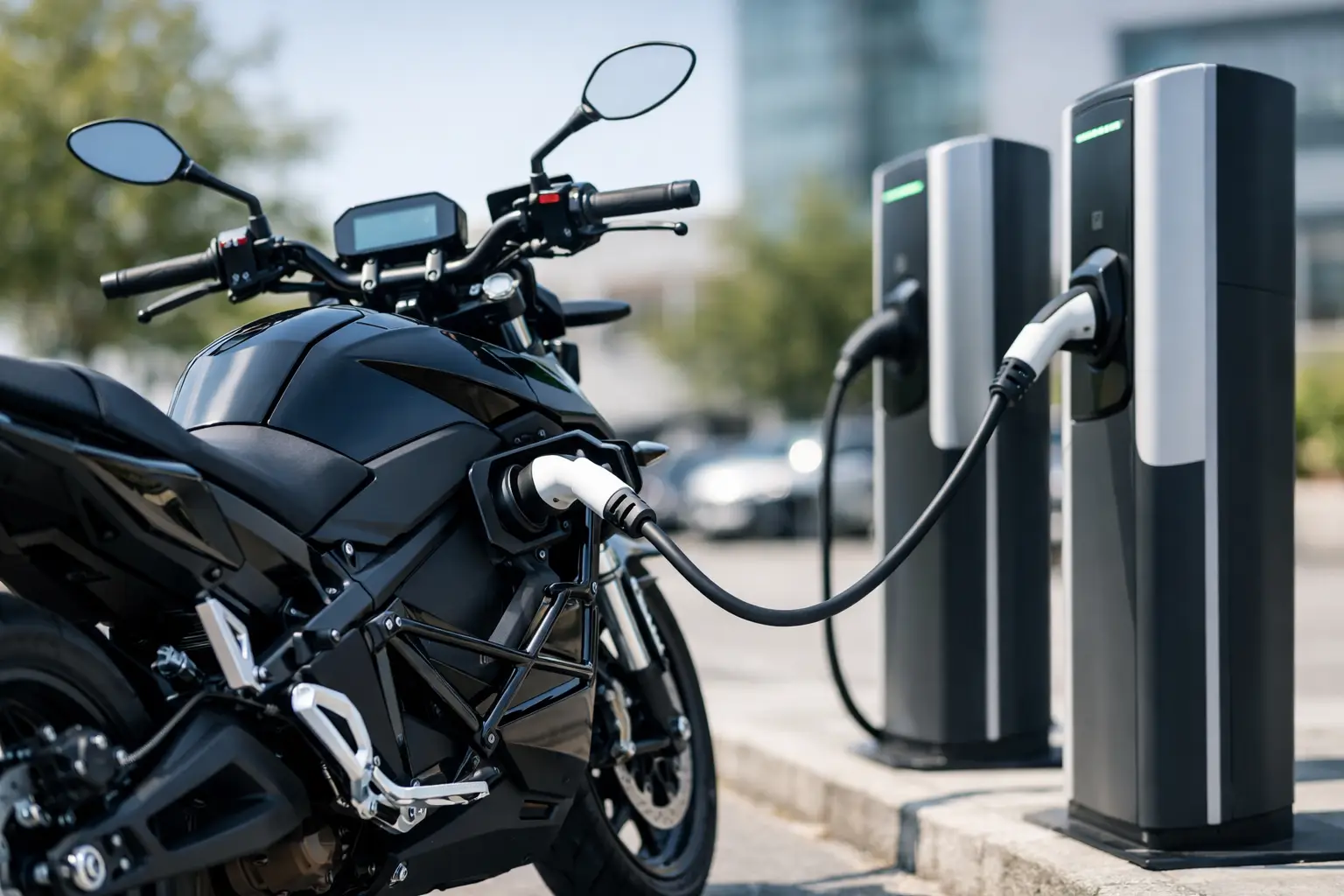
Charging Infrastructure for Electric Motorcycles
A gas station was never part of the romance. It was simply the interruption between the roads you wanted to ride. Electric motorcycles change that equation: for most urban riders, energy arrives quietly at home, while you sleep, work, or reset between rides. The question is no longer whether charging infrastructure for electric motorcycles exists. It is whether it fits the way you actually ride.
For the rider who covers city miles, commutes across town, and heads out on weekends, the answer is increasingly yes. But electric charging is not a direct copy of filling a tank. It rewards a different rhythm – one built around destinations, dwell time, and planning with intent.
Charging Infrastructure for Electric Motorcycles Starts at Home
The most valuable charger is usually not the most visible one. It is the outlet where your motorcycle spends the night.
Home charging turns ownership into a simple habit. Arrive, plug in, and leave the next morning with the battery ready for the day. There is no detour to a station, no standing beside a pump, and no need to make charging an event. For many riders, a standard household outlet is enough to recover everyday commuting mileage overnight.
A dedicated Level 2 setup can make more sense for riders with longer daily routes, limited charging windows, or a shared garage where several EVs compete for power. It delivers more energy in less time, but it is not automatically essential. Before installing one, consider your real distance, how long the bike is parked at home, the capacity of your electrical panel, and whether you can charge at work.
The premium move is not necessarily the fastest home charger. It is the setup that disappears into your life. A clean cable route, weather-protected equipment, and a convenient parking position matter as much as charging speed. Good design should feel considered even when the motorcycle is at rest.
Apartment Living Changes the Conversation
For apartment and condo riders, access matters more than voltage. A private parking space with an outlet can be more useful than a public fast-charging hub several miles away. If you rent or live in a managed building, ask early about outlet access, billing arrangements, and permission for a dedicated circuit.
Property managers are hearing the question more often. Framing the request around safety, professional installation, metered electricity, and a defined parking location makes it easier to have a practical conversation. A motorcycle occupies less space than a car, but it deserves the same serious approach to electrical work.
If home access is impossible, workplace charging can become the anchor. A bike parked for six to eight hours does not need extreme charging power to make a meaningful difference. For an urban commuter, that is often enough to replace the old fuel stop entirely.
Public Charging Is Growing, but It Is Not All Built for Bikes
Public networks are expanding across the United States, particularly in cities, retail districts, parking garages, hotels, and highway corridors. That growth is good news for electric motorcycle riders, but the experience remains uneven because much of the network was designed around cars.
Level 2 public chargers are usually the most natural fit for motorcycles. They are common where people already spend time: offices, restaurants, gyms, downtown garages, and shopping areas. A charge while you eat, work, or meet friends is not dead time. It is simply part of the stop.
DC fast charging is more complicated. It is transforming electric car road trips, yet compatibility, connector standards, cable reach, payment systems, and charging-stall layouts can make it less straightforward for motorcycles. Some motorcycles do not support DC fast charging at all, while others may require specific equipment or adapters. Never assume a fast charger will be usable just because it appears on a map.
That distinction matters. A public charger is only valuable when it matches your motorcycle’s onboard charging hardware and your route. Check connector type, charger power, access rules, parking restrictions, operating hours, and whether the station has recent successful check-ins. A beautiful ride should not end with a cable that will not reach the bike.
The Best Public Charger Is at a Real Destination
Charging stops work best when they support the ride rather than dictate it. A charger beside a coffee shop, gallery, office, or hotel is better than one in an isolated corner of a lot, even if both deliver the same electricity.
This is where electric motorcycles have a quiet advantage. Their batteries are smaller than those in electric cars, so riders often need less energy for a useful top-up. Urban riding also tends to include natural pauses. When charging aligns with those pauses, the infrastructure feels less like compromise and more like freedom from the routine of fuel.
Range Planning Is a Skill, Not a Restriction
Motorcycle riders already read the world differently. We notice weather, road surface, traffic, elevation, and the distance to the next turn. Electric riding adds battery state and charging opportunities to that awareness.
Real-world range depends on speed, temperature, elevation changes, payload, riding mode, tire pressure, and how often you call on instant torque. City riding can be especially favorable because lower speeds and regenerative braking help preserve energy. Sustained highway riding asks more from the battery. Cold weather can reduce available range and slow charging, while strong headwinds can make a route less forgiving than the map suggests.
None of this means every ride needs military precision. It means you should leave a margin. Plan to arrive with energy in reserve rather than treating every trip as a test of nerve. For a new owner, that margin builds confidence quickly. After a few weeks, your own routes become familiar and charging becomes instinctive.
For weekend escapes, choose stops that offer more than a plug. A town with food, a view, and an accessible charger beats a featureless detour. The best electric routes are not necessarily the longest ones. They are the ones with a rhythm worth repeating.
What Better Infrastructure Should Look Like
The future of electric motorcycle charging is not just more chargers. It is better placement, clearer information, and infrastructure that respects two wheels.
A good charging location needs room to approach safely, cables that can reach without creating a trip hazard, lighting after dark, and spaces that do not force a rider to block traffic or park awkwardly. It also needs working hardware. Reliability is more valuable than an impressive number of pins on a map.
The next stage will come from a mix of public investment, workplace installations, destination businesses, multifamily properties, and private garages. Standardization will help, but rider-friendly details will decide whether people trust the network. Payment should be simple. Status information should be accurate. Parking enforcement should keep charging bays available for vehicles that need them.
There is also a cultural shift underway. Charging is becoming part of the built environment, like Wi-Fi or secure bike storage. The infrastructure is not complete, and it does not need to be perfect before electric motorcycling makes sense. It needs to be dependable where riders live, work, and choose to spend time.
Ride With a Charging Plan That Feels Natural
Before buying or taking delivery, map the places that already shape your week: home, work, your favorite coffee stop, the gym, a friend’s building, and the roads that pull you out of the city. Then identify where charging is available and what type it is. This small exercise tells you more than a national charging-station total ever could.
For most city riders, one reliable home or workplace charging point is the foundation. Public chargers add flexibility, not daily dependence. For riders who regularly cover long highway distances, the calculation is different: available fast charging, motorcycle compatibility, and route planning deserve closer attention.
RGNT riders are not chasing noise for its own sake. They choose classic lines, an electric heart, and the kind of immediate torque that changes the texture of a city ride. Charging should support that choice with the same quiet confidence. Plug in where life already happens, leave with purpose, and let the road keep its place as the main event.
-
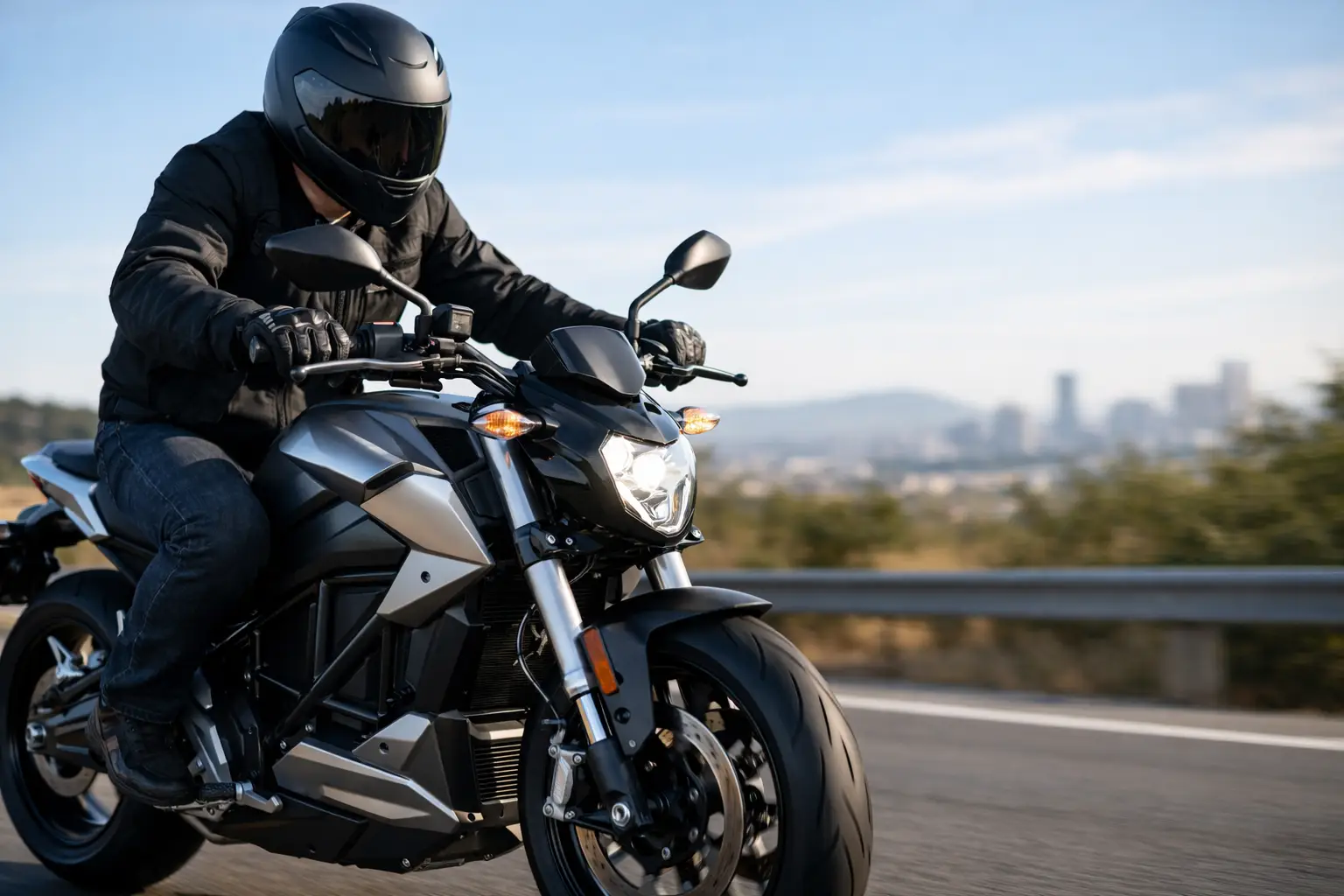
Electric Motorcycle Test Ride Review: What Matters
The first green light tells you more than a showroom ever can. An electric motorcycle test ride review should begin there: with the instant pull away from traffic, the absence of exhaust noise, and the question of whether the machine feels like an extension of your body or merely a clever piece of technology.
For riders drawn to classic lines and an electric heart, a test ride is not a formality before purchase. It is where performance becomes personal. Range figures matter. Charging matters. But so does the way a bike carries itself through a tight city corner, how its throttle responds in the rain, and whether you look back at it after parking.
Start With the First 30 Seconds
Do not spend the opening moments trying to recreate a gas motorcycle. An electric bike has its own language. There is no clutch ritual, no vibration climbing through the bars, no engine note asking for another gear. There is only immediate, measured torque.
Pull away normally first. Feel for precision rather than drama. A refined electric motorcycle should respond cleanly to small throttle inputs, without a jumpy on-off sensation that makes low-speed riding feel nervous. In downtown traffic, parking garages, and crowded intersections, that control matters more than a headline acceleration number.
Then make a firmer roll-on from about 15 to 25 mph. This is where electric power earns its place. The best response feels direct and confident, not theatrical. You should be able to slip into an opening in traffic without waiting for revs, a downshift, or permission from the machine.
What an Electric Motorcycle Test Ride Review Should Reveal
A good ride route is not a straight road built for showing off. It needs a few real-world conditions: stop-and-go traffic, a stretch of faster road, uneven pavement, a couple of corners, and somewhere quiet enough to notice the bike’s character.
Throttle calibration is the real performance test
Peak power gets attention because it is easy to print on a spec sheet. Throttle calibration is what you live with. Test how the bike behaves when you hold a steady speed, feather the throttle through a turn, or need a smooth restart after braking.
Some riders want the sharpest possible hit. Others want a calmer response that feels polished in traffic. Neither preference is wrong, but the bike should be honest about its intent. A city-focused electric motorcycle should feel alert without becoming tiring. Fast should not mean frantic.
Silence changes your awareness
Without combustion noise, the city arrives differently. You hear tires crossing painted lines. You hear a delivery truck edging out of an alley. You hear your own wind noise as speed rises.
That quiet is not just an environmental benefit. It can make riding feel more composed and more connected to the road. At the same time, it asks for sharper awareness. Pedestrians and cyclists may not hear you approaching, particularly at low speed. A confident rider uses that silence with restraint.
Handling should feel natural, not novel
A retro-inspired electric bike may look like it belongs outside a 1960s café, but its ride should feel thoroughly current. On your test route, look beyond the first impression of the styling. Notice how quickly it turns in, whether it holds a line over rough pavement, and how stable it feels when you glance over a shoulder or cross a bridge seam.
Battery placement has a major influence here. Low, centralized mass can make an electric motorcycle feel grounded and surprisingly agile. But weight is still weight. At a standstill, push the bike backward, turn it tightly, and park it on a slight incline if possible. A machine that feels light once moving may still demand more effort in a cramped apartment garage.
Braking and regeneration need a familiar rhythm
Electric motorcycles often recover energy when you roll off the throttle or apply braking. The feeling can range from subtle to pronounced. Neither is automatically better.
What matters is predictability. If regenerative braking comes in too abruptly, it can unsettle the bike when you are easing into a corner or riding on slick pavement. If it is too weak, you may rely entirely on the friction brakes and lose one of electric riding’s most satisfying habits: anticipating the road and flowing through it with fewer inputs.
Try a few controlled decelerations at different speeds. Pay attention to the transition from throttle-off regeneration to the brake lever. It should feel considered, not like two separate systems negotiating with each other.
Range Is a Lifestyle Question, Not Just a Number
The range you need depends on the ride you actually have, not the ride you imagine on a Saturday afternoon. A 12-mile round-trip commute with charging at home is a very different ownership experience from a 50-mile daily route with highway sections and no reliable outlet at either end.
During your ride, ask where the battery percentage is likely to go in your own routine. Fast riding, cold weather, steep grades, passenger weight, and repeated hard acceleration all affect real range. That is not a flaw unique to electric motorcycles. It is the reality of using energy, whether it comes from a battery or a fuel tank.
The better question is whether the bike’s useful range fits your week with room to spare. If it does, the absence of gas stations and oil changes can feel quietly liberating. If it does not, no amount of good design will make daily charging logistics disappear.
Treat Charging Like Part of the Ride
Ask to see the charging setup, not just the charging claim. Where does the cable live? How easily does it connect? Is the charge port placed sensibly? Could you use it at your parking spot without draping a cable across a walkway?
For urban riders, this practical detail can decide the whole ownership experience. Home charging is ideal, but it is not universal. Apartment dwellers should think honestly about access, building rules, and how often they will need to charge away from home.
A premium motorcycle should make this feel intentional. Technology belongs in the background, doing its job without stealing attention from the ride.
The Design Test Happens When You Stop
Performance can persuade the rational mind. Design is what keeps the emotional connection alive. Park the motorcycle and take a few steps away. Look at the profile, the proportions, the details your hands touch, and the way modern components sit within classic forms.
This is not superficial. A motorcycle is one of the few vehicles you wear in public. Its presence is part of the ownership experience. The strongest designs do not shout for attention. They hold it.
That is the appeal of a machine such as an RGNT: Swedish-crafted restraint paired with the kind of instant electric response that makes city riding feel fresh again. The goal is not nostalgia for its own sake. It is a familiar silhouette with a sharper purpose.
Questions Worth Asking Before You Hand Back the Key
Ask about warranty coverage, service access, software updates, battery care, and replacement parts. Ask whether the ride mode you tested is the one you will use most often. If the bike offers connected features, ask what remains useful when your phone is in your pocket and what happens if connectivity is unavailable.
Also ask about the motorcycle’s classification and licensing requirements in your state. Electric motorcycles do not escape the practical side of ownership: registration, insurance, protective gear, and local regulations still apply.
Finally, trust the physical answer your body gives you. Were your wrists comfortable? Could you see clearly in the mirrors? Did the seat, peg position, and bar reach work after more than a few minutes? A motorcycle can be beautiful, quick, and technically impressive, yet still be wrong for your frame or your route.
The right electric motorcycle does not need to imitate the past or overplay the future. It should make an ordinary ride across town feel intentional – quiet at the light, alive on the move, and unmistakably yours when the road opens up.
-
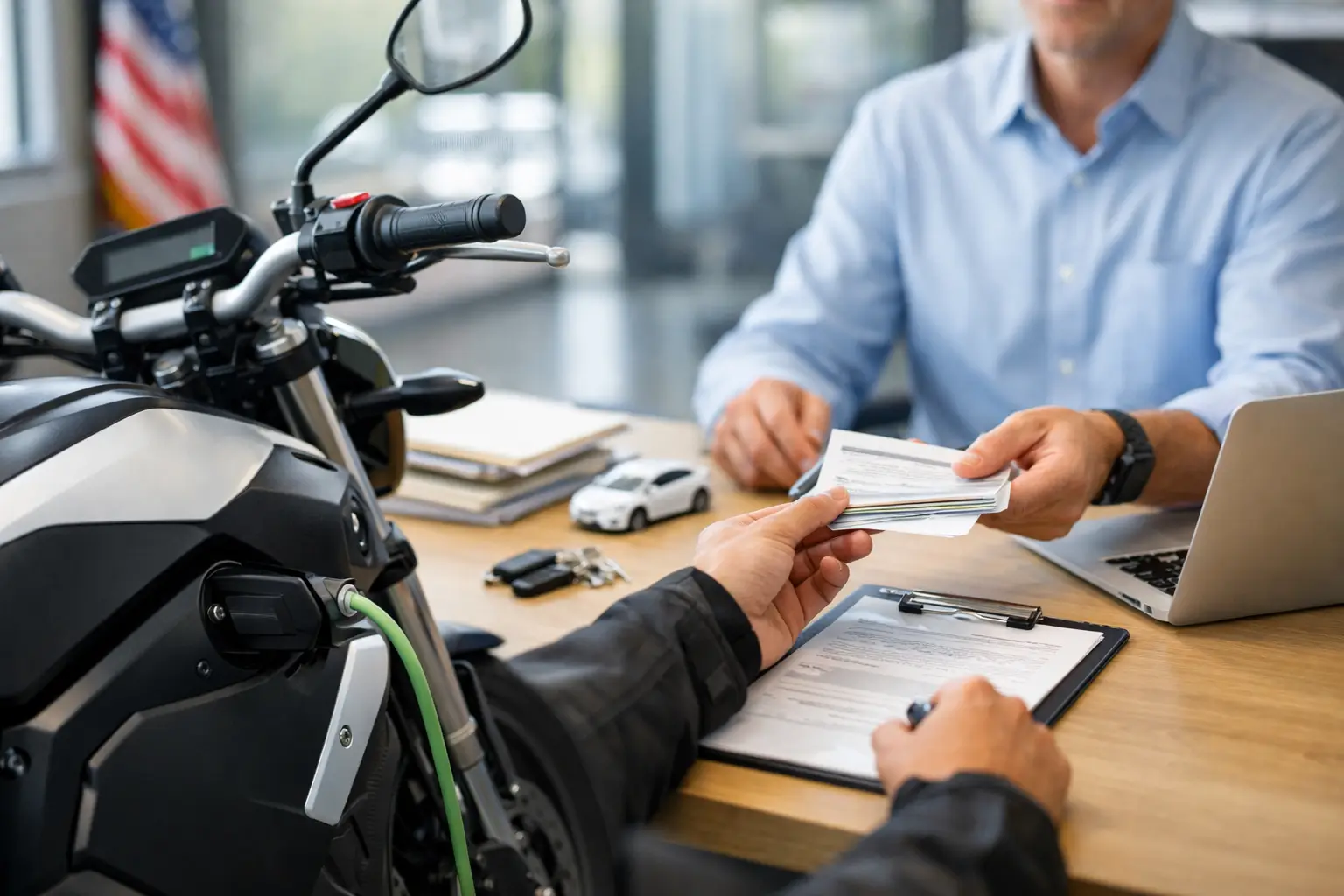
Electric Motorcycle Registration for US Riders
A silent ride should not begin with a surprise at the DMV. Before the first twist of electric torque, electric motorcycle registration deserves the same attention as range, charging time, and design. The process is usually straightforward, but the details depend on where you live, how the bike is classified, and whether you arrive with the right paperwork in hand.
For riders who want classic lines with an electric heart, registration is not red tape for its own sake. It is what turns a beautifully built machine into a legal part of city life – plated, insured, and ready for the commute, the long way home, and every quiet run through downtown after dark.
How electric motorcycle registration works
In most US states, a road-going electric motorcycle is registered much like a gas-powered motorcycle. It receives a title, a motorcycle license plate, and registration documents. You generally pay applicable sales tax, title fees, and registration fees, then renew the registration on the state schedule.
The crucial phrase is road-going electric motorcycle. States draw a bright line between motorcycles, mopeds, scooters, and low-speed e-bikes. A vehicle with motorcycle-level performance, a vehicle identification number, and the capability to keep pace with urban traffic will typically be treated as a motorcycle, regardless of the absence of an engine, fuel tank, or exhaust.
That distinction changes everything. A bicycle-style electric bike may have different access rules and may not require a plate. An electric motorcycle normally does. Do not assume that pedals, a modest silhouette, or quiet operation place a vehicle in the e-bike category. Classification rests on your state’s definitions, the vehicle’s specifications, and its federal compliance documentation.
Start with the vehicle documents
A new electric motorcycle should come with the documents needed to establish ownership and make it eligible for title and registration. The most significant is usually the Manufacturer’s Certificate of Origin, sometimes called an MCO or MSO. This document identifies the motorcycle by its VIN and confirms that it left the manufacturer as a new vehicle.
You will also typically need a signed bill of sale or purchase agreement showing the sale price, buyer information, and VIN. If you finance the motorcycle, the lender may be recorded as the lienholder. Some states retain the title electronically or send it to the lienholder until the loan is paid.
A dealer often handles much of this work, particularly when selling within the same state. Direct purchases and out-of-state deliveries can require more rider involvement. That is not a problem, but it means you should ask exactly which documents will arrive with the motorcycle and which steps remain yours.
Keep every original document clean, secure, and consistent. A single incorrect digit in a VIN can delay a title application. If a state requires a physical VIN inspection, book it before assuming your registration can be completed in one visit.
Bring insurance and identification
Most states require motorcycle liability insurance before issuing a plate. Requirements vary, but a policy must generally identify the motorcycle by VIN and meet the state’s minimum coverage limits. Comprehensive and collision coverage are often optional under state law, though a lender may require them on a financed bike.
This is also the moment to think beyond the minimum. Electric motorcycles have different components from internal-combustion bikes, including battery systems and specialized electronics. The right policy should reflect the actual replacement value of the motorcycle and the way you ride it. A low premium means little if the coverage does not match the machine.
Bring your driver’s license, proof of address where required, insurance card or policy proof, and payment method for taxes and fees. Requirements can be surprisingly specific. Some DMVs accept digital insurance proof; others may ask for a printed form or electronically verify coverage during the transaction.
The license question is separate
Registering a motorcycle and being licensed to ride it are related, but they are not the same task. In most states, operating an electric motorcycle on public roads requires a motorcycle endorsement or motorcycle license. Silent power is still motorcycle power.
The path commonly involves a written knowledge test, a skills test, or completion of an approved rider training course. New riders often benefit from the course route, not merely because it can simplify the endorsement process, but because immediate electric torque asks for disciplined throttle control. There is no clutch to manage, but there is also no delay between intention and acceleration.
Age restrictions, learner permits, helmet rules, and passenger rules vary state by state. Check the requirements where the motorcycle will be registered and ridden, especially if you bought it in another state or recently moved. The state DMV or motor vehicle agency is the final authority, not a forum post or a seller’s assumption.
What changes from state to state
There is no single national electric motorcycle registration rule. Federal standards shape how vehicles are manufactured and labeled, while states control titles, plates, operating privileges, inspections, and many equipment rules.
Some states may require an initial VIN verification for an out-of-state motorcycle. Others require a safety inspection, emissions inspection, or both. Because electric motorcycles have no tailpipe emissions, an emissions test may be irrelevant or exempted, but do not confuse that with an automatic exemption from all inspections. Lighting, tires, brakes, mirrors, horn, and roadworthiness can still matter.
Registration costs also vary. Certain states charge standard motorcycle fees. Others calculate fees based on vehicle value, weight, or local taxes. In a few places, electric-vehicle fees can apply to help offset transportation funding traditionally supported by fuel taxes. The amount may be small compared with the purchase price, but it belongs in the ownership calculation.
If you are registering after an out-of-state purchase, be prepared to show that sales tax was paid. Your home state may collect the difference if the tax paid elsewhere was lower than its own rate. This is normal interstate vehicle administration, not a penalty for choosing an electric machine.
A clean registration checklist
Before delivery day, confirm four things: the motorcycle’s VIN and title documents, your insurance requirements, your motorcycle endorsement status, and your state’s local DMV process. Then verify whether your county requires inspections, VIN verification, appointments, or additional taxes.
At the DMV, bring the MCO or existing title, bill of sale, valid identification, proof of insurance, lienholder details if applicable, and any state-specific application forms. If the bike is used, confirm that the title has been correctly assigned by the previous owner and that no unresolved lien remains.
The most common delays are not exotic electric-vehicle issues. They are missing signatures, incorrect VINs, insurance that has not yet been activated, and riders arriving without the document that proves tax payment. A 10-minute check before your appointment can prevent a second trip across town.
Registration is part of the ownership experience
A premium electric motorcycle is designed to make the everyday ride feel deliberate. That feeling starts before the first stoplight. The plate is not an afterthought bolted beneath a tail light. It is the final piece that gives a machine its place on public roads.
RGNT motorcycles are built for riders who want to move differently – with hand-crafted presence, immediate performance, and less noise competing for attention. Still, individual style works best when it is backed by the practical details: the correct license, active insurance, a valid plate, and documents filed where they belong.
Once the paperwork is handled, the city changes character. The route home becomes quieter, sharper, and entirely yours.
-
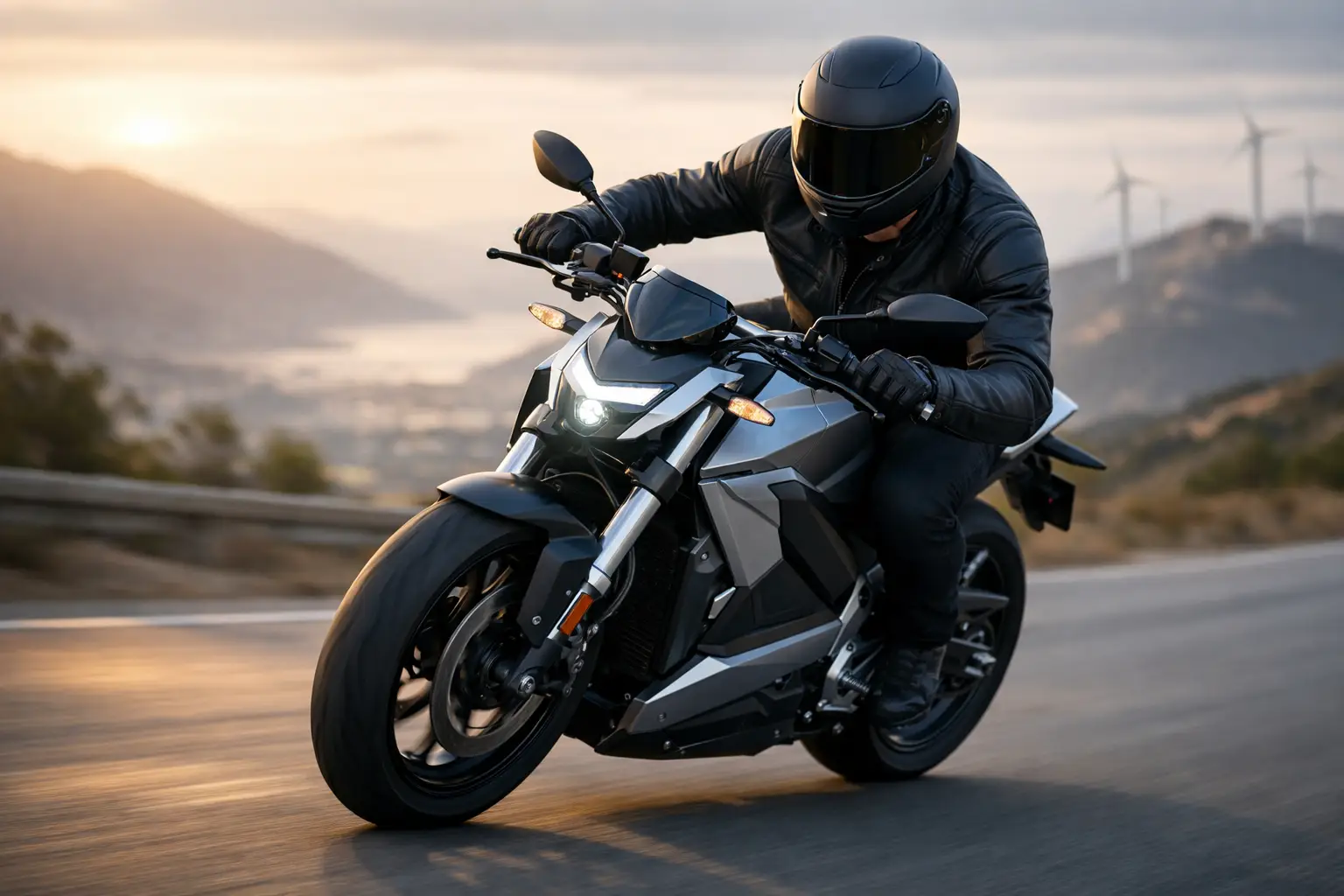
Motorcycle Electrification, Made to Feel Alive
A city wakes up in layers: delivery vans, train brakes, distant construction, the first rush of traffic. Motorcycle electrification offers a different entrance into that noise. Twist the throttle and there is no mechanical preamble, no exhaust note asking for attention – only immediate movement, clean and composed.
For riders, this is not about replacing one power source with another. It is about changing the feel of the everyday ride. The right electric motorcycle makes a familiar route sharper, quieter, and more intentional. Classic lines can remain. The emotion can remain. What disappears is the clutter between rider and road.
Why Motorcycle Electrification Matters in the City
Urban riding has always been about momentum. A motorcycle needs to pull away confidently at lights, move through traffic with control, and fit naturally into a day that includes work, dinner, errands, and an unexpected long way home. Electric power suits that rhythm unusually well.
Maximum torque arrives the moment the rider asks for it. There is no waiting for revs to build and no need to work through a gearbox in stop-and-go traffic. The response is direct, but it does not have to be aggressive. A well-calibrated electric drivetrain can feel precise rather than frantic, giving a rider clean acceleration without turning every block into a performance statement.
Silence changes the experience, too. It lets the rider hear the city rather than fight it: the tire contact, the wind around a corner, the small shifts in road surface. That quieter presence also respects the streets where motorcycles live. Less noise does not mean less character. It means the character comes from design, proportion, and the way the machine moves.
There is a practical side. With no tailpipe emissions at the point of use and fewer routine mechanical components than a combustion motorcycle, electric riding can reduce both local pollution and ownership friction. The full environmental picture still depends on battery production, electricity sources, and how long the machine remains in use. Building products that are desirable enough to be maintained, ridden, and valued for years is part of making electrification count.
An Electric Heart Does Not Require Futuristic Styling
For too long, electric mobility has been treated as a visual category. Sharp plastics, screens everywhere, and styling that seems designed to prove a point. But motorcycles have always carried more than transportation value. They carry posture, taste, memory, and a particular relationship with the street.
Motorcycle electrification is more compelling when it respects that history. A motorcycle can have a sculpted tank silhouette, a low and confident stance, round lighting, and the quiet authority of a classic machine while carrying a modern battery and motor beneath the surface. The contrast is the point: classic lines, electric heart.
This matters to riders who do not want their vehicle to look like a gadget with wheels. They want authenticity. That does not mean pretending technology is absent. It means integrating it with restraint. A display should be useful. Connected features should serve the ride. Every detail should earn its place.
At RGNT, that idea takes the form of hand-built Swedish electric motorcycles that place modern performance inside a distinctly retro-inspired silhouette. The appeal is not nostalgia for its own sake. It is proof that progress can have taste.
The Specs That Shape Real Ownership
Electric motorcycles are often judged through a short list of numbers: range, charging time, top speed, and acceleration. Those numbers matter, but they only tell the truth when read in context.
Range is a riding question
A claimed range is not a promise that every rider will see the same figure. Speed, temperature, hills, passenger weight, tire pressure, riding mode, and throttle habits all affect battery consumption. Sustained high-speed riding draws far more energy than a flowing urban commute.
For city-based riders, the useful question is not, “Can this motorcycle cross the country?” It is, “Can it cover my real week without becoming another task?” For many commutes and local rides, the answer can be yes by a wide margin. A motorcycle that charges where you already park – at home, in a garage, or near the office – changes charging from a trip to a habit.
Charging is about timing, not just speed
Fast charging looks good on a spec sheet, and for certain riders it is essential. But charging convenience begins with access. An electric motorcycle that can replenish overnight where it lives will suit a commuter better than one with an impressive charging claim but no practical place to plug in.
Before buying, riders should consider their parking arrangement, available electrical service, and the routes they actually ride. Apartment residents may need public or workplace charging options. Riders with private parking have a simpler path. Neither situation is automatically better or worse, but each calls for an honest plan.
Performance is more than top speed
Top speed matters on highways. In the city, response often matters more. Instant torque makes short gaps, merges, and uphill starts feel effortless. It also calls for maturity. Electric propulsion is so immediate that a smooth throttle map, balanced chassis, dependable braking, and predictable suspension become central to confidence.
A1-class electric motorcycles occupy a particularly interesting space. They are light, approachable, and quick where real urban riding happens. For a rider stepping up from a scooter or returning to motorcycles after time away, that balance can be more rewarding than chasing headline horsepower.
The Trade-Offs Are Real
Electric motorcycles are not the universal answer for every kind of riding. A rider who regularly covers long interstate distances with minimal stops will still find combustion more convenient in many parts of the United States. Public charging access remains uneven, especially outside dense urban areas and major travel corridors.
Upfront prices can also be higher than comparable entry-level gas motorcycles, though fuel savings, reduced maintenance, and available financing can soften the ownership equation. Battery aging is another fair concern. Modern battery systems are engineered for long service, but capacity changes over time, just as it does in every rechargeable device. Warranty terms, battery management, and the manufacturer’s long-term support should be examined with the same care as range figures.
Then there is emotion. Some riders will always want the heat, vibration, shifting, and soundtrack of an internal-combustion engine. That is not a failure of electric motorcycles. It is a preference. Electrification does not need to erase the past to earn its place beside it.
A New Kind of Motorcycle Culture
The most interesting shift is cultural. Electric motorcycles are creating room for riders who value performance but dislike spectacle, who want design without costume, and who see a quieter city as a better city. They are also widening the idea of what a motorcycle ride can be.
A silent departure at sunrise. A quick charge after work. A ride through downtown where the bike draws attention because of its form, not its volume. These are small changes, but motorcycles are made of small moments: the glance back after parking, the clear road ahead, the decision to take the longer route home.
The silent minority is not waiting for permission from old rules. It is choosing machines that look considered, move with purpose, and leave more of the ride intact. For the rider who wants the future without dressing like it, motorcycle electrification has finally found its shape.
-
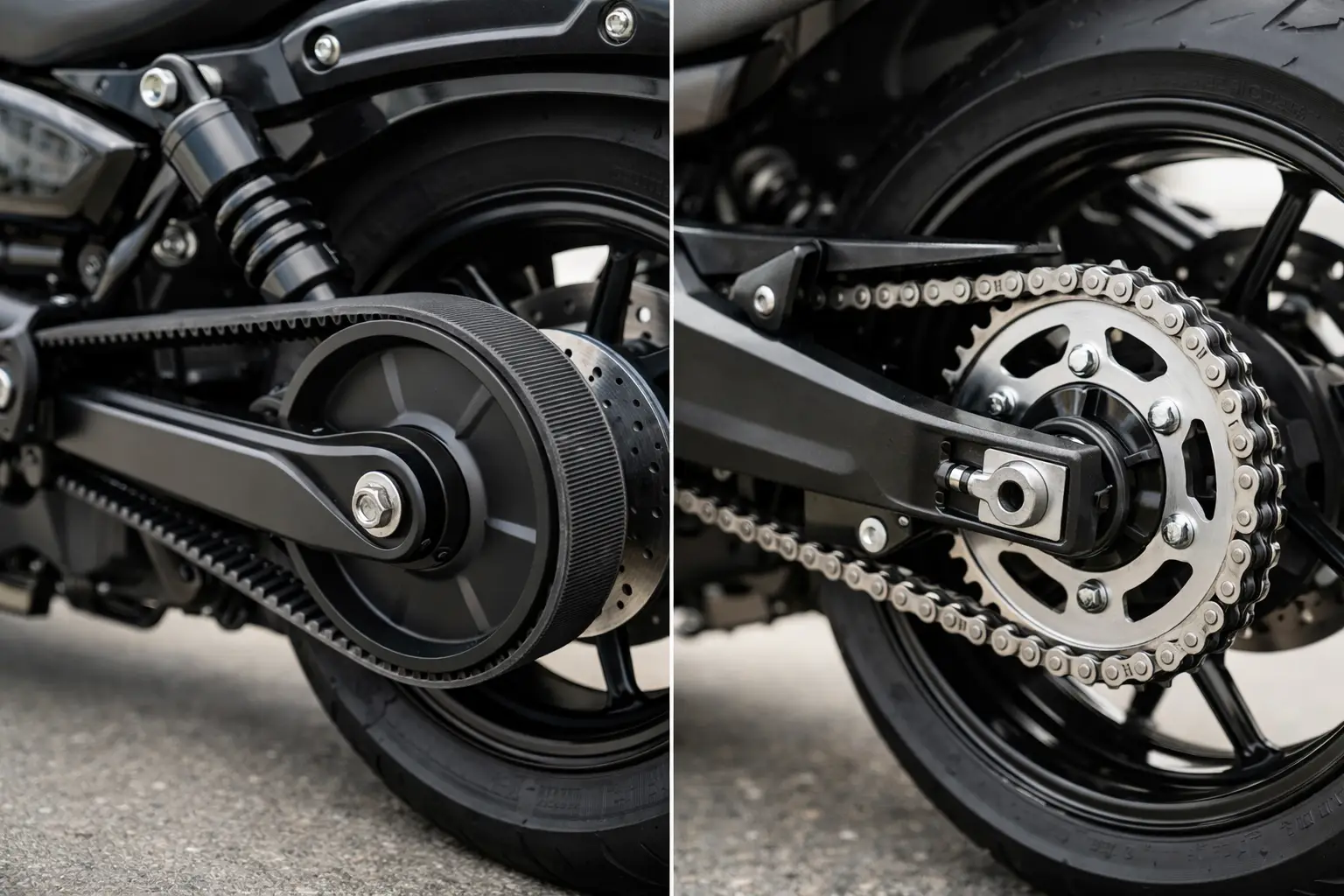
Belt Drive vs Chain Motorcycle Explained
A clean rear wheel, a quiet departure, less time spent with a chain brush in hand. The belt drive vs chain motorcycle decision is not just a mechanical detail – it shapes how a bike feels to own. For riders who use a motorcycle as part of daily city life, the right final drive can be as meaningful as torque figures or charging time.
Chains remain the default across much of motorcycling for good reason. They are compact, strong, affordable, and easy to gear for performance. Belts offer a different kind of appeal: controlled silence, low maintenance, and a more considered visual finish. Neither is automatically better. The real question is what kind of riding you want to make room for.
Belt Drive vs Chain Motorcycle: The Core Difference
Both systems transfer power from the motor or gearbox to the rear wheel. A chain uses metal links running over toothed sprockets. A belt uses a reinforced rubber composite band, usually with internal teeth, running between pulleys.
The difference sounds simple, but it affects maintenance, noise, gearing flexibility, and the way the machine presents itself. A chain is exposed mechanical theater. It is purposeful, adjustable, and familiar. A belt is cleaner and more discreet. It does its work with less visual and acoustic drama.
For an electric motorcycle, that contrast becomes especially noticeable. Electric powertrains remove engine vibration, exhaust note, clutch action, and gear changes from the foreground. What remains is the immediate pull of torque and the subtle sound of the road. A belt complements that quieter character naturally, while a chain brings a more traditional, mechanical edge.
Why Chains Still Own Performance Riding
A chain is the established choice for sport bikes, off-road machines, track-focused motorcycles, and many high-output street bikes. Its biggest advantage is strength relative to size. A well-maintained chain can handle serious power and aggressive riding without requiring the larger pulley diameters a belt system often needs.
Chains also make gearing changes straightforward. Riders can swap front or rear sprockets to favor harder acceleration or more relaxed highway cruising. That freedom matters to racers, tuners, and anyone who views a motorcycle as an evolving project rather than a finished object.
They are also widely serviceable. Nearly every workshop understands chains, replacement parts are easy to source, and roadside repairs are more realistic with a chain than with a damaged belt. For long-distance riders crossing remote areas, that familiarity can be reassuring.
There is a trade-off. Chains need regular attention. They collect road grit, require cleaning and lubrication, and need their tension checked. Neglect them and the result is noise, accelerated wear, reduced efficiency, and a rear wheel that never quite looks as sharp as it should. In wet, urban conditions, that maintenance can feel less like ritual and more like another task waiting at the end of the week.
The Case for Belt Drive
A belt drive is designed for riders who prefer more riding and less workshop time. It does not need lubrication, so there is no chain lube flinging onto the wheel, tire, or garage floor. Periodic inspection and correct tension still matter, but the ownership routine is substantially lighter.
Belt systems are also quieter than chains. On a gasoline motorcycle, that difference can hide beneath the exhaust. On an electric bike, silence is part of the experience. A belt helps preserve that composed, near-silent glide through early streets and evening traffic.
Then there is the aesthetic. A belt has a deliberate simplicity that suits modern-classic design. Without greasy links and exposed lubricant, the rear of the motorcycle feels cleaner and more architectural. For a rider who cares how a machine looks parked outside a studio, restaurant, or apartment, that is not superficial. Design is part of the ownership experience.
Belts can also offer a long service life under the right conditions. They are resistant to surface rust and do not require the constant care expected of chains. For a commuter who rides predictably on paved roads, a belt can be an exceptionally sensible choice.
Where Belt Drives Ask for Compromise
Low maintenance does not mean no vulnerability. A belt can be damaged by stones, debris, or objects caught between the belt and pulley. Unlike a chain, it cannot simply be repaired with a master link at the side of the road. If the belt fails, it generally needs replacement.
Belt drives also work best within specific packaging and performance limits. Because pulleys are typically larger than sprockets, designers need to account for space around the rear wheel and swingarm. They can be less suited to severe off-road use, where mud, rocks, and constant impacts are part of the terrain.
Gearing changes are possible but less casual and less common than changing chain sprockets. Riders who constantly tune a bike for drag runs, track days, or different race circuits will appreciate the chain’s flexibility. The belt rider is more likely to value a carefully engineered setup that simply works, mile after mile.
Cost can be nuanced, too. A replacement belt and pulley system may carry a higher parts cost than a basic chain and sprocket kit. Yet when you factor in chain cleaner, lubricant, labor, and time over years of ownership, the balance can shift. The better value depends on how much you ride, where you ride, and whether you enjoy hands-on maintenance.
City Riding Changes the Equation
Urban riders place different demands on a motorcycle than weekend canyon riders or backcountry explorers. Stop-and-go traffic, variable weather, tight parking, and limited garage space make convenience matter. So does arriving without a streak of lubricant on your trousers or a maintenance job looming after a rainy commute.
This is where a belt often makes a strong argument. It supports a quieter, cleaner, more relaxed ownership experience. Pair that with the instant torque of an electric motor and the result is direct, controlled movement through the city. No excess. No unnecessary noise.
A chain can still be the right call for city use if you want maximum mechanical simplicity, plan to customize gearing, or ride a high-performance bike that demands it. But riders moving between work, social plans, and open roads may find that a belt better fits the rhythm of real life.
Electric Motorcycles and Final Drive Design
Electric motorcycles do not all use the same final-drive layout. Some use chains, some belts, and some employ direct-drive or hub-motor arrangements. The choice reflects engineering priorities as much as brand character.
Electric motors deliver torque immediately, which places meaningful load on the drivetrain from the first twist of the throttle. A chain handles high loads efficiently and remains popular for performance-oriented electric motorcycles. A belt, however, can deliver power with a refined smoothness that suits urban and lifestyle-led machines.
Because electric motorcycles are already quieter and simpler to maintain than internal-combustion bikes, a belt drive can reinforce their advantage. Fewer routine chores. Less mess. More attention left for the ride itself. That philosophy aligns naturally with a modern-classic electric motorcycle built for streets rather than spectacle.
At RGNT Motorcycles, classic lines and an electric heart are not competing ideas. They belong together. The final-drive choice should support the same feeling: immediate performance delivered with restraint, craftsmanship visible in every detail, and a ride that stands apart without needing to shout.
How to Choose Between a Belt and Chain
Start with your riding, not the spec sheet. If you ride off-road, travel far from service support, tune your motorcycle frequently, or chase maximum performance, a chain is likely the more practical system. Its durability, compact size, and easy gearing changes are hard to dismiss.
If your riding is mostly urban, suburban, or relaxed highway travel, a belt deserves serious consideration. It is quiet, clean, and low-maintenance. It makes sense for riders who value a motorcycle as a daily companion and a design object, not just a machine to modify between rides.
Also consider your relationship with maintenance. Some riders genuinely enjoy cleaning a chain, checking alignment, and dialing in tension. It creates a connection with the machine. Others would rather use that hour for a sunset ride. Both approaches are valid. The better drivetrain is the one that matches your habits instead of asking you to become someone else.
Choose the system that keeps you reaching for your helmet. A motorcycle should feel like an invitation, whether that means a perfectly adjusted chain before a fast weekend run or a silent belt drive carrying you cleanly into the city before the streets wake up.
-
Why Choose a Limited Production Electric Motorcycle
The city is full of vehicles built to disappear into the background. A limited production electric motorcycle is built for the rider who refuses to. It brings together two things mass production rarely protects at the same time: real character and real attention to detail. The result is not simply an electric alternative to a gas bike. It is a quieter, sharper expression of how you choose to move.
For riders who care about design, the appeal starts before the motor turns. Classic proportions. Purposeful materials. A silhouette with enough restraint to stay relevant long after the latest tech trend has passed. Then comes the ride: instant torque, near-silent acceleration, and a different relationship with the streets you know by heart.
What a Limited Production Electric Motorcycle Changes
Limited production is often mistaken for a badge of rarity. It can be that, but rarity alone is not the point. The real value is what a smaller production run allows a manufacturer to protect: fit, finish, consistency, and intent.
When thousands of identical machines are pushed through a factory line every week, efficiency leads the conversation. When motorcycles are built in carefully controlled batches, the conversation can stay closer to the machine itself. Panel alignment matters. Wiring routes matter. The way a painted surface catches late-afternoon light matters. So does the feeling of the throttle at the first green light.
That approach suits electric motorcycles particularly well. Electric powertrains are mechanically simpler than internal-combustion engines in some respects, but a memorable electric bike still depends on dozens of decisions. Motor calibration, battery packaging, chassis balance, suspension response, charging integration, and digital controls must feel like one considered whole. There is nowhere for poor design to hide when the ride is silent.
A limited-run bike also carries a different kind of ownership experience. You are less likely to park beside a row of matching machines. That does not make it precious or untouchable. It makes it personal. The best examples are meant to be ridden to work, through the city, out to the coast, and home after dark with the motor humming beneath you instead of shouting over you.
Quiet Performance Has Its Own Presence
Electric motorcycles do not need exhaust noise to feel alive. The response is immediate. Twist the throttle and torque arrives without a pause for revs, gears, or drama. In urban traffic, that changes everything.
It means pulling cleanly away from lights, finding space with confidence, and moving through a commute with less mechanical effort. The absence of vibration can make the road feel more direct, too. You notice surface changes, lean angles, wind, and the subtle rhythm of the city. It is a more composed form of speed.
For some riders, that silence takes adjustment. A gasoline engine gives constant audible feedback, and many long-time motorcyclists enjoy its ritual. That is a legitimate preference. But silence is not emptiness. On a well-tuned electric motorcycle, it becomes part of the performance. The machine feels discreet until the road opens, then unmistakably quick.
This is where the modern-classic idea earns its place. Retro-inspired design should not mean recreating every inconvenience of the past. A bike can retain the honest shape of a classic motorcycle while replacing heat, noise, fuel stops, and excess maintenance with electric precision. Classic lines, electric heart.
Craftsmanship Is More Than a Finish
Premium craftsmanship is often reduced to leather, paint, and polished metal. Those details matter, but they are only the visible layer. The deeper standard is whether the motorcycle feels resolved.
A resolved bike has controls that fall naturally to hand. Its seat, footpegs, and bars create a riding position that makes sense after 30 minutes as well as after five. Its display provides useful information without turning the cockpit into a glowing distraction. Its components feel selected, not merely sourced.
In limited-batch production, those decisions can receive more scrutiny. Small refinements are easier to introduce. A team can respond to what riders experience in the real world rather than waiting for a full model cycle. That does not guarantee perfection, and buyers should never assume that a smaller manufacturer is automatically better. It does mean the relationship between design, engineering, and feedback can be more immediate.
For a brand such as RGNT, hand-built Swedish production is not about nostalgia for its own sake. It is a commitment to making the electric motorcycle feel like an object worth keeping. The goal is not to create a loud trophy for the garage. It is to build a machine with enough presence to become part of your daily life.
The Trade-Offs Are Real
Choosing a limited-production electric motorcycle is a decision made with both taste and clear eyes. Smaller runs can command a higher price because the economics are different. Tooling, quality control, specialized labor, and lower purchasing volume all have a cost. If the only priority is the lowest possible entry price, a high-volume model may be the better fit.
Service is another practical consideration. Before buying, understand who will maintain the bike, where replacement parts come from, and how warranty support works in your area. A thoughtful manufacturer should be direct about those details. A premium motorcycle should feel special, but ownership should not become a guessing game.
Range also deserves an honest conversation. Urban riding, average speed, rider weight, terrain, weather, and throttle habits all affect what you can expect from a charge. A bike that is ideal for a 20-mile daily commute may not suit someone who spends every weekend crossing several states. Electric riding is at its best when the motorcycle and the rider’s real routine match.
Charging access matters just as much. Home charging can make an electric motorcycle feel almost effortless: ride, park, plug in, repeat. Apartment dwellers and street-parked riders need to think more carefully about where the bike will charge and how often. This is not a reason to rule electric out. It is a reason to choose with intention.
Who It Is Made For
A limited production electric motorcycle is not trying to please every rider. It is made for the person who sees a commute as more than dead time. The design professional who wants a machine with visual discipline. The early EV adopter tired of products that look like prototypes. The experienced rider who still loves a beautiful tank line but wants a cleaner, calmer way to ride.
It also suits riders who understand that individuality does not have to be loud. There is a certain confidence in arriving without exhaust theatrics. You notice the bike because of its shape, its stance, and the way it leaves the light. It belongs to the silent minority.
That feeling matters because motorcycles are never only transportation. They are rituals. The jacket on the hook. The route chosen on instinct. The moment after work when the city loosens its grip and the road begins to open. A well-made electric motorcycle does not erase those rituals. It gives them a new soundtrack.
Buy for the Ride You Actually Live
Before choosing any electric motorcycle, look beyond the headline figures. Ask whether the riding position suits your streets, whether its range covers your weekly pattern with room to spare, and whether the build quality still feels convincing when you inspect it closely. Consider charging as part of your routine, not an afterthought. Then consider the emotional question: would you turn around to look at it after you park?
The right limited-production machine will not ask you to choose between performance and personality. It will make everyday riding feel considered, quick, and distinctly your own. Choose the motorcycle that fits the roads you ride most, then let its character make every ordinary departure feel less ordinary.