
Your cart is currently empty!
Motorcycle Electrification, Made to Feel Alive
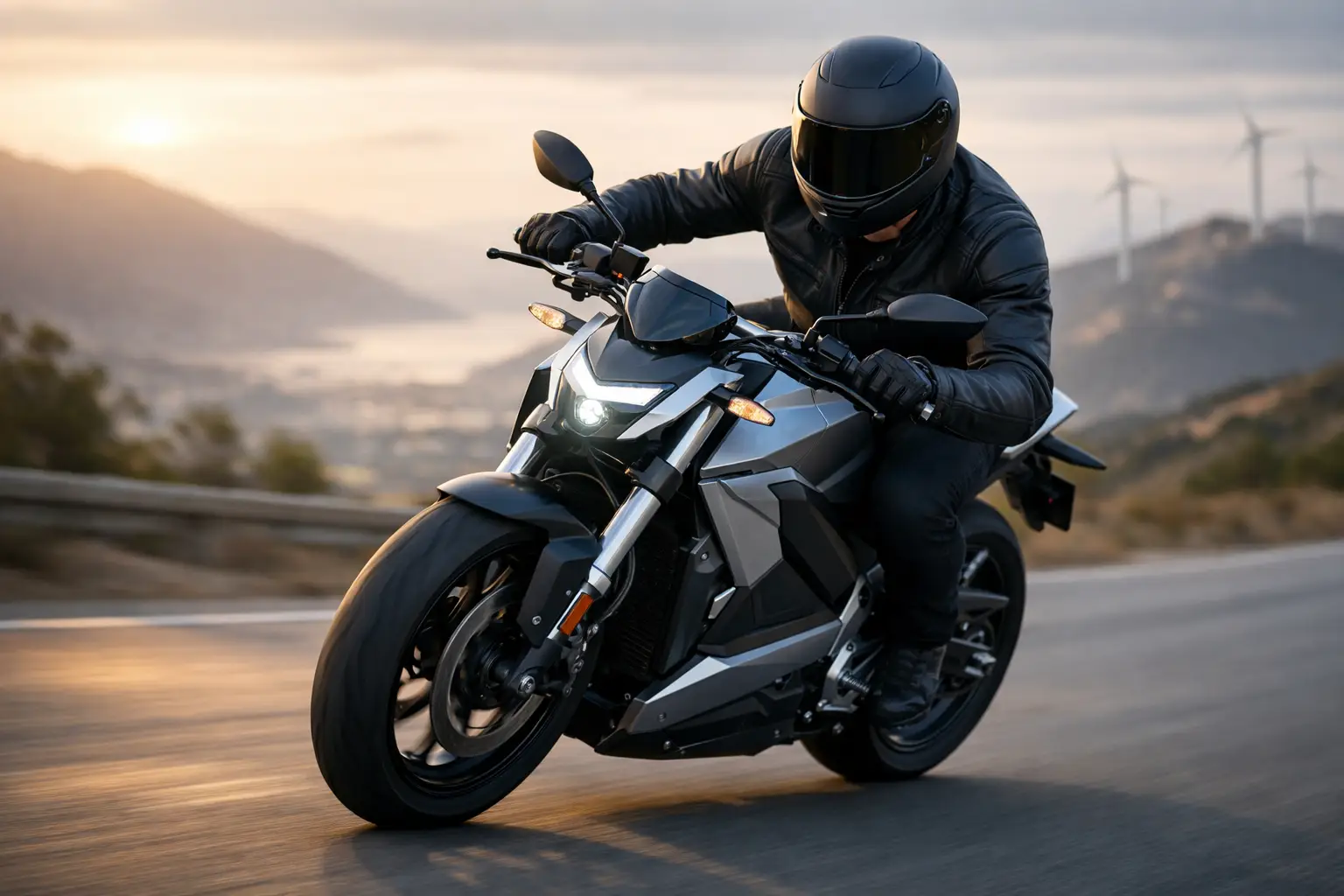
A city wakes up in layers: delivery vans, train brakes, distant construction, the first rush of traffic. Motorcycle electrification offers a different entrance into that noise. Twist the throttle and there is no mechanical preamble, no exhaust note asking for attention – only immediate movement, clean and composed.
For riders, this is not about replacing one power source with another. It is about changing the feel of the everyday ride. The right electric motorcycle makes a familiar route sharper, quieter, and more intentional. Classic lines can remain. The emotion can remain. What disappears is the clutter between rider and road.
Why Motorcycle Electrification Matters in the City
Urban riding has always been about momentum. A motorcycle needs to pull away confidently at lights, move through traffic with control, and fit naturally into a day that includes work, dinner, errands, and an unexpected long way home. Electric power suits that rhythm unusually well.
Maximum torque arrives the moment the rider asks for it. There is no waiting for revs to build and no need to work through a gearbox in stop-and-go traffic. The response is direct, but it does not have to be aggressive. A well-calibrated electric drivetrain can feel precise rather than frantic, giving a rider clean acceleration without turning every block into a performance statement.
Silence changes the experience, too. It lets the rider hear the city rather than fight it: the tire contact, the wind around a corner, the small shifts in road surface. That quieter presence also respects the streets where motorcycles live. Less noise does not mean less character. It means the character comes from design, proportion, and the way the machine moves.
There is a practical side. With no tailpipe emissions at the point of use and fewer routine mechanical components than a combustion motorcycle, electric riding can reduce both local pollution and ownership friction. The full environmental picture still depends on battery production, electricity sources, and how long the machine remains in use. Building products that are desirable enough to be maintained, ridden, and valued for years is part of making electrification count.
An Electric Heart Does Not Require Futuristic Styling
For too long, electric mobility has been treated as a visual category. Sharp plastics, screens everywhere, and styling that seems designed to prove a point. But motorcycles have always carried more than transportation value. They carry posture, taste, memory, and a particular relationship with the street.
Motorcycle electrification is more compelling when it respects that history. A motorcycle can have a sculpted tank silhouette, a low and confident stance, round lighting, and the quiet authority of a classic machine while carrying a modern battery and motor beneath the surface. The contrast is the point: classic lines, electric heart.
This matters to riders who do not want their vehicle to look like a gadget with wheels. They want authenticity. That does not mean pretending technology is absent. It means integrating it with restraint. A display should be useful. Connected features should serve the ride. Every detail should earn its place.
At RGNT, that idea takes the form of hand-built Swedish electric motorcycles that place modern performance inside a distinctly retro-inspired silhouette. The appeal is not nostalgia for its own sake. It is proof that progress can have taste.
The Specs That Shape Real Ownership
Electric motorcycles are often judged through a short list of numbers: range, charging time, top speed, and acceleration. Those numbers matter, but they only tell the truth when read in context.
Range is a riding question
A claimed range is not a promise that every rider will see the same figure. Speed, temperature, hills, passenger weight, tire pressure, riding mode, and throttle habits all affect battery consumption. Sustained high-speed riding draws far more energy than a flowing urban commute.
For city-based riders, the useful question is not, “Can this motorcycle cross the country?” It is, “Can it cover my real week without becoming another task?” For many commutes and local rides, the answer can be yes by a wide margin. A motorcycle that charges where you already park – at home, in a garage, or near the office – changes charging from a trip to a habit.
Charging is about timing, not just speed
Fast charging looks good on a spec sheet, and for certain riders it is essential. But charging convenience begins with access. An electric motorcycle that can replenish overnight where it lives will suit a commuter better than one with an impressive charging claim but no practical place to plug in.
Before buying, riders should consider their parking arrangement, available electrical service, and the routes they actually ride. Apartment residents may need public or workplace charging options. Riders with private parking have a simpler path. Neither situation is automatically better or worse, but each calls for an honest plan.
Performance is more than top speed
Top speed matters on highways. In the city, response often matters more. Instant torque makes short gaps, merges, and uphill starts feel effortless. It also calls for maturity. Electric propulsion is so immediate that a smooth throttle map, balanced chassis, dependable braking, and predictable suspension become central to confidence.
A1-class electric motorcycles occupy a particularly interesting space. They are light, approachable, and quick where real urban riding happens. For a rider stepping up from a scooter or returning to motorcycles after time away, that balance can be more rewarding than chasing headline horsepower.
The Trade-Offs Are Real
Electric motorcycles are not the universal answer for every kind of riding. A rider who regularly covers long interstate distances with minimal stops will still find combustion more convenient in many parts of the United States. Public charging access remains uneven, especially outside dense urban areas and major travel corridors.
Upfront prices can also be higher than comparable entry-level gas motorcycles, though fuel savings, reduced maintenance, and available financing can soften the ownership equation. Battery aging is another fair concern. Modern battery systems are engineered for long service, but capacity changes over time, just as it does in every rechargeable device. Warranty terms, battery management, and the manufacturer’s long-term support should be examined with the same care as range figures.
Then there is emotion. Some riders will always want the heat, vibration, shifting, and soundtrack of an internal-combustion engine. That is not a failure of electric motorcycles. It is a preference. Electrification does not need to erase the past to earn its place beside it.
A New Kind of Motorcycle Culture
The most interesting shift is cultural. Electric motorcycles are creating room for riders who value performance but dislike spectacle, who want design without costume, and who see a quieter city as a better city. They are also widening the idea of what a motorcycle ride can be.
A silent departure at sunrise. A quick charge after work. A ride through downtown where the bike draws attention because of its form, not its volume. These are small changes, but motorcycles are made of small moments: the glance back after parking, the clear road ahead, the decision to take the longer route home.
The silent minority is not waiting for permission from old rules. It is choosing machines that look considered, move with purpose, and leave more of the ride intact. For the rider who wants the future without dressing like it, motorcycle electrification has finally found its shape.