
Your cart is currently empty!
Category: Uncategorized
-
Street Classic Review: Quiet Power, Real Presence
A motorcycle does not need an exhaust note to make a statement. It needs proportion, purpose, and a feeling that stays with you after the light turns green. This Street Classic review looks at a machine built for riders who want classic lines and real road presence, without accepting the noise, vibration, or visual excess often attached to performance.
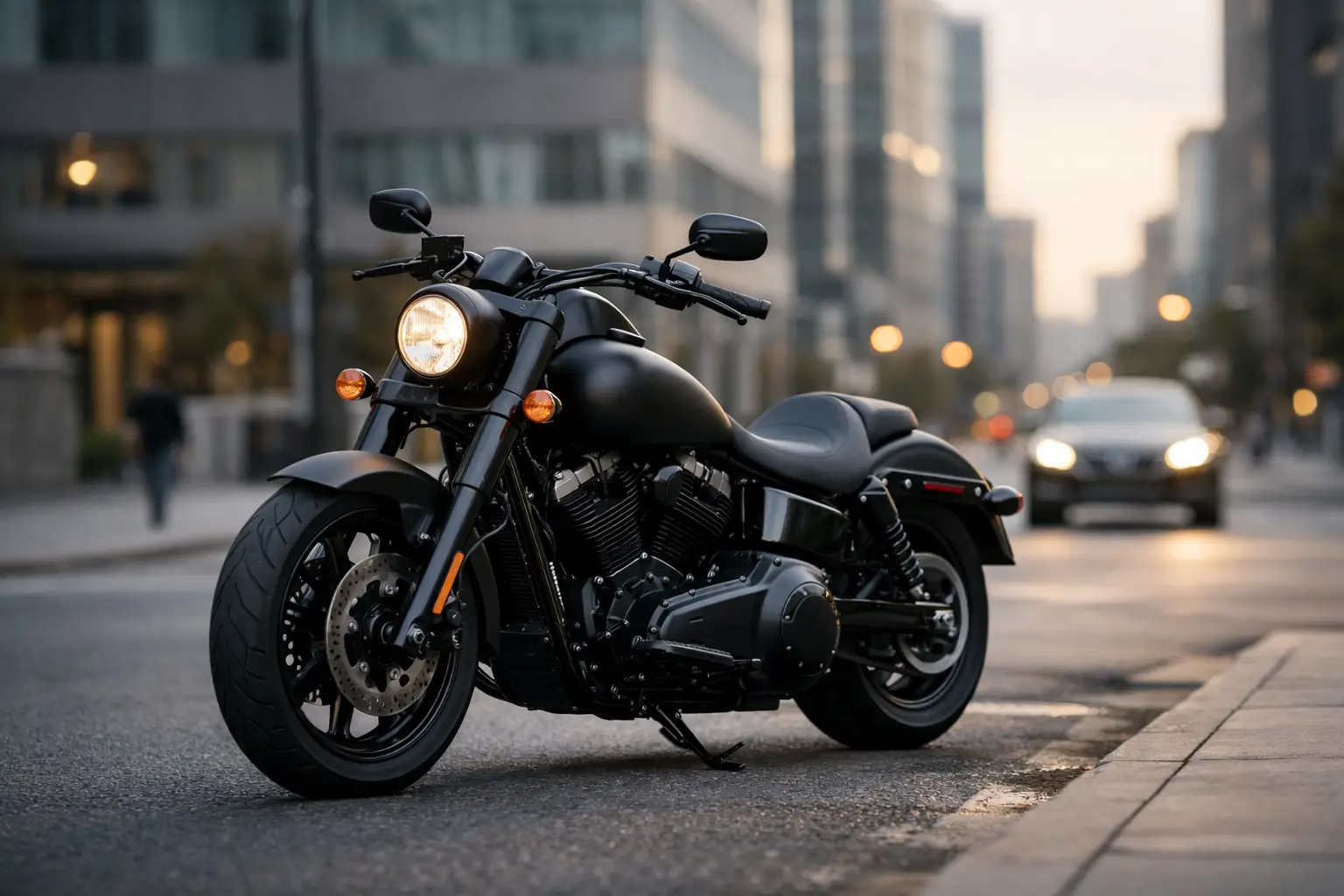
The Street Classic is not an electric motorcycle pretending to be something from the future. It is a modern-classic motorcycle with an electric heart. That distinction matters. Its appeal begins before the motor turns: a clean tank silhouette, wire-spoke character, deliberate finishes, and the kind of stance that earns a second look outside a coffee shop or under the hard light of a downtown parking structure.
Street Classic Review: What It Feels Like to Ride
The first sensation is torque. Electric power arrives without a clutch lever, gear changes, or a dramatic buildup of revs. Roll on the throttle and the Street Classic moves with a calm, decisive pull that suits city riding exceptionally well. It is quick where everyday riding demands quickness: leaving a stoplight, slipping into an open lane, or getting ahead of traffic before the gap disappears.
That immediacy does not make the bike feel frantic. The character is more composed than aggressive. There is no soundtrack competing with your thoughts, no vibration working through the bars, and no shifting routine interrupting the rhythm of traffic. In its place is a focused connection between throttle input and forward motion. The road, the wind, and the subtle mechanical whir of the drivetrain take center stage.
For riders coming from a gas-powered motorcycle, the silence can feel almost strange for the first few miles. Then it becomes one of the strongest arguments for electric riding. A quiet bike changes the texture of a commute. Early departures are less disruptive. Dense traffic feels less exhausting. You arrive without carrying the noise of the road with you.
The Street Classic is especially convincing in the urban environment it was made to inhabit. Its upright, natural riding position favors visibility and control. It feels at home moving through city streets, connecting neighborhoods, and taking the long route home when the evening opens up. This is not a machine that asks you to tolerate the commute for the sake of the weekend. It makes the ride to work part of the reason to ride.
Classic Design Without the Costume
Retro design can go wrong when it becomes decoration. A fake fuel tank, excessive chrome, or a forced vintage theme can leave a bike looking like it belongs in a themed showroom rather than on the street. The Street Classic avoids that trap by treating classic form as a foundation, not a costume.
The silhouette is familiar because it follows the visual logic of a proper motorcycle: a balanced profile, a purposeful seat, exposed wheels, and a frame that looks engineered rather than hidden. Yet the details make clear that this is an electric machine. The absence of an engine is not disguised. It is integrated into the design with restraint.
That restraint is a large part of the appeal. The Street Classic does not ask for attention with oversized screens, sharp plastic bodywork, or science-fiction styling. It has the confidence to be quieter visually, too. Parked alongside conventional motorcycles, it reads as distinctive because it is resolved, not because it is loud.
For design-conscious riders, that makes ownership feel more personal. The bike can fit a tailored work wardrobe, a studio parking garage, or a weekend escape beyond the city limits. It has style, but it does not depend on trends to create it.
Craftsmanship Is Part of the Experience
A premium motorcycle should reward a closer look. The Street Classic does. Its hand-built Scandinavian approach is felt in the way the machine presents itself as a complete object rather than a collection of parts. The finish, proportions, and integration of modern components support the larger impression: this is a bike made for people who care what they ride and why.
RGNT Motorcycles understands that emotional response is not separate from engineering. It is part of it. A clean control interface, thoughtful material choices, and a design that remains compelling while parked all shape how a motorcycle earns a place in someone’s life.
Electric Performance for the Real World
The Street Classic’s performance is best judged through use, not just numbers. Range, top speed, power output, and charging time all matter, but their importance changes with the rider’s routine. A daily rider traveling across a city and charging at home has different needs from someone planning long highway days every weekend.
For urban commuting, electric power makes a powerful case. The predictable morning route becomes simpler when there is no gas station stop, no engine warm-up ritual, and no oil change schedule. Charging can happen while you sleep or while the bike is parked during the day, depending on your setup. The key question is not whether charging is convenient in theory. It is whether you have reliable access to it where you live, work, or ride most often.
Acceleration is another real advantage. Electric torque is available immediately, which gives the Street Classic a crisp response in stop-and-go traffic. It can feel faster than riders expect because there is no delay between intent and motion. That responsiveness also helps the bike feel confident in the short, imperfect openings that define city riding.
There are trade-offs. Sustained high-speed riding uses energy faster than a relaxed city route. Cold weather, passenger weight, aggressive acceleration, elevation changes, and cargo can also affect practical range. Riders should think about their longest normal day rather than the ideal conditions of a spec sheet. If your life includes regular all-day interstate runs, a more touring-focused platform and a mature public charging plan may suit you better.
But for the rider whose world is built around city streets, suburban connections, and weekend backroads, the Street Classic’s electric format feels less like compromise and more like an upgrade in daily usability.
Technology That Stays in Its Place
A modern motorcycle should give the rider useful information without turning the handlebars into a tablet mount. The Street Classic takes the more considered route. Digital features belong here because they support the ride: ride data, battery awareness, mode selection, and the confidence that comes from knowing what the bike is doing.
What matters is that technology does not overpower the experience. The Street Classic is still defined by the simple physical pleasure of riding: hands on the bars, feet on the pegs, eyes up, city moving around you. The screen is there when needed. The road remains the main event.
That balance will appeal to riders who appreciate connected technology but do not want their motorcycle to feel disposable. Classic styling is not about rejecting progress. It is about choosing progress that ages well.
Who the Street Classic Is For
This motorcycle makes the most sense for the rider who sees a bike as both transportation and personal expression. It is for the commuter who wants a better way through traffic, the experienced motorcyclist ready to leave fuel behind, and the first electric-bike buyer who refuses to sacrifice character for efficiency.
It also suits the rider who values a more private kind of performance. The Street Classic has presence, but it does not announce itself from three blocks away. It belongs to the silent minority: riders who know that speed, style, and individuality do not need to be shouted.
Before choosing one, be honest about your route, charging access, and local licensing or registration requirements. Those practical details shape electric ownership more than any marketing line can. If they align with your routine, the Street Classic offers something rare: a motorcycle that makes the daily ride feel considered, immediate, and unmistakably yours.
The best test is simple. Picture the route you take most often, then picture taking it with less noise, less maintenance drama, and more reason to look back after you park. That is where the Street Classic makes its case.
-
Why an Urban Electric Motorcycle Fits the City
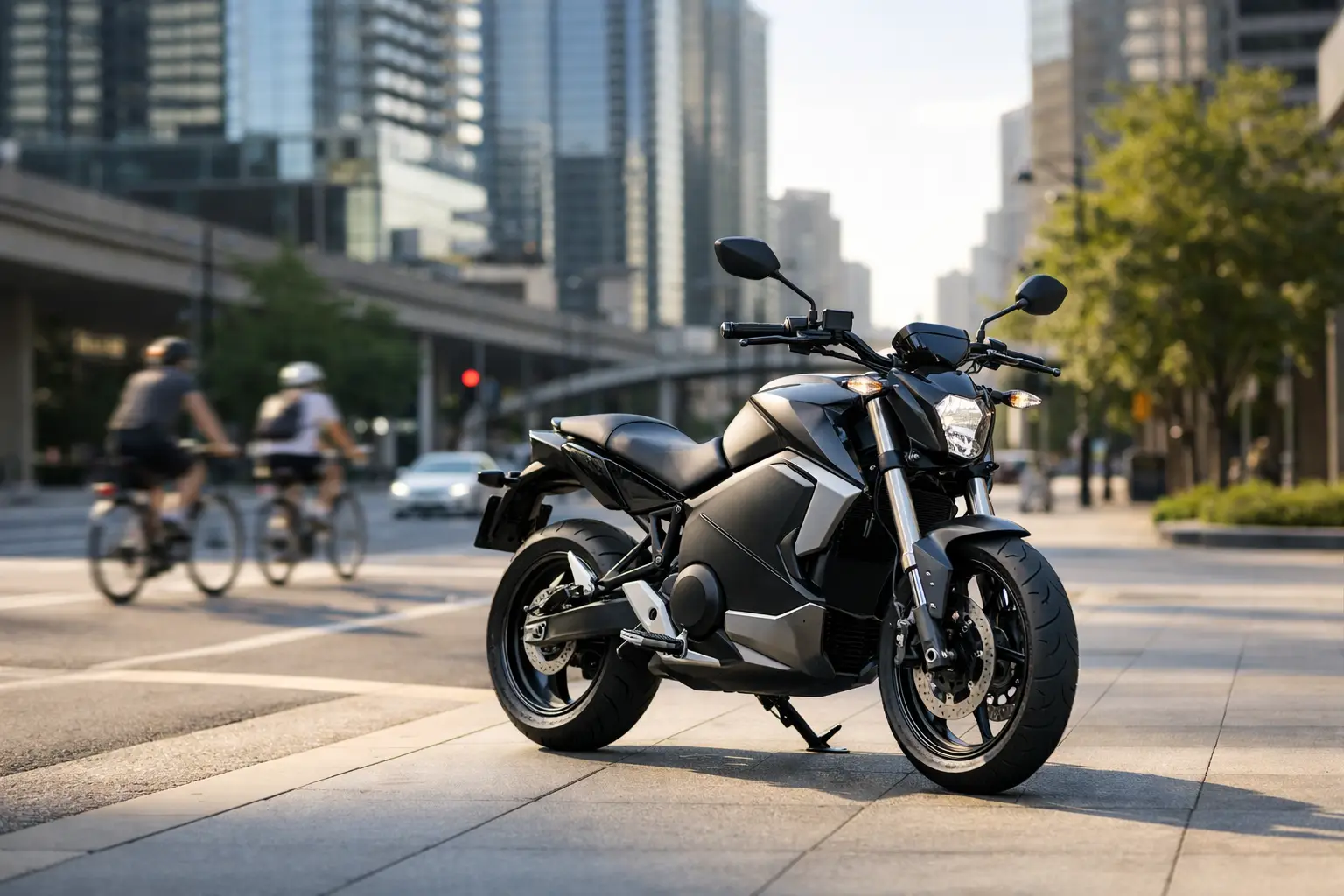
The traffic light changes. Cars hesitate, buses groan, and the city starts moving all at once. An urban electric motorcycle does something different: it moves with immediate, silent intent. No clutch work in stop-and-go traffic. No heat rising from an idling engine. Just clean torque, a narrow profile, and a ride that makes the everyday commute feel deliberately chosen.
For riders who care how a machine looks, feels, and belongs in the city, electric is no longer a compromise made for the future. It is a sharper answer to the way cities work now.
The Urban Electric Motorcycle Has a Different Job
A city motorcycle is not judged only by top speed. Its real test happens between red lights, on imperfect pavement, while finding parking outside a crowded restaurant, and during the last five minutes of a ride home after a long day.
That is where electric power makes its case. Full torque arrives from the first twist of the throttle, which gives an electric motorcycle a quick, confident character when merging, filtering where permitted, or taking the lead from an intersection. The power delivery is direct rather than dramatic. There is no waiting for revs to build and no gear change interrupting the moment.
Silence changes the experience, too. It does not remove the sensation of riding. It brings other parts of it forward: the sound of tires on pavement, the wind across a helmet, the small mechanical conversations between rider, suspension, and road. In dense neighborhoods, quieter riding also carries a certain respect. You arrive without announcing yourself to the entire block.
Fast Enough Means More Than a Top-Speed Number
For urban riding, performance is about usable response. A motorcycle that feels alive from 0 to 45 mph can be more rewarding in the city than one built to chase high-speed figures it rarely gets to use.
This is why vehicle class matters. Many premium electric motorcycles are designed for A1-class licensing in markets that use that category, while US buyers should always verify local licensing, registration, insurance, and equipment requirements before purchasing. The practical question is simple: does the bike have enough power to keep pace with urban traffic and enough composure to feel stable beyond it?
A well-considered electric motorcycle should feel planted when the road opens up, not merely quick at the first green light. Chassis balance, suspension calibration, braking feel, tire choice, and throttle mapping all shape whether instant torque feels refined or unruly. The best city machines have urgency without nervousness.
What range really means in town
Range claims deserve context. A published figure may be based on a particular speed, rider weight, temperature, terrain, and riding mode. City riding can be kind to an electric drivetrain because low speeds and regenerative braking may help preserve energy. Aggressive acceleration, cold weather, steep hills, passenger loads, and sustained faster riding will reduce the number.
Rather than treating range as a contest, match it to your routine. A rider covering 15 to 35 miles a day has very different needs from someone commuting across an entire metro area, riding all weekend, and lacking access to charging at home or work. The useful range is the range that lets you ride your normal week without turning every trip into battery math.
Charging should fit the rhythm of ownership. Overnight home charging is ideal for many urban riders: plug in after dinner, wake up ready. Workplace charging can make the equation even easier. If neither is available, the motorcycle may still work, but it calls for more planning and a more honest look at daily mileage.
Design Is Not an Accessory
Most electric vehicles still make the same mistake. They confuse looking futuristic with having character. Screens, sharp plastic panels, and visual noise may signal technology, but they do not automatically create a motorcycle people want to keep looking at after they park it.
Classic proportions endure for a reason. A sculpted tank form, a balanced stance, a round headlight, and purposeful wheels give a motorcycle visual language that survives trends. When those lines hold an electric heart, the result is not nostalgia. It is continuity with a new source of power.
This matters in the city because your motorcycle is part of your daily visual landscape. It sits outside the studio, the office, the coffee shop, and the apartment building. It becomes a personal object before it becomes transportation. A bike with presence needs no oversized graphics or artificial theater. Its details do the talking.
RGNT Motorcycles builds around that idea: hand-crafted Swedish design, modern electric performance, and a silhouette that looks considered from every angle. The point is not to imitate a gasoline-era motorcycle. It is to carry forward the parts worth keeping – proportion, material, ritual, and attitude – while leaving the noise behind.
Ownership Gets Better When It Gets Simpler
Electric ownership has practical advantages that are easy to overlook until they become part of a routine. There are fewer moving parts than in an internal-combustion drivetrain. No oil changes, spark plugs, exhaust systems, or clutch adjustments belong on the regular checklist. That does not mean maintenance disappears. Tires, brake pads, brake fluid, suspension, bearings, lights, and general inspections still matter.
The trade-off is that battery health, charging habits, software support, and qualified service access deserve more attention before buying. Ask what warranty coverage looks like, where service can be performed, how diagnostic updates are handled, and what support is available if the motorcycle is stored for an extended period. Premium ownership should feel clear, not mysterious.
Upfront price is another honest consideration. A design-led, limited-batch electric motorcycle can cost more than an entry-level gas bike or a mass-market scooter. But purchase price is only one part of the picture. Fuel costs, routine maintenance, parking, insurance, financing, and the value of a motorcycle you genuinely want to ride all affect the decision.
For some riders, the arithmetic will favor a practical commuter. For others, the right machine must also earn its place emotionally. That is not indulgence. A motorcycle that makes you take the long way home is often the one that stays in your life.
Choosing the Right City Electric Motorcycle
Start with your route, not a spec sheet. Measure your typical day, including detours, errands, bridges, hills, and the occasional faster road. Then consider where the motorcycle will sleep and charge. Apartment riders should confirm building access and charging rules before falling for a particular model.
Next, sit on the bike. Foot position, seat height, handlebar reach, and low-speed balance matter more in city use than they do in a showroom photo. If possible, test the throttle at low speed, where refined calibration reveals itself. A good electric motorcycle should feel intuitive in a tight parking lot before it feels exciting on a clear boulevard.
Finally, choose with your eye as well as your head. The silent minority does not need to look anonymous. An urban motorcycle can be efficient, technically advanced, and unmistakably yours at the same time.
The right ride is the one that turns a routine trip across town into a small act of independence. Charge it overnight, take the clean line through morning traffic, and let the city hear a little less while you feel a lot more.
-
Guide to Electric Motorcycle Charging Options
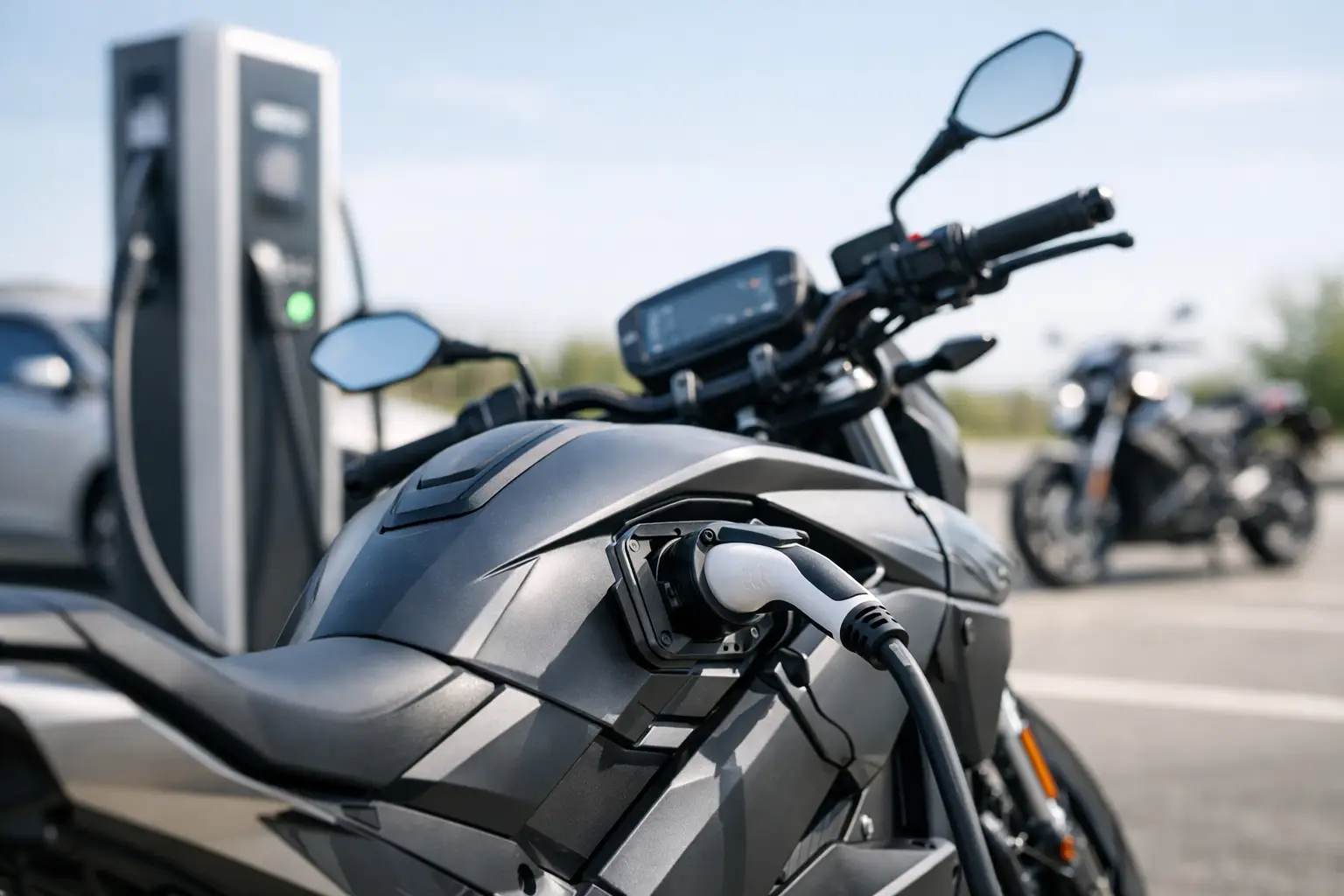
The best electric rides do not begin at a gas station. They begin quietly, where you park. This guide to electric motorcycle charging options is about making that quiet convenience work for your actual life – the commute across town, the last-minute dinner plan, the longer Saturday escape beyond the city.
Electric charging is often discussed as a technical hurdle. In daily riding, it is usually the opposite. Once your routine is set, plugging in becomes as unremarkable as charging your phone overnight. The key is knowing which charging option fits your bike, your building, and the way you prefer to move.
Start with the charger your motorcycle accepts
Before choosing a charging setup, check the motorcycle’s battery capacity, onboard charger rating, connector type, and stated charging times. These details determine what the bike can actually draw from a power source. A public charger may offer more power than your motorcycle can accept, while a simple wall outlet may already be enough for a full overnight recharge.
This distinction matters because charging equipment is not automatically faster just because it looks more serious. The rate is limited by the lowest-capacity part of the system: the outlet or station, cable, onboard charger, or battery-management system.
For many urban electric motorcycles, the practical question is not, “What is the fastest charger available?” It is, “Can I arrive home, plug in, and leave with a full battery tomorrow?” If the answer is yes, home charging will carry most of your riding life.
Home charging: the standard that makes electric easy
Home is where electric ownership earns its reputation. Instead of scheduling fuel stops, you restore range while the motorcycle is parked anyway. For riders with a private garage, driveway, or assigned space with power, this is the cleanest arrangement.
A standard wall outlet
Level 1 charging uses a standard household outlet. It is the simplest entry point and often requires no added equipment beyond the charging cable supplied or specified for the motorcycle. Charging is slower, but slow is not a problem when the bike sits for eight to twelve hours.
A wall outlet makes particular sense for short daily mileage. If your commute and errands use only part of the battery, overnight charging can comfortably replace what you used without any change to your routine. It also keeps installation costs low.
There are limits. Older outlets, damaged wiring, extension cords, and shared circuits are not details to ignore. Charging draws power continuously for long periods, so the outlet and circuit should be in sound condition. If there is uncertainty, have a qualified electrician assess the setup. Premium ownership should not rely on improvised wiring.
A dedicated 240-volt circuit
A 240-volt circuit, commonly called Level 2 charging, is the better choice when you want shorter recharge times, ride more frequently, or share access with another EV. Depending on the motorcycle and charger, it can significantly reduce the time needed to recharge.
This is less about chasing numbers and more about freedom. A faster home setup gives you room for an evening ride after work, a recharge over dinner, then another departure later that night. It is especially useful for riders who cover higher daily mileage or dislike planning around a long charging window.
Installation is a property decision as much as a vehicle decision. Homeowners may need a panel-capacity review, permits, and weather-rated equipment for outdoor parking. Renters and condo owners may need approval from a landlord, homeowners association, or building manager. Start that conversation early and frame it clearly: dedicated charging adds everyday convenience and can make a parking space more valuable.
Public charging: useful, not necessarily essential
Public charging changes what is possible, particularly for riders without home access. It can also add confidence on days that run longer than planned. But it should be treated as part of a charging plan, not always the plan itself.
Public stations vary widely. Some are in garages, retail lots, workplaces, hotels, and municipal parking areas. Availability, pricing, access hours, connector support, parking rules, and station reliability can differ from one location to the next. Check these details before you need them, not when the battery is low and the weather has turned.
Know the connector before you arrive
The station connector must match your motorcycle, or work with an approved adapter where one is permitted by the motorcycle manufacturer. Do not assume that a connector designed around cars will fit or be appropriate for every electric motorcycle.
Also remember that a high-powered DC fast-charging station is not automatically usable. Many electric motorcycles are designed for AC charging and do not support DC fast charging. That is not a flaw. It reflects different battery sizes, packaging constraints, and real-world riding patterns. A lighter, more elegant motorcycle built for the city does not need to imitate a large electric car to be useful.
Make public charging part of the destination
The most refined public-charging habit is not waiting beside your motorcycle. It is charging while you are already doing something worthwhile. Park at work. Plug in during a gym session. Add range while you have coffee, meet friends, or spend an afternoon in a neighborhood worth arriving in.
If charging carries a parking fee or idle fee, set a reminder to return before the session ends. Public infrastructure works best when riders treat it as shared space. Move on when the motorcycle has what it needs.
Workplace charging can be the sleeper advantage
For apartment dwellers, workplace charging can be more valuable than a public network. A motorcycle parked for most of the workday has time on its side. Even a modest charging rate can recover a meaningful amount of range between morning and evening.
If your employer does not offer charging, it can be worth asking. Motorcycle charging often requires less space and energy than car charging, and it supports a practical commuter benefit. Come prepared with the motorcycle’s charging requirements and a simple proposal for safe installation. The request lands better when it is specific.
Charging away from home: plan for the ride you want
Longer rides require a different mindset, but not a more anxious one. Start with your expected range in the conditions you will actually face. Speed, temperature, elevation, passenger weight, cargo, tire pressure, and aggressive acceleration all affect consumption. Electric torque is immediate and addictive. Use it with intention when range matters.
Map charging stops around places you would choose to stop anyway. A route with a reliable station near food, a scenic town, or a proper break is better than one that depends on a single obscure charger with no backup. Leave a range buffer instead of riding the battery down to a dramatic final percentage.
Four habits make longer rides less complicated:
- Check station access, connector compatibility, and recent availability before departure.
- Identify a backup charger within reach of your planned route.
- Arrive with enough reserve to handle a closed lot, occupied space, or detour.
- Charge more often during natural stops rather than waiting for a deep battery drain.
That final point is easy to overlook. Lithium-ion batteries are generally happier with regular, moderate charging than repeated extremes. Your motorcycle’s manual remains the authority on daily charge limits, storage guidance, and battery care for its specific battery system.
The charging option that fits your life
There is no single best setup. A rider with secure garage parking and a short commute may need nothing beyond a properly inspected outlet. A high-mileage commuter may appreciate a dedicated Level 2 circuit. A city resident without private parking may build a dependable rhythm around workplace and neighborhood stations.
The right choice also depends on ownership horizon. If you are staying in a home for years, a professionally installed circuit can be a strong investment in ease. If you rent, a portable, approved charging solution and a reliable local charging map may be the smarter move. Do not buy infrastructure for an imaginary lifestyle. Build around the rides you take now, with enough headroom for the rides you want next.
A quieter ritual, not another errand
Electric motorcycles reward small rituals. Park. Connect. Let the battery recover while the city carries on. There is no fuel smell on your gloves, no queue beneath fluorescent lights, no unnecessary noise at the end of the day.
For riders drawn to classic lines and an electric heart, that is part of the point. Charging should fade into the background so the ride can stay in the foreground. Set up the option that feels natural, protect a little range for the unexpected, and leave room in your plans for the road that looks better than the direct route.
-
Do Electric Motorcycles Need Maintenance? Yes.
The short answer: less maintenance, not no maintenance
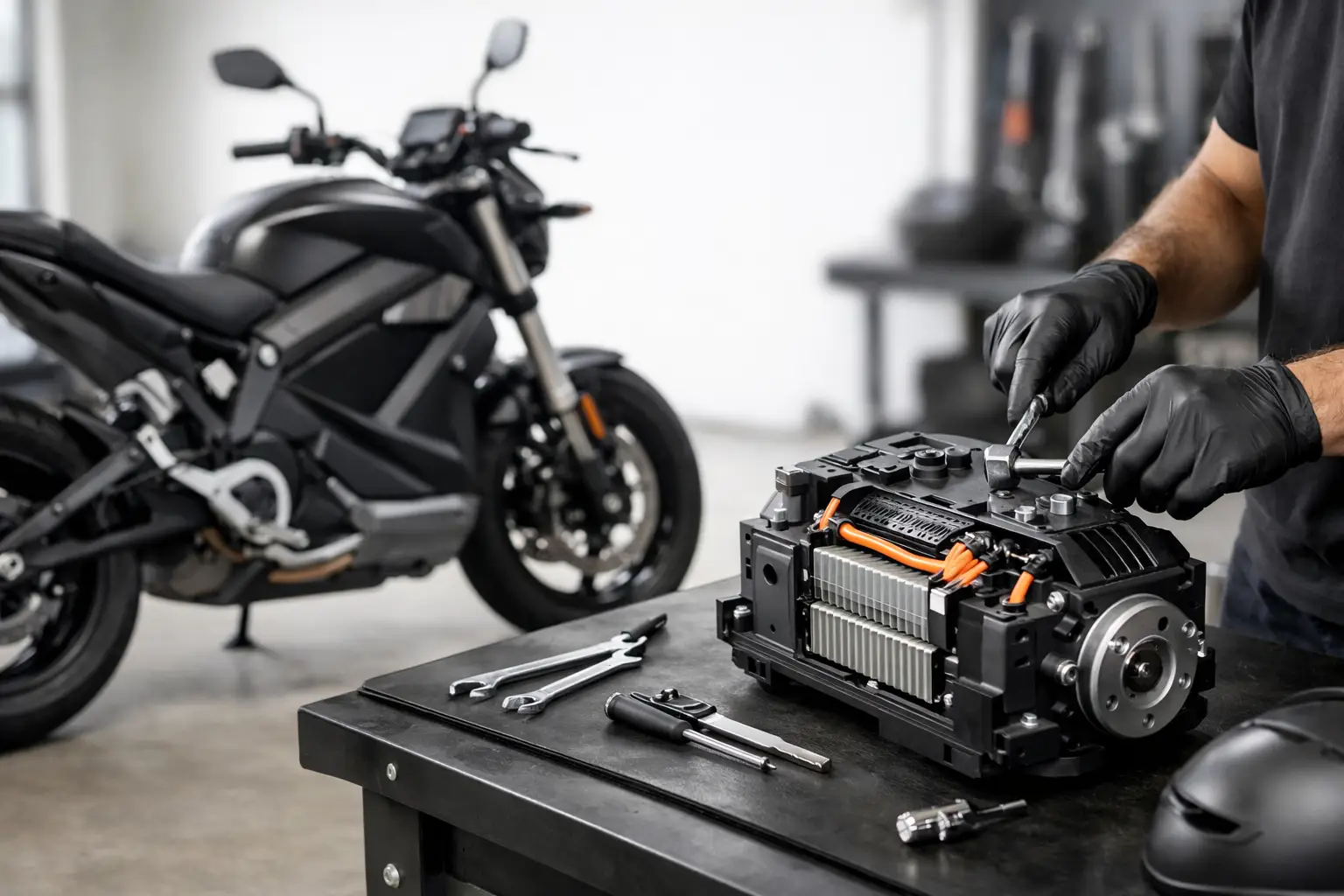
Do electric motorcycles need maintenance? Absolutely. They simply trade the messy, frequent rituals of combustion for a smaller set of checks that protect safety, performance, and the long life of the bike.
There is no oil filter to change, no spark plugs to foul, no valves to adjust, and no exhaust system to corrode. That is a meaningful shift, especially for riders who would rather spend a Saturday riding than stripping panels off a conventional engine. But silent power still meets rough pavement, rain, heat, potholes, and time. Tires wear. Brake fluid ages. Fasteners need inspection. A battery deserves intelligent care.
Think of electric motorcycle maintenance as ownership with less noise – in every sense. The work is lighter, but it is not optional.
What an electric motorcycle does not need
A gas motorcycle has hundreds of moving engine parts working under heat, pressure, and vibration. Its routine maintenance schedule is built around managing that complexity: engine oil and filters, air filters, fuel delivery, clutch wear, valve clearances, cooling-system service, and exhaust inspections.
An electric motor has dramatically fewer moving parts. Instant torque comes without combustion, and there is no gearbox demanding regular oil changes in the way riders expect from many traditional motorcycles. For an urban rider, that means fewer consumables, fewer workshop visits, and less chance that a neglected service item becomes a costly engine problem.
That lower workload is one reason electric ownership feels so composed. Start, ride, charge, repeat. Classic lines, electric heart.
The trade-off is that the remaining maintenance items matter even more. A quiet bike can make a worn tire or dragging brake easier to overlook because there is no engine soundtrack covering it up.
The maintenance electric motorcycles still need
Tires are still your contact with the road
Electric torque is immediate. It makes city riding responsive and addictive, but enthusiastic launches can wear a rear tire faster than a rider expects. Check tire pressure when the tires are cold, follow the pressure specification for your motorcycle, and inspect tread and sidewalls regularly.
Look for embedded debris, cuts, uneven wear, and cracking caused by age or sun exposure. A motorcycle with plenty of tread is not automatically road-ready if its tires are old and hardened. For a design-led machine built to move through the city with confidence, fresh rubber is not a detail. It is the foundation of the ride.
Brakes need attention, even with regenerative braking
Regenerative braking can reduce the use of the friction brakes, especially in stop-and-go traffic. That often means pads and rotors may last longer. It does not mean the braking system is maintenance-free.
In fact, lighter brake use can allow moisture, dirt, and surface corrosion to build up. Inspect pads, rotors, calipers, hoses, and lever feel. Brake fluid absorbs moisture over time and should be replaced according to the manufacturer’s service interval, regardless of how few miles you ride.
If you notice a soft lever, pulsing under braking, a grinding sound, or the bike pulling to one side, stop treating it as a minor annoyance. Brakes are a professional-service item when anything feels wrong.
Suspension, steering, and chassis checks keep the ride sharp
Road impacts do not care what powers the motorcycle. Fork seals can leak, suspension components can wear, steering-head bearings can develop play, and wheel bearings can loosen or become rough. Periodic inspections identify those issues before they change the handling.
Pay attention to changes in the ride: a front end that feels vague, a clunk over bumps, bouncing after a pothole, or a bike that no longer tracks cleanly through a corner. These are not traits of electric power. They are signals from the chassis.
Fasteners also deserve a scheduled check. Motorcycles live with vibration, thermal changes, and imperfect pavement. A qualified technician can inspect critical bolts, controls, footpegs, suspension mounts, and other safety-related hardware to the correct torque specifications.
The drive system depends on the bike
Electric motorcycles may use a belt, chain, or other final-drive arrangement. The service needs depend on the system fitted to your model.
A chain generally needs cleaning, lubrication, tension checks, and eventual replacement. A belt is cleaner and typically requires less regular attention, but it should still be inspected for damage, alignment, and correct tension. Never assume that “electric” means every drivetrain component can be ignored. Consult the owner’s manual for the correct inspection intervals and approved products.
Battery care is mostly about good habits
The traction battery is the center of an electric motorcycle, and it is engineered with monitoring and protection systems. Your role is not to service the high-voltage pack. Leave battery repairs, high-voltage cables, and internal electrical work to trained technicians.
Your role is simpler: charge thoughtfully, use approved equipment, and avoid extremes when possible. Plug in with dry, undamaged connectors. Keep the charge port clean and capped when not in use. If a cable is frayed, a connector is hot, or the motorcycle reports a charging fault, do not improvise a fix.
Battery longevity is influenced by heat, time spent at very high or very low charge, charging behavior, and storage conditions. The best routine depends on the motorcycle and its battery-management system, so follow the manufacturer’s guidance rather than treating one internet rule as universal. Daily riders may charge differently from a bike parked for a winter month.
For extended storage, do not simply leave the motorcycle forgotten in a cold garage or baking outside. Store it in a dry, moderate environment, maintain the recommended state of charge, and check it at the interval specified in the manual.
Software and electrical systems deserve a check-in
Modern electric motorcycles use software to manage power delivery, charging, displays, diagnostics, and sometimes connected features. Updates may improve functionality or address known issues, so include software checks in scheduled service.
Also inspect the practical electrical items: lights, turn signals, brake light, horn, display, switches, charging-port cover, and wiring visible around the chassis. A failed turn signal is not glamorous, but neither is explaining it after a close call in traffic.
A practical maintenance rhythm
A quick pre-ride glance takes less than a minute. Check tire condition, brake feel, lights, and the ground beneath the motorcycle for anything unusual. If the bike has been parked outdoors, look over the charge port and controls before setting off.
Every few weeks, or more often if you ride daily, check tire pressure and inspect the tires closely. Clean the motorcycle carefully, avoiding aggressive high-pressure spray around bearings, seals, connectors, and the charge port. Cleanliness is not just cosmetic. It makes leaks, loose hardware, and damage easier to spot.
At the service intervals set by the manufacturer, book a professional inspection. That appointment should cover the brakes, tires, suspension, steering, final drive, chassis hardware, charging system, diagnostic codes, and applicable software updates. Mileage matters, but so does time. A motorcycle that covers only a few miles each season still has aging brake fluid, tires, seals, and a battery that has been sitting.
When should you call a technician?
Do not wait for a scheduled service if the motorcycle changes character. Warning lights, reduced power, unusual charging behavior, a burning smell, fluid leaks, damaged cables, new vibration, or a sudden change in braking all deserve prompt attention.
The same goes for crash damage, even after a low-speed drop. A scraped cover may be cosmetic, but an impact can also affect a lever, wheel, fork, sensor, cable, or battery enclosure. High-voltage systems are not the place for trial-and-error repairs.
Lower maintenance is part of the appeal
Electric motorcycles do not erase ownership responsibilities. They remove much of the old burden and leave the parts that genuinely shape a safe, satisfying ride. Less time with oil, filters, fuel, and engine adjustments means more room for the reasons you chose a motorcycle in the first place: the line of the tank, the clean pull of torque, and the city opening up ahead.
Treat the essentials with care, keep the service schedule honest, and your electric motorcycle can stay as sharp as the first silent departure.
-
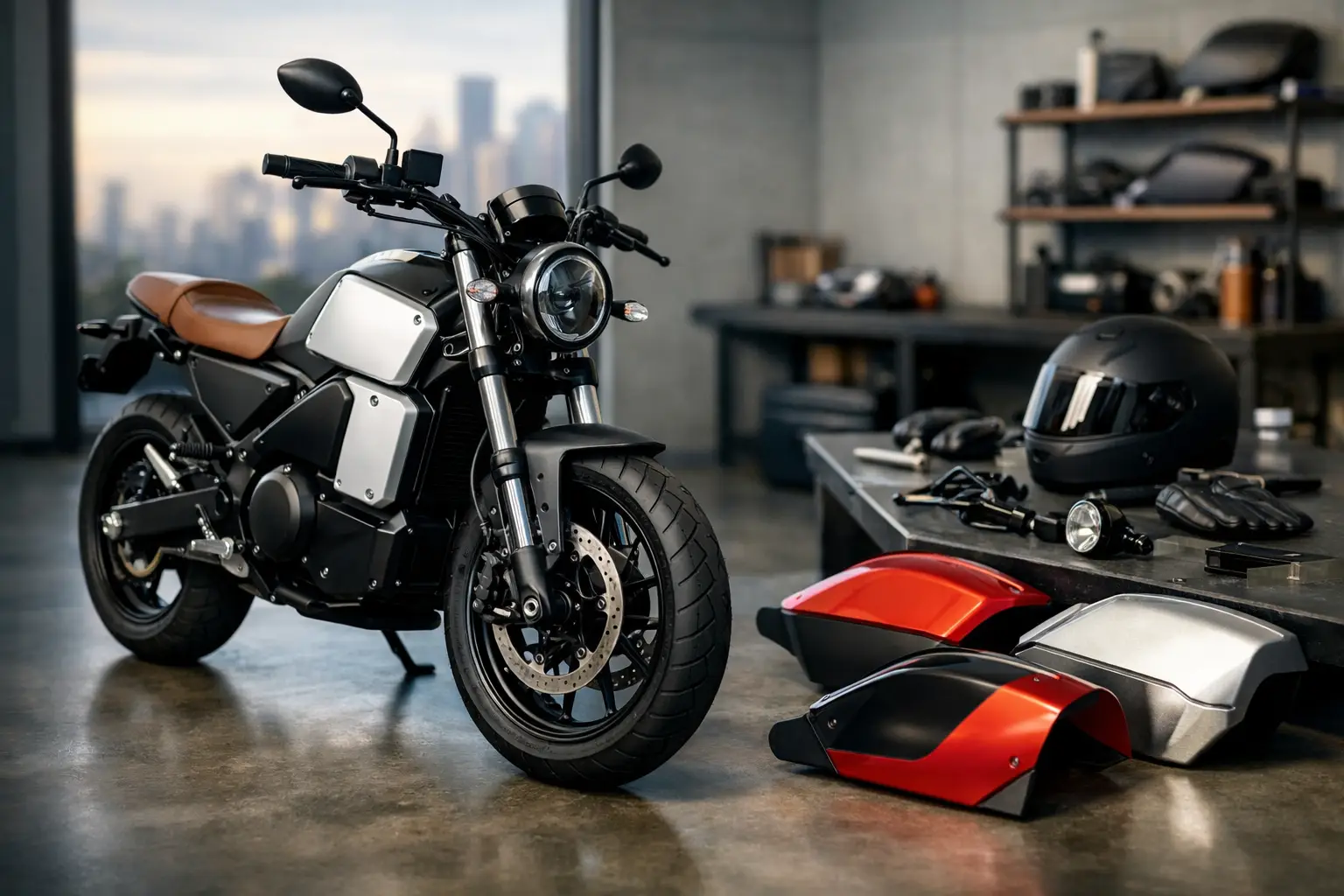
Customizable Electric Motorcycle, Made Personal
A customizable electric motorcycle should not feel like a gadget with a paint option. It should feel like yours before the motor turns over – classic lines, electric heart, and choices that sharpen the connection between rider and machine. For riders who care where they park, how they arrive, and what the ride says without making noise, personalization is not an afterthought. It is part of the appeal.
The strongest electric motorcycles are already defined by their silence, immediate torque, and clean mechanical simplicity. Customization gives that experience a point of view. The right specification can make a bike feel more considered in city traffic, more comfortable on the daily commute, and more distinct outside a favorite late-night spot.
What Customization Should Actually Change
There is a difference between decoration and meaningful choice. A badge, a sticker kit, or a catalog of bolt-on parts may change a bike’s appearance. A well-configured motorcycle changes how ownership feels.
Start with the elements you will see and use every day. Color and finish set the visual tone, but seat material, riding position, controls, and display settings affect the relationship over hundreds of miles. On an electric motorcycle, software also matters. Ride modes, regenerative braking behavior, throttle response, and connected features can shape the bike as decisively as a different handlebar or tire profile.
The point is not to add everything. A premium build is often defined by restraint. Choose details that suit your route, your wardrobe, and the way you ride. A motorcycle with clean proportions does not need to shout to be remembered.
Choosing a Customizable Electric Motorcycle for the City
Urban riding puts customization in a more practical light. Your bike needs to move confidently through stop-and-go traffic, fit the realities of parking, and carry enough charge for the way you actually travel. The best decisions begin with use, not a mood board.
Consider where your miles happen. A rider covering short city trips with dependable charging at home may prioritize a lighter, visually minimal setup. Someone commuting across town every day may put range visibility, charging speed, and comfort first. Neither choice is more authentic. It depends on the ride.
An A1-class electric motorcycle can be an especially compelling format for urban riders. It offers enough performance to make traffic feel less tedious, while remaining approachable for newer riders and practical for dense streets. Instant electric torque removes the waiting game at green lights. The quiet drivetrain makes early departures and late returns feel more civilized, without taking away the sense that you are riding a real motorcycle.
Start With the Riding Position
A tailored riding position has more value than a dramatic cosmetic change. Before choosing finishes, think about your wrists, knees, back, and the kind of roads you ride. An upright posture suits frequent stops and better visibility through traffic. A lower, more forward stance can feel more connected and purposeful, but may become tiring on a long commute.
Seat shape deserves the same attention. A beautifully stitched saddle is part of the visual story, but it also determines whether a 20-minute ride feels effortless or becomes something you endure. If you often carry a passenger, do not treat the rear seat as a detail. Build for the life you plan to live with the bike.
Make the Electric Performance Yours
Electric power is not one fixed sensation. A customizable electric motorcycle may let riders select or adjust ride modes that change acceleration, power delivery, and regenerative braking. These settings are useful because cities demand different things at different times.
A softer response can make wet streets, packed intersections, and low-speed filtering more composed. A more direct setting brings out the quick, silent push that makes an electric bike feel alive. Regenerative braking can also be tuned to preference. Strong regeneration can reduce brake use in urban traffic and return some energy to the battery, while a lighter setting may feel more familiar to riders coming from conventional motorcycles.
There is a trade-off. The most aggressive response is not always the fastest way across town, and maximum regeneration is not automatically the smoothest setting. Test the behavior on your real route. Good customization makes performance more intuitive, not more complicated.
Finish Is More Than a Color Choice
The visual identity of a motorcycle starts with its silhouette, then lives in the details. A deep gloss finish can give a retro-inspired tank a formal, almost tailored presence. A muted matte tone can bring a more technical, stripped-back character. Polished hardware, darkened components, wheel color, and the texture of the seat can either reinforce the design or distract from it.
This is where Scandinavian restraint earns its place. The most lasting builds tend to pair a strong base color with a few deliberate contrasts. Let the frame, tank, wheels, and seat speak to one another. Avoid turning every component into a separate statement.
For city ownership, finish also has a practical side. Dark matte surfaces can hide some visual noise but may need careful cleaning. Gloss can show dust and light scratches more readily, yet it delivers a richer visual depth when maintained well. Lighter colors may improve daytime visibility, while darker builds carry a more discreet presence after sunset. Style and utility are allowed to share the same garage.
The Technology Worth Specifying
Technology should disappear into the ride. A clear display, trustworthy range estimate, practical navigation support, and straightforward charging information are more valuable than a screen full of distractions. You should be able to check the essentials at a glance, put on your gloves, and leave.
When comparing specifications, look beyond a single range figure. Range varies with speed, rider weight, ambient temperature, elevation, tire pressure, and how hard you use the throttle. City riding can benefit from regenerative braking, but constant rapid acceleration still uses energy. A published maximum range is a useful benchmark, not a promise for every Tuesday in January.
Charging is equally personal. Home charging is often the quiet advantage of electric ownership: return, plug in, and wake up ready. If you rely on public charging, confirm the connector standard, local charging access, and the time a full or partial charge requires. A bike that suits your style but complicates your weekly routine is not truly well configured.
Connected features can add real value when they support ownership rather than demand attention. Ride data, location awareness, security alerts, and service updates can be useful. The best systems provide confidence in the background and leave the foreground to the road.
Handcrafted Character Versus Endless Options
More choices do not always create a better motorcycle. In fact, a seemingly unlimited configurator can lead to a bike that feels less resolved. The advantage of a design-led manufacturer is that the available choices are already filtered through proportion, performance, and material quality.
RGNT Motorcycles approaches this balance through hand-built Swedish craftsmanship and a modern-classic design language. The goal is not customization for its own sake. It is a motorcycle that carries individual character while keeping the coherence that makes a classic shape timeless.
That distinction matters. Handcrafted does not mean precious, and premium does not mean impractical. It means the touch points, finishes, and engineering decisions have been considered as one object. A motorcycle is never just transportation when it is parked beneath your apartment, waiting at the curb outside the studio, or rolling silently into the morning.
Customize With Ownership in Mind
Before committing to an accessory or modification, consider warranty coverage, local regulations, insurance requirements, and the effect on safety. Lighting, mirrors, tires, brakes, and license plate placement are not merely aesthetic territory. Changes in these areas can affect road legality and the way a motorcycle performs in an emergency.
Prioritize quality over quantity. Choose components designed for the motorcycle, installed correctly, and suited to real-world weather. Cheap add-ons can create vibration, compromise electrical systems, or make service more difficult. The cleanest custom builds are often the ones that look almost inevitable.
A motorcycle earns its identity mile by mile. Choose the color that makes you look back when you walk away, the riding setup that keeps you comfortable past the first hour, and the technology that lets the city fade into the background. Then ride it often. That is where a personal machine becomes a signature.
-
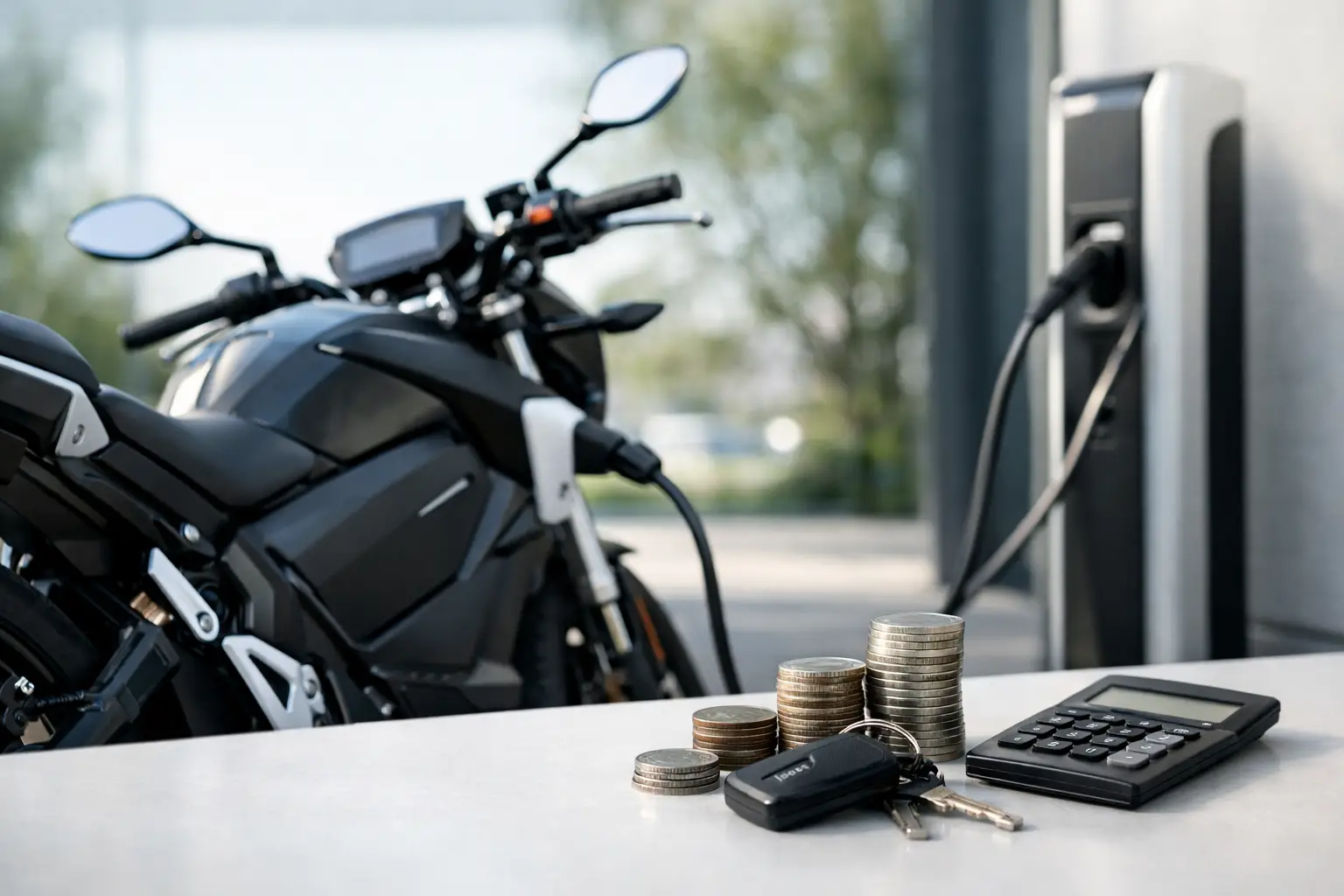
Guide to Electric Motorcycle Ownership Costs
The price on the tag is only the first number. A proper guide to electric motorcycle ownership costs looks beyond the purchase moment – to the quiet charge at home, the insurance quote, the tires that meet the road, and the choices that shape what riding really costs over time. For city riders, an electric motorcycle can replace more expensive daily miles with something cleaner, sharper, and far more satisfying.
Start With the Real Purchase Price
The purchase price is the foundation, but it is not always the final amount paid before the bike reaches your garage. Sales tax, registration, title fees, documentation charges, destination costs, and optional accessories can materially change the out-the-door figure. The exact mix depends on your state, dealer arrangement, and whether you buy directly or through a retail partner.
For a premium electric motorcycle, also think about what is already included. A lower-priced machine may require upgrades to reach the finish, charging setup, security, or riding position you want. A hand-built motorcycle with strong component quality can cost more upfront while reducing the temptation to immediately replace the parts that define the experience.
Financing changes the monthly picture rather than the total cost disappearing. Compare the annual percentage rate, loan term, down payment, and any early repayment conditions. A longer term can make a premium bike feel more accessible each month, but interest adds up. The right structure leaves room in your budget for insurance, protective gear, and the occasional weekend ride that reminds you why you bought a motorcycle in the first place.
Charging Costs: Usually the Quiet Advantage
Electricity is where ownership can feel distinctly different from gasoline. Most riders do the majority of their charging at home, where electricity rates are usually more predictable and less expensive per mile than fuel. Your actual cost depends on local utility pricing, battery capacity, charging losses, and how often you ride.
A simple way to estimate it is to multiply your battery capacity in kilowatt-hours by your home electricity rate. If a full charge uses roughly 8 kWh from the wall and your electricity costs $0.18 per kWh, that charge costs about $1.44. Real-world charging draws slightly more energy than the battery stores, so leave a little margin rather than assuming laboratory-perfect efficiency.
Annual mileage matters more than almost any other variable. A rider covering 2,000 urban miles will see a different savings profile than a commuter riding 7,000 miles a year. Stop-and-go city riding can favor electric power because there is no idling fuel burn, while aggressive acceleration, cold weather, steep climbs, and sustained highway speed will use more energy.
Public charging can add convenience, not always savings. Per-kWh pricing, session fees, parking charges, and membership plans vary widely. For most owners, public charging is best treated as a useful option for longer days, while home charging remains the financial center of ownership.
Home Charging Setup
Many electric motorcycles can charge from a standard household outlet. That keeps the initial setup simple, especially for riders with a secure garage or private parking space. If you want faster charging, a dedicated circuit or upgraded equipment may be worthwhile, but factor in electrician labor and local permitting.
Apartment living requires a more deliberate plan. Ask about outlet access, parking rules, billing, and whether the building intends to add shared charging. A motorcycle’s relatively modest battery can make the conversation easier than it is for a full-size electric car, but access is still more valuable than theoretical charging speed.
Insurance, Registration, and Taxes
Insurance is one of the least predictable electric motorcycle ownership costs. Your age, riding record, ZIP code, coverage limits, deductible, annual mileage, storage situation, and motorcycle value all influence the premium. Urban riders may pay more because of theft and collision exposure, while experienced riders with secure parking may see more favorable rates.
Get quotes before committing to a specific model. Make sure the insurer understands that the vehicle is an electric motorcycle, not a low-speed scooter or e-bike. Ask how the policy handles battery damage, charging equipment, accessories, roadside assistance, and replacement-value coverage. Those details matter when the motorcycle is both a daily machine and a design object worth protecting.
Registration and licensing depend on your state. Many electric motorcycles require the same motorcycle endorsement, registration process, and road-use compliance as their gasoline counterparts. Some states and municipalities offer EV incentives, reduced fees, or parking advantages, but policies change. Treat incentives as a welcome possibility, not a reason to stretch your budget.
Service Costs: Less Routine, Not Maintenance-Free
Electric power removes several familiar expenses. There are no oil changes, spark plugs, air filters, clutch adjustments, or exhaust-system repairs. That is a meaningful advantage for riders who want more time moving through the city and less time scheduling routine engine service.
But an electric motorcycle is still a motorcycle. Tires, brake pads, brake fluid, suspension checks, wheel bearings, steering components, chain or belt care where applicable, and general inspections remain part of responsible ownership. Immediate torque can be addictive, and a rider who uses it often may reach the tire shop sooner than expected.
Premium machines deserve proper attention. Follow the manufacturer’s service schedule, keep software current when applicable, and use technicians familiar with high-voltage systems. A well-maintained motorcycle protects safety, resale value, and the composed feel that separates a considered ride from a merely functional one.
The Battery Question
The battery is the major long-term component riders rightly think about. Its life is shaped by age, charge cycles, heat exposure, storage habits, and charging behavior. Warranty coverage should be read carefully before purchase: look at the term, capacity-retention language, exclusions, and what support looks like in your market.
You do not need to obsess over every percentage point. For most riders, the sensible approach is simple: avoid leaving the motorcycle fully depleted for long periods, follow the storage guidance for winter, and protect it from extreme heat where possible. Modern battery management systems are designed to help, but good ownership habits still matter.
Do Not Forget the Costs Around the Motorcycle
The most overlooked expenses are often the ones that make ownership easy and secure. A helmet, jacket, gloves, pants, boots, lock, cover, and security solution can add a substantial amount, particularly if you choose gear with genuine protective credentials. This is not the category to reduce to an afterthought.
If you commute, include luggage or a practical carrying solution in the budget. If you park outside, think about a weatherproof cover, a ground anchor where permitted, and theft protection. If you store the bike for winter, account for a clean, dry space and the small amount of preparation required to keep it ready for spring.
There is also the value of your time. An electric motorcycle can simplify the weekly routine: no fuel-station detours, fewer consumables, and a silent departure that does not announce itself to the block. That convenience is hard to place in a spreadsheet, yet it is part of the ownership equation.
A Guide to Electric Motorcycle Ownership Costs Over Five Years
The most useful calculation is not a single monthly payment. It is a five-year ownership view that includes purchase price, financing interest if applicable, insurance, registration, electricity, service, tires, gear, accessories, and expected resale value. Subtracting resale value at the end gives you a clearer sense of what the motorcycle truly cost to own.
Your result will depend on how you ride. A low-mileage weekend rider may spend more on insurance and depreciation than on electricity. A daily commuter may see the value shift toward reduced fuel and routine service costs. A rider who keeps a motorcycle for many years may place more weight on build quality, battery warranty, parts support, and timeless design than on the lowest possible entry price.
That is where a motorcycle such as an RGNT earns its place in the conversation. The appeal is not simply that electric power can lower running costs. It is that classic lines, an electric heart, and Swedish craftsmanship can make every necessary mile feel chosen.
Buy the motorcycle that fits your roads, your charging reality, and your style of riding. Then budget for the parts of ownership that protect the experience. The best cost calculation leaves you with a machine you still want to see waiting outside after the numbers are done.
-
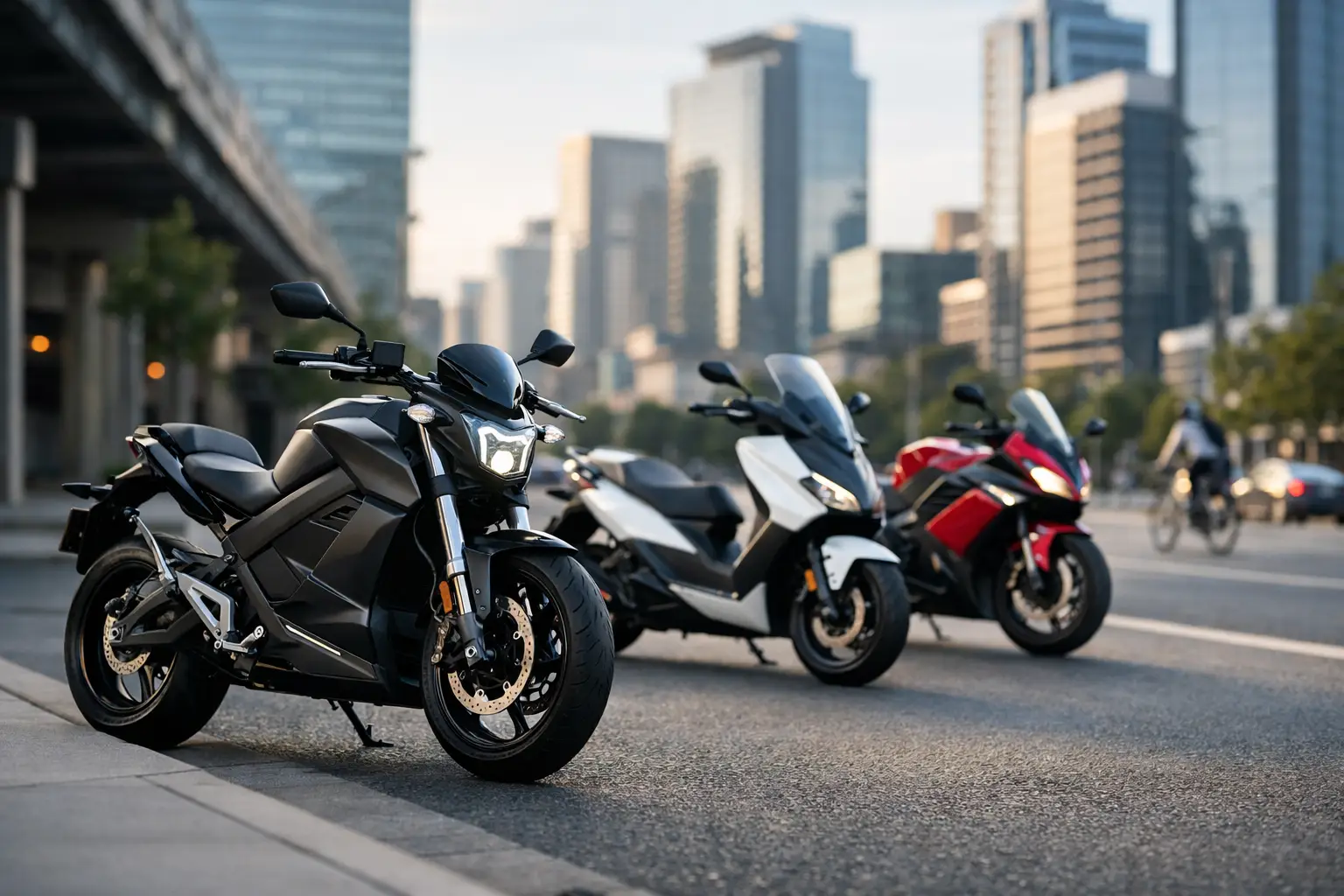
Best Motorcycles for Urban Commuters in 2026
A city motorcycle earns its place before the first coffee stop. It has to slip through traffic without feeling nervous, pull cleanly away from lights, fit into real parking spaces, and still look right outside a restaurant after work. The best motorcycles for urban commuters do more than reduce travel time. They make the daily ride feel like a choice rather than a compromise.
For riders who care about design as much as destination, the answer is rarely the biggest engine or the longest spec sheet. It is a machine with the right proportions, immediate response, manageable weight, and enough range for the rhythm of the week. Electric power has made that equation especially compelling: quiet movement, instant torque, and no heat building beneath you in stop-and-go traffic.
What Makes a Motorcycle Right for the City?
Urban riding rewards precision. Tight corners, uneven pavement, delivery vans, wet crosswalk paint, and constant changes in pace all expose a motorcycle that is too large, too heavy, or too aggressive for its setting. A commuter bike should feel composed at 15 mph as well as 50 mph.
Weight matters, but balance matters more. A low center of gravity and a narrow profile make low-speed turns, U-turns, and parking-lot maneuvers less demanding. Seat height also deserves more attention than it gets. Being able to plant a foot confidently at a red light changes how relaxed a bike feels in dense traffic, particularly for newer riders or anyone carrying a bag through a long workday.
Power delivery should be usable, not theatrical. City riders need quick acceleration to merge, clear an intersection, or move ahead of a bus, but they do not need a machine that demands constant restraint. Smooth throttle response builds confidence. On an electric motorcycle, torque arrives without clutch work, shifting, or engine vibration. That calm, direct response is not a novelty. It is an advantage when every block asks for another decision.
Range Is About Your Actual Week
A massive range figure can look reassuring, but commuting decisions should begin with the routes you actually ride. Add your round-trip distance, a realistic buffer for detours, colder weather, and the occasional evening plan. Then consider charging access at home, in a garage, or at work.
For many urban riders, charging overnight is more useful than chasing the highest possible range. A motorcycle that comfortably handles several days of commuting can be a better fit than a larger, heavier model built for frequent highway touring. The right range gives you freedom without making you haul around battery capacity you rarely use.
Riding style changes the calculation. Repeated hard acceleration, high speeds, steep streets, cold temperatures, and a passenger all reduce real-world range. Treat published figures as a starting point, then choose with headroom. Range anxiety has little to do with numbers alone. It comes from buying a bike that does not match the life around it.
The Best Motorcycles for Urban Commuters Share Five Traits
Whether you choose electric or gasoline, retro or minimal, the strongest city motorcycles tend to get the fundamentals right.
- Agile dimensions: A slim tank area or battery enclosure, sensible wheelbase, and easy steering help the bike move through compact streets without feeling twitchy.
- Practical performance: Strong midrange acceleration matters more than top speed. You want pace that feels available, not intimidating.
- Predictable braking: Urban riders brake often and sometimes suddenly. Quality brakes, well-calibrated ABS, and a controlled front-end feel are non-negotiable.
- Everyday comfort: An upright or lightly forward riding position offers visibility and reduces strain. A seat that looks beautiful but punishes a 35-minute ride is not a commuter feature.
- Low-friction ownership: Simple charging or fueling, manageable maintenance, secure parking options, and practical accessories all determine whether a bike gets ridden every day.
A sixth trait is harder to quantify: presence. Your commute is part of your public life. The motorcycle you arrive on says something before you remove your helmet. That does not mean it needs to be loud. The strongest design often has no need to shout.
Electric Motorcycles Make a Strong Urban Case
Electric motorcycles are particularly well suited to the city because their strengths appear exactly where gas motorcycles are most compromised. There is no clutch to feather in crawling traffic, no exhaust heat rising in summer, and no idling engine filling the space around you. The ride is clean, focused, and unexpectedly intimate. You hear the tires, the wind, and the city itself.
Instant torque is another reason. An electric motor delivers decisive acceleration from a standstill, which makes traffic gaps easier to manage and starts from red lights feel effortless. Riders coming from scooters may appreciate the simplicity; experienced motorcyclists often appreciate how much attention is freed up for line choice, braking, and traffic awareness.
The trade-off is planning. Public charging is not as universal or as predictable for motorcycles as it is for cars, and apartment residents without dedicated parking need a realistic charging plan before buying. Electric motorcycles also vary widely in charge times, battery capacity, and cold-weather performance. A beautiful bike is only a practical commuter if it works where you live.
For riders with dependable overnight charging, however, electric ownership can feel remarkably natural. You come home, plug in, and leave the next morning with a full battery. No fuel stop. No oil change schedule. No engine noise announcing every early departure. Just classic lines, electric heart.
Choose a Style That Will Still Feel Right on Friday Night
Commuter motorcycles are often treated like appliances. That is a mistake. A bike that moves you through the week should also be a bike you want to ride when there is nowhere particular to be.
Modern naked bikes are a sensible choice for riders who value light weight, broad handlebars, and accessible performance. They offer excellent visibility and a direct connection to the road, though some can lean toward sharp, aggressively futuristic styling. Small and midsize standards bring a more relaxed personality, usually with easier ergonomics and enough power for most city duties.
Scooters remain brilliant for riders who prioritize storage, weather protection, and step-through convenience. Their automatic transmissions and compact packaging make them genuinely useful in dense areas. Yet riders who want a full motorcycle stance, a more involving chassis, and a design with lasting character may find a standard or electric roadster more compelling.
Retro-inspired electric motorcycles occupy a distinct space. They pair familiar silhouettes with silent, modern propulsion, avoiding both nostalgia cosplay and gadget-heavy styling. This is where a machine like an RGNT can make sense for the design-led commuter: handcrafted Scandinavian character, immediate electric response, and a visual language that belongs on a city street without looking manufactured for attention.
Do Not Buy for the Fantasy Ride Alone
The wrong commuter bike is often the one bought for a ride that happens twice a year. A towering adventure machine may look ready for every horizon but feel cumbersome in a parking garage. A supersport may feel thrilling on a clear road yet put too much weight on your wrists during a weekday crawl. A huge touring bike may offer comfort at speed while making a tight apartment exit needlessly dramatic.
Be honest about the first five minutes of every ride. Can you get the bike out easily? Is it pleasant at neighborhood speeds? Can you secure your helmet, gloves, and laptop? Does it turn tightly enough for the places you park? These ordinary questions reveal more than a top-speed number ever will.
Test rides matter because urban confidence is physical. Notice how quickly you can put a foot down, how the bike responds to a small steering input, and whether the controls feel intuitive with gloves on. If possible, ride over imperfect pavement rather than only smooth dealership roads. The city will not curate its surface for your motorcycle.
Gear and Security Are Part of the Motorcycle
A city-ready setup includes more than the bike itself. A quality lock or alarm, theft coverage, and a secure place to park deserve space in the budget. So does weather-ready gear. A ventilated jacket works for warm days, but a waterproof outer layer and gloves that remain useful in rain can be the difference between riding regularly and taking a car whenever the forecast turns uncertain.
Storage is equally personal. Some riders need only a compact backpack. Others carry a laptop, gym clothes, camera equipment, or groceries. A cleanly integrated rear rack, small luggage solution, or locking case can make a motorcycle dramatically more useful without overwhelming its shape. Choose accessories that support the design rather than bury it.
The Better Commute Is the One You Want to Repeat
The best urban motorcycle is not defined by a single category, fuel type, or badge. It is the one that fits your streets, your charging or fueling routine, your body, and your sense of style. It should make traffic feel less like dead time and more like a private interval between the demands of the day.
Choose the bike that feels agile at low speed, confident in the rain, easy to live with, and unmistakably yours. The city is loud enough already. Your ride can be part of the silent minority.
-
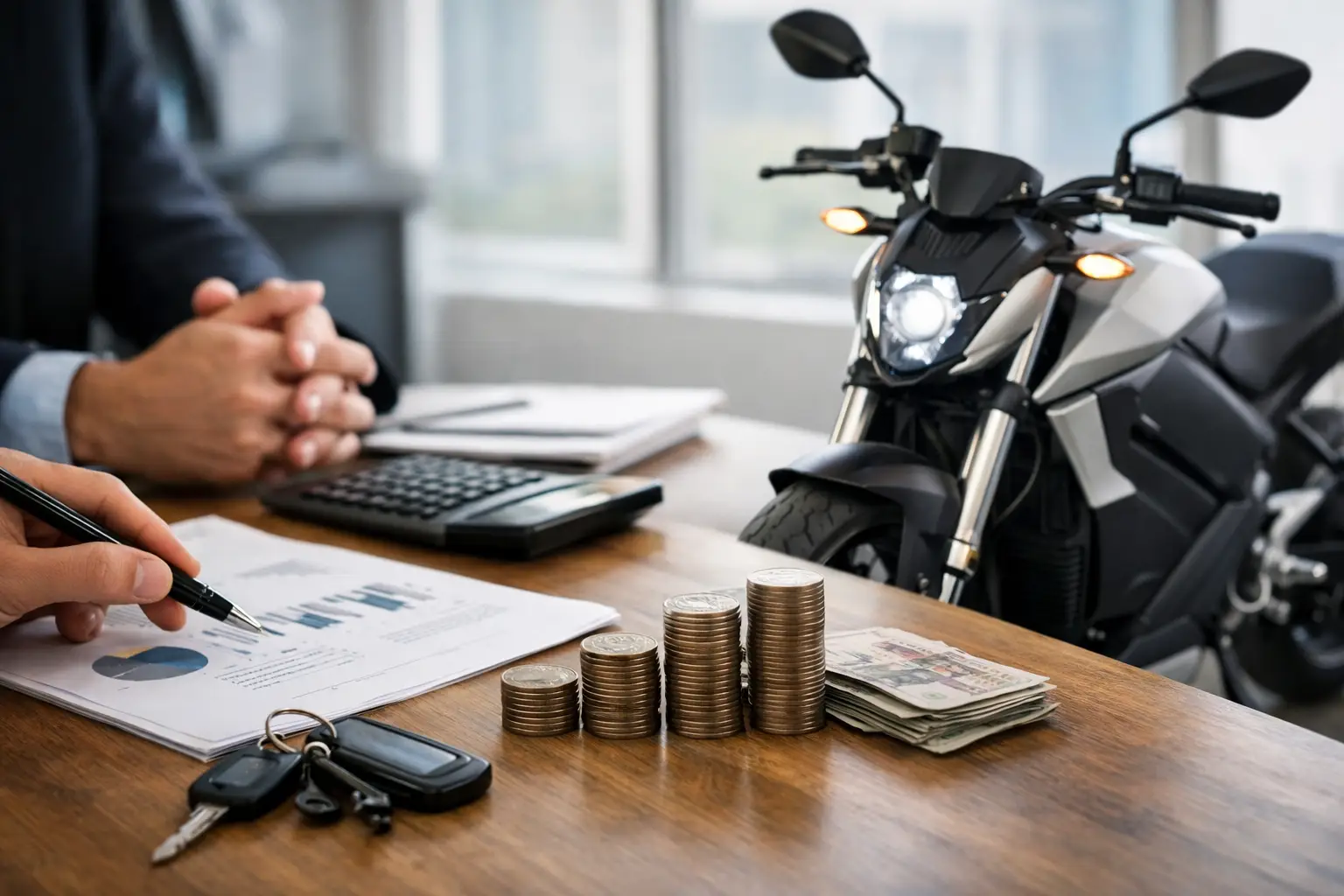
How to Finance an Electric Motorcycle
The price tag gets your attention. The monthly payment decides whether the bike actually ends up in your garage.
That is the real question behind how to finance an electric motorcycle. Not just whether you can get approved, but whether the numbers support the way you want to ride. A premium electric bike is part commuting tool, part design object, part identity. Finance it badly, and the ownership experience feels tight from day one. Finance it well, and the bike fits your life as cleanly as it fits the road.
How to finance an electric motorcycle without guessing
Most buyers have three realistic paths: dealer financing, a motorcycle loan through a bank or credit union, or paying with cash and avoiding financing altogether. Cash is simple, but it is not always the smartest move. If tying up that much money limits your flexibility, financing can make more sense, especially if you can secure a competitive rate and keep your monthly cost aligned with your actual budget.
Dealer financing is often the most convenient option. The process is streamlined, approval can be fast, and promotional terms may be available depending on the brand, the market, and your credit profile. Convenience matters, but it should not replace comparison. A polished checkout experience can still hide a higher APR, extra fees, or a longer loan term that costs more over time.
Banks and credit unions usually offer a more traditional route. If you already have a strong relationship with your lender, this can be a smart place to start. Credit unions in particular can be competitive on rates, though some are more conservative about newer vehicle categories like electric motorcycles. You may need to confirm that the lender treats the bike as a motorcycle rather than a powersports outlier.
Personal loans are another possibility, but they tend to carry higher interest rates than secured vehicle loans. They can work if the bike or seller does not fit a lender’s standard vehicle criteria, yet the trade-off is usually cost. For most buyers, a dedicated motorcycle loan is the cleaner move.
What lenders actually look at
Lenders are not financing your taste. They are financing risk.
Your credit score is the obvious starting point, but it is only part of the picture. Income, debt-to-income ratio, employment history, down payment, and the total amount financed all influence your approval odds and your rate. If you are self-employed or your income varies month to month, expect more documentation. Premium buyers often have strong earnings but less conventional income structures, and that can slow the process if you are not prepared.
The down payment matters more than many buyers expect. Put more down, and you reduce both the lender’s risk and your monthly payment. That sounds basic, but it changes the shape of the entire deal. A smaller financed balance may also help you qualify for a better rate, particularly if the bike sits at the higher end of the market.
Loan term matters too. Stretching a loan from 36 months to 72 months can make the payment look dramatically better, but you are buying that lower payment with more total interest and a longer period before you own the bike outright. If you like to change vehicles often, a long term can leave you upside down for longer than you expected.
The monthly payment is not the real monthly cost
This is where buyers get careless.
The payment is only one line in the ownership picture. Insurance, registration, taxes, charging costs, protective gear, and possible home charging setup all belong in the same calculation. Electric motorcycles can lower routine running costs compared with gas bikes, especially when it comes to fuel and some maintenance items, but lower operating costs do not give you permission to overfinance the bike itself.
A good benchmark is to decide on your all-in monthly comfort zone first, then work backward. If your ideal number is $350 a month, that should include more than the loan. Once insurance and charging are added, your acceptable loan payment might be closer to $250 or $275. That distinction keeps excitement from doing the budgeting for you.
The trade-off between down payment and flexibility
A larger down payment usually improves the deal. That part is easy. The harder question is whether it is the right use of your cash.
If putting 20 percent down still leaves you with a healthy emergency cushion, it is often a strong move. It reduces the financed amount, lowers interest paid over time, and can make approval easier. But if a large down payment drains liquidity, the cleaner-looking loan may leave you financially brittle. Premium ownership should feel effortless, not fragile.
There is no perfect universal number. Some riders prefer to keep more cash available and accept a slightly higher payment. Others want to reduce interest as aggressively as possible. The right answer depends on how stable your income is, how much you already spend on transportation, and whether this motorcycle is replacing a car, adding to a garage, or becoming your primary urban machine.
Incentives, rebates, and tax angles
When thinking about how to finance an electric motorcycle, buyers often focus on rates and ignore incentives. That is a mistake.
Depending on where you live, there may be state or local rebates, EV incentives, registration benefits, or utility programs tied to charging equipment. Availability changes often, and not every electric motorcycle qualifies in the same way. Some programs are brand-specific, class-specific, or limited by battery size, price, or purchase timing.
These incentives can affect your financing strategy. If a rebate comes later rather than at the point of sale, you may choose to apply it to the principal after funding. That can shorten the loan or reduce future interest, depending on your lender’s terms. If the incentive is immediate, it may reduce the amount financed from the beginning. Either way, it is worth understanding the timing before you sign.
Tax treatment is another area where details matter. For personal use, benefits may be limited or location-specific. For business use, there may be additional considerations. This is one of those moments where style meets paperwork. Do not assume. Verify.
How to compare offers like an adult
The elegant mistake is choosing the offer with the lowest monthly payment. The smarter move is comparing four numbers: APR, loan term, total amount financed, and total cost over the life of the loan.
A lower APR on a shorter term often beats a lower payment on a longer one, even if the monthly number feels less comfortable at first glance. Watch for fees folded into the contract, prepayment penalties, and add-ons that raise the financed amount without adding meaningful value.
If two offers are close, ask how interest is calculated and whether there is flexibility for early payoff. You want a financing structure that rewards discipline, not one that punishes it. The best loan is not just affordable on paper. It gives you room to move.
Should you finance through a brand or bring your own lender?
There is no rule here. A brand-backed finance offer can be excellent if it is competitive and transparent. It can also be less attractive than outside financing if promotional language hides a mediocre rate.
The best approach is simple: arrive with a benchmark. Get pre-approved or at least rate-qualified through your bank or credit union before you shop. That gives you leverage, speed, and perspective. If the in-house offer is better, great. If not, you know it immediately.
For design-led electric motorcycles, the buying experience is often smoother than old-school powersports retail. That is a good thing. Just make sure smooth does not become automatic.
Financing a premium electric bike is different
Not every motorcycle purchase is emotional. This one probably is.
If you are shopping for a hand-built, style-forward electric motorcycle, you are not only comparing horsepower and monthly payment. You are comparing how the machine fits your city, your routine, and your eye. The right bike can replace a lot of dead time in traffic with something sharper, quieter, and far more intentional.
That is exactly why discipline matters. Premium products have a way of making people rationalize upward. Better trim, better finish, better performance, slightly higher payment. Sometimes that stretch is worth it. Sometimes it is just excitement wearing a tailored jacket.
If you are considering a bike like an RGNT, think beyond the purchase moment. Consider how often you will ride, whether home charging is practical, how much value you place on silent urban performance, and whether the bike genuinely replaces another transportation cost. A beautiful machine that gets used every day is easier to justify than a cheaper one that never quite becomes part of your life.
A practical way to decide
Start with a realistic total budget, not a dream payment. Check your credit before applying. Compare at least two financing sources. Decide how much cash you are comfortable putting down without compromising flexibility. Then model the real ownership cost, including insurance and charging, before you commit.
If the numbers work and the bike still feels right after the spreadsheet has had its say, you are in a good position. That is the sweet spot – classic lines, electric heart, and a payment that does not follow you around like regret.
Buy the motorcycle that fits your life with the same precision it fits your taste. The road feels better when the math is quiet.
-
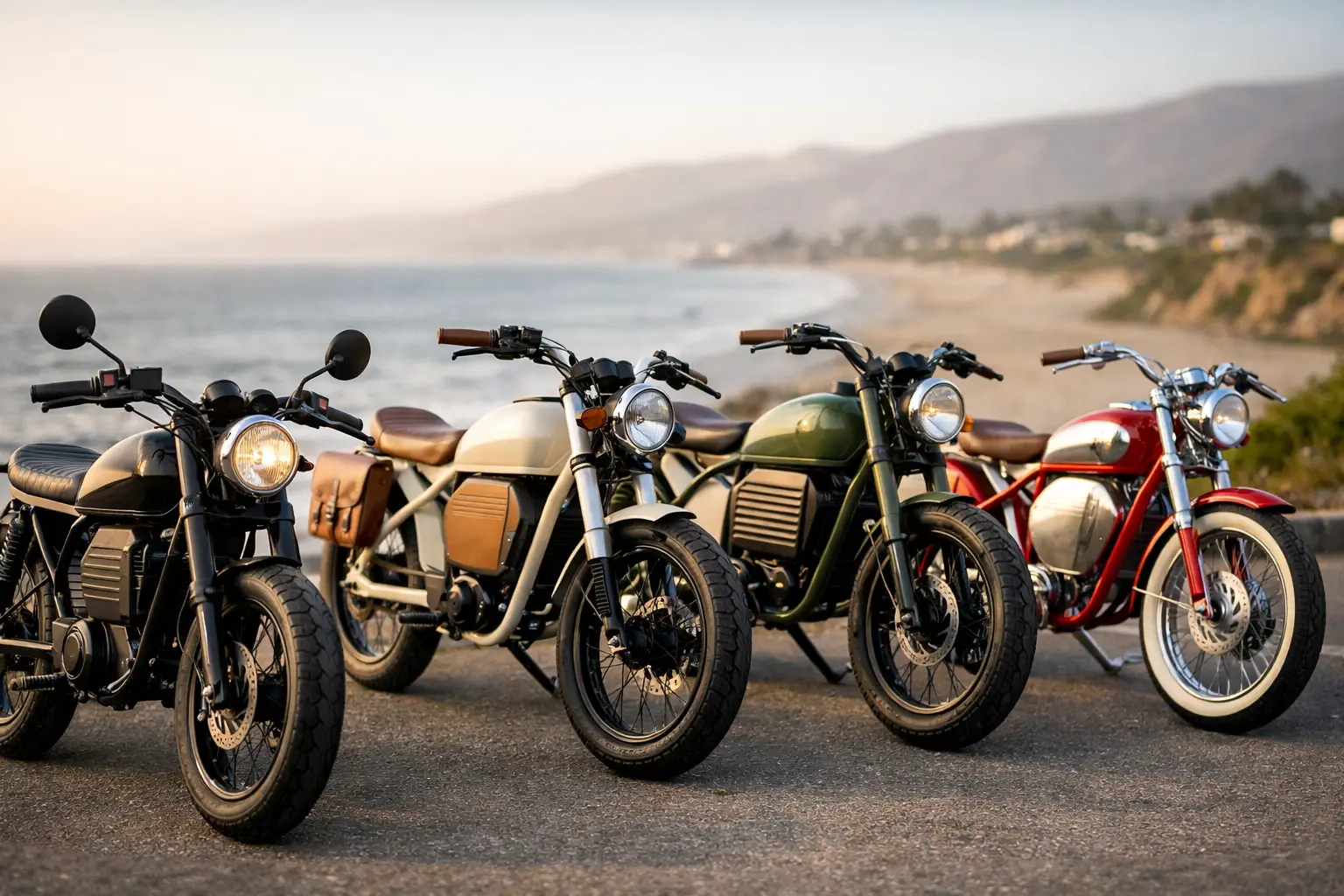
8 Best Retro Electric Bikes Right Now
The best retro electric bikes do not win on specs alone. They win the second you walk away from one, look back over your shoulder, and know it still has presence. That is the whole point of this category – classic lines, electric heart, and enough modern performance to make daily riding feel sharp rather than nostalgic.
That also makes this market harder to shop than it looks. Plenty of electric motorcycles borrow a round headlight and call it heritage. Fewer actually balance design, proportion, power delivery, charging practicality, and build quality in a way that feels complete. If you are choosing with both taste and engineering in mind, the details matter.
What makes the best retro electric bikes worth buying
A convincing retro electric bike is not cosplay. It needs the stance, restraint, and material choices of a classic machine, but it also needs to behave like a modern EV. Instant torque should feel clean, not abrupt. Controls should be intuitive. The battery should support real city mileage, not just brochure optimism.
Design is where most shoppers start, and fairly so. A retro bike should have coherent lines from tank to tail, not a random mix of vintage cues stuck onto a generic electric frame. The best ones understand proportion. They feel intentional from ten feet away and refined up close.
Performance is the next filter. For urban riders especially, low-end response matters more than headline top speed. A bike that pulls cleanly from traffic lights, merges without hesitation, and stays composed at city pace will feel faster in real life than one chasing a spec-sheet number.
Then there is ownership. Charging time, battery longevity, service support, riding modes, and software all shape whether the bike becomes part of your life or a stylish complication. Premium design can justify a premium price, but only if the machine holds up where it counts.
The best retro electric bikes for style and substance
The strongest bikes in this segment usually fall into a few camps. Some lean heavily into lightweight urban usability. Some behave more like full motorcycles with serious road presence. Others prioritize custom culture and visual drama over everyday practicality. Which one is best depends on how you ride and what kind of statement you want the bike to make.
For city riders who want authentic motorcycle presence
If your idea of a perfect ride is cutting through the city in near silence while still feeling like you are on a real motorcycle, not an appliance, the best options are the bikes that combine A1-friendly accessibility with full-size design language. This is where retro EVs get compelling.
The right machine in this category should be narrow enough for urban traffic, quick enough for confident starts, and refined enough that the electric powertrain feels like an upgrade to the classic formula rather than a compromise. A bike such as the RGNT Street Classic captures that balance especially well – restrained styling, hand-built credibility, and the kind of immediate torque that suits real commuting instead of showroom theater.
This category tends to appeal to riders who care about what they park outside a studio, office, or restaurant as much as what they can measure on paper. That is not vanity. It is the reality of buying a design-led machine. Motorcycles are transportation, yes, but they are also objects of identity.
For riders who want sharper performance with retro lines
Some retro electrics keep the styling classic but turn up the pace. These bikes are for riders who want stronger acceleration, more assertive road behavior, and a setup that can stretch beyond short urban hops.
This is where trade-offs start to show. More performance usually means more weight, a higher price, and sometimes less visual purity. Batteries are heavy, and packaging serious power without ruining the silhouette is not easy. The best brands manage it with subtle engineering – integrating the mass low in the frame, keeping the side profile clean, and avoiding the bulky, over-styled look that plagues a lot of modern EV design.
If your route includes faster roads, longer commutes, or regular two-up riding, this category makes more sense than the lighter urban set. But if most of your life happens below 45 mph, the extra power may be nice rather than necessary.
For buyers drawn to custom-inspired design
Then there are retro electric bikes that lean harder into visual attitude – bobber cues, stripped silhouettes, oversized tires, and a more radical stance. These can be incredibly appealing if you want something less polished and more individual.
The catch is practicality. Aggressive custom styling can compromise comfort, passenger space, turning radius, and even battery efficiency. The lower and longer a bike gets, the more it may ask you to accept in everyday use. That may be a fair trade if the bike is a weekend expression piece. It is less convincing if you need an all-weather commuter.
How to judge the best retro electric bikes beyond appearance
The easiest mistake in this category is buying with your eyes only. A beautiful bike can still be annoying to charge, awkward to ride slowly, or underwhelming once the novelty fades.
Range should match your real week
Start with your actual routine, not fantasy rides. If you commute 12 miles each way, run errands, and occasionally ride for pleasure on weekends, your battery needs are different from someone doing suburban highway miles every day.
Urban electric motorcycles often make more sense than their listed range suggests because regenerative braking and lower-speed riding favor efficiency. On the other hand, higher sustained speeds will cut range fast. If you regularly ride on faster roads, give yourself margin. The claimed number is not the whole story.
Charging needs to fit your life
A retro electric bike with elegant design but awkward charging logistics can lose its charm quickly. Home charging is the simplest setup, especially if you have a garage or dedicated parking. Apartment living changes the equation.
Before buying, think through where the bike will actually charge, how long it will take, and whether that pattern feels effortless or irritating. Fast charging can be a major advantage, but many riders are better served by reliable overnight charging than by chasing headline speed.
Weight changes the character of the bike
Electric motorcycles carry their weight differently from gas bikes, and not always badly. A low center of gravity can make a machine feel planted and surprisingly manageable. Still, there is no ignoring total mass.
For newer riders or anyone navigating tight city parking, lighter is usually better. Heavier bikes can feel more substantial and stable, but they ask more from the rider at walking pace. That matters more than many reviews admit.
Build quality is everything in a premium segment
Retro design invites close inspection. People notice paint depth, switchgear feel, stitching, metal finishes, and how panels meet. If a brand is charging premium money, the bike should look resolved from every angle and feel durable where your hands touch it.
This is one area where smaller, design-led manufacturers can stand apart from mass-market players. Limited-batch production, careful quality control, and a clear design philosophy often produce a machine with more character and better finish than a bike built to chase volume.
Who the best retro electric bikes are actually for
Not every rider wants this category, and that is fine. If your priority is maximum range for the dollar, raw speed, or adventure capability, there are better choices elsewhere in the electric market.
But if you want a motorcycle that feels culturally aware, mechanically current, and visually disciplined, retro electric bikes make a strong case. They suit urban professionals, style-first commuters, and experienced riders looking for a quieter kind of thrill. They also appeal to people who have never connected with the aggressive, sci-fi look of many EVs.
There is a confidence to choosing a bike that does not shout. Silent running, classic posture, modern response – that combination has a different kind of magnetism. It is less about spectacle and more about presence.
Why the best retro electric bikes are getting harder to ignore
Electric motorcycles used to ask buyers to tolerate futuristic styling in exchange for new technology. That deal is fading. The market is maturing, and the strongest bikes now prove that electrification does not require abandoning beauty, proportion, or heritage-inspired design.
That shift matters because motorcycles have never been purely rational purchases. They live at the intersection of motion, identity, and object design. The best retro electric bikes understand this. They deliver the silence, torque, and lower-maintenance appeal of EV ownership without erasing the emotional language riders still want.
If you are shopping this segment, be selective. Look for a bike that gets the fundamentals right, not just the photo angle. The right one will feel modern every time you twist the throttle and timeless every time you kill the lights and leave it parked.
-
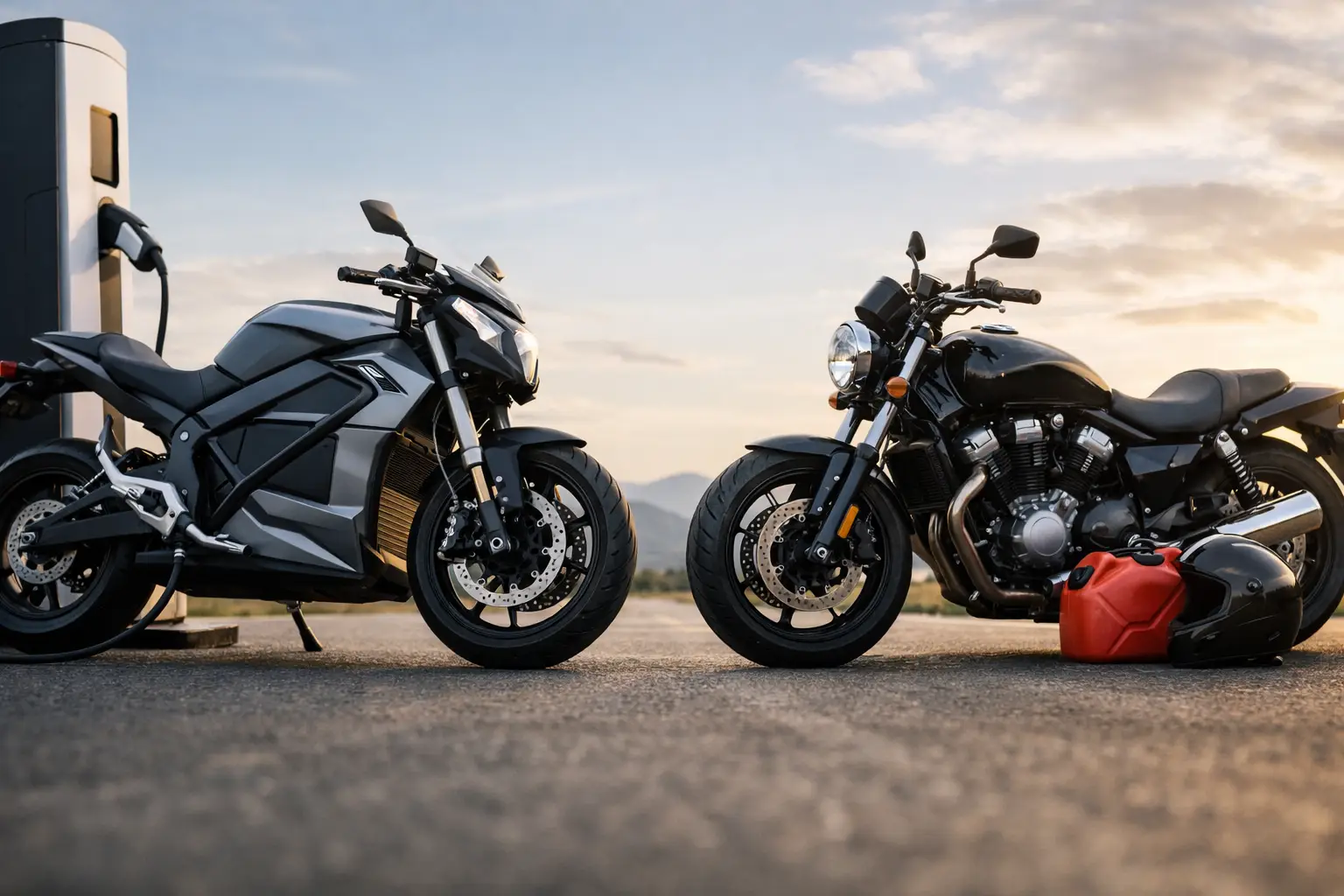
Electric Motorcycle vs Gas Bike: What Wins?
The real question in an electric motorcycle vs gas bike debate is not which one is louder, older, or more familiar. It is which one fits the way you actually ride. If your week looks like city commutes, short escapes, stoplights, traffic, and the occasional weekend run through clean backroads, the answer can shift fast once you move past habit and start looking at performance, cost, and feel.
For a long time, gas bikes owned the story. Sound, smell, vibration, shifting, heat – all of it became part of the mythology. But mythology is not the same as a better ride. Electric motorcycles have changed the terms. They bring instant torque, near-silent acceleration, lower maintenance, and a different kind of presence. Less noise. More intent. For many riders, that is not a compromise. It is the upgrade.
Electric motorcycle vs gas bike: the ride itself
Start with the moment that matters most – twist the throttle.
A gas bike builds power through revs and gearing. That can be engaging, especially if you enjoy managing the machine as much as moving through space. There is ritual in it. Clutch work, engine note, powerband, downshifts before a corner. For some riders, that mechanical conversation is the point.
An electric motorcycle answers differently. Power arrives now. No waiting for revs to climb. No hunting for the right gear. In urban riding, that changes everything. Pulling away from a light feels clean and immediate. Gaps open up faster. Traffic becomes less of a chore because the bike responds with almost no delay.
That instant delivery also makes electric feel deceptively quick. On paper, a gas bike may still post a higher top speed or longer highway range in some categories. In real city use, though, electric torque can feel sharper, smoother, and easier to access. You are not working to reach the performance. It is simply there.
Where gas still holds ground
Gas bikes still make a strong case in a few specific scenarios.
If you ride long distances often, especially in areas where charging is limited, gas remains more convenient. A quick fuel stop is hard to beat when your route stretches far beyond the city. Riders who spend most of their time touring, crossing states, or covering rural miles may still find internal combustion more practical.
There is also the emotional side. Some riders want the soundtrack. They want the mechanical pulse and the old-school connection of engine, clutch, and gearshift. That feeling is real. It should not be dismissed just because a new technology has arrived.
But practicality cuts both ways. Plenty of owners think they need maximum range when most of their riding happens within a much smaller daily radius. In those cases, gas bike advantages can be more theoretical than useful.
Cost is not just about the sticker price
The up-front price often leads the conversation, but ownership is where the difference gets interesting.
A gas bike may look more affordable at purchase, depending on model and class. But then come fuel, oil changes, filters, spark plugs, chain service, and more frequent mechanical attention. None of that is shocking to experienced riders. It is just part of the package.
Electric motorcycles typically ask less from you after the sale. Charging is usually cheaper than filling a tank. Maintenance is lighter because there are fewer moving parts, no oil changes, and less routine engine service. Over time, that can narrow the gap or even flip it.
Insurance, registration, and tire wear still exist on both sides, of course. Electric is not free. But for commuters and daily riders, reduced operating costs are one of the strongest arguments in the electric motorcycle vs gas bike conversation.
The smartest way to compare the two is by looking at a three-year or five-year ownership window, not just the purchase contract.
Maintenance changes the relationship
Gas bikes ask for attention. Some riders enjoy that. Garage time can be part of the culture. Tuning, checking fluids, adjusting components, listening for changes in the engine – it all builds familiarity.
Electric motorcycles shift that relationship. There is less wrenching, less routine servicing, and fewer systems to monitor. That makes ownership feel cleaner and more direct. You spend less time managing the machine and more time riding it.
For urban professionals, that matters. Not everyone wants their motorcycle to become a side project. Sometimes premium means less drama. Charge it, ride it, park it, repeat.
There is also a reliability argument here. Simpler drivetrains can mean fewer maintenance variables. That does not eliminate issues entirely, but it changes the ownership rhythm in a meaningful way.
Range anxiety versus real life
Range is the point critics return to first, and fair enough. It matters.
A gas bike usually offers longer distance before refueling, and refueling is faster than charging. If your riding regularly pushes beyond an electric bike’s usable range, that is not a small detail. It is the detail.
But range panic often says more about imagination than routine. Most urban riders commute well below the range capabilities of modern electric motorcycles. They ride to work, to dinner, to a studio, to a meeting, across town, home again. They are not crossing deserts every Tuesday.
Charging also fits differently into life than fueling. With gas, you stop when empty. With electric, you often start full if you charge at home or at work. That changes the whole equation. Instead of detouring to a station, the bike is ready when you are.
So yes, range still matters. But context matters more. For city use and short-to-medium rides, electric often makes more sense than the headline debate suggests.
Sound, presence, and the culture of riding
This is where the split gets personal.
Gas bikes announce themselves. For some riders, that sound is emotion, identity, and tradition. It signals history. It carries a certain kind of swagger.
Electric motorcycles move with more restraint. You hear wind, tires, the city around you. That creates a different kind of immersion. More calm, less theater. And in a crowded world, silence can be its own statement.
That is part of the appeal for riders who want classic lines without old noise. They are not looking for a machine that shouts. They want one that arrives with confidence and leaves without a scene. The silent minority has grown because style no longer needs an exhaust note to feel authentic.
Design matters more than many buyers admit
Motorcycles are emotional purchases. Always have been.
People talk specs because specs are measurable. But aesthetics decide more purchases than spreadsheets do. A bike has to look right parked outside your apartment, outside your office, outside the places where your life actually happens. It has to feel like an extension of your taste, not a compromise you rationalized.
That is one reason electric has matured so quickly in the premium category. Once manufacturers stopped making every EV look like a science project, a bigger audience started paying attention. A well-designed electric motorcycle can offer classic lines, refined materials, and real performance without dragging old mechanical baggage behind it.
That combination is exactly why brands like RGNT exist – to prove that modern propulsion does not require abandoning motorcycle soul.
Which rider should choose what?
If you want cross-country flexibility, easy refueling in remote areas, and you love the mechanical ritual of combustion, a gas bike still makes sense. It remains a strong tool for long-range riding and for riders who value engine character above convenience.
If you ride in and around the city, care about operating costs, want immediate torque, and prefer a cleaner ownership experience, electric starts to look very compelling. Add a strong eye for design and a desire for something less common, and the case gets stronger still.
There is also a middle truth here. Not every rider is choosing based on pure utility. Some are choosing the machine that best reflects how they want to move through the world. Gas can still feel visceral and nostalgic. Electric can feel intelligent, modern, and quietly radical.
That is why the electric motorcycle vs gas bike decision is ultimately less about ideology and more about alignment. Your route. Your taste. Your expectations. Your sense of what performance should feel like.
The best bike is not the one that wins every argument online. It is the one that makes you want to take the longer way home.