
Your cart is currently empty!
Why an Urban Electric Motorcycle Fits the City
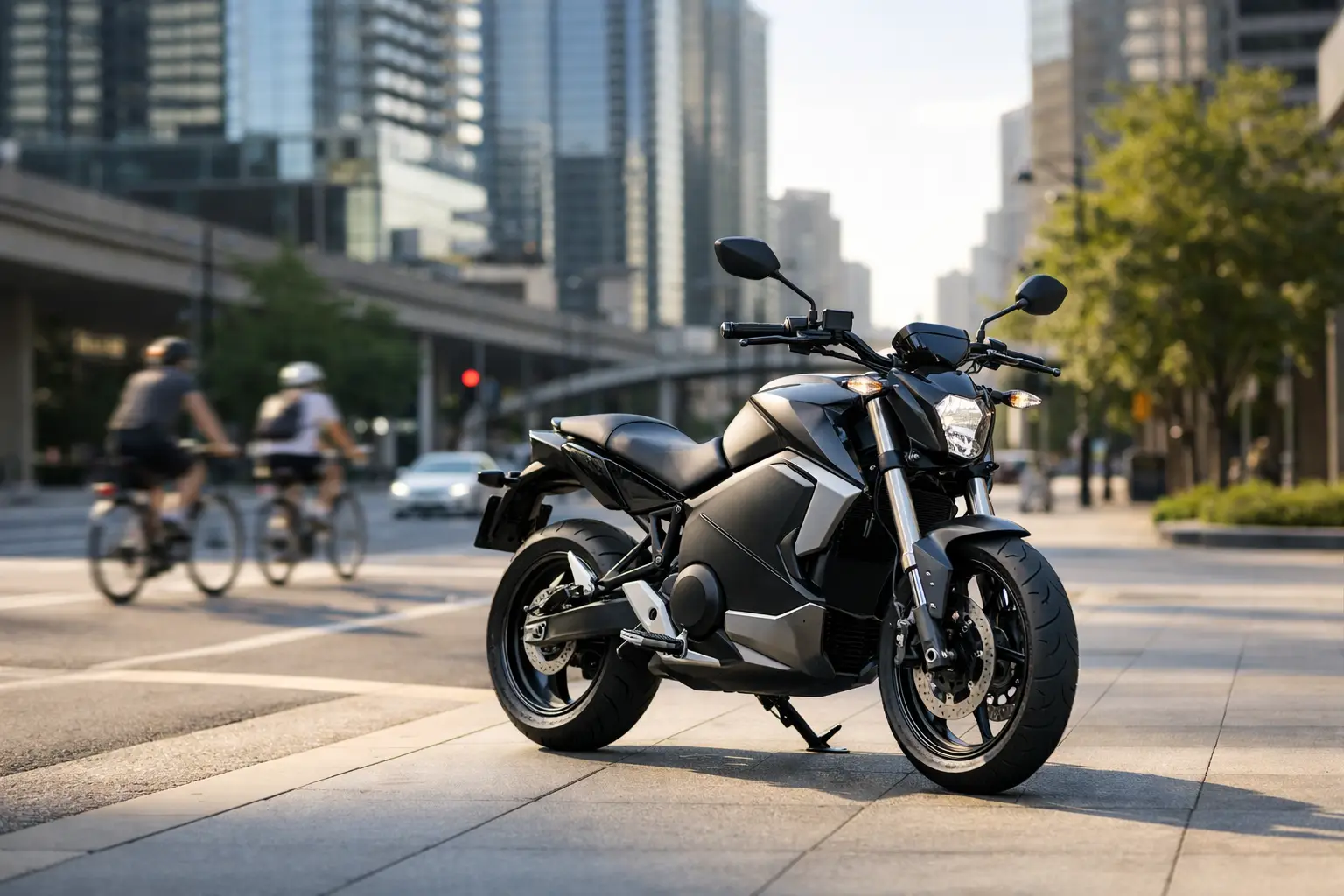
The traffic light changes. Cars hesitate, buses groan, and the city starts moving all at once. An urban electric motorcycle does something different: it moves with immediate, silent intent. No clutch work in stop-and-go traffic. No heat rising from an idling engine. Just clean torque, a narrow profile, and a ride that makes the everyday commute feel deliberately chosen.
For riders who care how a machine looks, feels, and belongs in the city, electric is no longer a compromise made for the future. It is a sharper answer to the way cities work now.
The Urban Electric Motorcycle Has a Different Job
A city motorcycle is not judged only by top speed. Its real test happens between red lights, on imperfect pavement, while finding parking outside a crowded restaurant, and during the last five minutes of a ride home after a long day.
That is where electric power makes its case. Full torque arrives from the first twist of the throttle, which gives an electric motorcycle a quick, confident character when merging, filtering where permitted, or taking the lead from an intersection. The power delivery is direct rather than dramatic. There is no waiting for revs to build and no gear change interrupting the moment.
Silence changes the experience, too. It does not remove the sensation of riding. It brings other parts of it forward: the sound of tires on pavement, the wind across a helmet, the small mechanical conversations between rider, suspension, and road. In dense neighborhoods, quieter riding also carries a certain respect. You arrive without announcing yourself to the entire block.
Fast Enough Means More Than a Top-Speed Number
For urban riding, performance is about usable response. A motorcycle that feels alive from 0 to 45 mph can be more rewarding in the city than one built to chase high-speed figures it rarely gets to use.
This is why vehicle class matters. Many premium electric motorcycles are designed for A1-class licensing in markets that use that category, while US buyers should always verify local licensing, registration, insurance, and equipment requirements before purchasing. The practical question is simple: does the bike have enough power to keep pace with urban traffic and enough composure to feel stable beyond it?
A well-considered electric motorcycle should feel planted when the road opens up, not merely quick at the first green light. Chassis balance, suspension calibration, braking feel, tire choice, and throttle mapping all shape whether instant torque feels refined or unruly. The best city machines have urgency without nervousness.
What range really means in town
Range claims deserve context. A published figure may be based on a particular speed, rider weight, temperature, terrain, and riding mode. City riding can be kind to an electric drivetrain because low speeds and regenerative braking may help preserve energy. Aggressive acceleration, cold weather, steep hills, passenger loads, and sustained faster riding will reduce the number.
Rather than treating range as a contest, match it to your routine. A rider covering 15 to 35 miles a day has very different needs from someone commuting across an entire metro area, riding all weekend, and lacking access to charging at home or work. The useful range is the range that lets you ride your normal week without turning every trip into battery math.
Charging should fit the rhythm of ownership. Overnight home charging is ideal for many urban riders: plug in after dinner, wake up ready. Workplace charging can make the equation even easier. If neither is available, the motorcycle may still work, but it calls for more planning and a more honest look at daily mileage.
Design Is Not an Accessory
Most electric vehicles still make the same mistake. They confuse looking futuristic with having character. Screens, sharp plastic panels, and visual noise may signal technology, but they do not automatically create a motorcycle people want to keep looking at after they park it.
Classic proportions endure for a reason. A sculpted tank form, a balanced stance, a round headlight, and purposeful wheels give a motorcycle visual language that survives trends. When those lines hold an electric heart, the result is not nostalgia. It is continuity with a new source of power.
This matters in the city because your motorcycle is part of your daily visual landscape. It sits outside the studio, the office, the coffee shop, and the apartment building. It becomes a personal object before it becomes transportation. A bike with presence needs no oversized graphics or artificial theater. Its details do the talking.
RGNT Motorcycles builds around that idea: hand-crafted Swedish design, modern electric performance, and a silhouette that looks considered from every angle. The point is not to imitate a gasoline-era motorcycle. It is to carry forward the parts worth keeping – proportion, material, ritual, and attitude – while leaving the noise behind.
Ownership Gets Better When It Gets Simpler
Electric ownership has practical advantages that are easy to overlook until they become part of a routine. There are fewer moving parts than in an internal-combustion drivetrain. No oil changes, spark plugs, exhaust systems, or clutch adjustments belong on the regular checklist. That does not mean maintenance disappears. Tires, brake pads, brake fluid, suspension, bearings, lights, and general inspections still matter.
The trade-off is that battery health, charging habits, software support, and qualified service access deserve more attention before buying. Ask what warranty coverage looks like, where service can be performed, how diagnostic updates are handled, and what support is available if the motorcycle is stored for an extended period. Premium ownership should feel clear, not mysterious.
Upfront price is another honest consideration. A design-led, limited-batch electric motorcycle can cost more than an entry-level gas bike or a mass-market scooter. But purchase price is only one part of the picture. Fuel costs, routine maintenance, parking, insurance, financing, and the value of a motorcycle you genuinely want to ride all affect the decision.
For some riders, the arithmetic will favor a practical commuter. For others, the right machine must also earn its place emotionally. That is not indulgence. A motorcycle that makes you take the long way home is often the one that stays in your life.
Choosing the Right City Electric Motorcycle
Start with your route, not a spec sheet. Measure your typical day, including detours, errands, bridges, hills, and the occasional faster road. Then consider where the motorcycle will sleep and charge. Apartment riders should confirm building access and charging rules before falling for a particular model.
Next, sit on the bike. Foot position, seat height, handlebar reach, and low-speed balance matter more in city use than they do in a showroom photo. If possible, test the throttle at low speed, where refined calibration reveals itself. A good electric motorcycle should feel intuitive in a tight parking lot before it feels exciting on a clear boulevard.
Finally, choose with your eye as well as your head. The silent minority does not need to look anonymous. An urban motorcycle can be efficient, technically advanced, and unmistakably yours at the same time.
The right ride is the one that turns a routine trip across town into a small act of independence. Charge it overnight, take the clean line through morning traffic, and let the city hear a little less while you feel a lot more.