
Your cart is currently empty!
Category: Uncategorized
-
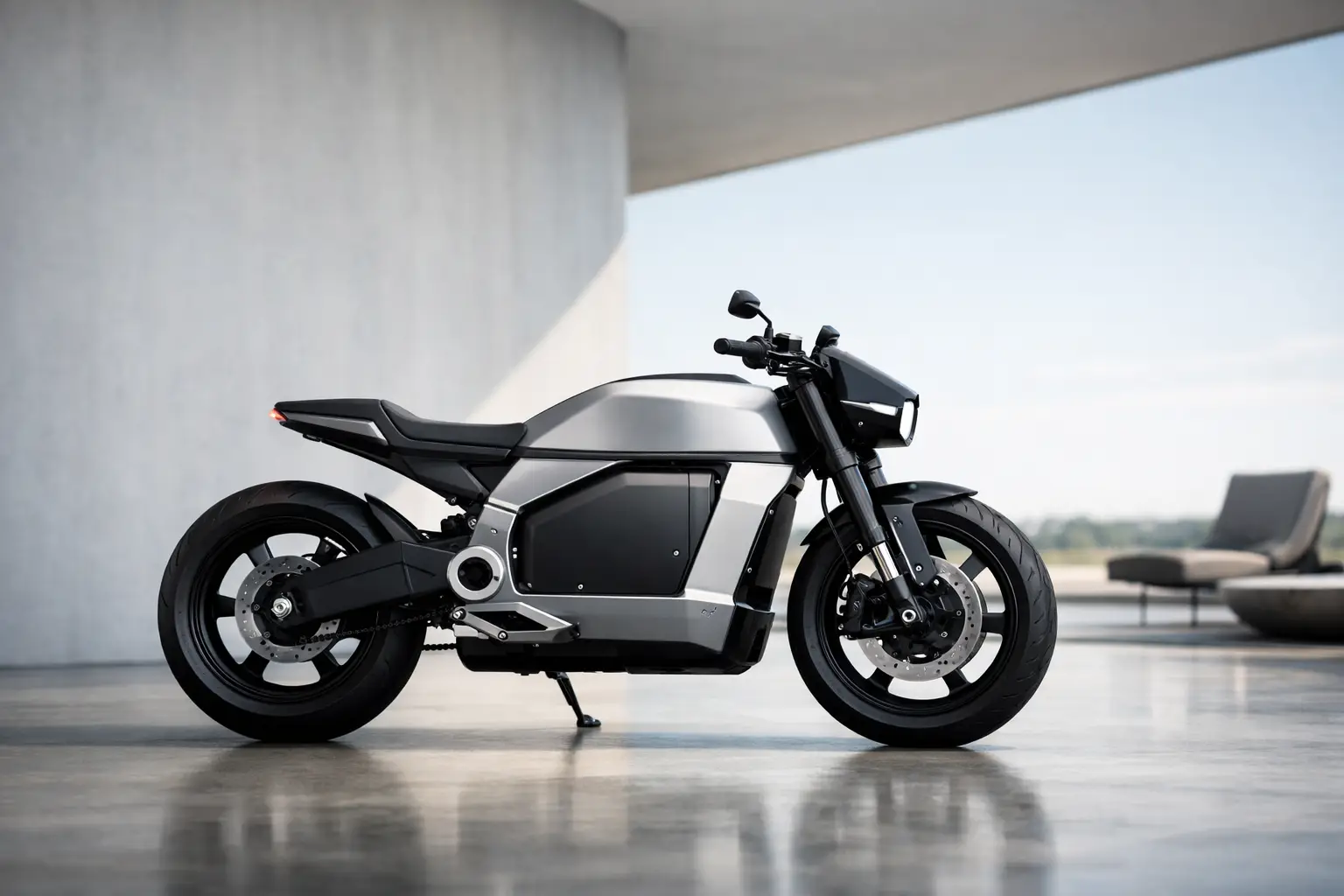
An Electric Motorcycle for Design Lovers
An Electric Motorcycle for Design Lovers Starts With Proportion
A red light is a ruthless place to judge a motorcycle. There is no blur of speed to hide awkward geometry, no exhaust note to distract from cheap details. An electric motorcycle for design lovers has to hold its own in stillness: clean tank line, deliberate stance, a seat that belongs to the frame, and controls that feel considered rather than added at the end.
That is where the difference lives. Plenty of electric two-wheelers are efficient. Fewer understand that a motorcycle is also an object of desire. It is the machine parked outside the studio, the café, or the apartment building that says something before its rider puts on a helmet. For riders who notice materials, silhouette, and restraint, design is not an accessory. It is part of the performance.
Classic Lines Need an Electric Heart
The best modern-classic motorcycles do not imitate the past. They borrow its confidence. A long, level silhouette, a purposeful wheelbase, exposed mechanical cues, and honest materials can create a shape that feels familiar without becoming nostalgic costume.
Electric power gives that language a new kind of clarity. Remove the heat, vibration, and visual clutter of a combustion drivetrain, and the rest of the motorcycle has more room to speak. The result can be minimal without being sterile. A battery does not need to force a vehicle into a plastic, space-age form. It can sit within a composition that feels balanced, tactile, and unmistakably motorcycle.
This is why retro-inspired electric design works when it is done with discipline. The goal is not to hide the technology. The goal is to integrate it so naturally that classic lines and modern function feel like one idea.
Silence Changes the Experience
A gas motorcycle announces itself before it arrives. An electric motorcycle makes a different statement. It moves through the city with a low mechanical presence, allowing the architecture, the road surface, and the rider’s own senses to come forward.
That silence is not an absence of character. It is character with less noise around it. Twist the throttle and the response is immediate. There is no waiting for revs, no clutch work in stop-and-go traffic, no drama required to pull away cleanly from an intersection. For an urban rider, that directness can make daily travel feel less like a routine and more like a private advantage.
The trade-off is emotional, too. Some riders will always want the pulse and soundtrack of an internal-combustion engine. Design-led electric motorcycles are not trying to replace that ritual for everyone. They offer another kind of connection: a quiet, precise response between hand, machine, and street.
What Design Lovers Should Look For
Beautiful motorcycles can photograph well and still disappoint in person. The closer you get, the more the decisions matter. Look beyond paint color and a clever badge. Study how the parts meet.
A silhouette with restraint
Good proportion is difficult to fake. The visual mass of the battery, motor, wheels, and rider position should feel resolved from every angle. A strong design has a clear center of gravity. It does not need exaggerated fairings or aggressive angles to look fast.
A compact urban bike may favor a tighter, more upright stance. A longer machine can feel more composed at speed. Neither is automatically better. The right choice depends on where and how you ride, but the form should always support the purpose.
Materials that reward attention
Premium design is felt through contact points. The texture of the grips, the finish of the switches, the stitching of the seat, and the quality of metal hardware all shape the ownership experience. These are the details a rider encounters every day, long after the first impression has faded.
Handcrafted, limited-batch production has real value here when it leads to better fit, finish, and quality control. It is not about chasing rarity for its own sake. It is about choosing a motorcycle made with enough care that it continues to feel considered after a year of commutes and weekend rides.
Technology that knows when to disappear
A display should be legible in bright daylight, not a glowing distraction. Connectivity should offer useful information, not turn every ride into another stream of notifications. Modern technology earns its place when it makes the machine easier to live with: clear charge status, practical ride data, sensible security, and dependable control.
For design lovers, the ideal interface is quiet confidence. It gives you what you need, then steps back.
Performance Is Part of the Aesthetic
A motorcycle that looks composed should ride that way, too. Instant electric torque suits city riding particularly well because it delivers strong acceleration where riders use it most: pulling into traffic, clearing an intersection, or flowing through a gap before it closes.
But spec-sheet theater is not the whole story. Top speed matters if your route includes faster roads. Range matters if you cannot charge where you park. Charging time matters if the bike must fit into a working day. Vehicle classification matters because licensing rules, insurance, and local regulations can shape what makes sense for you.
For many urban riders, an A1-class electric motorcycle hits an appealing balance. It is substantial enough to feel like a real motorcycle, yet approachable in size, weight, and daily running costs. It can be the right category for a newer rider, a returning rider, or someone who wants a more elegant alternative to a car for city movement. Still, riders with regular freeway miles or two-up plans may need more capacity, range, and sustained-speed performance.
The point is simple: buy for your actual week, not your most cinematic Sunday.
The Motorcycle as a Daily Object
Design is often misunderstood as decoration. In reality, it is the discipline of making an object work beautifully. On an electric motorcycle, that begins with practical questions. How naturally does it fit your body? Can you maneuver it in a tight garage? Is charging straightforward? Will its range comfortably cover your commute with room for detours?
Then come the less measurable questions. Do you look back at it after parking? Does it feel right beneath you at low speed? Does the machine feel like an extension of your taste, rather than a compromise you accepted for convenience?
That overlap of utility and identity is where a motorcycle becomes more than transportation. It becomes part of a life built around intentional choices: fewer unnecessary things, better-made things, and more pleasure in the everyday journey.
A More Considered Kind of Rebellion
The loudest motorcycle in the street is not always the one people remember. Sometimes it is the one with the strongest line, the cleanest detail, and the confidence to let its presence do the work.
RGNT Motorcycles approaches this idea through hand-built Swedish craftsmanship, modern electric performance, and a silhouette that respects the enduring appeal of a proper motorcycle. The appeal is not novelty. It is the conviction that progress can look better than a gadget.
That matters for riders who have spent years choosing furniture, clothing, tools, and spaces with care. A motorcycle should not be excluded from that standard. It should meet it with an electric heart, immediate torque, and a form worth living with.
Choose the machine that suits your roads and charging routine, then give equal weight to the feeling it leaves behind when the ride is over. The right one will make even a familiar route feel like a deliberate choice.
-
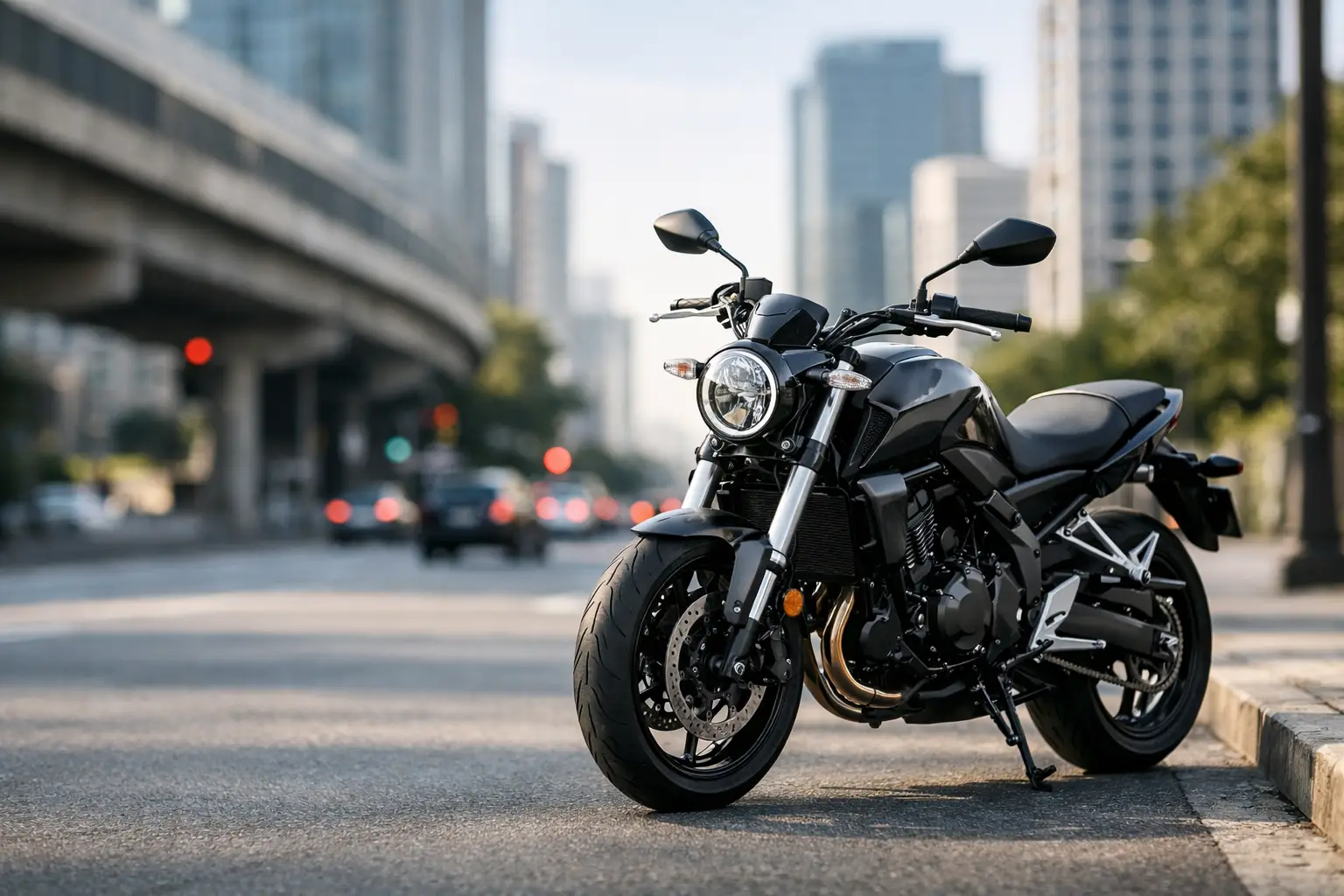
Best Low Maintenance Motorcycles for City Riders
A motorcycle should earn its place in your life, not dominate your calendar. For city riders, the best low maintenance motorcycles deliver the cleanest version of freedom: immediate movement, minimal workshop time, and a machine that still looks right parked outside a favorite café.
Low maintenance is not the same as maintenance-free. Tires wear. Brake fluid ages. Bearings, suspension, and safety checks remain part of responsible ownership. The real difference is how many consumable parts, fluids, adjustments, and service intervals stand between you and the next ride.
For most urban riders, electric motorcycles lead the conversation. They remove the engine oil, spark plugs, clutch wear, exhaust system, and much of the routine complexity that defines internal-combustion ownership. But a well-chosen gas bike can still be a dependable, uncomplicated companion. The right answer depends on where you ride, how far you go, and whether your idea of style leans classic, stripped-back, or quietly futuristic.
What Makes the Best Low Maintenance Motorcycles?
The strongest low-maintenance choice usually starts with a simple mechanical layout. Fewer moving parts mean fewer parts to adjust, lubricate, or replace. An electric motor is exceptionally compelling here: instant torque comes without oil changes, valve-clearance inspections, fuel filters, or a multi-speed gearbox demanding regular attention.
Drivetrain design matters, too. Belt and shaft drives reduce the frequent cleaning and lubrication associated with a conventional chain. A chain is not a deal-breaker – it is light, efficient, and familiar to any motorcycle shop – but it asks more of a rider who commutes through rain, dust, and city grime.
There is another, less glamorous factor: dealer and parts support. A motorcycle with a reputation for reliability is only low-stress if common wear items, qualified service, and diagnostic support are accessible in your area. Before committing, look beyond the showroom finish. Ask about service intervals, warranty coverage, battery support, and the availability of tires and brake components in the sizes the bike uses.
Finally, choose a machine that suits your actual riding. A large, high-output performance motorcycle can be dependable, yet it will often consume expensive tires and brakes more quickly than a lighter urban bike. Low maintenance is partly engineering and partly restraint.
Electric Motorcycles: The Cleanest Ownership Equation
Electric motorcycles are built for riders who would rather charge than wrench. Their maintenance schedules still include brake inspections, tire replacement, suspension checks, and periodic software or battery-system diagnostics. Yet the core powertrain is refreshingly spare. There is no clutch cable to adjust in traffic, no oil to drain, and no hot exhaust system competing with your commute.
RGNT Street Classic and Turbo
For riders drawn to classic lines and an electric heart, the RGNT Street Classic and Turbo make a persuasive case. Handcrafted in Sweden, these machines pair the visual language of a proper motorcycle with silent electric response. The result is not an appliance on two wheels. It is a design object with real road presence, minus much of the mechanical routine attached to vintage-inspired gas bikes.
They are especially suited to shorter urban rides, where instant torque, quiet acceleration, and easy charging feel more relevant than cross-country range. As with any electric motorcycle, battery care is simple but not optional: follow charging guidance, avoid leaving the battery at extreme states of charge for long periods, and store the bike appropriately during extended downtime.
Zero S
The Zero S is a pragmatic choice for riders who want an established electric-motorcycle platform with everyday usability. Its appeal is the same appeal that brings many riders to electric power in the first place: twist-and-go performance with a reduced routine-service burden. It is worth checking local service coverage before purchase, particularly if you live outside a major metro area. Electric simplicity is at its best when support is close at hand.
LiveWire S2 Del Mar
The LiveWire S2 Del Mar brings street-focused electric performance into a compact, modern package. For an urban rider, its low-maintenance advantage is clear: no gasoline, no engine oil, and no traditional clutch system. Its running costs will still be shaped by how hard you use the throttle. Electric torque is addictive, and hard launches can shorten tire life just as quickly as they can improve your morning.
BMW CE 04
The BMW CE 04 blurs the boundary between scooter practicality and motorcycle attitude. It is not for the rider chasing a classic tank-and-frame silhouette, but it is one of the most sensible low-maintenance urban machines available. Its automatic electric drive, weather protection, and storage make it particularly appealing to commuters who need a motorcycle to work as hard as they do.
Low-Maintenance Gas Motorcycles That Still Make Sense
A gas motorcycle comes with more scheduled care, but proven middleweight models can remain remarkably easy to own. The key is avoiding unnecessary complexity. Look for fuel injection, liquid cooling, an accessible service network, modest power, and a reputation built over years rather than a single launch season.
Honda Rebel 500
The Honda Rebel 500 is one of the cleanest answers for riders who want a traditional motorcycle with a relaxed ownership experience. Its parallel-twin engine is proven, approachable, and easy to live with. The chain requires normal care, and routine oil changes remain part of the deal, but its overall simplicity makes it a strong first bike and an equally rational city bike.
Honda CB500F
For a more upright and agile posture, the Honda CB500F carries similar virtues into a naked-bike form. It has enough performance for highways without demanding the consumables of a larger sport machine. Its broad dealer network is part of the value proposition. When service is needed, convenience counts.
Kawasaki Z500
The Kawasaki Z500 is another lightweight, fuel-injected naked motorcycle worth considering. It is lively without being excessive, compact without feeling like a compromise, and designed around everyday usability. Expect standard gas-bike tasks such as oil, filters, chain care, and periodic inspections. In return, you get quick refueling and familiar service almost anywhere.
Yamaha MT-03
The Yamaha MT-03 has earned a following because it keeps the formula direct: manageable size, reliable parallel-twin power, and uncomplicated street manners. It is a particularly good fit for newer riders who want a motorcycle that will not punish them with weight, heat, or a demanding maintenance schedule. It does not offer electric silence, but it offers a sensible entry into dependable gas ownership.
Do Not Let Low Maintenance Become Low Attention
The easiest motorcycle to own is still a safety-critical machine. Check tire pressure regularly, inspect tire tread and sidewalls, test lights, monitor brake feel, and keep the battery system healthy. For chain-driven motorcycles, clean and lubricate the chain at the interval recommended for your riding conditions. Wet commutes and gritty streets call for more frequent attention than sunny weekend rides.
Electric riders should also think about charging as a habit, not a chore. A reliable home charging setup changes the ownership experience completely. Start the day with a ready bike, rather than planning detours around a gas station. If you cannot charge at home or work, a gas motorcycle may be the more effortless choice despite its larger maintenance checklist.
Insurance, theft protection, and parking are part of the equation as well. A bike that is easy to maintain but difficult to store securely is not truly low-friction city transport. Factor in a quality lock or secure garage, weather exposure, and the cost of replacing tires in your local market.
Choose the Maintenance Profile You Will Actually Enjoy
Electric motorcycles make the strongest case for riders whose world is built around commuting, city movement, and shorter spirited rides. They trade gas-station speed and long-distance flexibility for silence, direct torque, and dramatically reduced powertrain maintenance.
Gas motorcycles remain the better fit for riders with unpredictable long-distance plans, limited charging access, or a preference for the familiar rituals of combustion. A Honda, Kawasaki, or Yamaha middleweight will rarely be difficult to own if you keep up with basic service.
Choose the bike that leaves the most room for riding. When the machine fits your city, your routine, and your sense of style, maintenance fades into the background – exactly where it belongs.
-
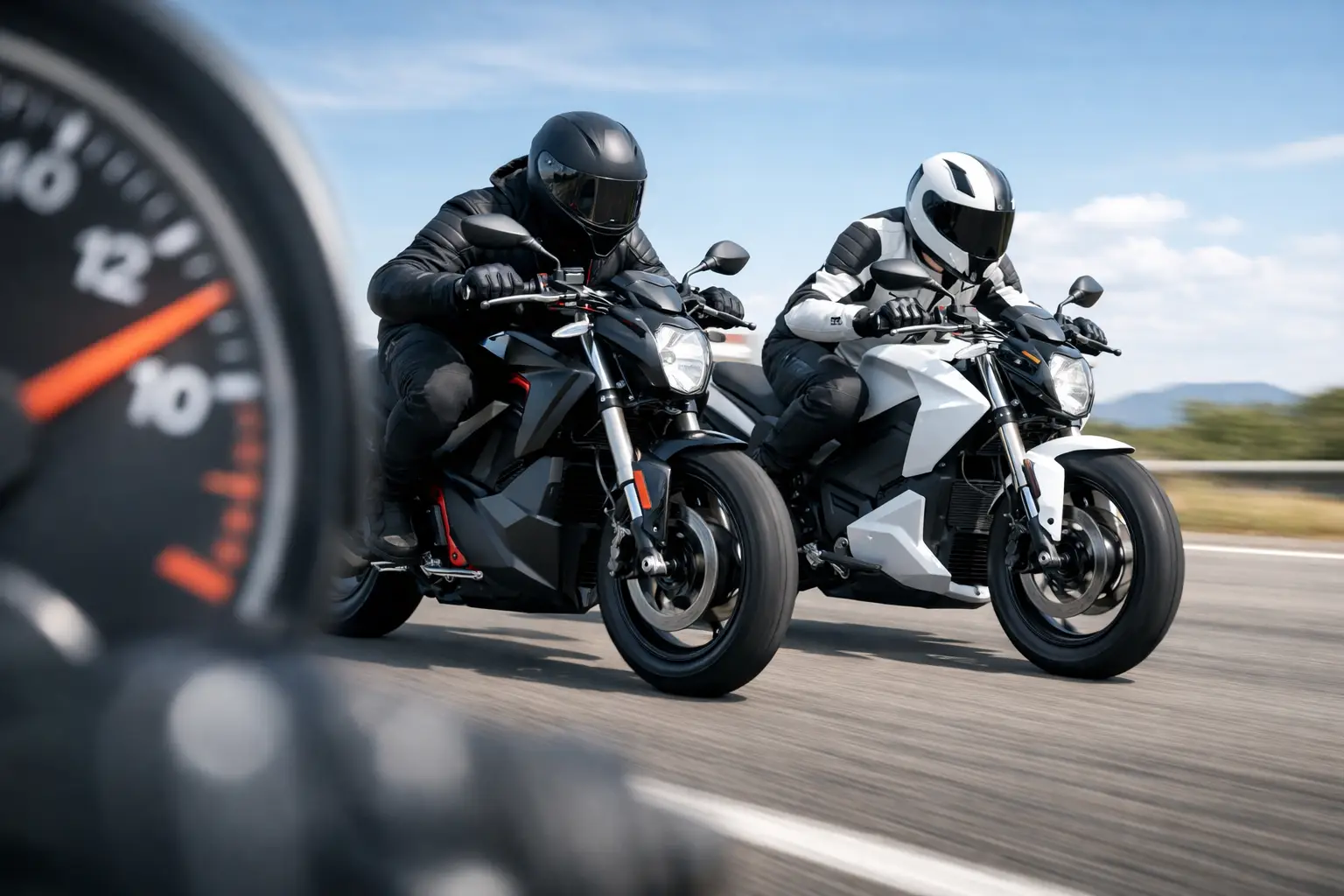
How to Compare Electric Motorcycle Acceleration
A spec sheet can make two electric motorcycles look equally quick, then the first green light tells a different story. One leaves traffic behind with calm, immediate force. The other feels sharp for a moment, then runs out of breath. Knowing how to compare electric motorcycle acceleration means looking past one headline number and asking how that power arrives, how long it lasts, and where you will actually use it.
For city riders, acceleration is not a bragging-rights figure. It is the clean, silent gap you create when a lane opens. It is the confidence to merge without drama. And on a motorcycle with classic lines and an electric heart, it should feel as considered as the design.
Start With the Acceleration Figure, Then Question It
The familiar 0-60 mph time is useful because it creates a common language. It tells you how quickly a motorcycle can reach highway speed from a standstill, and it gives a broad sense of performance. But it is only one scene in the story.
A 0-30 mph time can matter more in dense urban riding, where traffic lights, roundabouts, and short gaps define the day. A bike that reaches 30 mph instantly may feel more responsive in the city than a faster machine built to dominate from 50 to 100 mph. If a manufacturer publishes 0-60 but not 0-30 or rolling acceleration, read the figure as a reference point rather than a complete verdict.
Also ask how the number was achieved. Was it independently tested or manufacturer-claimed? Was the battery fully charged? What was the rider’s weight, road surface, temperature, and riding mode? These details can move a result by enough to matter, especially on lighter electric motorcycles.
Compare Electric Motorcycle Acceleration Through Torque Delivery
Electric motors make peak torque available almost immediately. That is the defining sensation: no clutch work, no waiting for revs, no interruption between gears. Twist the throttle and the response is there.
Yet peak torque alone does not tell you how forceful a motorcycle will feel. A large torque number can be quoted at the motor shaft, while the final drive ratio determines what reaches the rear wheel. More importantly, manufacturers may tune throttle response very differently. One bike can deliver its power in a hard initial hit, while another builds it with measured precision for smoother control on city streets.
Look for power in kilowatts alongside torque. Torque shapes the first punch off the line; power has more influence as speed rises. A motorcycle with strong torque but modest continuous power can feel brilliant through the first few yards, then become less urgent at higher speeds. For urban use, that may be exactly the right balance. For frequent highway riding, sustained power deserves more weight.
The most convincing electric acceleration feels immediate without being crude. It should give the rider control at low speed, composure on imperfect pavement, and enough edge when the road clears. Silence makes that sensation even more vivid. Without exhaust noise and gear changes competing for attention, you feel the movement more directly.
Weight Changes the Feeling at Every Speed
Motorcycle weight is not just a handling figure. It is central to acceleration. More mass requires more force to move, so a lighter machine can feel alive even when its motor output looks modest beside a heavier competitor.
When comparing models, use curb weight where possible. This represents the bike ready to ride with necessary fluids and, depending on the manufacturer, a charged battery. Dry weight is less useful because it can exclude exactly the components that make an electric motorcycle substantial.
Weight distribution matters too. Batteries sit low in the chassis, which can create a planted, balanced feel through turns and at low speed. That low center of gravity is an electric advantage, but a very heavy battery pack can still blunt the first response or make quick direction changes feel less effortless.
Think beyond the launch. The right bike should feel light enough when filtering through traffic, parking at the curb, and changing lanes. Acceleration is part of a larger rhythm, not an isolated test strip event.
Check Rolling Acceleration and Passing Response
A motorcycle that wins a stoplight sprint is not automatically the best companion on a fast boulevard. Rolling acceleration shows what happens when you are already moving, such as 30-50 mph or 40-60 mph. This is where continuous power, software calibration, and top-speed headroom become clear.
If you can test ride, hold a steady speed in a safe, legal setting and roll on the throttle decisively. Notice whether the bike responds immediately or hesitates. Does it keep pulling cleanly toward its top speed, or does the surge fade early? Is the power delivery predictable enough to meter out through a corner exit or a wet intersection?
This is also the moment to evaluate riding modes. Eco modes often soften throttle response and limit power to preserve range. Sport modes may provide the full character of the motor. Neither is inherently better. A useful comparison considers the mode you are likely to use most, not only the most aggressive setting available for a short ride.
Battery Charge, Heat, and Software Are Part of Performance
An electric motorcycle does not deliver identical acceleration under every condition. State of charge matters. Many bikes feel strongest with a well-charged battery and may reduce available output as charge drops to protect the battery system. Cold weather can have a similar effect, as can repeated hard launches that raise component temperatures.
Ask whether the listed power is peak or continuous. Peak power is what the bike can produce briefly, often delivering that addictive initial rush. Continuous power is what it can maintain for longer periods. Both figures matter, but they answer different questions.
Battery management software also shapes the ride. It controls how power is released, how traction is managed, and when performance is reduced for protection. Good calibration is not about making every throttle input theatrical. It is about making performance repeatable, legible, and satisfying in the conditions riders face every day.
Traction Can Be the Difference Between Quick and Useful
The road decides how much acceleration you can use. On dry, clean pavement, a strong electric motor can expose the limits of tire grip almost instantly. On wet asphalt, painted lane markings, cold tires, or cobblestones, a forceful throttle map can become more effort than advantage.
Compare tire sizes, tire quality, wheelbase, and traction-control systems where fitted. A longer wheelbase can improve stability under hard acceleration, while a shorter wheelbase may feel more agile in town. Neither setup wins everywhere. The better choice depends on whether your riding is mostly urban, suburban, or open-road.
Do not mistake a dramatic launch for superior real-world pace. The most usable motorcycle is often the one that lets you apply its torque confidently, repeatedly, and without unsettling the chassis.
Match the Numbers to Your Riding Life
An A1-class electric motorcycle has a different mission from a high-output superbike, and that is not a compromise. For commuting and city riding, immediate response to 30 or 40 mph, manageable weight, controllable power, and low running noise can be more rewarding than a huge 0-60 claim.
The same principle guides design-led performance machines such as RGNT Motorcycles. A bike should have the pace to feel alive in the city, but it should also carry itself with restraint. Quiet power does not need to announce itself to make an impression.
Before choosing, compare claimed 0-60 mph times, motor power, curb weight, top speed, riding modes, and real test impressions together. Then place those facts against your own roads. A daily ride through downtown streets calls for a different kind of acceleration than a weekend route filled with open, fast sweepers.
The best electric motorcycle is not necessarily the one with the loudest numbers. It is the one whose acceleration feels perfectly placed: instant when you need it, composed when the surface changes, and memorable long after the light turns green.
-
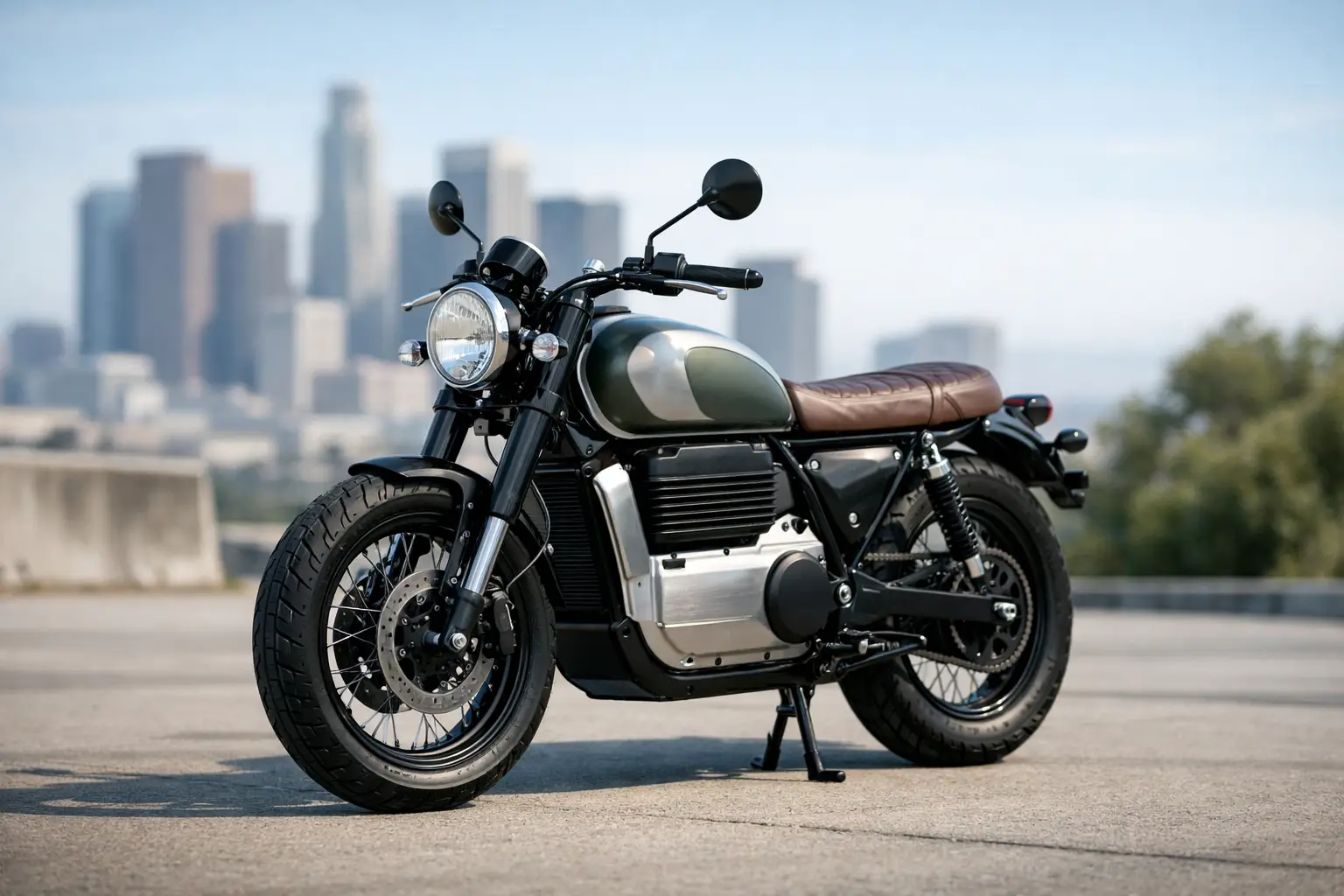
Are Retro Electric Motorcycles Practical?
The question, “are retro electric motorcycles practical,” is best answered at the curb, not in a spec-sheet debate. Picture the daily ride: traffic tightening, parking scarce, a short run across town, then a quiet exit toward open roads after work. For that kind of life, a classic-shaped electric motorcycle can make more sense than a large gas bike – provided the rider chooses it for the roads they actually ride.
Retro electric motorcycles are not trying to be everything to everyone. They are designed for riders who value instant response over exhaust drama, timeless proportions over science-fiction styling, and a more considered relationship with the city. Classic lines. Electric heart. The result is a motorcycle that feels familiar at a glance and distinctly different the moment the throttle turns.
What Practicality Really Means on Two Wheels
Practicality is not just range. It is the complete rhythm of ownership: how easily a bike leaves the garage, moves through traffic, finds a place to park, charges between rides, and fits the rider’s routine without demanding a new lifestyle.
For urban commuters, electric power has an immediate advantage. There is no clutch work in stop-and-go traffic, no engine heat rising beneath you at a red light, and no fuel stop added to the weekly schedule. Torque arrives immediately, which makes pulling away from lights and slipping into a gap feel clean, direct, and controlled. The silence changes the character of riding, too. You hear the city, your tires, and the road surface rather than competing with the machine beneath you.
A retro electric motorcycle also brings a practical kind of emotional value. A motorcycle that looks right outside a studio, apartment building, or favorite coffee spot is more likely to be ridden. Design is not a substitute for engineering, but it is part of ownership. The bike should earn a second look while still being ready for the first green light.
Are Retro Electric Motorcycles Practical for Commuting?
For a predictable commute with access to charging, they can be exceptionally practical. The key is matching the motorcycle’s real-world range to your real-world mileage, not to the occasional longest ride of the year.
A rider traveling 15 to 35 miles each way can often return home with ample battery remaining, especially when charging is available overnight. That makes daily use simple: ride, plug in, repeat. Home charging turns energy into a background task, much like charging a phone. No gas station detour, no oil-change calendar, and far fewer routine mechanical items to think about.
City riding also plays to the electric drivetrain’s strengths. Regenerative braking can recover some energy during deceleration, while the lack of gears means the motorcycle remains composed through constant speed changes. A well-calibrated electric bike feels calm in congestion but eager when the road clears.
The limitation is equally clear. Riders without dependable home, workplace, or nearby public charging need to plan more carefully. Apartment living does not automatically rule out electric ownership, but access matters. A beautiful motorcycle is less practical if every charge requires a logistical mission.
The Range Question: Use the Honest Number
Published range is useful, but riders should treat it as a starting point. Speed, temperature, elevation, payload, tire pressure, wind, and riding style all affect how far a charge will go. Fast highway riding draws more energy than a steady city route, while cold weather can reduce available battery performance.
The practical question is not, “Can this bike achieve its maximum quoted range?” It is, “Can it cover my normal day with a comfortable buffer?” That buffer matters. It leaves room for an unexpected errand, a longer route home, or the simple pleasure of taking the scenic road.
For many urban riders, the answer is yes. For someone who regularly covers 150 miles of interstate in a single day, the answer is likely no – at least not without longer stops and deliberate charging planning. Electric motorcycles reward intentional riding. They are strongest when the ride and the machine are matched.
Charging Is the Real Ownership Test
Charging speed matters, but charging convenience matters more. An overnight charge at home is often the ideal arrangement because it uses the hours when the motorcycle would be parked anyway. The rider wakes up to a full battery rather than a low-fuel warning.
Public charging expands possibilities, especially for errands and workdays, but it should be viewed as support rather than the foundation of ownership. Infrastructure varies widely between neighborhoods and regions. Before buying, inspect the places you already spend time: home, office, gym, favorite weekend destination. If charging fits naturally into those locations, electric ownership becomes far easier.
There is also a useful shift in mindset. Gasoline motorcycles are refueled in concentrated stops. Electric motorcycles are charged in smaller, quieter moments. Riders who can plug in regularly rarely think about it. Riders who cannot may think about it constantly.
Retro Style Does Not Mean Old-School Performance
The strongest argument for the format is not nostalgia alone. A retro electric motorcycle combines the visual language riders already trust – a shaped tank profile, round lighting, honest materials, balanced stance – with power delivery that feels distinctly current.
Immediate torque can make a lightweight electric motorcycle feel quicker in city traffic than its horsepower figure suggests. Without gear changes interrupting acceleration, the response is smooth and immediate. That confidence is useful when merging, crossing an intersection, or moving through a tight urban lane.
The absence of engine vibration is another practical benefit, especially on repeated commutes. Less vibration can mean less fatigue through the hands and feet. Less noise can make early starts and late arrivals more considerate in dense neighborhoods. Silence is not a lack of character. It creates space for a different kind of character: subtle, composed, and unmistakably modern.
At RGNT, that idea is central to the appeal. The objective is not to imitate the past. It is to preserve the visual confidence of classic motorcycles while giving riders a cleaner, sharper way forward.
Where a Retro Electric Motorcycle Makes Less Sense
There are situations where a gas motorcycle remains the easier tool. Long-distance touring across remote areas is one. When a route depends on rapid refueling and hundreds of miles between overnight stops, gasoline infrastructure still offers greater freedom with less planning.
Riders who need to carry heavy cargo, regularly ride two-up at highway speeds, or live far from reliable charging should be particularly rigorous with their calculations. Motorcycle practicality is personal. A bike that is ideal for a 22-mile downtown commute may be the wrong answer for a 90-mile daily highway run.
Price also deserves a direct look. Premium electric motorcycles can cost more upfront than entry-level gas alternatives. The trade-off may be lower energy costs, reduced maintenance, and a more refined riding experience, but those benefits arrive over time. Buyers should assess the full ownership picture, including insurance, registration, charging access, and local incentives where available.
The Details That Decide Daily Usability
Before choosing a retro electric motorcycle, focus on the details that shape every ride. Confirm the usable range for your normal speeds. Understand the charging equipment, charging time, and outlet requirements. Check seat height, riding position, storage options, passenger capability, and the service support available in your area.
Do not overlook licensing and vehicle classification. Requirements vary by state, and riders should verify the rules that apply where they live. The same applies to insurance, parking policies, and access to workplace charging. Practicality is often decided by these quiet details rather than the headline numbers.
Finally, ride one if possible. Electric power delivery is hard to understand from a screen. Some riders miss shifting at first; others realize within minutes that they do not miss it at all. The right motorcycle should feel natural when the light changes and effortless when the road opens.
A retro electric motorcycle is practical when it becomes the machine you reach for without negotiation. If it fits your distance, charging routine, and sense of style, it can turn the everyday commute into something quieter, quicker, and far more alive.
-
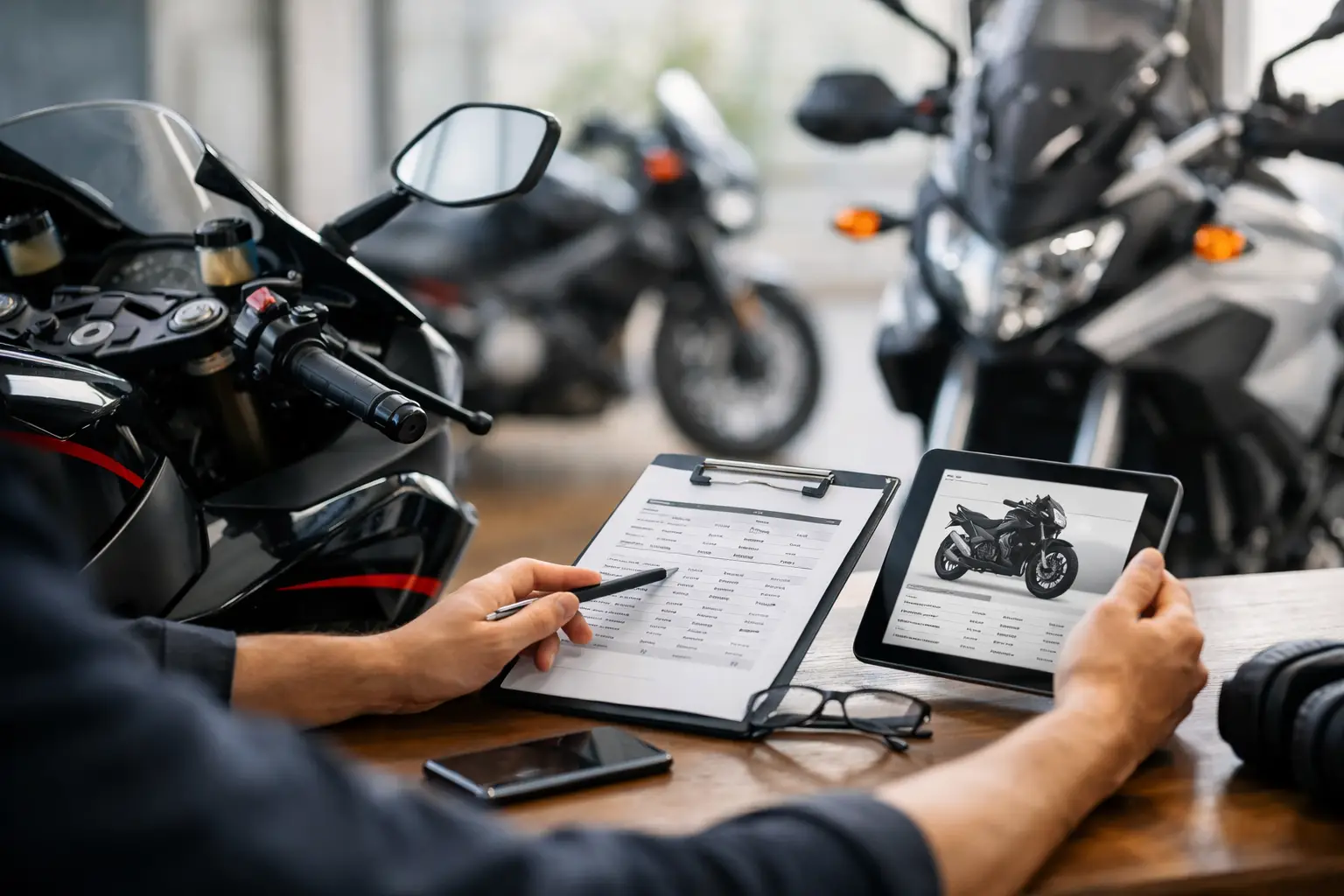
How to Compare Motorcycle Specs Before You Ride
A spec sheet can make almost any motorcycle look compelling. A big top-speed number catches the eye. A long range claim sounds liberating. But the bike that looks strongest in a comparison table is not always the one that feels right beneath you at a red light, through a fast corner, or on the ride home after a long day.
Knowing how to compare motorcycle specs means separating the numbers that shape your actual experience from the ones that only look impressive in an ad. For urban riders especially, the right machine is a balance of instant response, practical range, composed handling, intelligent charging, and a design you will want to ride every day.
How to Compare Motorcycle Specs That Matter
Start by comparing motorcycles built for the same job. Putting a lightweight city-focused electric motorcycle next to a large touring machine tells you very little, even if both have two wheels and a claimed range. Decide where and how you ride first: dense city streets, suburban roads, weekend backroads, freeway commutes, or a mix of all four.
Then place the models side by side and look at the complete picture. Do not let one heroic figure decide the purchase. A motorcycle is a system. Motor output affects acceleration, but weight changes how that output feels. Battery capacity affects range, but charging speed determines how easily that range fits your life. Wheel size, suspension travel, brake hardware, tire choice, and riding position all influence confidence.
The best spec is the one that serves your route, your pace, and your taste without asking you to make excuses for it.
Power: Look Beyond the Peak Number
With gas motorcycles, buyers often start with horsepower and engine displacement. With electric motorcycles, torque and power delivery deserve equal attention. Electric motors deliver torque immediately, which gives a well-tuned bike its clean, decisive pull away from traffic lights and through gaps in city flow.
Compare both continuous power and peak power when manufacturers publish them. Peak power tells you about the hard hit available for acceleration. Continuous power is often more useful for understanding what the motorcycle can sustain without heat or battery limits reducing output. The difference matters on long, fast rides and during repeated hard acceleration.
Torque figures need context, too. A large torque number at the motor does not automatically reveal how urgent the bike will feel at the rear wheel. Gear reduction, throttle mapping, bike weight, traction control, and ride modes all shape the result. If possible, compare 0-30 mph and 0-60 mph times rather than relying on torque alone. For city riding, the first number can be more revealing. The rush from a standstill to urban speed is where electric performance earns its reputation.
Top speed should be judged honestly. If your routes include freeway stretches, make sure the motorcycle can hold a comfortable speed with reserve for merging and passing. If most of your riding happens below 50 mph, a dramatic top-speed claim may matter far less than smooth low-speed control.
Range: Ask Which Riding Conditions Were Used
Range is one of the most misunderstood motorcycle specs because no single number can capture every rider, road, temperature, and throttle hand. A claimed maximum range usually comes from controlled, favorable conditions. It is a useful reference point, not a personal guarantee.
When comparing electric motorcycles, find out whether the stated range is measured in city traffic, mixed riding, or sustained highway use. Stop-and-go riding can be surprisingly efficient for an EV because regenerative braking recovers some energy. High freeway speed, steep hills, cold weather, a passenger, and aggressive acceleration will shorten the distance available.
A better question is not, “Which motorcycle goes farthest?” It is, “How much range do I need between charges with a comfortable buffer?” If your daily loop is 28 miles and you can charge overnight, a bike with a huge battery may add cost and mass without adding much freedom. If you regularly ride 80 miles between dependable charging points, usable range becomes a central buying decision.
Also compare battery capacity, typically listed in kilowatt-hours, but do not treat it as the final answer. More kWh generally means more potential range, yet efficiency and weight still matter. Consider usable capacity when it is available, since some batteries reserve a portion to protect long-term health.
Charging: The Spec That Decides Ownership
Charging is less glamorous than acceleration, but it has a larger effect on everyday ownership. Check what type of charging the motorcycle accepts, whether a charger is built in, and how long it takes from a standard household outlet versus a higher-voltage setup.
Pay attention to the stated time and the conditions behind it. A claim from 20% to 80% is helpful for a mid-ride stop, while a 0% to 100% figure speaks more directly to overnight planning. For many urban owners, the ideal arrangement is simple: arrive home, plug in, and leave with a full battery the next morning.
Charging access should shape the comparison as much as battery size. Apartment parking, workplace charging, garage outlets, and local public infrastructure each create a different reality. A smaller battery that recharges conveniently can be more useful than a larger one that creates friction every time it needs energy.
Compare Weight, Geometry, and the Feel of Control
A motorcycle’s weight is never just a number. Where that weight sits matters just as much. A low-mounted battery can lower the center of gravity, making an electric bike feel planted through corners and easier to balance at low speed than its curb weight suggests.
Still, compare curb weight rather than dry weight whenever possible. Curb weight includes the fluids and ready-to-ride condition that better reflects what you will actually maneuver. If a manufacturer only lists dry weight, treat it as a partial figure and look for clarity before drawing conclusions.
Seat height matters at every stoplight. Riders with shorter inseams may value a low, narrow seat that makes a bike easy to support on uneven pavement. Taller riders should look at knee bend, handlebar reach, and footpeg placement, not only the seat-height measurement. A motorcycle can fit on paper and still feel cramped after 30 minutes.
Wheelbase, rake, and trail can offer clues about handling, though they should not be read in isolation. A shorter wheelbase often supports quick direction changes, while longer geometry may favor calm, straight-line stability. Suspension travel and adjustability matter more when pavement is broken, streets are crowned, or your route includes rough industrial blocks. The final test is always the ride itself: Does the motorcycle feel composed, natural, and alive in your hands?
Brakes, Tires, and Safety Technology
Brake-disc size and caliper design are worth comparing, but braking performance comes from the full package: tire grip, brake feel, suspension behavior, ABS calibration, and the rider’s control. Standard ABS is a meaningful baseline for street riding. Cornering ABS, traction control, and selectable ride modes can add another layer of confidence, especially in rain, cold conditions, or unpredictable city traffic.
Do not overlook tire dimensions and tire type. Wide tires may create a muscular silhouette and a planted feel, but they can add steering effort and affect efficiency. A sport-oriented tire may offer sharp dry-road grip while wearing faster or performing differently in wet weather. The right tire is not the most aggressive one. It is the one that suits the roads you ride.
Read the Fine Print, Then Trust the Ride
Spec comparisons get smarter when you look for the details beneath the headline. Check warranty terms for both the motorcycle and its battery. Ask whether connected features require a subscription, whether software updates are supported, and how service is handled where you live. For electric motorcycles, available dealer support and parts access can matter as much as the motor figure.
Legal classification deserves attention as well. Licensing, registration, insurance, and power limits vary by state and country. Confirm that the motorcycle fits the rules where you ride, rather than assuming a class label means the same thing everywhere.
Finally, compare what cannot be reduced to a column of numbers. Finish quality. Switchgear. The shape of the tank or battery enclosure beneath your knees. The way a silent drivetrain changes the texture of a familiar street. A hand-built machine such as an RGNT is chosen as much for its presence as its performance, and that is not a compromise in logic. It is part of the point.
The right motorcycle should make the practical details feel settled, then leave room for something less measurable: the instinct to take the longer way home.
-
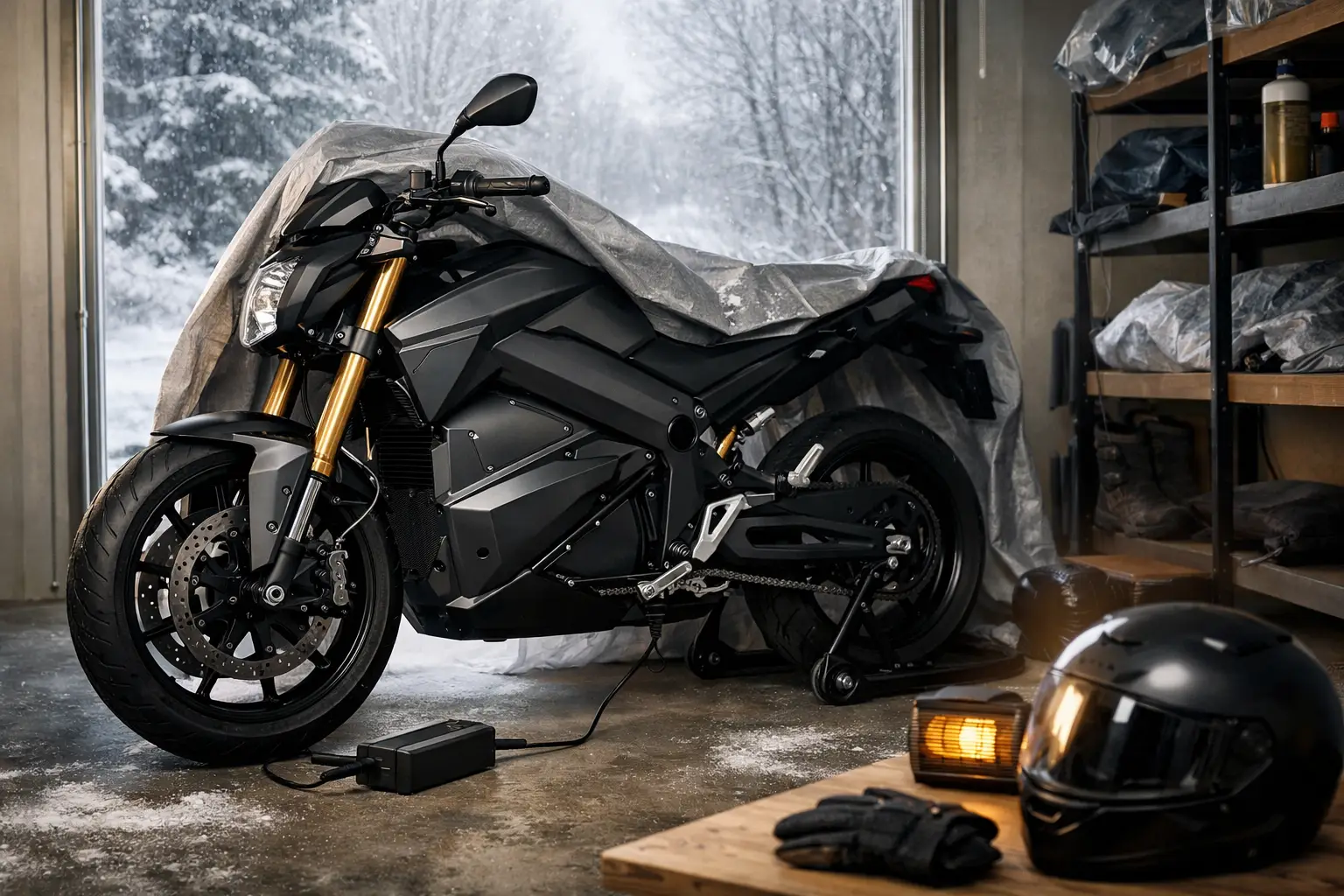
How to Store an Electric Motorcycle in Winter
The first dry Saturday of spring is not the time to discover a flat tire, corroded connector, or battery left in the wrong state for months. Knowing how to store electric motorcycle in winter protects the parts that make silent performance feel so effortless. A proper layup is less about elaborate rituals and more about disciplined preparation: clean it, charge it correctly, keep it dry, and give it a calm place to wait.
For a premium electric motorcycle, winter storage is part of ownership. The machine may be quiet, but it is not indifferent to cold, moisture, neglect, or a charger left working without a plan. Treat the off-season as you would a tailored jacket or a favorite analog watch: put it away properly, and it returns ready to make an entrance.
How to Store an Electric Motorcycle in Winter: Start Clean
Road grime is not just cosmetic. Rainwater, road salt, brake dust, and chain lubricant can hold moisture against painted metal, fasteners, wheels, and electrical housings. Before parking the bike for more than a few weeks, give it a careful wash with products suited to motorcycle finishes. Avoid blasting high-pressure water directly at bearings, seals, charge ports, display edges, switches, or electrical connectors.
Dry the motorcycle completely. Use a soft microfiber towel around painted surfaces and compressed air or a gentle blower around tighter areas where water tends to linger. Pay close attention to the underside, calipers, suspension, wheel spokes or rims, and the area around the charging port. A short ride after washing can help evaporate hidden moisture, provided roads are dry and free of salt.
Once the bike is clean and dry, inspect it with intent. Look for chipped paint, loose fasteners, worn brake pads, tire damage, and anything that deserves attention before spring. Wipe exposed metal components with an appropriate protectant, taking care to keep all lubricants away from brake discs, pads, and tires. If your motorcycle uses a drive chain, clean and lubricate it according to the owner’s manual before storage.
Do not cover a dirty bike and call it done. That is how a winter’s worth of road film becomes a spring restoration project.
Give the Battery a Thoughtful Winter Plan
The traction battery is the center of an electric motorcycle’s character. It delivers the immediate torque, quiet movement, and clean response that define the ride. It also deserves a storage plan that follows the motorcycle manufacturer’s guidance, not old habits borrowed from gasoline bikes.
For many lithium-ion systems, long-term storage is best at a partial state of charge rather than completely full or nearly empty. A commonly recommended range is around 40 to 60 percent, but your owner’s manual takes priority. Battery chemistry, software settings, and battery-management systems vary, so use the specified storage level for your model.
Temperature matters as much as charge level. Store the motorcycle in a dry, insulated space that stays reasonably moderate. Extreme cold can reduce available battery performance, while sustained heat is especially hard on lithium-ion cells. A garage that freezes overnight may be workable for some motorcycles, but a temperature-stable garage, workshop, or storage unit is the better choice. Never charge a battery that is extremely cold unless the motorcycle’s instructions explicitly allow it or its system manages battery temperature automatically.
Avoid leaving the motorcycle at 100 percent for the entire winter simply because it feels prepared. Likewise, do not let it sit near empty. Both extremes can put unnecessary strain on a battery during a long layup. If the bike has an app or display that lets you check charge remotely, use it occasionally. Otherwise, schedule a quick inspection every few weeks.
Whether to leave the charger connected depends entirely on the manufacturer. Some electric motorcycles are designed to manage long-term connection through their battery-management system. Others are better checked and topped up periodically. Use the supplied or approved charger, plug it into a properly grounded outlet, and avoid extension cords unless they are rated for the load and conditions. If you have any uncertainty, the manual is more valuable than guesswork.
If your motorcycle has a removable battery, only remove it if the design and manufacturer instructions support it. Carry it carefully, protect terminals from debris, and store it indoors away from direct sun, heat sources, and anything flammable. Never open, modify, or attempt to service a high-voltage battery yourself.
Choose a Space Worthy of the Machine
A dry garage is ideal, but dry matters more than glamorous. Condensation is the enemy. An unheated shed with a leaking roof or a damp concrete floor can age a motorcycle faster than a cold but well-ventilated garage. If the space is humid, consider a dehumidifier or moisture-control solution. Keep the motorcycle away from fertilizer, pool chemicals, solvents, and other corrosive materials.
Park on a clean, level surface. If moisture rises through a concrete floor, place a vapor barrier or thick mat beneath the tires. Inflate the tires to the recommended pressure before storage. For a layup lasting several months, a paddock stand can reduce the chance of tire flat spots and keep the machine upright with a clean, considered stance. If you do not have stands, rolling the motorcycle slightly during periodic checks can help.
Use a breathable motorcycle cover once the bike is fully dry. A soft indoor cover protects paint and upholstery from dust without trapping moisture. Skip plastic tarps. They look protective, but they can hold condensation against the very finishes you want to preserve.
Protect the Small 12-Volt Battery Too
Even an electric motorcycle may rely on a conventional low-voltage battery for accessories, controls, alarms, or startup systems. That small battery can discharge during a long winter, particularly when the motorcycle is parked in cold conditions.
Check your manual for its recommended maintenance procedure. It may call for a compatible battery tender, periodic charging, or disconnecting the battery during extended storage. Do not assume the main traction battery will keep the 12-volt system healthy. They are separate systems with separate needs.
This is also the moment to think about security. A locked garage is only the first layer. Use a quality ground anchor, chain, disc lock, or alarm appropriate for your parking setup. Store keys in a secure place away from the motorcycle, and do not leave the charger, documents, or removable accessories in plain sight. A winter-stored bike is still a desirable bike.
Check In Without Disturbing the Rest
A motorcycle in storage does not need weekly attention, but it should not disappear from your mind until April. Once every three to four weeks, inspect the storage area for leaks, pests, rodent activity, and unusual humidity. Look over the tires, cover, charging equipment, and any visible wiring.
Check the battery state of charge and follow the manufacturer’s instructions if it has dropped below the recommended storage range. This is a check-in, not a reason to repeatedly charge the battery to full. If you use a maintainer for the 12-volt battery, confirm that its indicator lights show normal operation and that cables remain secure.
Resist the urge to start the bike briefly just to hear or see it wake up. Electric motorcycles do not need the same occasional engine run associated with combustion motorcycles, and cycling systems without riding may not provide any real benefit. A quiet winter is perfectly acceptable.
Bring It Back With Intention
When riding weather returns, remove the cover and inspect the motorcycle before heading out. Check tire pressure and condition, brake operation, lights, controls, charging port, fasteners, and fluid levels where applicable. Look for signs of moisture, corrosion, chewed wiring, or damaged insulation. Recharge the traction battery according to the normal charging procedure, not a rushed improvisation.
Take the first ride gently. Tires, brakes, suspension, and your own reflexes may need a few miles to return to form. Confirm that the display, regenerative braking settings, ride modes, and connected features are behaving as expected before asking for full performance.
Winter storage should leave no trace on the ride. When the streets clear and the city starts moving again, your electric motorcycle should be ready to answer with classic lines, an electric heart, and the kind of silence that makes every departure feel deliberate.
-
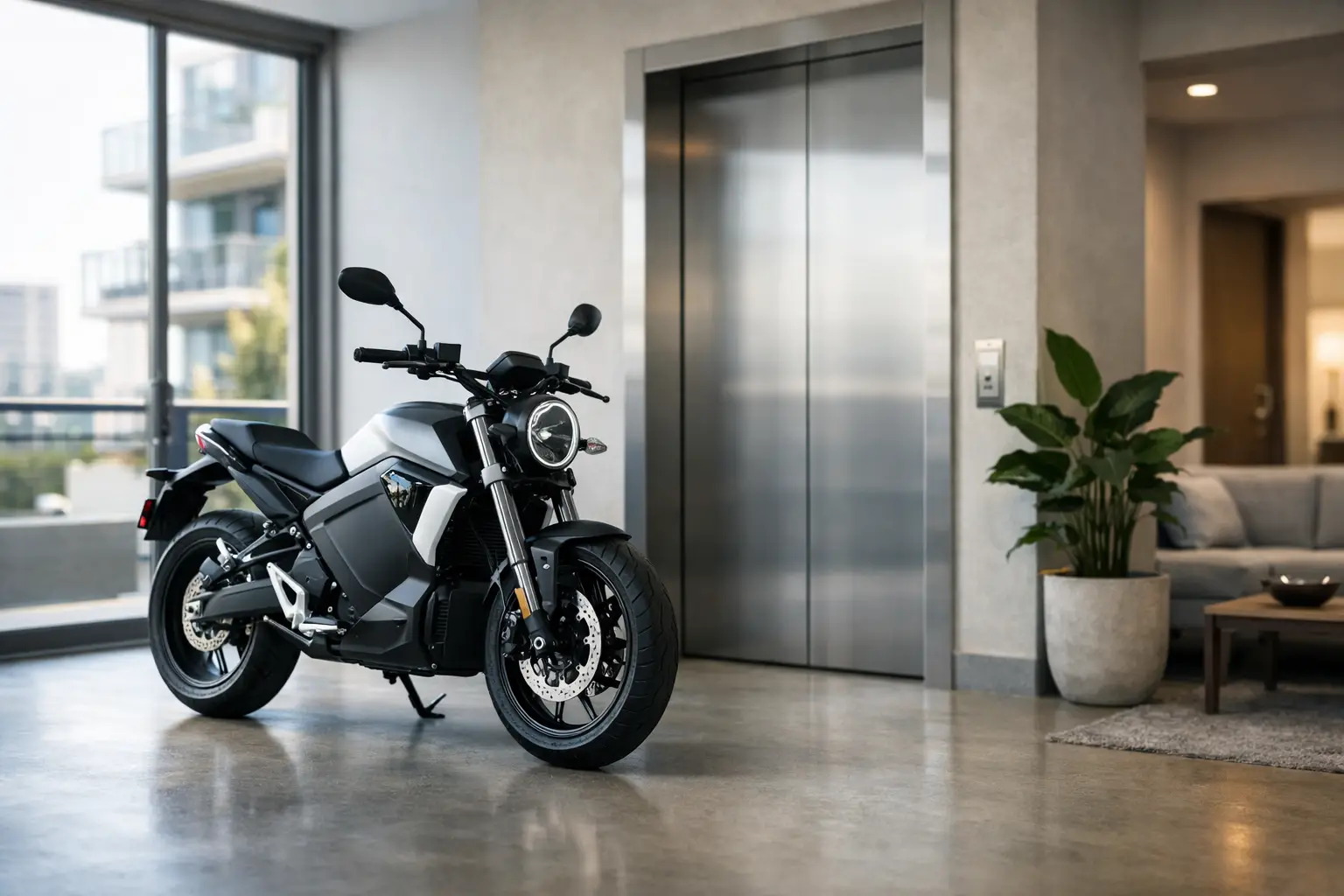
Electric Motorcycle for Apartment Living
A great electric motorcycle for apartment living does not begin with a spec sheet. It begins downstairs: at the garage door, in the parking bay, beside the elevator, and at the outlet you may or may not be allowed to use. City riding is effortless when the practical details are handled before delivery.
For apartment-based riders, electric power has an obvious appeal. There is no fuel smell in a shared garage, no loud cold start before an early meeting, and no oil-stained ritual attached to every ride. What remains is the part that matters: immediate torque, clean design, and a quiet exit into the city.
What Apartment Riders Actually Need
Range matters, but it is rarely the first constraint. Most urban riders travel predictable distances: a commute, a dinner reservation across town, a weekend ride beyond the city edge. The real question is whether the motorcycle fits the rhythm and rules of the building where it lives.
Start with parking. A dedicated, covered space is ideal, particularly if it is visible, access-controlled, or protected by a camera. Motorcycles occupy little room, but they are still valuable objects. A premium electric bike deserves the same consideration as a performance car: a secure place, a lock appropriate for the environment, and no assumption that a shared garage is automatically safe.
Then consider access. Can you ride directly to your space? Is there a ramp, a gated entrance, or a tight turn that could make maneuvering awkward? If the motorcycle must pass through a service corridor or use an elevator, measure first and check the building rules. An electric motorcycle may be quiet, but it is still a full motorcycle, not something to casually store in a hallway or apartment.
Charging Is the Deciding Detail
An electric motorcycle for apartment living works brilliantly when charging is straightforward. It becomes frustrating when charging is treated as an afterthought.
The best setup is a legal, dedicated outlet at your assigned parking space, installed or approved by the property owner. Depending on the motorcycle and charging equipment, a standard household outlet may be enough for overnight charging. That suits riders whose bike rests at home for several hours between trips. Faster charging can be useful, but the ability to plug in consistently is more valuable than chasing maximum charging speed.
Do not run an extension cord across a garage lane, through a door, down a stairwell, or across a sidewalk. It creates a safety issue, invites damage, and can put you in conflict with building management. It also turns a refined ownership experience into a daily workaround.
Ask the landlord the right questions
Apartment managers are more likely to approve a request that is specific and professional. Instead of asking whether you can charge a motorcycle somewhere, explain where the bike will park, what outlet or charging equipment is required, who will pay for installation, and how energy use will be measured if needed.
Ask whether the garage has available electrical capacity, whether alterations require a licensed electrician, and whether charging is permitted in individual spaces. If the answer is no, ask whether a shared EV charging area is planned or whether a managed solution can be considered. The rules vary by property, city, insurer, and HOA. Get the approval in writing.
If home charging is impossible, look honestly at your routine. Public charging may work for a rider with reliable charging near work or along regular routes, but it is less convenient than plugging in where you sleep. For apartment riders, convenience is not a luxury. It is what makes electric ownership feel natural.
Quiet Power Changes Shared Living
The strongest argument for electric riding in dense neighborhoods is not only efficiency. It is restraint.
A combustion motorcycle can be a beautiful machine, but early departures and late returns are often amplified by concrete garages, narrow streets, and sleeping neighbors. Electric power replaces the startup drama with near silence. You roll out cleanly, ride with instant response, and return without announcing yourself to the entire block.
That quietness does not make the motorcycle less emotional. It shifts the sensation. Instead of waiting for revs, you feel torque arrive immediately. Instead of performing for traffic lights, you move through them with purpose. For riders drawn to classic forms but unwilling to accept old compromises, that contrast has real appeal: classic lines, electric heart.
There is a trade-off. Riders should remain especially alert around pedestrians, cyclists, and cars pulling from curbside spaces. The city is loud enough to hide almost anything, including a silent motorcycle. Good road position, controlled speed, and deliberate use of lighting matter more when people may not hear you approaching.
Choose a Bike for the Ride You Actually Take
Urban motorcycling rewards proportion. The ideal apartment bike is quick enough for highway links, composed in traffic, and manageable at walking pace. It should feel substantial on the road without becoming cumbersome in a crowded garage.
Look beyond headline range. A manufacturer’s stated number is useful, but your real range depends on speed, temperature, rider weight, hills, cargo, and how often you use full acceleration. If your daily ride consumes only a fraction of the battery, you gain a generous margin for detours and spontaneous plans. If every commute pushes the limit, ownership starts to revolve around battery math.
Also consider rider ergonomics. Apartment dwellers often ride in normal clothes, carry a backpack, and stop frequently. A comfortable seat, sensible riding position, predictable low-speed balance, and easy storage for a helmet or riding gear nearby can matter more than an extra increment of top speed.
Models such as the RGNT Street Classic and Turbo speak to this balance in different ways: handcrafted Scandinavian character paired with modern electric performance, designed to feel like motorcycles first rather than anonymous mobility devices. The right choice is personal, but the principle is not. Buy the machine that makes the everyday ride feel considered.
Protect the Bike Without Turning It Into Furniture
Security is part of apartment living because the motorcycle often lives one floor away from strangers. Use a serious lock in addition to the motorcycle’s built-in security features, and attach it to a fixed point when the garage layout allows. A disc lock with an alarm can add another visible layer of deterrence. Covering the bike may help reduce attention, though a cover should be used only where it will stay dry and will not interfere with building access.
A few habits make a difference. Keep the key secure rather than in a nearby storage unit. Photograph the motorcycle and record its vehicle identification information. Confirm that your insurance policy reflects where it is parked, especially if the space is shared, outdoors, or not gated.
Avoid using an apartment as a workshop. Battery systems, charging equipment, and motorcycle maintenance deserve proper ventilation, clear access, and manufacturer-approved conditions. Store riding gear neatly, keep chargers protected from impact and moisture, and follow the motorcycle maker’s guidance without improvisation.
Make the Building Part of the Plan
The smoothest apartment ownership begins before purchase. Visit the parking space at the time you would normally arrive home. Notice the lighting, the traffic flow, the distance to an approved outlet, and whether the gate is open to the street for long periods. Speak to management before you need permission, not after the motorcycle is delivered.
It also helps to think about your next move. If you are likely to change apartments within a year, choose an ownership plan that does not depend on a complicated private installation. A portable, permitted charging arrangement or access to reliable workplace charging may offer more flexibility. If you expect to stay, a properly installed dedicated solution can make the bike part of your daily life for years.
Apartment living does not require smaller ambition. It simply rewards better planning. Find a secure place, establish a legitimate charging routine, and choose a motorcycle whose presence is as refined in the garage as it is alive on the road. Then the city becomes yours before the traffic has fully woken up.
-
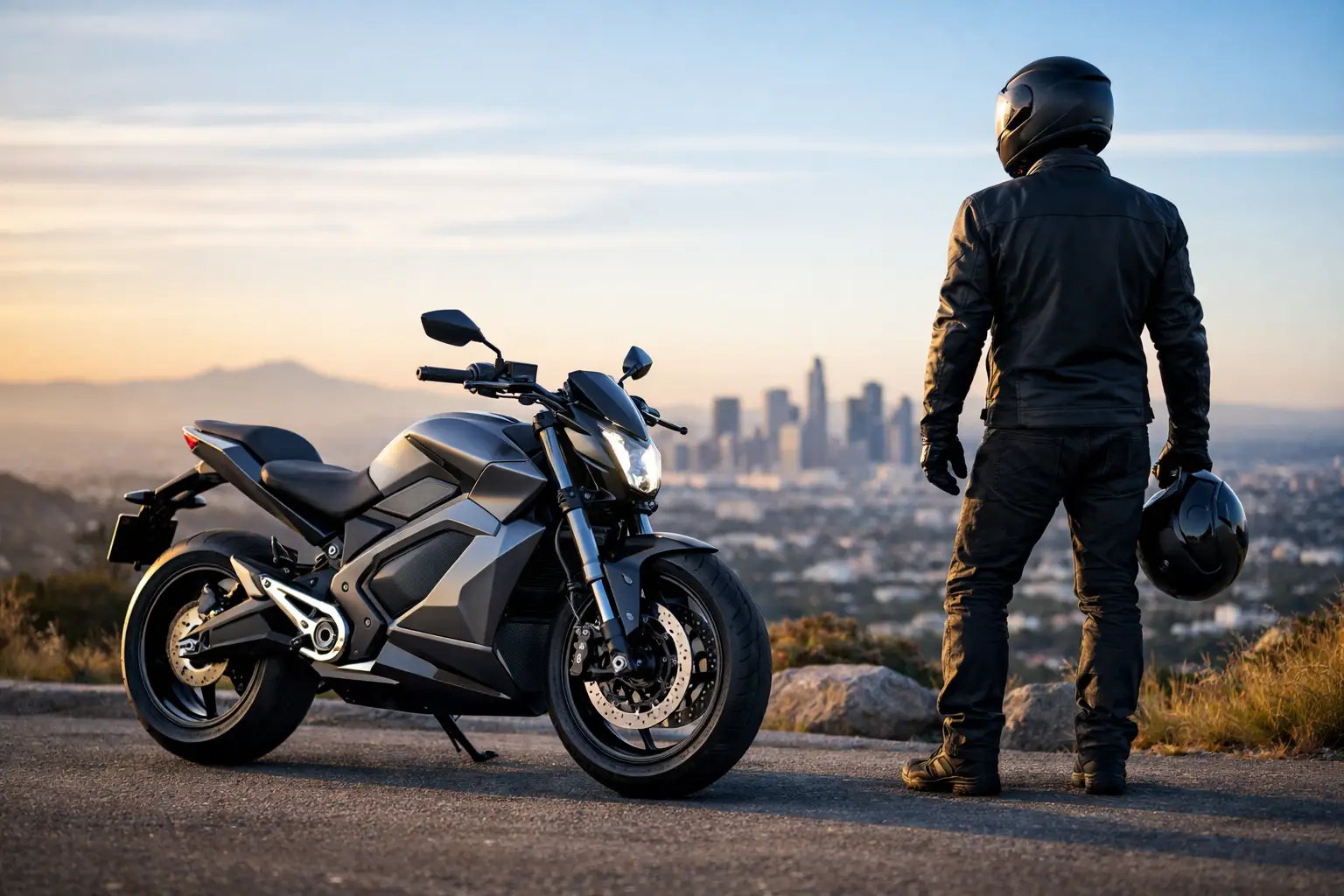
The Future of Electric Motorcycles Is Personal
A motorcycle has always said something before the engine starts. The future of electric motorcycles will not change that. It will make the statement more deliberate: less noise, less compromise, more character. For riders who see the city as both a route and a stage, the next generation of electric bikes will be judged not by novelty, but by whether it feels right beneath them.
Electric power is already rewriting the essentials. Immediate torque changes how a bike leaves a light. Near-silent running changes how a rider moves through an early neighborhood. Fewer mechanical parts change the relationship between rider, machine, and maintenance. But battery capacity alone will not decide what comes next. The bikes that endure will combine useful performance with a point of view.
The Future of Electric Motorcycles Is Not Bigger Batteries Alone
Range remains the question every prospective electric rider asks, and it should be. A claimed number means little without context. Speed, temperature, elevation, rider weight, passenger load, tire pressure, and riding mode all influence how far a motorcycle can travel on a charge. Highway miles consume energy differently from stop-and-go urban miles, where regenerative braking may return a small but meaningful amount of power.
The industry will improve battery energy density over time. That means more range from a similarly sized pack, or a lighter motorcycle with the same practical distance. Yet the most compelling progress may be more honest than dramatic: clearer real-world range estimates, smarter battery management, and charging systems that fit the way riders actually live.
For many urban riders, the ideal electric motorcycle does not need to cross three states before lunch. It needs enough range for a week of commuting, an evening ride across town, and the confidence that a charge at home or work restores the plan. This is where electric motorcycles already make a convincing case. The future is not one battery for every rider. It is better alignment between the bike’s intended life and the rider’s real one.
Charging Must Become Effortless, Not Just Faster
Fast charging will matter, particularly as public infrastructure expands. A meaningful top-up while stopping for coffee makes an electric bike more flexible beyond city limits. But speed is only one part of convenience. Charging access at apartments, offices, garages, and destinations matters just as much.
The strongest ownership experience will be quiet in every sense. Plug in at night. Wake up ready. Avoid the ritual of fuel stops without turning charging into a new chore. Manufacturers and cities have work to do here, from compatible hardware to reliable public stations, but the direction is clear: charging must fade into the background.
Performance Will Feel More Refined
Electric motorcycles are often described through torque figures, and for good reason. Electric drive delivers its pull immediately. There is no waiting for revs to rise and no hunting for the right gear before a gap opens in traffic. In the city, that response feels less like a statistic and more like composure.
Still, raw acceleration is not the whole story. The next era of performance will be defined by calibration. Riders need throttle response that is sharp without being abrupt, regenerative braking that supports rather than interrupts corner entry, and ride modes that genuinely alter the motorcycle’s character. A refined electric bike should feel intuitive at low speed, controlled on wet pavement, and alive when the road opens.
Software will play a larger role, but it should remain in service of the ride. Useful features include navigation that accounts for charge, theft alerts, remote diagnostics, and updates that improve battery or motor behavior. A screen packed with distractions is not progress. The best technology does its work quietly, then lets the rider look up.
Weight Is the Next Great Design Challenge
Batteries carry mass, and mass shapes everything from braking to handling. This is one of the defining trade-offs in electric motorcycle design. A larger battery can extend range, but it can also make a motorcycle less agile, more expensive, and harder to manage at a standstill.
That makes intelligent packaging essential. Low-mounted battery placement can create a favorable center of gravity, while careful chassis geometry, suspension tuning, and braking hardware determine whether the bike feels planted or ponderous. The objective is not to make every electric motorcycle featherweight. It is to make the weight disappear in motion.
For A1-class and urban-focused machines, this balance is especially important. A rider navigating traffic, narrow parking spaces, and imperfect pavement values confidence more than excess. The most desirable electric motorcycles will feel compact, balanced, and precise – not like oversized batteries with handlebars attached.
Design Will Separate the Icons From the Gadgets
Early electric mobility often leaned hard into the visual language of the future: sharp plastics, exposed screens, and shapes designed to announce their difference. There is room for that. But a motorcycle is not a smartphone on two wheels. It carries more than a function. It carries memory, proportion, stance, and attitude.
The future will favor designs with enough restraint to age well. Classic lines and an electric heart are not opposing ideas. A round headlight, a purposeful tank silhouette, real metalwork, and a clean tail can feel familiar while housing thoroughly modern technology. That blend gives riders a way to choose electric without giving up the emotional pull that brought them to motorcycles in the first place.
Craftsmanship will become more visible as the market matures. When there is no exhaust note to dominate the experience, other details step forward: the feel of the controls, the finish of a frame, the fit of a seat, the confidence of a switch, the quality of the materials seen every day. Limited-batch production and hands-on quality control will matter to riders who want their motorcycle to feel chosen, not merely purchased.
RGNT Motorcycles represents this direction well: Swedish-built machines that treat silence as a form of sophistication rather than an absence. The appeal is not pretending electric power is vintage. It is preserving the enduring parts of motorcycling while removing the parts that no longer belong.
Ownership Will Become More Accessible, With Conditions
Electric motorcycles can reduce routine maintenance. There are no oil changes, spark plugs, clutch adjustments, or exhaust systems to manage. Regenerative braking can also reduce wear on brake components, depending on how and where the bike is ridden. Over years of commuting, those savings can be meaningful.
But electric ownership is not maintenance-free, and buyers should resist that myth. Tires, brake fluid, suspension, bearings, belts or chains, and general inspection still require attention. Battery health also matters. A well-engineered pack, thoughtful thermal management, sensible charging habits, and a clear warranty are more valuable than vague claims about lifespan.
The purchase price remains a barrier for some riders, particularly when compared with entry-level gas motorcycles. Financing, leasing, insurance costs, local incentives, and lower running costs can shift the equation, but the answer depends on the rider’s location and usage. For a daily commuter with reliable charging, the numbers can be compelling. For someone who regularly rides long distances through areas with sparse charging, the decision may require more compromise.
That is not a weakness to hide. It is the honest state of a category growing into its confidence.
A Quieter Motorcycle Culture, Not a Smaller One
Some riders worry that electric power removes the soul of motorcycling. They are right about one thing: it changes the sensory experience. There is no engine pulse through the pegs, no exhaust crack on downshifts, no familiar mechanical theater at idle.
What replaces it is not emptiness. It is tire noise, wind, road texture, and the direct sensation of acceleration. It is the ability to leave early without waking the block. It is a conversation at a stoplight without shouting over an engine. It is a different kind of presence – subtle, confident, and hard to ignore once experienced.
Motorcycle culture has always evolved through tension between tradition and change. Electric bikes will not erase combustion motorcycles overnight, nor should they need to. Different machines serve different roads, identities, and rituals. But for urban movement, short escapes, and riders drawn to clean design with real performance, electric is becoming less of a statement about the future and more of a natural choice.
Choose the motorcycle that fits the miles you actually ride, the place you can actually charge, and the feeling you want when you turn onto an empty street. The right electric bike should not ask you to lower your expectations. It should give you a new reason to take the long way home.
-
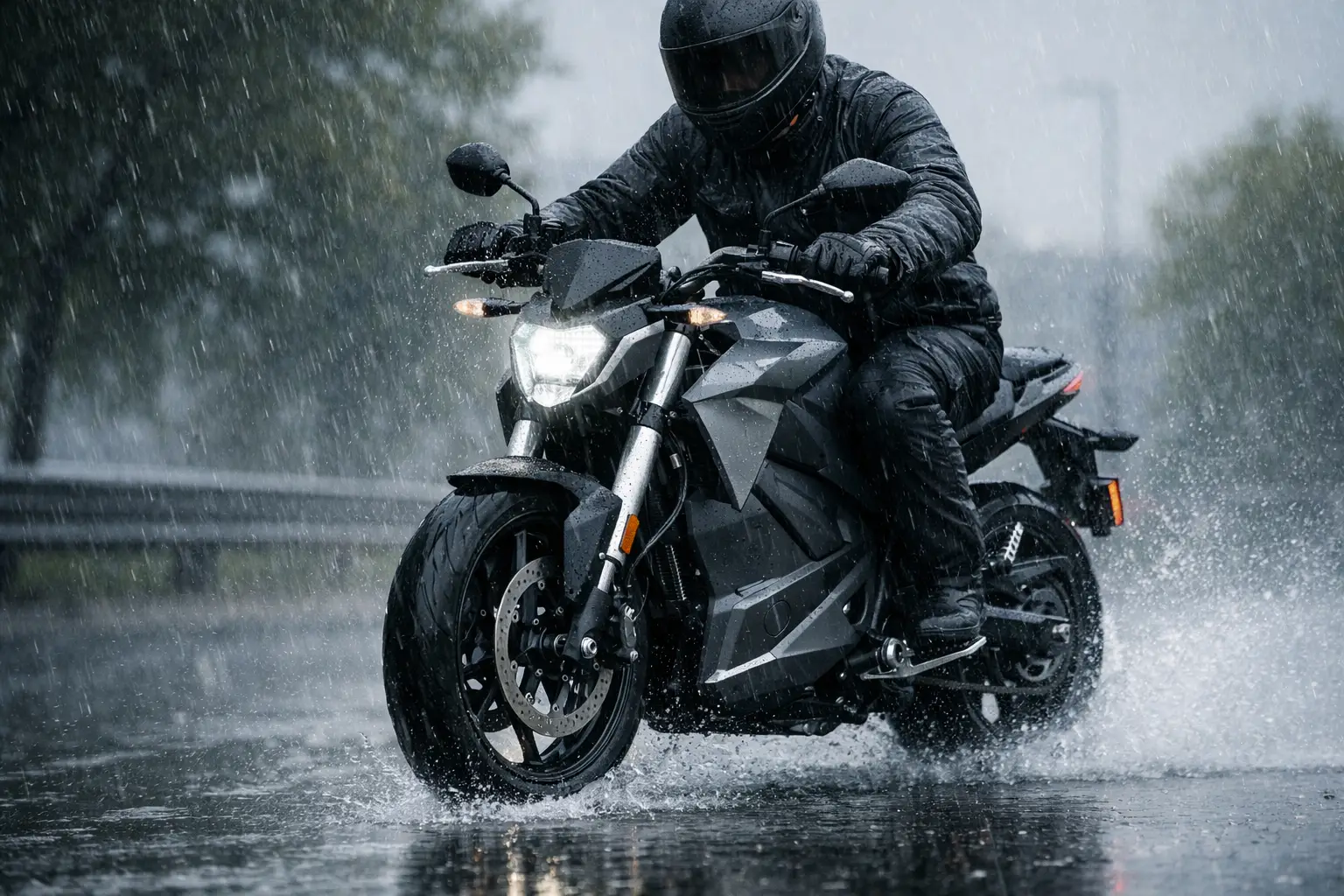
Can You Ride Electric Motorcycles in Rain?
A sudden downpour should not turn a good ride into a call for a trailer. So, can you ride electric motorcycles in rain? Yes. A properly engineered electric motorcycle is built to operate through ordinary wet-weather riding, from a soaked morning commute to a long gray afternoon in the city.
The real question is not whether electricity and rain can coexist. They can. It is whether the motorcycle is designed for the conditions, whether you understand its limits, and whether you ride with the restraint wet pavement demands. Rain does not erase performance. It changes the conversation between rider, tires, brakes, and road.
Can You Ride Electric Motorcycles in Rain Safely?
Electric motorcycles are not exposed bundles of wires. Their battery packs, controllers, connectors, and motor systems are enclosed and sealed to withstand the weather they are intended to encounter on the road. Rain riding is an expected part of owning a street motorcycle, not an exotic test.
Still, water resistance is not the same as invincibility. The level of protection varies by model and component, and manufacturers define operating limits for a reason. Heavy rain is one thing. Riding through standing water deep enough to submerge electrical components, force water into seals, or hide a pothole is another.
Treat an electric motorcycle as you would any premium machine: capable, refined, and not interested in being abused for a dramatic shortcut. If floodwater reaches the lower battery area, turn around. The risk is not only electrical. Hidden curbs, open drains, oil, debris, and sudden changes in depth can end a ride quickly.
What Rain Changes on the Road
The bike may feel familiar in the wet, but traction is never identical. Rain lifts oil, rubber residue, dust, and fuel film to the surface, especially during the first minutes of a shower. Painted lane markings, manhole covers, steel bridge plates, wet leaves, and polished stone are all far slicker than they look.
Electric torque arrives immediately. That is part of the appeal: clean, silent acceleration with no waiting for revs. In rain, it is also a reason to be deliberate with the throttle. Roll on power progressively as you leave lights and corners. A smooth hand is faster, safer, and more composed than a sharp burst of torque that asks too much from the rear tire.
Braking deserves the same discipline. Modern braking systems and ABS offer meaningful support, but they do not create grip. Leave more room ahead, apply the brakes gradually, and avoid braking hard while leaned over. Finish as much of your braking as possible before the turn, enter at a measured speed, then accelerate gently once the bike is more upright.
Your tires matter more than almost anything else. Adequate tread depth, correct pressure, and a tire compound suited to street use make a real difference when roads go glossy. Check pressures when the tires are cold. An underinflated tire can feel vague and generate excess heat, while an overinflated tire may reduce the contact patch you need on slick surfaces.
Regenerative Braking Requires a Light Touch
Regenerative braking can feel elegantly controlled in dry conditions, particularly in urban traffic. In the rain, its deceleration effect can arrive more firmly than expected if you abruptly close the throttle. The rear tire still has a finite amount of traction to share between slowing down and holding its line.
Use a softer throttle transition before corners, intersections, and downhill sections. Learn how your motorcycle applies regenerative braking in a quiet, low-traffic area before relying on that feeling in a storm. Precision is the point. The best wet-weather rider is rarely the loudest or the most aggressive.
Protect the Motorcycle Without Overthinking It
After a ride in normal rain, there is no need for ceremony. Park the motorcycle somewhere sheltered if possible, wipe down the seat and controls, and let the machine dry. If road spray included grit or salt, rinse it with low-pressure water and clean it sooner rather than later. Salt is more persistent than rain and much less forgiving to metal finishes, fasteners, and chain components.
Avoid aiming a pressure washer directly at seals, bearings, electrical connectors, the dash, or charging hardware. High-pressure water can go places rain never will. For routine cleaning, a gentle rinse, motorcycle-safe cleaner, soft cloth, and careful drying are enough.
Pay attention to the chain, if your motorcycle uses one. Wet roads wash away lubrication and carry abrasive grime toward the drivetrain. Check it after sustained rain riding, clean it as needed, and apply the manufacturer-recommended lubricant. A quiet electric powertrain makes neglected mechanical noise easier to notice, which is useful if you listen.
Before the next ride, give the bike a brief visual check. Look for debris around the wheels and brakes, inspect the tires, confirm the lights work, and make sure the charge port cap is closed securely. It takes less than a minute and reinforces the kind of ownership that keeps a beautiful machine looking sharp.
Charging After Riding in the Rain
Riding in rain and charging in rain are different situations. Your motorcycle’s charge port and charging equipment should be kept clean and dry before connecting. If the bike has been sitting in heavy weather, wipe the port area, inspect the cable and connector for moisture or damage, and charge in a covered, dry location.
Do not charge with a compromised cable, a loose connection, or visible water inside the connector. Do not improvise with extension cords across wet ground. These are simple rules, but premium ownership is often defined by the habits that do not make for exciting stories.
Follow the instructions supplied with your motorcycle and charger, including any guidance on operating temperature, charging location, and connector care. The electronics are sophisticated. Your approach should be simple: clean, dry, deliberate.
Visibility Is Part of Performance
Rain shrinks the world around you. Car windows fog, mirrors fill with droplets, and drivers are already managing glare from wet asphalt. Being technically right about who has the right of way offers little protection when someone has not seen you.
Use your headlight, even in daylight. Wear a helmet visor treatment designed for rain or keep a clean microfiber cloth accessible for stops. Waterproof gloves with enough feel at the controls are worth more than bulky gloves that leave you clumsy on the throttle. A jacket and pants with real weather protection keep your focus on traffic instead of the cold trickle down your back.
Choose gear with thoughtful reflective details rather than turning yourself into a billboard. The objective is clear presence, not noise. That idea fits the electric ride itself: less disruption, more intention.
When It Is Better Not to Ride
There are conditions where good judgment means leaving the motorcycle parked. Thunderstorms with frequent lightning, flood warnings, strong crosswinds, icy temperatures, and roads covered in storm debris are not tests of commitment. Neither is riding when your tires are worn, your lights are not working, or you cannot see clearly through your visor.
If you are new to riding, use the first wet days as practice rather than a performance. Take familiar streets, reduce speed, and give yourself extra time. Avoid the pressure to keep pace with faster traffic. Rain rewards riders who preserve options.
For an urban electric motorcycle, wet-weather confidence comes from the same qualities that make every ride better: considered engineering, responsive controls, quality tires, and a rider who understands that style has nothing to do with taking unnecessary risks. A motorcycle such as an RGNT is made for the rhythm of real streets, where weather is part of the landscape, not a reason to lose the day.
The next time the forecast turns dark, check your tires, close the charge port, zip the waterproof layer, and ride with a lighter hand. The rain can stay. So can the pleasure of moving through the city in near silence.
-
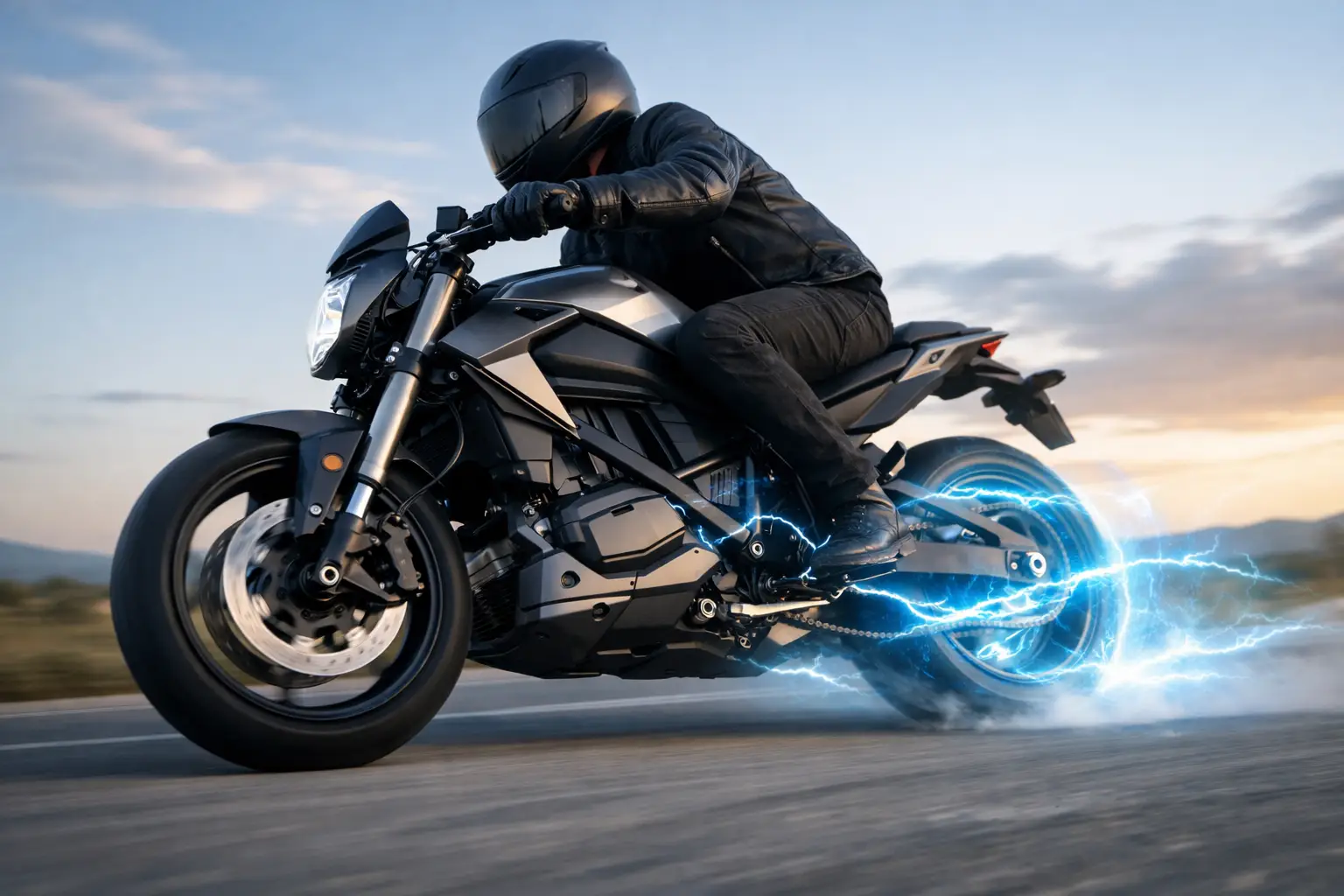
Electric Motorcycle Instant Torque Explained
The light changes. A gap opens between traffic. With an electric motorcycle, there is no clutch work, no rising revs, no pause while the engine finds its stride. Electric motorcycle instant torque explained in one moment: twist the throttle and the bike moves with clean, immediate intent.
That sensation is one of electric riding’s defining pleasures. It makes a city commute feel less like managing machinery and more like reading the road. But instant torque is not magic, and it is not simply about being fast. It is the result of how an electric motor delivers force, how the controller meters it, and how the chassis turns that force into motion.
Electric Motorcycle Instant Torque Explained: The Core Physics
Torque is rotational force. On a motorcycle, it is the twisting force that ultimately reaches the rear wheel and pushes the bike forward. More wheel torque generally means a stronger pull at low speed, especially when moving away from a stop or accelerating out of a slower corner.
A gasoline engine needs to spin within a certain rpm range before it makes its strongest torque. That is why an internal-combustion motorcycle has gears, a clutch, and a familiar rhythm: build revs, release the clutch, shift, repeat. The rider can enjoy that mechanical ceremony, but it also means the engine is not always at its most responsive point.
An electric motor develops substantial torque from zero rpm. The rotor reacts as soon as current flows through the motor. There is no idle speed to maintain and no combustion cycle waiting to happen. The controller reads the throttle input, draws available energy from the battery, and commands the motor to produce force almost immediately.
The key word is almost. Electronics operate extremely quickly, but they still shape delivery for safety, traction, battery protection, and ride quality. A well-calibrated electric motorcycle should feel immediate without feeling abrupt. The best response has precision, not theatrics.
Why It Feels So Different on the Street
Instant torque changes the part of riding that happens most often: the first few seconds. Pulling into traffic, clearing an intersection, passing a slow-moving car, or leaving a tight urban corner all happen at low to moderate speeds. This is where an electric drivetrain feels especially alive.
On a conventional bike, acceleration can be tied to the selected gear. Too high a gear and the response softens. Too low and the engine may be busy, loud, and ready for another shift. An electric motorcycle delivers a more direct relationship between your right hand and the road. There is less mechanical negotiation between the decision to accelerate and the acceleration itself.
Silence sharpens the experience. Without exhaust note and vibration competing for attention, the rider notices the physical details: tire contact, wind pressure, the pull through the bars, the changing surface beneath the wheels. The motorcycle does not become less emotional. It becomes emotional in a different register – quieter, cleaner, and more focused.
For urban riders, that character has real value. Strong response can create a more confident margin when traffic behavior is unpredictable. It also makes ordinary routes more engaging without requiring high speeds or aggressive riding. A short green light can feel like a private launch sequence.
Torque Is Not the Same as Power
Torque gets the headlines, but power still matters. Torque is the turning force; power describes how quickly the motorcycle can do work. In practical terms, torque is a major part of the immediate shove you feel, while power becomes increasingly relevant as speed rises.
This distinction explains why a bike can feel startlingly quick from a stop yet have a more modest top speed than a larger gas motorcycle. Electric motors are exceptionally effective in the low-speed range where commuters spend much of their time. As speed increases, the system’s voltage, motor design, gearing, and software limits have a larger influence on acceleration.
That is not a weakness. It is a design choice. A lightweight, city-focused electric motorcycle does not need to chase superbike figures to feel compelling. It needs usable response, composed handling, and power that arrives exactly when the rider asks for it. For A1-class riding, accessible performance can be far more meaningful than numbers built for a racetrack.
The Controller Is the Difference Between Sharp and Crude
The motor produces torque, but the controller gives it manners. Think of it as the conductor between throttle, battery, motor, and rear tire. It determines how force builds, how much current is delivered, and how the bike responds when grip is limited.
A poorly tuned system can make instant torque feel like an on-off switch. That may sound dramatic in a spec sheet conversation, but it is tiring in traffic and unsettling on wet pavement. A refined system lets the rider make small, accurate adjustments. Roll on gently through a crowded block, then ask for decisive acceleration when the road opens.
Ride modes can alter this character further. A restrained mode may soften initial response and preserve range. A more direct setting can make the throttle feel sharper and more immediate. Neither is automatically better. The right choice depends on rain, road surface, passenger load, experience, and mood.
Regenerative braking also plays a role in the overall feel. When the rider closes the throttle, the motor can act as a generator, converting some motion back into battery energy. Strong regeneration may provide an engine-braking sensation, while lighter regeneration allows more coasting. The most natural setup is the one that gives the rider a predictable connection to the road.
The Rear Tire Still Has the Final Say
Instant torque does not cancel physics. Every motorcycle is limited by the grip available where the rear tire meets the pavement. Cold tires, painted lane markings, gravel, wet leaves, and uneven asphalt can all reduce the amount of force the road can accept.
That is why smooth throttle technique matters as much on an electric motorcycle as it does on any other bike. Immediate response rewards a relaxed wrist and deliberate inputs. The goal is not to snap the throttle open at every light. The goal is to place the motorcycle exactly where you want it, with the right amount of acceleration for the moment.
Weight transfer matters too. As the bike accelerates, load shifts rearward, increasing rear-wheel grip up to a point. On a compact, agile motorcycle, this can make launches feel planted and confident. But if the surface is poor or the rider demands too much too quickly, traction control and thoughtful throttle calibration become valuable allies.
This is also why the best electric motorcycles feel designed rather than merely electrified. Battery placement, frame balance, suspension setup, tire choice, and software tuning all influence whether torque feels elegant at the wheel.
Does Instant Torque Affect Range?
It can. Hard acceleration requires high current, and repeated full-throttle launches use more energy than smooth, progressive riding. Fast riding also increases aerodynamic drag dramatically, so sustained speed is often a larger range factor than the occasional quick start.
The advantage is that electric torque does not require the rider to keep an engine spinning at high rpm just to stay responsive. In city riding, where slowing and accelerating are constant, the drivetrain can feel both eager and efficient. Regeneration may recover a portion of energy during deceleration, though it will never fully erase the energy used to accelerate.
Range is therefore not a single fixed number. Temperature, speed, elevation, tire pressure, rider weight, passenger load, and throttle habits all shape the result. The more honestly a rider understands those variables, the more satisfying electric ownership becomes.
A New Kind of Motorcycle Character
Some riders miss the vibration, shifting, and soundtrack of combustion. That preference is real, and no electric motorcycle needs to apologize for offering a different experience. Electric torque replaces part of the old ritual with another kind of connection: quiet movement, direct response, and the freedom to hear the city as you pass through it.
RGNT Motorcycles approaches that contrast with classic lines and an electric heart. The visual language remains familiar and purposeful, while the drivetrain changes the conversation at the throttle. It is not nostalgia frozen in time. It is heritage with a sharper response.
The real appeal of instant torque is not that it makes every ride a drag race. It gives the rider authority in the moments that matter most. Start smoothly, accelerate decisively, leave the noise behind, and let the road make the next request.