
Your cart is currently empty!
How to Compare Electric Motorcycle Acceleration
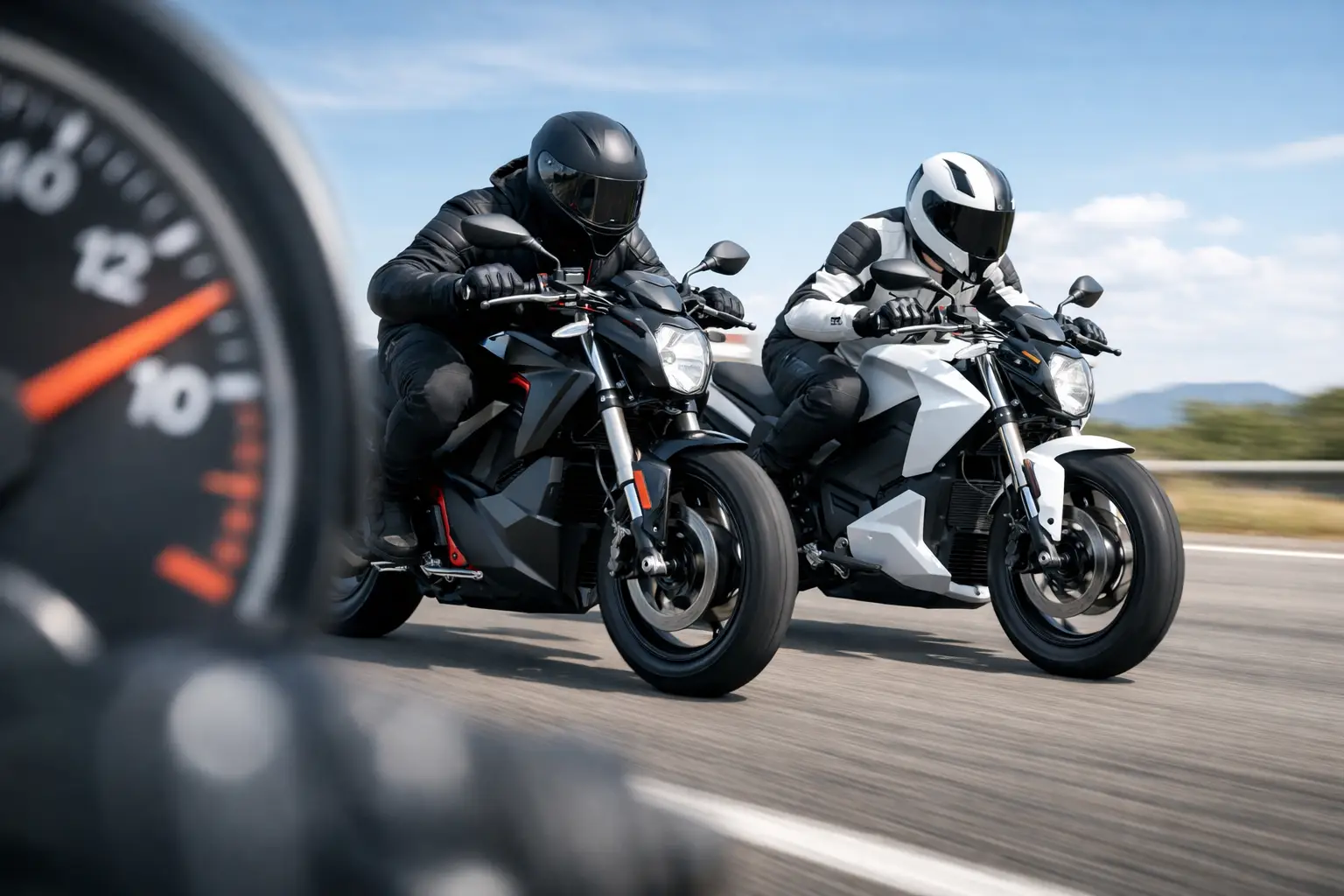
A spec sheet can make two electric motorcycles look equally quick, then the first green light tells a different story. One leaves traffic behind with calm, immediate force. The other feels sharp for a moment, then runs out of breath. Knowing how to compare electric motorcycle acceleration means looking past one headline number and asking how that power arrives, how long it lasts, and where you will actually use it.
For city riders, acceleration is not a bragging-rights figure. It is the clean, silent gap you create when a lane opens. It is the confidence to merge without drama. And on a motorcycle with classic lines and an electric heart, it should feel as considered as the design.
Start With the Acceleration Figure, Then Question It
The familiar 0-60 mph time is useful because it creates a common language. It tells you how quickly a motorcycle can reach highway speed from a standstill, and it gives a broad sense of performance. But it is only one scene in the story.
A 0-30 mph time can matter more in dense urban riding, where traffic lights, roundabouts, and short gaps define the day. A bike that reaches 30 mph instantly may feel more responsive in the city than a faster machine built to dominate from 50 to 100 mph. If a manufacturer publishes 0-60 but not 0-30 or rolling acceleration, read the figure as a reference point rather than a complete verdict.
Also ask how the number was achieved. Was it independently tested or manufacturer-claimed? Was the battery fully charged? What was the rider’s weight, road surface, temperature, and riding mode? These details can move a result by enough to matter, especially on lighter electric motorcycles.
Compare Electric Motorcycle Acceleration Through Torque Delivery
Electric motors make peak torque available almost immediately. That is the defining sensation: no clutch work, no waiting for revs, no interruption between gears. Twist the throttle and the response is there.
Yet peak torque alone does not tell you how forceful a motorcycle will feel. A large torque number can be quoted at the motor shaft, while the final drive ratio determines what reaches the rear wheel. More importantly, manufacturers may tune throttle response very differently. One bike can deliver its power in a hard initial hit, while another builds it with measured precision for smoother control on city streets.
Look for power in kilowatts alongside torque. Torque shapes the first punch off the line; power has more influence as speed rises. A motorcycle with strong torque but modest continuous power can feel brilliant through the first few yards, then become less urgent at higher speeds. For urban use, that may be exactly the right balance. For frequent highway riding, sustained power deserves more weight.
The most convincing electric acceleration feels immediate without being crude. It should give the rider control at low speed, composure on imperfect pavement, and enough edge when the road clears. Silence makes that sensation even more vivid. Without exhaust noise and gear changes competing for attention, you feel the movement more directly.
Weight Changes the Feeling at Every Speed
Motorcycle weight is not just a handling figure. It is central to acceleration. More mass requires more force to move, so a lighter machine can feel alive even when its motor output looks modest beside a heavier competitor.
When comparing models, use curb weight where possible. This represents the bike ready to ride with necessary fluids and, depending on the manufacturer, a charged battery. Dry weight is less useful because it can exclude exactly the components that make an electric motorcycle substantial.
Weight distribution matters too. Batteries sit low in the chassis, which can create a planted, balanced feel through turns and at low speed. That low center of gravity is an electric advantage, but a very heavy battery pack can still blunt the first response or make quick direction changes feel less effortless.
Think beyond the launch. The right bike should feel light enough when filtering through traffic, parking at the curb, and changing lanes. Acceleration is part of a larger rhythm, not an isolated test strip event.
Check Rolling Acceleration and Passing Response
A motorcycle that wins a stoplight sprint is not automatically the best companion on a fast boulevard. Rolling acceleration shows what happens when you are already moving, such as 30-50 mph or 40-60 mph. This is where continuous power, software calibration, and top-speed headroom become clear.
If you can test ride, hold a steady speed in a safe, legal setting and roll on the throttle decisively. Notice whether the bike responds immediately or hesitates. Does it keep pulling cleanly toward its top speed, or does the surge fade early? Is the power delivery predictable enough to meter out through a corner exit or a wet intersection?
This is also the moment to evaluate riding modes. Eco modes often soften throttle response and limit power to preserve range. Sport modes may provide the full character of the motor. Neither is inherently better. A useful comparison considers the mode you are likely to use most, not only the most aggressive setting available for a short ride.
Battery Charge, Heat, and Software Are Part of Performance
An electric motorcycle does not deliver identical acceleration under every condition. State of charge matters. Many bikes feel strongest with a well-charged battery and may reduce available output as charge drops to protect the battery system. Cold weather can have a similar effect, as can repeated hard launches that raise component temperatures.
Ask whether the listed power is peak or continuous. Peak power is what the bike can produce briefly, often delivering that addictive initial rush. Continuous power is what it can maintain for longer periods. Both figures matter, but they answer different questions.
Battery management software also shapes the ride. It controls how power is released, how traction is managed, and when performance is reduced for protection. Good calibration is not about making every throttle input theatrical. It is about making performance repeatable, legible, and satisfying in the conditions riders face every day.
Traction Can Be the Difference Between Quick and Useful
The road decides how much acceleration you can use. On dry, clean pavement, a strong electric motor can expose the limits of tire grip almost instantly. On wet asphalt, painted lane markings, cold tires, or cobblestones, a forceful throttle map can become more effort than advantage.
Compare tire sizes, tire quality, wheelbase, and traction-control systems where fitted. A longer wheelbase can improve stability under hard acceleration, while a shorter wheelbase may feel more agile in town. Neither setup wins everywhere. The better choice depends on whether your riding is mostly urban, suburban, or open-road.
Do not mistake a dramatic launch for superior real-world pace. The most usable motorcycle is often the one that lets you apply its torque confidently, repeatedly, and without unsettling the chassis.
Match the Numbers to Your Riding Life
An A1-class electric motorcycle has a different mission from a high-output superbike, and that is not a compromise. For commuting and city riding, immediate response to 30 or 40 mph, manageable weight, controllable power, and low running noise can be more rewarding than a huge 0-60 claim.
The same principle guides design-led performance machines such as RGNT Motorcycles. A bike should have the pace to feel alive in the city, but it should also carry itself with restraint. Quiet power does not need to announce itself to make an impression.
Before choosing, compare claimed 0-60 mph times, motor power, curb weight, top speed, riding modes, and real test impressions together. Then place those facts against your own roads. A daily ride through downtown streets calls for a different kind of acceleration than a weekend route filled with open, fast sweepers.
The best electric motorcycle is not necessarily the one with the loudest numbers. It is the one whose acceleration feels perfectly placed: instant when you need it, composed when the surface changes, and memorable long after the light turns green.