
Your cart is currently empty!
Electric Motorcycle Test Ride Review: What Matters
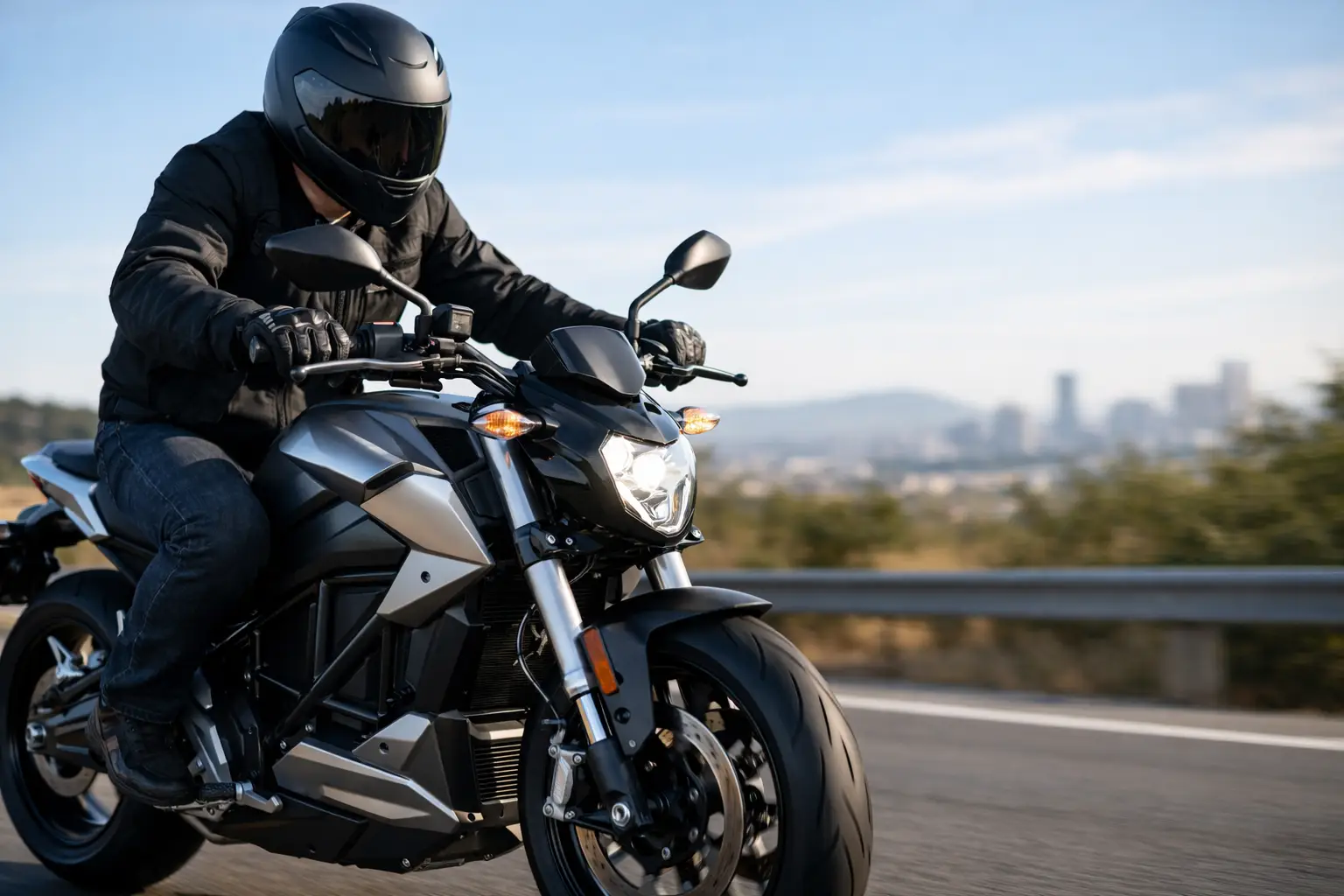
The first green light tells you more than a showroom ever can. An electric motorcycle test ride review should begin there: with the instant pull away from traffic, the absence of exhaust noise, and the question of whether the machine feels like an extension of your body or merely a clever piece of technology.
For riders drawn to classic lines and an electric heart, a test ride is not a formality before purchase. It is where performance becomes personal. Range figures matter. Charging matters. But so does the way a bike carries itself through a tight city corner, how its throttle responds in the rain, and whether you look back at it after parking.
Start With the First 30 Seconds
Do not spend the opening moments trying to recreate a gas motorcycle. An electric bike has its own language. There is no clutch ritual, no vibration climbing through the bars, no engine note asking for another gear. There is only immediate, measured torque.
Pull away normally first. Feel for precision rather than drama. A refined electric motorcycle should respond cleanly to small throttle inputs, without a jumpy on-off sensation that makes low-speed riding feel nervous. In downtown traffic, parking garages, and crowded intersections, that control matters more than a headline acceleration number.
Then make a firmer roll-on from about 15 to 25 mph. This is where electric power earns its place. The best response feels direct and confident, not theatrical. You should be able to slip into an opening in traffic without waiting for revs, a downshift, or permission from the machine.
What an Electric Motorcycle Test Ride Review Should Reveal
A good ride route is not a straight road built for showing off. It needs a few real-world conditions: stop-and-go traffic, a stretch of faster road, uneven pavement, a couple of corners, and somewhere quiet enough to notice the bike’s character.
Throttle calibration is the real performance test
Peak power gets attention because it is easy to print on a spec sheet. Throttle calibration is what you live with. Test how the bike behaves when you hold a steady speed, feather the throttle through a turn, or need a smooth restart after braking.
Some riders want the sharpest possible hit. Others want a calmer response that feels polished in traffic. Neither preference is wrong, but the bike should be honest about its intent. A city-focused electric motorcycle should feel alert without becoming tiring. Fast should not mean frantic.
Silence changes your awareness
Without combustion noise, the city arrives differently. You hear tires crossing painted lines. You hear a delivery truck edging out of an alley. You hear your own wind noise as speed rises.
That quiet is not just an environmental benefit. It can make riding feel more composed and more connected to the road. At the same time, it asks for sharper awareness. Pedestrians and cyclists may not hear you approaching, particularly at low speed. A confident rider uses that silence with restraint.
Handling should feel natural, not novel
A retro-inspired electric bike may look like it belongs outside a 1960s café, but its ride should feel thoroughly current. On your test route, look beyond the first impression of the styling. Notice how quickly it turns in, whether it holds a line over rough pavement, and how stable it feels when you glance over a shoulder or cross a bridge seam.
Battery placement has a major influence here. Low, centralized mass can make an electric motorcycle feel grounded and surprisingly agile. But weight is still weight. At a standstill, push the bike backward, turn it tightly, and park it on a slight incline if possible. A machine that feels light once moving may still demand more effort in a cramped apartment garage.
Braking and regeneration need a familiar rhythm
Electric motorcycles often recover energy when you roll off the throttle or apply braking. The feeling can range from subtle to pronounced. Neither is automatically better.
What matters is predictability. If regenerative braking comes in too abruptly, it can unsettle the bike when you are easing into a corner or riding on slick pavement. If it is too weak, you may rely entirely on the friction brakes and lose one of electric riding’s most satisfying habits: anticipating the road and flowing through it with fewer inputs.
Try a few controlled decelerations at different speeds. Pay attention to the transition from throttle-off regeneration to the brake lever. It should feel considered, not like two separate systems negotiating with each other.
Range Is a Lifestyle Question, Not Just a Number
The range you need depends on the ride you actually have, not the ride you imagine on a Saturday afternoon. A 12-mile round-trip commute with charging at home is a very different ownership experience from a 50-mile daily route with highway sections and no reliable outlet at either end.
During your ride, ask where the battery percentage is likely to go in your own routine. Fast riding, cold weather, steep grades, passenger weight, and repeated hard acceleration all affect real range. That is not a flaw unique to electric motorcycles. It is the reality of using energy, whether it comes from a battery or a fuel tank.
The better question is whether the bike’s useful range fits your week with room to spare. If it does, the absence of gas stations and oil changes can feel quietly liberating. If it does not, no amount of good design will make daily charging logistics disappear.
Treat Charging Like Part of the Ride
Ask to see the charging setup, not just the charging claim. Where does the cable live? How easily does it connect? Is the charge port placed sensibly? Could you use it at your parking spot without draping a cable across a walkway?
For urban riders, this practical detail can decide the whole ownership experience. Home charging is ideal, but it is not universal. Apartment dwellers should think honestly about access, building rules, and how often they will need to charge away from home.
A premium motorcycle should make this feel intentional. Technology belongs in the background, doing its job without stealing attention from the ride.
The Design Test Happens When You Stop
Performance can persuade the rational mind. Design is what keeps the emotional connection alive. Park the motorcycle and take a few steps away. Look at the profile, the proportions, the details your hands touch, and the way modern components sit within classic forms.
This is not superficial. A motorcycle is one of the few vehicles you wear in public. Its presence is part of the ownership experience. The strongest designs do not shout for attention. They hold it.
That is the appeal of a machine such as an RGNT: Swedish-crafted restraint paired with the kind of instant electric response that makes city riding feel fresh again. The goal is not nostalgia for its own sake. It is a familiar silhouette with a sharper purpose.
Questions Worth Asking Before You Hand Back the Key
Ask about warranty coverage, service access, software updates, battery care, and replacement parts. Ask whether the ride mode you tested is the one you will use most often. If the bike offers connected features, ask what remains useful when your phone is in your pocket and what happens if connectivity is unavailable.
Also ask about the motorcycle’s classification and licensing requirements in your state. Electric motorcycles do not escape the practical side of ownership: registration, insurance, protective gear, and local regulations still apply.
Finally, trust the physical answer your body gives you. Were your wrists comfortable? Could you see clearly in the mirrors? Did the seat, peg position, and bar reach work after more than a few minutes? A motorcycle can be beautiful, quick, and technically impressive, yet still be wrong for your frame or your route.
The right electric motorcycle does not need to imitate the past or overplay the future. It should make an ordinary ride across town feel intentional – quiet at the light, alive on the move, and unmistakably yours when the road opens up.