
Your cart is currently empty!
Charging Infrastructure for Electric Motorcycles
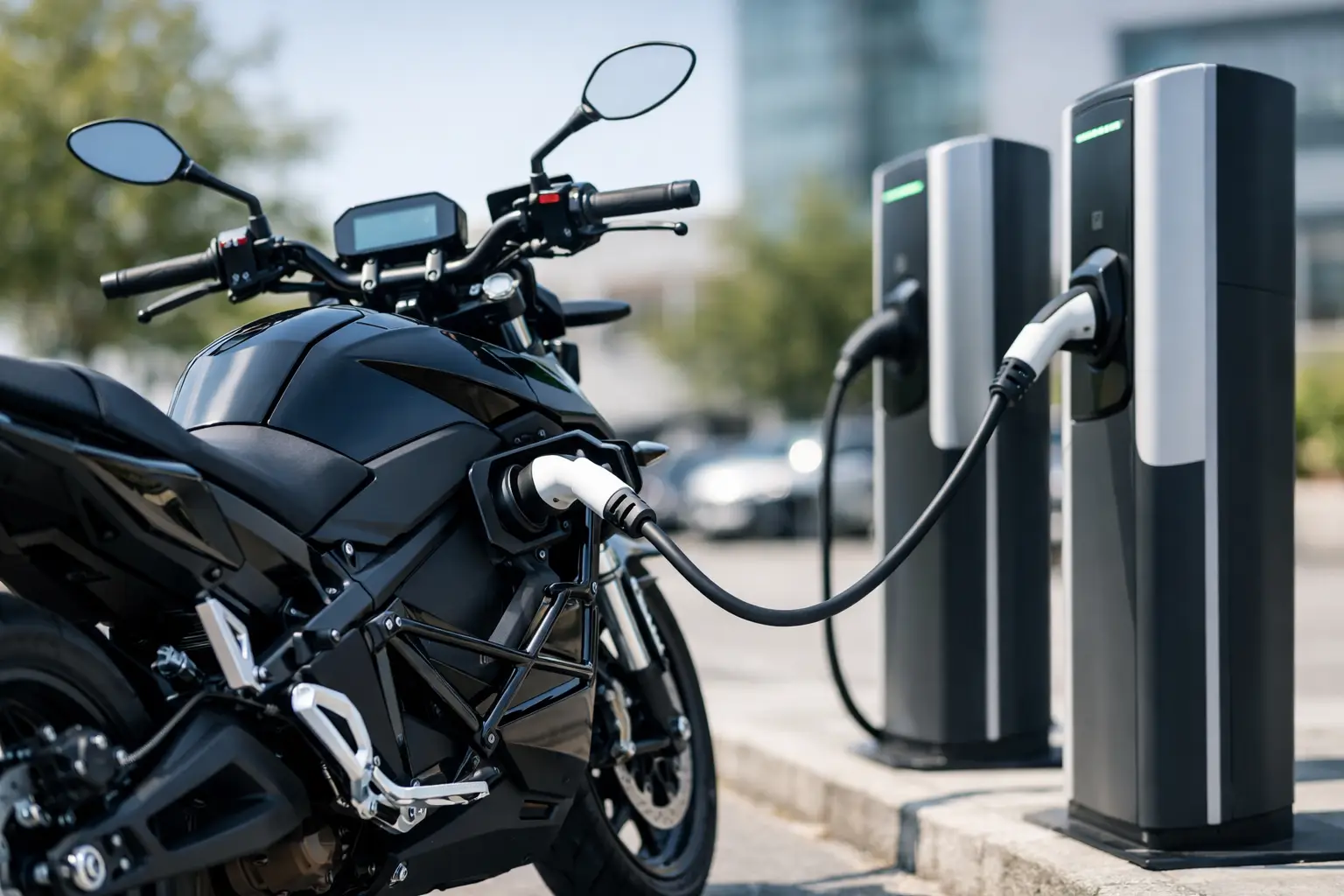
A gas station was never part of the romance. It was simply the interruption between the roads you wanted to ride. Electric motorcycles change that equation: for most urban riders, energy arrives quietly at home, while you sleep, work, or reset between rides. The question is no longer whether charging infrastructure for electric motorcycles exists. It is whether it fits the way you actually ride.
For the rider who covers city miles, commutes across town, and heads out on weekends, the answer is increasingly yes. But electric charging is not a direct copy of filling a tank. It rewards a different rhythm – one built around destinations, dwell time, and planning with intent.
Charging Infrastructure for Electric Motorcycles Starts at Home
The most valuable charger is usually not the most visible one. It is the outlet where your motorcycle spends the night.
Home charging turns ownership into a simple habit. Arrive, plug in, and leave the next morning with the battery ready for the day. There is no detour to a station, no standing beside a pump, and no need to make charging an event. For many riders, a standard household outlet is enough to recover everyday commuting mileage overnight.
A dedicated Level 2 setup can make more sense for riders with longer daily routes, limited charging windows, or a shared garage where several EVs compete for power. It delivers more energy in less time, but it is not automatically essential. Before installing one, consider your real distance, how long the bike is parked at home, the capacity of your electrical panel, and whether you can charge at work.
The premium move is not necessarily the fastest home charger. It is the setup that disappears into your life. A clean cable route, weather-protected equipment, and a convenient parking position matter as much as charging speed. Good design should feel considered even when the motorcycle is at rest.
Apartment Living Changes the Conversation
For apartment and condo riders, access matters more than voltage. A private parking space with an outlet can be more useful than a public fast-charging hub several miles away. If you rent or live in a managed building, ask early about outlet access, billing arrangements, and permission for a dedicated circuit.
Property managers are hearing the question more often. Framing the request around safety, professional installation, metered electricity, and a defined parking location makes it easier to have a practical conversation. A motorcycle occupies less space than a car, but it deserves the same serious approach to electrical work.
If home access is impossible, workplace charging can become the anchor. A bike parked for six to eight hours does not need extreme charging power to make a meaningful difference. For an urban commuter, that is often enough to replace the old fuel stop entirely.
Public Charging Is Growing, but It Is Not All Built for Bikes
Public networks are expanding across the United States, particularly in cities, retail districts, parking garages, hotels, and highway corridors. That growth is good news for electric motorcycle riders, but the experience remains uneven because much of the network was designed around cars.
Level 2 public chargers are usually the most natural fit for motorcycles. They are common where people already spend time: offices, restaurants, gyms, downtown garages, and shopping areas. A charge while you eat, work, or meet friends is not dead time. It is simply part of the stop.
DC fast charging is more complicated. It is transforming electric car road trips, yet compatibility, connector standards, cable reach, payment systems, and charging-stall layouts can make it less straightforward for motorcycles. Some motorcycles do not support DC fast charging at all, while others may require specific equipment or adapters. Never assume a fast charger will be usable just because it appears on a map.
That distinction matters. A public charger is only valuable when it matches your motorcycle’s onboard charging hardware and your route. Check connector type, charger power, access rules, parking restrictions, operating hours, and whether the station has recent successful check-ins. A beautiful ride should not end with a cable that will not reach the bike.
The Best Public Charger Is at a Real Destination
Charging stops work best when they support the ride rather than dictate it. A charger beside a coffee shop, gallery, office, or hotel is better than one in an isolated corner of a lot, even if both deliver the same electricity.
This is where electric motorcycles have a quiet advantage. Their batteries are smaller than those in electric cars, so riders often need less energy for a useful top-up. Urban riding also tends to include natural pauses. When charging aligns with those pauses, the infrastructure feels less like compromise and more like freedom from the routine of fuel.
Range Planning Is a Skill, Not a Restriction
Motorcycle riders already read the world differently. We notice weather, road surface, traffic, elevation, and the distance to the next turn. Electric riding adds battery state and charging opportunities to that awareness.
Real-world range depends on speed, temperature, elevation changes, payload, riding mode, tire pressure, and how often you call on instant torque. City riding can be especially favorable because lower speeds and regenerative braking help preserve energy. Sustained highway riding asks more from the battery. Cold weather can reduce available range and slow charging, while strong headwinds can make a route less forgiving than the map suggests.
None of this means every ride needs military precision. It means you should leave a margin. Plan to arrive with energy in reserve rather than treating every trip as a test of nerve. For a new owner, that margin builds confidence quickly. After a few weeks, your own routes become familiar and charging becomes instinctive.
For weekend escapes, choose stops that offer more than a plug. A town with food, a view, and an accessible charger beats a featureless detour. The best electric routes are not necessarily the longest ones. They are the ones with a rhythm worth repeating.
What Better Infrastructure Should Look Like
The future of electric motorcycle charging is not just more chargers. It is better placement, clearer information, and infrastructure that respects two wheels.
A good charging location needs room to approach safely, cables that can reach without creating a trip hazard, lighting after dark, and spaces that do not force a rider to block traffic or park awkwardly. It also needs working hardware. Reliability is more valuable than an impressive number of pins on a map.
The next stage will come from a mix of public investment, workplace installations, destination businesses, multifamily properties, and private garages. Standardization will help, but rider-friendly details will decide whether people trust the network. Payment should be simple. Status information should be accurate. Parking enforcement should keep charging bays available for vehicles that need them.
There is also a cultural shift underway. Charging is becoming part of the built environment, like Wi-Fi or secure bike storage. The infrastructure is not complete, and it does not need to be perfect before electric motorcycling makes sense. It needs to be dependable where riders live, work, and choose to spend time.
Ride With a Charging Plan That Feels Natural
Before buying or taking delivery, map the places that already shape your week: home, work, your favorite coffee stop, the gym, a friend’s building, and the roads that pull you out of the city. Then identify where charging is available and what type it is. This small exercise tells you more than a national charging-station total ever could.
For most city riders, one reliable home or workplace charging point is the foundation. Public chargers add flexibility, not daily dependence. For riders who regularly cover long highway distances, the calculation is different: available fast charging, motorcycle compatibility, and route planning deserve closer attention.
RGNT riders are not chasing noise for its own sake. They choose classic lines, an electric heart, and the kind of immediate torque that changes the texture of a city ride. Charging should support that choice with the same quiet confidence. Plug in where life already happens, leave with purpose, and let the road keep its place as the main event.