
Your cart is currently empty!
Category: Uncategorized
-
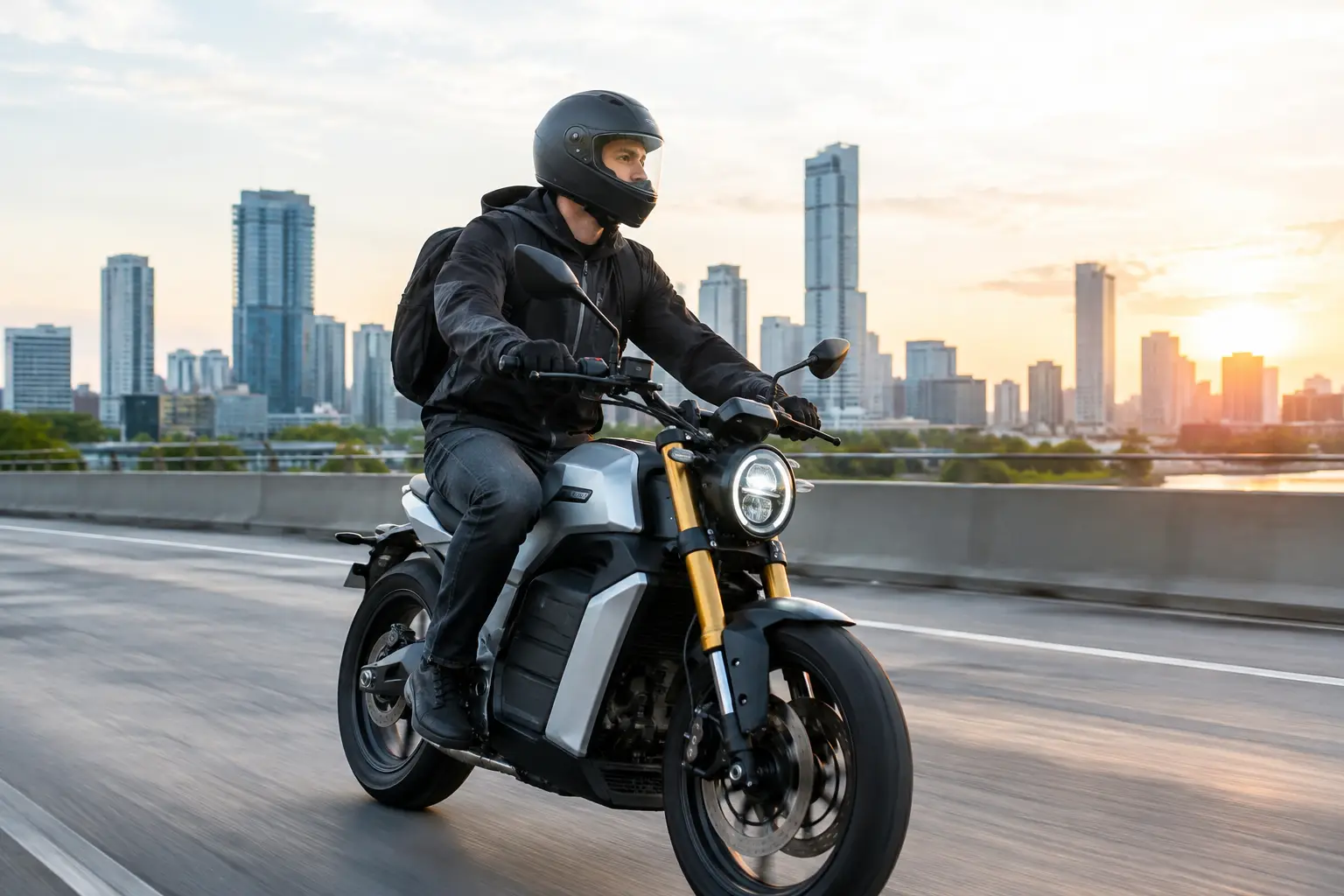
Electric Motorcycle Commute Examples That Work
At 8:12 a.m., the usual city soundtrack is already underway: buses pulling away from curbs, delivery vans idling, drivers watching the clock. An electric motorcycle cuts through it differently. These electric motorcycle commute examples are not fantasy rides staged on empty streets. They are the everyday routes where instant torque, compact proportions, and near-silent movement make the strongest case for two wheels.
The right electric commute is not measured by maximum range alone. It is measured by whether the bike fits the distance, pace, parking, and charging reality of your day. For many urban riders, that is where electric begins to feel less like a compromise and more like the obvious choice.
Electric Motorcycle Commute Examples for Real City Rides
The five-mile cross-town run
A design professional lives in Brooklyn, works in Manhattan, and has a commute that looks short on a map but unpredictable in a car. The route is five miles, with lights, traffic, construction, and a bridge crossing. A subway ride can take 35 minutes door to door. Driving means paying for parking before the workday has even begun.
On an electric motorcycle, the trip becomes direct. Immediate power from a stop makes city gaps easier to read, while the absence of clutch work reduces the constant hand-and-foot choreography of dense traffic. The rider arrives alert rather than wrung out. At the office, the motorcycle occupies a fraction of the space required by a car.
This is the electric motorcycle at its most convincing: modest mileage, frequent stops, and a premium placed on time and composure. Range anxiety has little room to grow when the full round trip is comfortably inside the motorcycle’s real-world capability. The important question is not, “Can it go 200 miles?” It is, “Can it own this route every day?”
The 18-mile city-to-neighborhood commute
Another rider leaves a downtown apartment for a studio on the edge of the city. The route begins in tight traffic, opens into a faster arterial road, then finishes among tree-lined residential streets. Eighteen miles each way is substantial enough to make battery range and riding mode worth considering, but still ideal for charging at home overnight.
This rider has a secure outlet in a garage and plugs in after arriving home. That simple habit replaces the weekly stop at a gas station. There is no need to hunt for public charging on a normal workday, provided the motorcycle’s usable range covers the 36-mile round trip with a sensible reserve.
Temperature, speed, and rider weight affect real range. So does the temptation to use every green light as an invitation. A rider who spends most of the route at higher speeds should plan more conservatively than one moving through 25 mph streets. That is not a flaw unique to electric motorcycles. It is simply the difference between brochure conditions and a lived-in commute.
The mixed-mode commuter who refuses to drive downtown
A suburban rider has a 28-mile trip to the train station, then a packed urban final mile to the office. Taking a car all the way downtown is possible, but it means tolls, parking fees, and the kind of gridlock that can make a good morning feel wasted before it starts.
The electric motorcycle handles the first leg, then waits in designated motorcycle parking near the station. This arrangement works best when charging is available at home and the rider has checked parking rules before making it part of the routine. It also demands practical gear: a compact lock, weather-ready layers, and storage for a helmet or a willingness to carry it.
The appeal is not only financial. The motorcycle restores a sense of authorship to the first part of the day. It is a short, clean ride before the train, not another session behind a windshield. For riders who live beyond the urban core but do not want a car to dictate every decision, this is a sharp compromise.
The commute with a lunchtime charge
Not every rider has home charging. A renter may live in an older building, use street parking, and work at an office with a compatible charger. In that case, the commute can still work, but the ownership pattern changes. Charging becomes part of the workday rather than a background ritual overnight.
Picture a 12-mile trip each way, with the bike charged at work two or three times a week. It is entirely workable if the charger is dependable, access is straightforward, and the rider does not routinely leave work with an unexpectedly low battery. It is less appealing if every charge requires a detour, an app, and a hope that the station is available.
The lesson is simple: buy the commute, not the promise. Before choosing an electric motorcycle, test the exact places where it will be parked. Look at outlet access, charger compatibility, security, and whether your daily mileage leaves enough room for unplanned errands. A beautiful machine should make life more fluid, not turn every Tuesday into battery logistics.
Where Electric Commuting Feels Better Than Expected
Traffic is where an electric motorcycle reveals its character. There is no engine heat building beneath you at a long light, no vibration blurring the mirrors, and no mechanical drama before moving away. Twist the throttle and the response is immediate, quiet, and clean.
That quiet changes the mood of a ride. You hear tires on pavement, the city around you, and the subtle feedback that can make urban riding feel more connected. Silence does not make a motorcycle invisible, however. Defensive riding remains essential. Assume drivers have not seen you, use deliberate lane position, and wear gear that makes your presence clear without sacrificing personal style.
Maintenance is another understated advantage. An electric motorcycle eliminates oil changes, spark plugs, and much of the routine engine service attached to combustion ownership. Tires, brakes, suspension, and drive components still deserve attention. Premium riding is not maintenance-free. It is simply free of a great deal of old machinery.
The Trade-Offs Worth Facing Before You Buy
Electric commuting asks for honesty. If your day regularly includes a 90-mile freeway round trip, no reliable place to charge, and winter temperatures well below freezing, a small urban-focused electric motorcycle may not be the right tool. A larger battery, workplace charging, or a different transport mix may be necessary.
Rain deserves equal candor. Electric motorcycles can be excellent in wet weather when designed and maintained for it, but the rider still needs waterproof gear, careful braking, and respect for painted lines and steel plates. The silent minority does not get a free pass from physics.
Then there is the emotional adjustment. Some riders miss the pulse, noise, and ritual of an internal-combustion machine. Others discover that they never needed the noise at all. They wanted the shape, the stance, the freedom, and the feeling of leaving the city behind for a few miles before arriving exactly where they meant to be.
Choosing a Motorcycle Around Your Actual Week
Start with seven days of real movement, not an idealized Sunday. Add up the round-trip commute, regular errands, occasional detours, and the distance to a charging point. Then consider the fastest part of the route, because sustained speed has more influence on energy use than stop-and-go urban travel.
A1-class electric motorcycles make particular sense for riders whose lives happen within the city and its close orbit. They are agile enough for narrow streets, quick enough for confident starts, and easier to live with than a larger machine built for journeys they rarely take. A motorcycle such as an RGNT pairs that practical purpose with classic lines and an electric heart, so the ride still says something before the motor says nothing.
The best commute is not the longest one a battery can survive. It is the route that makes you choose the motorcycle on an ordinary Wednesday, even when nobody is watching.
-
How to Finance an Electric Motorcycle Well
The price on the tag is only one part of the decision. To finance an electric motorcycle is to choose how you want to own the ride: with a larger down payment and lower monthly cost, or with more cash left for the rest of life. Either can be the right call. What matters is that the payment supports the reason you chose electric in the first place: quiet torque, clean design, and a better way through the city.
A premium electric motorcycle should feel considered from the first twist of the throttle to the final payment. That means looking beyond the advertised monthly figure and understanding the full shape of the deal.
Start With the Ride, Then Set the Budget
Before comparing lenders, decide what the motorcycle needs to do. A daily city commuter has a different value equation than a weekend machine that earns its keep through pure escape. Consider your usual mileage, access to charging, parking situation, insurance cost, and how long you expect to keep the bike.
Electric ownership can change the monthly math. Charging generally costs less than fueling a comparable gas motorcycle, and an electric drivetrain has fewer routine mechanical service points. There is no oil to change, no clutch to adjust, and no exhaust system to maintain. Those savings are real, but they should not become an excuse to stretch beyond a comfortable payment.
Set a monthly number that leaves room for insurance, protective gear, registration, charging, and the occasional unexpected expense. The best motorcycle payment is not the biggest one a lender will approve. It is the one that lets you ride without turning every month into a negotiation.
How to Finance an Electric Motorcycle: Know Your Options
Most riders choose between dealer-arranged financing, a bank or credit union loan, and personal financing. Each route has a place, and the strongest option depends on your credit profile, purchase timing, and appetite for flexibility.
Dealer-arranged financing is often the most direct path. It keeps the purchase and financing process together, which can make delivery feel refreshingly uncomplicated. Dealers may also have access to promotional rates or lending partners familiar with motorcycle purchases. Read the agreement closely, particularly any early payoff terms, processing fees, or requirements attached to a promotional offer.
A bank or credit union can be compelling if you already have a relationship there or have strong credit. Credit unions, in particular, may offer competitive rates and a more personal approval process. Getting pre-approved before shopping gives you a real ceiling and lets you evaluate any dealer offer with calm, not pressure.
Personal loans offer another route, especially when traditional motorcycle financing is unavailable for a particular model or purchase structure. The trade-off is that rates may be higher than secured vehicle loans, since the motorcycle is not always used as collateral. They can make sense for buyers who value simple terms and plan to pay the loan down quickly.
Look Past the Monthly Payment
A low monthly number can look polished while hiding a longer term or higher total cost. Ask for the annual percentage rate, loan term, total amount financed, total interest paid over the loan, and whether there are fees folded into the balance.
A 72-month loan can make a premium motorcycle appear easier to reach, but it also keeps you paying longer and increases the interest you pay. It may be sensible if the payment gives you breathing room and you intend to make extra payments. If not, a shorter term is usually cleaner. You build equity faster and reduce the risk of owing more than the bike is worth if your plans change.
The down payment matters for the same reason. Putting money down reduces the amount borrowed, lowers interest costs, and can improve approval odds. A 10% to 20% down payment is a useful benchmark for many buyers, though there is no universal rule. Keep enough cash in reserve to handle your real life. Draining your savings for a smaller payment is not a design move. It is a gamble.
A Simple Way to Compare Offers
Put every offer on one page. Compare the vehicle price, down payment, APR, term length, monthly payment, fees, and total repayment. If one lender offers a lower payment but asks you to carry the loan for two extra years, the comparison will expose it immediately.
Also ask whether the loan allows extra payments without penalty. The ability to pay more when a bonus, tax refund, or strong month arrives gives you control. A flexible loan lets you keep the lower required payment while shortening the actual life of the debt on your terms.
Credit, Approval, and Timing
Your credit score is not a verdict on your taste. It is a tool lenders use to price risk. Higher scores generally lead to better rates, but approval decisions can also reflect income, debt-to-income ratio, employment history, loan amount, and the size of your down payment.
Check your credit report before applying. Correcting an error or paying down a high credit-card balance can have more impact than shoppers expect. Avoid applying with multiple lenders over a long period, since repeated hard inquiries can complicate your profile. Instead, research first, then submit applications in a focused window once you are ready.
If your rate is less attractive than expected, do not confuse speed with necessity. You might improve your options by increasing the down payment, choosing a shorter loan amount, bringing in a qualified co-signer, or waiting while you strengthen your credit position. The motorcycle will still be worth wanting after a better decision.
Price the Whole Ownership Experience
Electric motorcycles are refreshingly spare in their maintenance needs, but ownership is never just the financed amount. Insurance can vary substantially based on location, rider history, coverage limits, and the replacement value of the bike. Get a quote before signing, not after.
Charging deserves a practical look, too. For urban riders, home charging may be easy, or it may require a conversation with a landlord, building manager, or electrician. Public charging can work well for certain routines, but it should complement your life rather than dictate it. Know the bike’s charging requirements and your real access before treating charging savings as guaranteed.
Factor in riding gear and security. A premium motorcycle merits a proper helmet, jacket, gloves, lock, and, where appropriate, secure storage. These are not accessories added to inflate a checkout total. They are part of protecting the machine and the person on it.
Incentives Can Help, but Do Not Build the Deal Around Them
Depending on where you live, electric motorcycles may qualify for state, local, utility, or other incentive programs. Availability, eligibility rules, funding levels, and vehicle requirements change frequently. Some offers are applied at purchase; others are claimed later and may depend on residency, income, registration, or the specific model.
Treat an incentive as a welcome reduction in cost only after you have confirmed the details. Do not use a possible rebate to justify a payment that already feels too tight. A financing plan should stand on its own, even if the incentive arrives late or does not apply.
Choose a Bike Worth Keeping
Financing works best when the motorcycle has staying power. That does not mean buying the most expensive option. It means choosing something with performance that suits your routes, build quality that supports regular use, and a design you will still want to see in the garage years from now.
Classic lines and an electric heart are not opposing ideas. For riders who reject disposable trends, they are the point. A hand-built machine such as an RGNT can make a strong case for itself when its range, charging fit, performance, and finish match the way you actually ride.
The goal is not to make a motorcycle look affordable by extending payments until the numbers disappear. The goal is to make a clear, confident purchase that keeps its edge long after the paperwork is forgotten. Choose the term that gives you room to live, protect the bike properly, and leave enough space in the budget for the only metric that really matters: more time riding in silence.
-
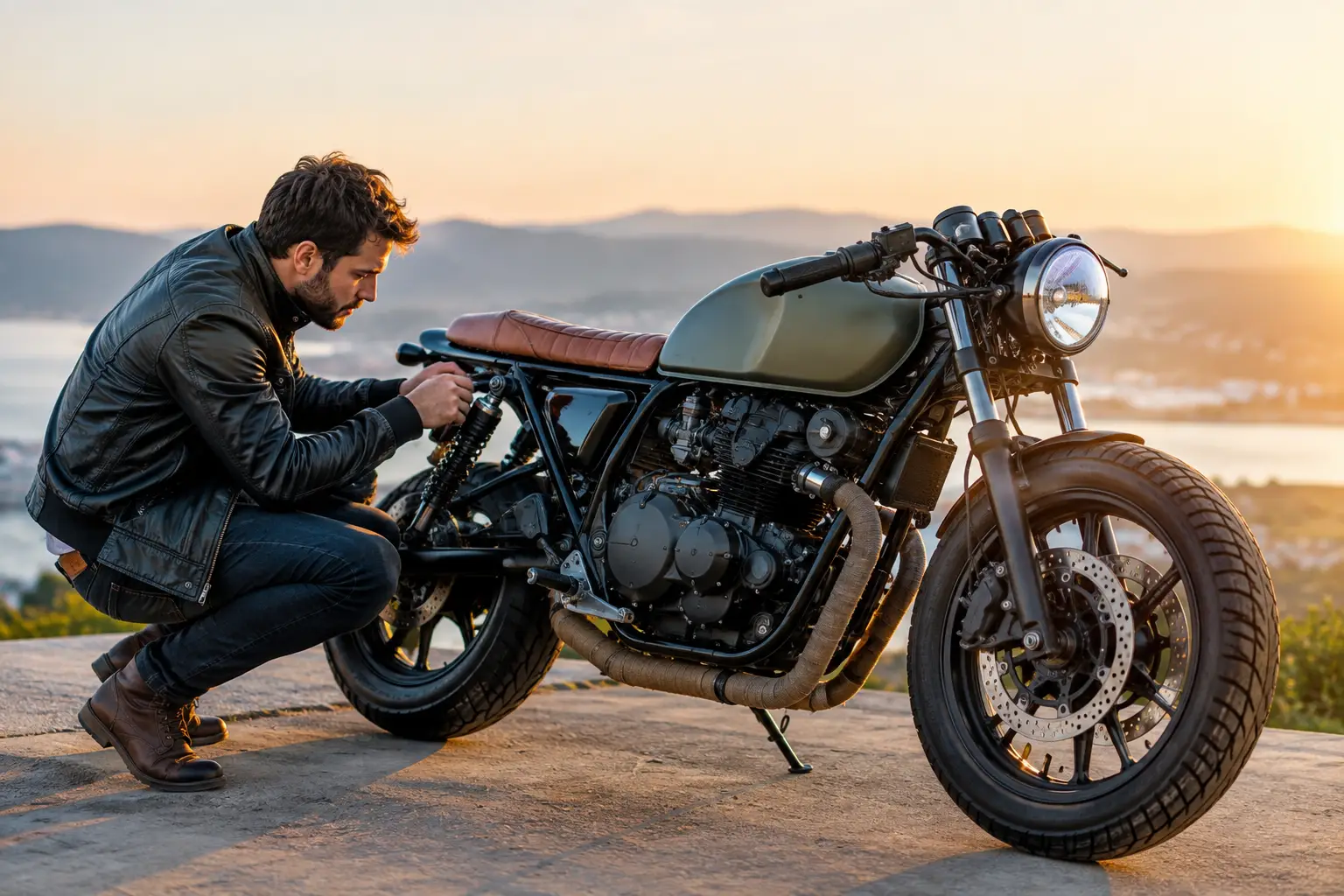
Motorcycle Customization With Real Character
Motorcycle customization is not about adding more. It is about removing every detail that does not belong until the machine feels unmistakably yours. The best builds carry a point of view before the key is turned: classic lines, a purposeful stance, and performance that fits the way you actually ride.
For an urban rider, that point of view matters more than a catalog full of parts. A motorcycle has to look right parked outside a gallery, move cleanly through morning traffic, and still feel alive when the city opens up. Personalization should sharpen that experience, not bury it under noise.
Motorcycle Customization Starts With the Ride
Start by being honest about where your motorcycle spends its time. A bike built for weekend canyon roads asks for different decisions than one that handles a daily commute, a tight apartment garage, and unpredictable city weather. The goal is not to copy a build seen online. It is to create a machine with a reason for every choice.
Think in terms of a brief. Do you want a stripped-back street tracker with a compact, forward stance? A refined commuter with warmer materials and practical storage? Or a dark, minimal machine that lets its engineering do the talking? A clear brief keeps the build coherent when choices start competing for attention.
Set a budget early, but do not divide it evenly across cosmetic and mechanical work. A new seat or pair of grips can change how a bike feels every day. So can better tires, suspension setup, braking components, and lighting. The difference is that the second group affects control as well as character.
Choose a direction, then edit hard
Customization works best when it follows a visual language. Pick two or three defining cues – perhaps brushed metal, blacked-out hardware, and saddle leather – then repeat them with restraint. If every component demands attention, the motorcycle loses its silhouette.
This is where many builds go wrong. A premium exhaust, a carbon fender, a quilted seat, anodized levers, and aggressive graphics may all be excellent parts on their own. Together, they can look like five different motorcycles arguing at a stoplight. Good design knows when to leave space.
Build the Silhouette Before the Details
The profile of a motorcycle is its first impression. Before selecting mirrors, foot pegs, or a finish for the bolts, look at the tank, seat, wheels, handlebars, and rear end as one continuous line. Small changes in these areas can transform the entire bike.
Handlebar choice is a useful example. Low clip-ons create a committed, athletic posture and a more compact visual line, but they can become tiring in slow urban traffic. Upright bars offer leverage, comfort, and better visibility, yet may move the bike away from a café-racer attitude. Neither is automatically better. The right choice depends on your roads, your body, and how long you stay in the saddle.
Seats deserve the same attention. A slim, flat saddle can make a motorcycle look leaner and more deliberate. It may also reduce passenger comfort and limit the space available for a battery enclosure or electronics beneath it. Choose materials that age with dignity. Leather, quality vinyl, textured technical fabrics, and clean stitching can add personality without turning the bike into a costume.
Wheel and tire choices are equally powerful. Tire tread changes the visual weight of a build, but it also changes turn-in, wet-weather confidence, rolling resistance, and noise. For city riding, a tire that looks suitably tough but performs poorly in rain is not a styling decision. It is a compromise you will feel at every intersection.
Customize an Electric Motorcycle With Care
Electric motorcycles create a different kind of custom canvas. Without a large combustion engine, exhaust headers, and fuel system occupying the center of the bike, proportion becomes even more visible. The battery, motor, cable routing, and cooling strategy are not background details. They are part of the architecture.
That is an opportunity, provided you respect the systems that make electric performance possible. Cosmetic changes around battery covers, side panels, seats, and lighting can create a strikingly individual machine. Altering high-voltage wiring, battery management systems, motor controllers, or thermal protection without specialist expertise can compromise safety, reliability, range, and warranty coverage.
The strongest electric builds do not pretend to be gasoline motorcycles. They use silence as part of the experience. A clean drivetrain, restrained surfaces, and immediate torque create their own kind of drama. At RGNT Motorcycles, that balance is central: a motorcycle can carry the proportions and emotional pull of a classic machine while keeping an electric heart visible in its confidence and response.
Preserve what makes the bike ride well
The temptation to modify performance is understandable. Riders want quicker acceleration, a more urgent throttle response, or a higher top speed. Yet software tuning and aftermarket controllers can affect heat management, battery life, regenerative braking behavior, and legal classification. Gains on paper may bring less range, rougher low-speed control, or more wear in daily use.
Start with changes that improve the connection between rider and machine. Suspension setup for your weight and riding style can deliver more confidence than chasing extra power. Brake pads, fresh fluid, properly adjusted levers, and quality tires often make a bike feel sharper without asking the electrical system to do something it was not designed to do.
The Details That Carry Identity
Once the stance and core function are right, the smaller choices become meaningful. Mirrors, grips, levers, foot controls, turn signals, and license plate hardware are not glamorous, but they are the elements you touch and see most often. Cheap finishes fade quickly. Poorly fitted components rattle. Both can undo the effect of an otherwise considered build.
Lighting is one area where design and safety should move together. A compact LED headlight or discreet turn signals can clean up the front and rear of a motorcycle, but visibility remains non-negotiable. Make sure beam patterns are useful at night, signals remain visible from the side, and any modification meets local road requirements. Minimal should never mean invisible.
Color deserves restraint, too. One strong paint color can define a bike more effectively than a complicated graphic package. Deep green, muted silver, ink black, warm ivory, or a single unexpected accent can all work when the finish is excellent. Consider how the color sits against the frame, motor housing, and wheels in daylight, not just under workshop lighting.
There is also a quiet luxury in materials that improve with use. Machined aluminum develops small marks. Leather gains depth. A well-painted tank reflects the miles rather than hiding them. Motorcycle culture has always valued patina because it proves a machine is ridden, not merely displayed.
Keep the Build Street-Ready
A custom motorcycle should be checked as carefully as it is styled. Confirm that steering moves freely from lock to lock, cables are not pinched, suspension travel is unobstructed, and fasteners are tightened to the correct specification. If a modification affects brakes, lighting, wheels, drivetrain components, or high-voltage equipment, have a qualified technician inspect the work.
Legal requirements vary by state, especially around lighting, mirrors, fenders, plate placement, noise rules, and vehicle modifications. Electric bikes avoid exhaust noise, but that does not exempt them from equipment standards. A build that cannot be registered, insured, or safely ridden after dark has missed the point.
Document the work as you go. Keep photos, receipts, paint codes, component specifications, and notes on wiring changes. This makes future maintenance easier, supports resale value, and helps the next technician understand what they are working with. Individuality should not create mystery.
Let the Motorcycle Say Less
The most memorable custom motorcycles do not announce every decision. Their details feel inevitable. The seat follows the frame. The controls suit the riding position. The color serves the shape. The performance remains usable where the bike lives.
Build for the moment you walk back to it after a long day and notice that it still feels like your machine, not someone else’s idea of one. That is the standard worth chasing: a motorcycle with enough attitude to stand apart, and enough discipline to stay timeless.
-
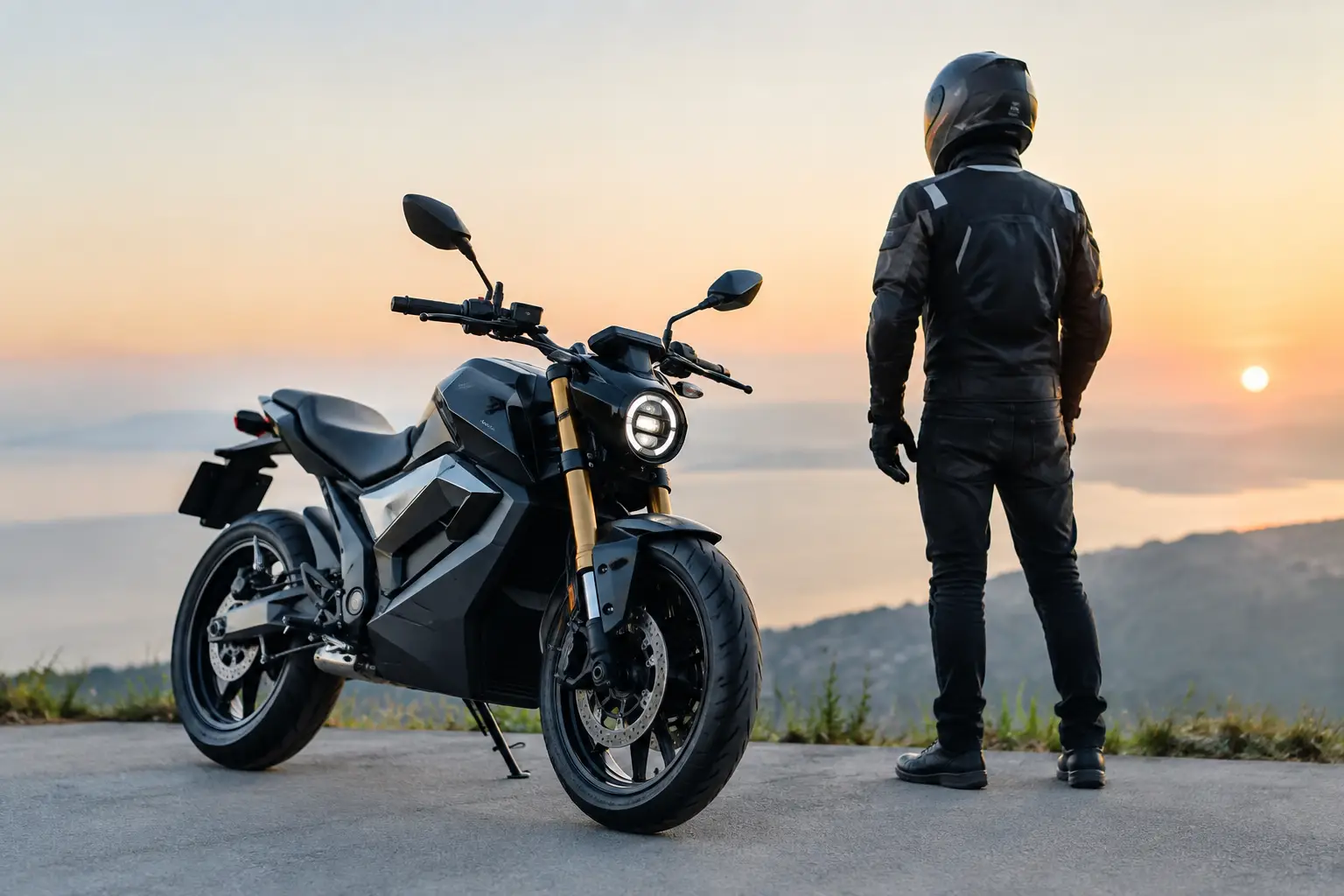
A1 Electric Motorcycle Rules: What Riders Need
A quiet electric motorcycle can feel radically different from a gas bike, but the rules that determine who can ride it are not always as modern as the machine itself. A1 electric motorcycle rules are built around legal power categories, rider age, licensing, and local registration requirements – not around whether the motor runs on gasoline or electrons.
For riders drawn to classic lines and an electric heart, that distinction matters. An A1-class motorcycle can be a compelling entry into real motorcycling: city-capable speed, instant torque, and a light, approachable feel. But the badge is not a universal passport. A1 is primarily a European licensing category, while the United States uses its own state-by-state licensing system.
What an A1 motorcycle category means
Under the common European A1 license framework, riders may operate motorcycles with a maximum continuous rated power of 11 kW and a power-to-weight ratio no greater than 0.1 kW per kilogram. The motorcycle must also have an engine-equivalent displacement of no more than 125cc when it is combustion-powered. For electric motorcycles, displacement is irrelevant. Rated power and power-to-weight are what count.
The minimum age for an A1 license is generally 16, though individual countries can apply their own practical requirements. Riders typically need theory training, a practical test, and the appropriate license before taking an A1 motorcycle onto public roads. A car license alone does not automatically grant A1 motorcycle rights in every country.
The phrase “continuous rated power” deserves attention. Electric motors can produce brief bursts of power far above their continuous rating. That is how a well-designed A1 electric motorcycle can feel sharp away from a stoplight while remaining inside the legal category. Peak power makes the first few seconds exciting. Continuous power is the figure regulators use to classify the bike.
A1 electric motorcycle rules are not US license rules
For American riders, A1 can be useful shorthand for the performance class of a motorcycle, but it is not a nationwide US motorcycle license category. There is no federal A1 endorsement. Instead, each state sets its own motorcycle licensing rules, usually through a motorcycle endorsement or a separate motorcycle license.
That means a US rider should not assume an A1-class electric bike can be operated with a standard driver’s license simply because its continuous rating is 11 kW or less. In most states, if the vehicle is registered as a motorcycle and capable of normal road speeds, a motorcycle endorsement is required. Rules for learner permits, rider education courses, helmets, insurance, passenger use, and highway access also differ by state.
The practical takeaway is simple: treat A1 as a vehicle performance class in the US, then check your state’s rules for the license you need to ride it. Your local DMV or motor vehicle agency has the final word. A silent ride should never mean making assumptions about the law.
Continuous power, peak power, and why the difference matters
Electric motorcycle specifications often list both nominal or continuous power and peak power. They are not interchangeable.
Continuous rated power is the output a motor can sustain without exceeding its thermal limits. This is normally the number used for A1 classification in European type approval. Peak power is the short, higher output available during acceleration. It affects the sensation of torque and response, particularly in urban traffic where short bursts matter more than sustained top speed.
A motorcycle can therefore be legally A1-compliant while delivering far more immediate pull than its 11 kW continuous figure might suggest. That is not a loophole. It is a reflection of how electric propulsion works.
Still, classification depends on more than a number on a product page. The approved documentation for the specific model, market, and configuration matters. If you are buying in Europe, confirm the vehicle’s certificate of conformity and the exact homologation category. If you are importing a motorcycle, do not rely on an overseas classification alone. Registration agencies may require separate federal and state compliance documents.
The power-to-weight limit changes the design brief
A1 rules do not simply cap power. They also cap power relative to weight at 0.1 kW per kilogram. At the full 11 kW continuous rating, an A1 motorcycle generally needs to weigh at least 110 kilograms, or roughly 243 pounds, to meet that ratio.
That rule prevents an ultra-light motorcycle from carrying disproportionately high performance for the category. It also shapes the character of an A1 bike. The best examples do not try to imitate a heavyweight superbike. They use manageable mass, predictable chassis balance, and immediate electric torque to make city riding feel deliberate rather than intimidating.
For a rider, lighter is not always better if it changes the legal category or compromises stability. Battery capacity, frame construction, brakes, suspension, and rider confidence all belong in the equation. The right motorcycle is not the one with the loudest claim. It is the one that feels composed when the street gets crowded and the light turns green.
Road registration is separate from license class
A motorcycle’s A1 eligibility does not automatically settle its road legality. A road-going electric motorcycle still needs to satisfy the registration, equipment, and insurance requirements of the place where it will be ridden.
In the US, that can involve a vehicle identification number, title, manufacturer certification, road-legal lighting, mirrors, tires, brake equipment, and insurance that meets your state’s minimum standards. Some states also inspect vehicles, while others do not. Electric motorcycles are typically treated as motorcycles for registration purposes, not as e-bikes or low-speed scooters.
This distinction is worth making because an electric two-wheeler can look deceptively simple. Pedal-assist e-bikes, mopeds, scooters, and electric motorcycles may all be quiet, but they occupy different legal categories. A machine with motorcycle-level acceleration and traffic-speed capability belongs in the motorcycle conversation – with the endorsement, protective gear, registration, and respect that come with it.
Where an A1-class electric motorcycle fits best
A1-class performance is especially convincing in dense urban environments and on suburban routes where agility, clean response, and practical range matter more than extreme top speed. It is a class made for slipping through the rhythm of the city without adding another layer of noise.
It is less ideal if your daily ride means long freeway stretches at high speeds, frequent two-up touring, or heavy cargo. An A1 motorcycle can handle more than many riders expect, but the legal power ceiling exists for a reason. Choose the class for the riding you actually do, not for the occasional fantasy route.
This is where design and regulation can work together. A motorcycle with classic proportions, thoughtful weight distribution, and controlled electric performance feels natural at A1 level. It does not need to shout to make its point. RGNT builds for that kind of rider: someone who wants a machine with presence, precision, and an identity beyond raw output.
Before you buy, confirm these details
Before committing to an A1 electric motorcycle, verify four things: the bike’s continuous rated power, its power-to-weight figure, its official road homologation documents, and the license required where you live. If you are in the US, add state title, registration, insurance, and endorsement requirements to that check.
Also consider charging access and realistic range. Electric riding is at its best when the motorcycle fits naturally into your routine: charged at home or work, ready for the commute, and effortless through the streets you ride most. A1 is not a compromise when it matches the mission. It is a more considered kind of performance – quiet at the curb, alive at the throttle, and fully your own once the light changes.
-
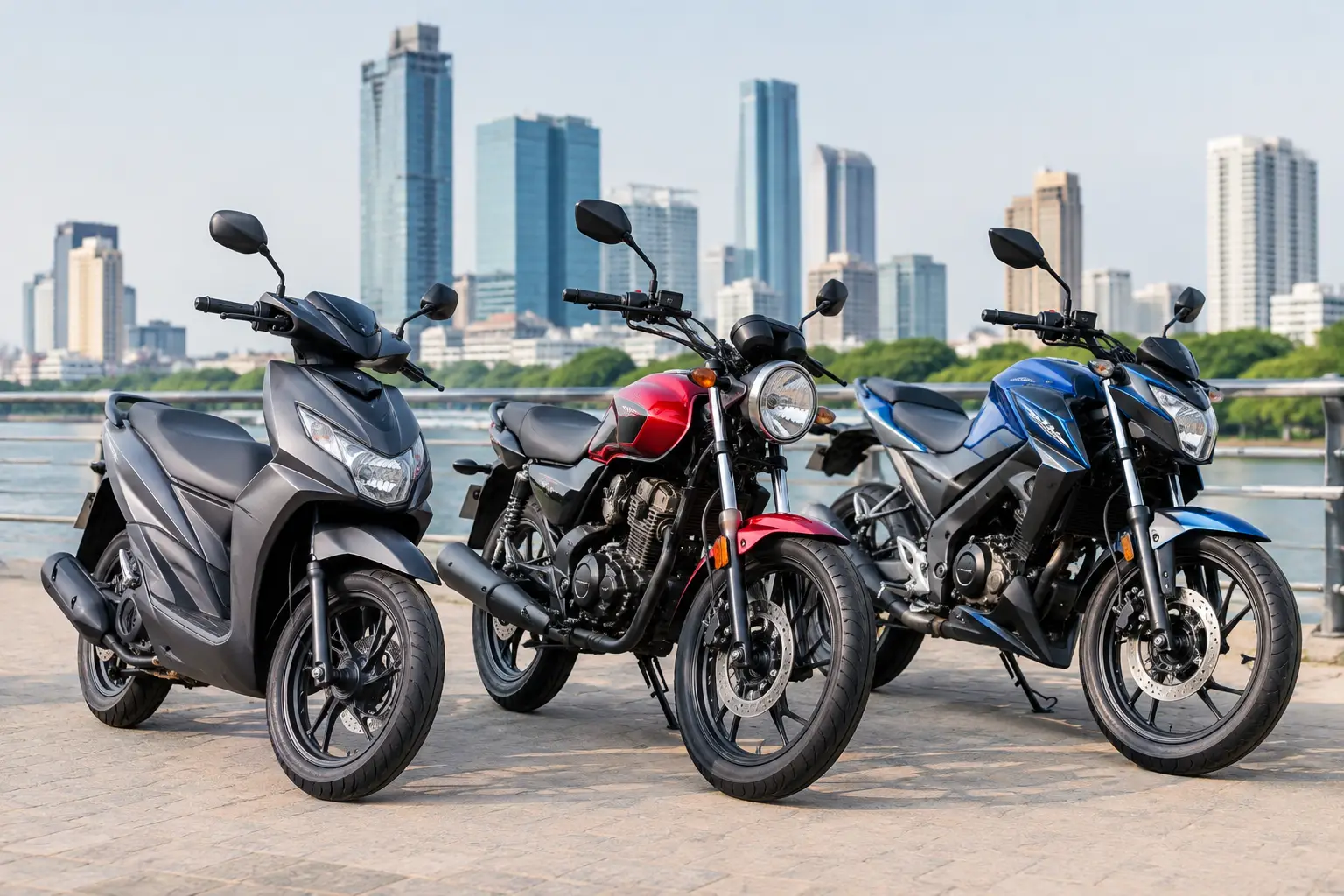
Top Motorcycles With Low Running Costs for City Life
A cheap motorcycle can become an expensive habit fast. Tires, chain adjustments, valve services, fuel stops, insurance premiums, and surprise repairs all arrive long after the purchase payment. The top motorcycles with low running costs are not simply the least expensive bikes on the showroom floor. They are the ones that make sense every weekday, from the first silent morning departure to the last ride home through traffic.
For city riders, the equation is refreshingly clear: manageable power, proven engineering, readily available parts, and a machine you actually want to ride. Fuel economy matters. So does the number of components that require regular attention. And for an increasing number of riders, electric power changes the whole ownership calculation.
What Actually Keeps Motorcycle Costs Low?
Purchase price gets the headlines. Cost per mile earns the respect. A motorcycle with modest displacement or an efficient electric drivetrain generally uses less energy, puts less strain on consumables, and can be easier to insure than a high-output sport bike.
Maintenance is the line item many first-time buyers underestimate. Internal-combustion motorcycles need oil and filter changes, spark plugs, air filters, coolant on liquid-cooled models, and periodic valve inspections. They also need a chain cleaned, lubricated, and eventually replaced. None of that is a reason to avoid gasoline power. It is simply part of the deal.
Electric motorcycles remove several of those routine jobs. No oil changes. No clutch wear. No exhaust system. No fuel system. Brake pads can also last longer because regenerative braking handles part of the slowing. The trade-off is a higher upfront price on many electric models, plus the need to choose range and charging access with real honesty.
Insurance is personal, but engine size, replacement value, location, theft risk, and riding history all play a role. A 300cc standard or a lower-powered electric bike is often a calmer place to start than an aggressive liter-class machine wrapped in expensive bodywork.
Top Motorcycles With Low Running Costs
There is no universal winner. A rider covering long highway distances has different needs from someone traveling seven miles across town. Still, these motorcycles offer compelling ownership economics without feeling like punishment.
Honda Rebel 300: The Easygoing All-Rounder
The Honda Rebel 300 has earned its reputation because it makes motorcycling feel uncomplicated. Its single-cylinder engine is efficient, proven, and inexpensive to live with, while the low seat and relaxed ergonomics work for a wide range of riders.
It is not built to chase superbikes, which is part of the point. The Rebel has enough character for a weekend ride and enough restraint to keep fuel use, tire costs, and insurance from becoming dramatic. Its large dealer network and broad parts availability strengthen the case for riders who want low-fuss ownership over mechanical theater.
The compromise is highway pace. It can manage faster roads, but riders who spend every day at high speeds may prefer more displacement and wind protection.
Honda CB300R: Lightweight, Clean, and Capable
For riders who want a more upright, modern-classic stance, the Honda CB300R is a smart low-cost choice. It is light, agile, and powered by a compact single-cylinder engine that avoids the thirst and complexity of larger multi-cylinder motorcycles.
Less weight matters beyond the fuel pump. Lightweight bikes are easier on tires and brakes, easier to maneuver in tight parking situations, and less intimidating when a city street slopes the wrong way. The CB300R also has the stripped-back simplicity that makes cleaning, checking, and living with a motorcycle feel less ceremonial.
Its limitation is the same one shared by many lightweight standards: limited weather protection. Add frequent interstate miles and the bike may feel smaller than its sharp styling suggests.
Yamaha MT-03: A Lively Everyday Machine
The Yamaha MT-03 brings a little more edge to practical ownership. Its parallel-twin engine feels more eager than a typical single, yet it remains approachable for newer riders and sensible for commuters. It is a good reminder that low running costs do not require a flat, joyless ride.
Yamaha’s widespread support and the MT-03’s mainstream mechanical layout help keep ownership predictable. It is also a practical fit for riders who want city agility but occasionally carry speed on an open road. The engine’s extra smoothness can make longer rides more relaxed than they are on a single-cylinder bike.
Expect slightly more fuel use and potentially higher consumable costs than on a 300cc single. In return, you get a more versatile performance envelope.
Kawasaki Ninja 500: Efficient Performance, With Conditions
The Ninja 500 proves that a sportier silhouette does not automatically mean ruinous costs. Its middleweight parallel-twin offers usable torque, reasonable efficiency, and enough power to avoid feeling outgrown after one season. For a rider who wants fairing protection and a more focused look, it is a sensible middle ground.
But this is where the details matter. Sport-styled motorcycles can attract higher insurance quotes, particularly for younger riders. Fairings can also make minor drops more expensive than they are on a naked bike. Get an insurance estimate before falling for the paint and profile.
Honda Navi: The City-First Budget Choice
The Honda Navi occupies its own lane. It is compact, automatic, playful, and remarkably approachable for short urban trips. Its small engine and simple mechanical package keep fuel and service requirements light, while its scooter-like twist-and-go operation removes the learning curve of a manual clutch.
It is not the answer for freeway commuting, long-distance travel, or riders who need full-size motorcycle proportions. But for neighborhood riding, campus travel, and dense city errands, the Navi keeps the barrier to ownership impressively low. It makes sense when the mission is movement, not mileage records.
The Electric Case: Fewer Service Stops, More Intention
Electric motorcycles make their strongest case where gasoline bikes often work hardest: stop-and-go city riding. Instant torque makes traffic gaps easy to manage, regenerative braking suits repeated slowing, and home charging can replace the weekly fuel-station routine.
The savings are not imaginary, but neither are they automatic. Electricity rates, local registration fees, battery warranty terms, and charging access all deserve a place in your calculation. Apartment dwellers without dependable charging may find that a highly efficient gas bike is the better real-world value.
For riders with a home outlet or workplace charging, an electric motorcycle can offer unusually clean ownership. There is less routine service, no gas station smell on your jacket, and no engine noise competing with the city around you. Models such as the RGNT Street Classic add a design-led alternative to the appliance-like EV stereotype: classic lines, electric heart, and the kind of presence that does not need an exhaust note to be noticed.
Electric bikes also bring an important trade-off. Battery capacity sets the day’s radius, and cold weather, higher speeds, passenger loads, and steep hills can reduce practical range. Buy for your normal week, not the occasional ambitious escape.
Choose the Bike That Fits Your Actual Miles
Before comparing monthly payments, picture a typical Tuesday. How far do you ride? Can you charge at home? Do you need freeway speed? Will the motorcycle live on the street? Those questions reveal more about running costs than a spec-sheet comparison alone.
A small gasoline motorcycle is often the best value for riders who need easy refueling, occasional longer trips, and a low purchase price. An electric motorcycle can be the stronger financial and lifestyle choice for urban riders with reliable charging and predictable daily mileage. In both cases, avoid buying too much engine, too much weight, or too much image for the job at hand.
Budget for quality safety gear, theft protection, tires, and scheduled service from day one. Then choose the motorcycle that makes you look for the longer route home. The lowest-cost bike is rarely the one that sits unused.
-
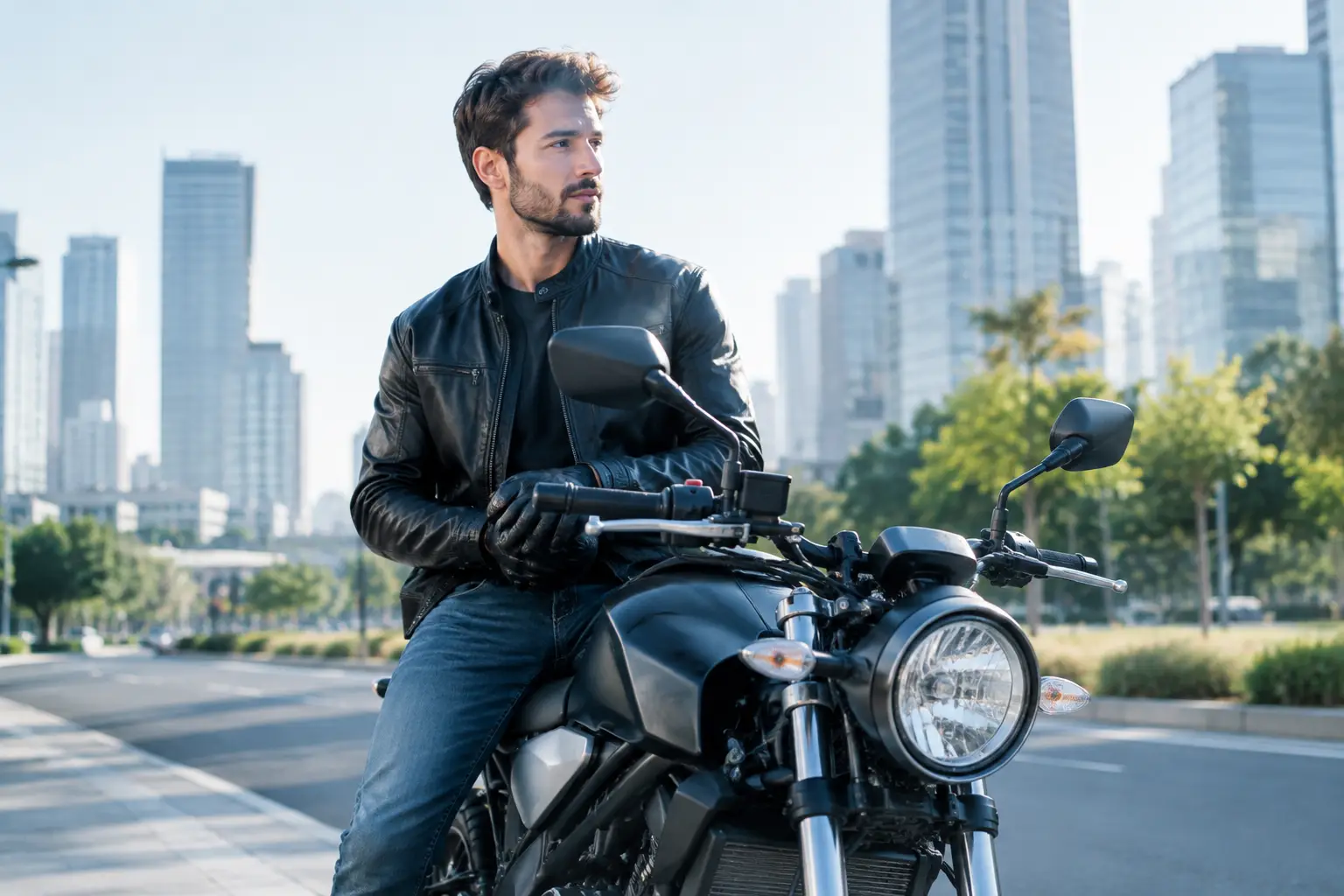
A Guide to A1 Motorcycle Licenses for City Riders
The first twist of the throttle should feel like freedom, not paperwork. This guide to A1 motorcycle licenses cuts through the license categories, power figures, and country-by-country details that can stand between a new rider and a properly chosen machine.
For American riders, one point comes first: the A1 license is not a U.S. motorcycle endorsement. It is a licensing category used across much of Europe and recognized in similar forms in other markets. If you are moving abroad, buying a motorcycle overseas, or comparing an electric bike labeled A1-class, understanding the category tells you exactly what kind of performance it is built to deliver.
What Is an A1 Motorcycle License?
An A1 motorcycle license is an entry-level motorcycle license designed for lighter, lower-power motorcycles. Under the European framework, it generally allows riders to operate motorcycles with an engine capacity of up to 125cc, maximum power of 11 kW, and a power-to-weight ratio no higher than 0.1 kW per kilogram.
Electric motorcycles do not have engine displacement, so power and power-to-weight figures matter most. An electric motorcycle can qualify for A1 classification when its rated continuous power and approved specifications fall within the applicable limits. That distinction matters because electric bikes can deliver immediate torque in a way a small gasoline engine often cannot. The legal number may look modest. The feeling at a green light can be anything but.
A1 is intended as a credible first rung, not a toy category. It is well suited to urban movement, daily commuting, and riders who want the directness of a real motorcycle without stepping immediately into higher-powered license classes.
A Guide to A1 Motorcycle Licenses: The Core Rules
The broad A1 framework is consistent, but licensing is administered nationally. That means the rules in Sweden, Germany, France, the United Kingdom, and other countries can differ on age, training, test format, and whether a foreign license can be exchanged.
In many European countries, the minimum age for an A1 license is 16. In the UK, riders generally need to be 17 to ride an A1 motorcycle after completing the required theory and practical tests. Those age differences are not a technicality. They affect when you can train, what vehicle you may ride during training, and whether a 125cc-equivalent electric bike is legally available to you.
Before choosing a motorcycle, confirm four details with the licensing authority in the country where you will ride:
- The minimum age for an A1 license
- Whether compulsory basic training is required before practice riding
- The theory, hazard-perception, and practical test requirements
- The approved power rating for the exact motorcycle or electric model
Manufacturer specifications are useful, but the registration documents and local vehicle approval are what count. A bike marketed as A1-compatible in one country may have a different homologation, software setting, or registration category elsewhere.
The Numbers That Define A1
The headline limit is 11 kW, roughly 14.7 horsepower. Yet comparing an electric motorcycle and a gasoline motorcycle through peak horsepower alone can be misleading. Some electric motors produce a short burst of peak output above their continuous rating, depending on local approval rules and how the vehicle is certified.
That is why riders should look beyond a single spec line. Check the motorcycle’s official rated power, vehicle category, curb weight, and registration status. The power-to-weight limit of 0.1 kW per kilogram may also shape what qualifies, especially for very light machines.
There is a trade-off here. A1 limits make motorcycles more approachable and easier to manage while skills are still forming. They also cap top-end performance and high-speed passing power. For city riders, that can be a smart compromise. For frequent highway travel, it may point you toward a future A2 or unrestricted A license instead.
How the A1 Licensing Process Usually Works
Most A1 paths combine knowledge, controlled practice, and an on-road assessment. The details change by country, but the progression is deliberately practical: prove that you understand the rules, demonstrate that you can control the motorcycle at low speed, then show that you can read traffic without becoming part of the problem.
Training typically begins with protective gear, motorcycle controls, braking, turning, observation, and emergency maneuvers. A good course spends serious time at walking pace. Slow-speed balance, clean clutch or throttle control, and precise head checks are not glamorous skills, but they are the foundation of confident city riding.
For electric motorcycle riders, the absence of a clutch and gearbox changes the learning experience without removing the need for discipline. Instant torque rewards a smooth right hand. Regenerative braking may change how the motorcycle slows when you roll off the throttle. Quiet operation means other road users may notice you later than they would a loud exhaust. The silent minority still needs to ride visibly and decisively.
Theory testing generally covers road signs, traffic laws, rider awareness, hazard perception, and safe decision-making. The practical test often includes an off-road or closed-course section followed by a ride in traffic. Expect to be assessed on controlled stops, swerves or obstacle avoidance, turns, lane position, observation, and how you respond to real-world conditions.
The right mindset is not to ride perfectly. It is to ride predictably, legally, and with enough space to make a good decision when someone else makes a poor one.
Choosing an A1-Class Electric Motorcycle
An A1-class electric motorcycle makes particular sense when the majority of your miles happen between neighborhoods, offices, studios, cafés, and the roads that connect them. Electric drive removes the vibration, heat, fuel stops, and constant shifting that can make a short urban ride feel like a chore. What remains is the line of the road, the pull of torque, and the clean satisfaction of arriving without noise.
Still, electric ownership asks different questions. Range is not a single fixed number. Cold weather, rider weight, hills, speed, cargo, wind, and aggressive acceleration all affect it. A claimed range may be more than enough for a daily commute, but only if your actual route and charging routine support it.
Charging deserves the same honesty. Consider where the bike sleeps, whether you have reliable access to a standard outlet or dedicated charging point, and how long a full charge takes in your market. Apartment riders should settle these practical details before falling for a silhouette, however beautiful it may be.
Then there is the emotional part, which is no less real. An entry-level license does not require an entry-level presence. A motorcycle can be manageable without looking anonymous. Classic lines and an electric heart make sense for riders who want less noise, less clutter, and more character in the everyday miles. RGNT’s A1-class electric motorcycles are built around that balance: hand-crafted Scandinavian form paired with the immediate response of electric power.
A1 License vs. A2 and Full Motorcycle Licenses
A1 is the beginning of a progression. A2 typically permits motorcycles up to 35 kW, while the unrestricted A license opens the door to higher-performance machines once the applicable age and experience requirements are met. Exact routes vary by country, including whether direct access or staged progression is available.
Choosing A1 should not be framed as settling for less. It is a deliberate choice when your riding is centered on city streets, shorter commutes, and building skills with a lighter performance envelope. But be candid about your future. If you expect long two-up trips, sustained freeway riding, or a move into high-performance motorcycles within a year, the cost and time of stepping through categories may influence your plan.
For some riders, A1 is all they need. For others, it is the license that teaches them what kind of rider they want to become.
What U.S. Riders Should Know Before Riding Abroad
A standard U.S. motorcycle endorsement does not automatically translate into an A1 license. Countries may permit visitors to ride under different rules, sometimes with an International Driving Permit, sometimes only for a limited period, and sometimes not at all for motorcycles. Residency changes the equation again.
Do not assume that being licensed for a large-displacement motorcycle in the U.S. means you can register, insure, or ride an A1-class motorcycle abroad without local documentation. Ask the relevant licensing authority, insurer, rental company, or dealer before you travel or buy. The answer depends on your residency status, issuing state, destination, and the motorcycle’s registration category.
A license category is more than a gatekeeper. It shapes the motorcycle you can ride, the roads that suit it, and the skills you develop from the first mile. Get the legal details right, choose a machine that fits the rhythm of your life, and let the city hear a little less of you as you pass through it.
-
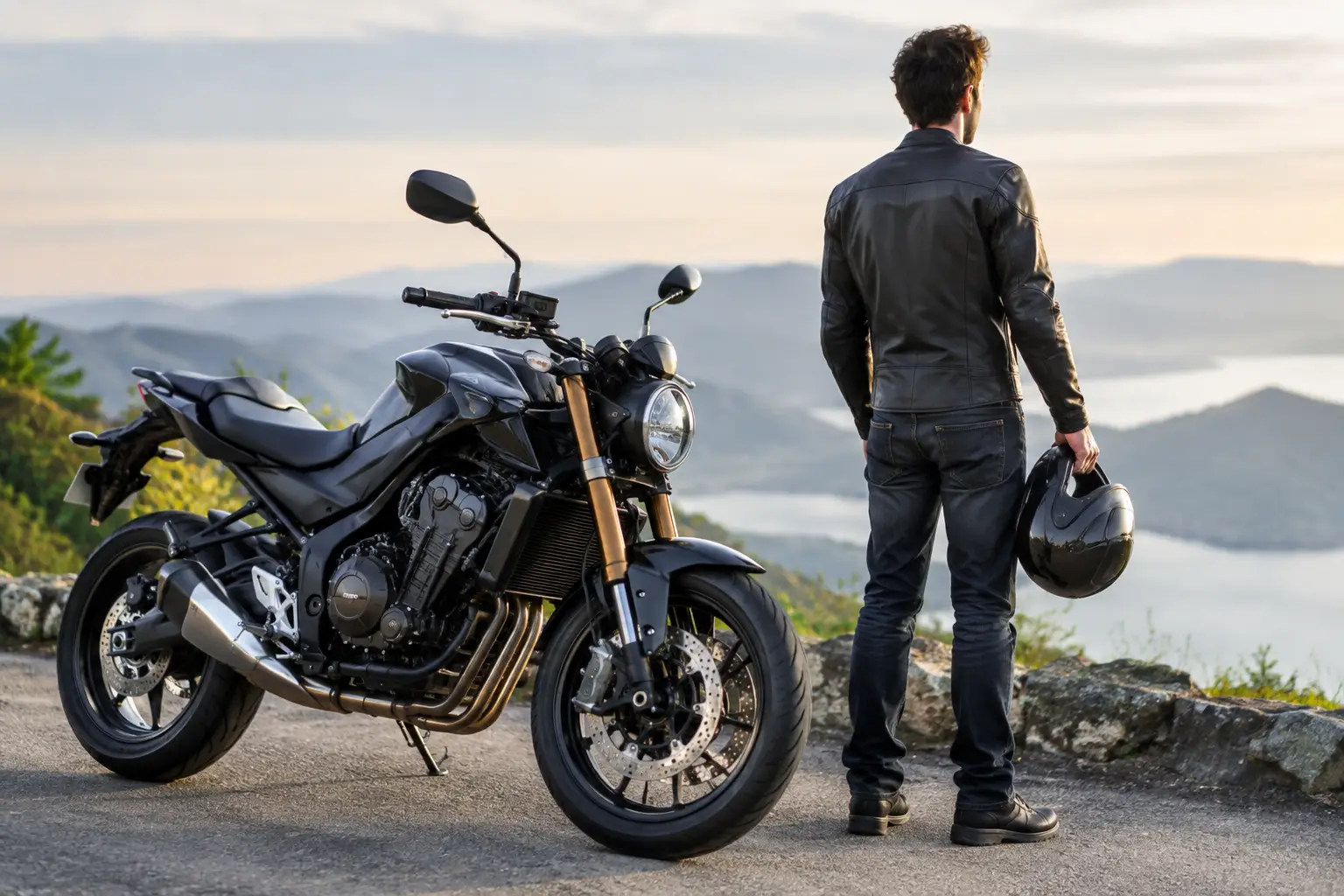
What Affects Motorcycle Resale Value Most?
A motorcycle can feel like a personal statement from the first ride, but the market eventually gets a vote. What affects motorcycle resale value is not simply the number on the odometer or the badge on the tank. It is the complete impression: how the bike has been ridden, cared for, specified, documented, and presented when its next owner arrives.
For a design-led machine, that impression begins before the engine turns or the motor delivers its first silent surge of torque. A clean, well-kept motorcycle signals confidence. A neglected one makes even great specifications look like a gamble.
What Affects Motorcycle Resale Value Most?
Condition is the strongest influence on resale value because it is the proof buyers can see for themselves. A motorcycle with modest mileage and tired finishes can lose ground to one with more miles but immaculate paint, clean controls, fresh tires, and a complete service record. The first tells a story of storage and shortcuts. The second tells a story of ownership with standards.
That does not mean a bike must be museum-perfect to hold its value. Motorcycles are meant to be ridden. A few honest signs of use are expected, especially on an urban commuter. What hurts value is evidence of avoidable wear: corrosion around fasteners, neglected chains, sun-faded plastics, torn seats, leaking forks, damaged wheels, or makeshift repairs.
A buyer is not only pricing the motorcycle in front of them. They are pricing the work, uncertainty, and future expense that may follow it. Keeping that uncertainty low is one of the most effective ways to protect value.
Service history creates confidence
Paperwork is not glamorous, but it carries real weight. Scheduled maintenance records, inspection receipts, tire and brake replacement dates, and invoices for quality work help a buyer see that the bike has been treated as a machine worth preserving.
A stamped service book is useful. Detailed records are better. They establish mileage at the time of each visit, show which parts were replaced, and make it easier to answer questions without hesitation. If a motorcycle has had repair work after a drop or collision, honesty matters here as well. A disclosed, professionally repaired incident is usually easier to sell than suspiciously vague gaps in its history.
For electric motorcycles, documentation should also cover software updates, battery checks, charging equipment, and any warranty work. The technology may be quieter and mechanically simpler, but buyers still want evidence that the electrical system has been properly supported.
Mileage matters, but how it was accumulated matters too
Lower mileage generally supports a higher price, particularly when a bike is still young. Yet mileage is not a verdict. A motorcycle used regularly, serviced on schedule, and stored correctly can be a more appealing purchase than a low-mileage example that sat for years with stale fluids, weakened tires, or an uncared-for battery.
Context changes the calculation. Ten thousand highway miles can be gentler than three thousand miles of stop-start riding, poor weather, and short journeys. Buyers will still use the odometer as a fast comparison tool, so mileage should be considered alongside age, condition, and maintenance rather than treated as the whole story.
Brand, model, and the market around the motorcycle
Some motorcycles retain value because demand stays ahead of supply. A respected name, a distinctive design, a limited-production model, or a configuration that has become hard to find can all strengthen resale value. But desirability is not fixed. It changes with riding trends, new-model updates, dealer availability, financing conditions, and the local used market.
A practical middleweight with a strong reputation may attract a wide pool of riders. A rare machine may command attention but take longer to sell because fewer people are looking for it. Premium motorcycles face a similar trade-off: the right buyer may pay for craftsmanship and character, but the seller needs the patience and presentation to reach them.
Color and specification have an effect too. Classic, well-executed finishes usually age better than novelty colors or highly personal graphics. Factory options that improve comfort, utility, or security can support a sale when they are in demand. Not every expensive option returns its full cost, however. Buyers often pay for a complete, desirable motorcycle, not a line-by-line reimbursement of every accessory.
Originality usually wins over personalization
A carefully selected accessory can make a bike more useful. A quality luggage system, discreet protection, premium tires, or a well-integrated phone mount may help a buyer picture daily life with the machine. Extreme modifications are different. Loud exhausts, poorly fitted lighting, cut wiring, bargain suspension parts, and irreversible styling changes narrow the audience.
The safest approach is simple: keep the original parts. If the next owner wants the motorcycle in factory form, having the stock mirrors, levers, seat, exhaust, or tail section can remove a major objection. Originality has a quiet authority, especially with motorcycles whose design is part of their appeal.
Electric motorcycle resale has its own rules
Electric motorcycles bring a different set of questions to the used market. Buyers look beyond cosmetic condition to charging access, battery health, range expectations, software support, and the availability of replacement components. Clear answers protect value.
Battery condition is central, but it should not be reduced to a single scary number. Capacity naturally changes with age, use, temperature exposure, and charging habits. A seller who can explain real-world range, normal charging routines, winter storage practices, and any diagnostic information gives a buyer something more valuable than a vague promise: clarity.
Charging equipment should be complete and in good condition. Include the original cable, adapters, keys, manuals, and any supplied accessories. Missing equipment creates friction on day one, while a complete handover makes the ownership transition feel considered.
Technology support also matters. An electric motorcycle is part vehicle, part evolving platform. Buyers will pay more confidently for a model with current software, functioning connected features, and a manufacturer known for serviceability. That is one reason craftsmanship and long-term support matter beyond the showroom. A machine such as an RGNT, built around classic lines and an electric heart, should still feel intentional years later, not stranded in an earlier version of the future.
Storage deserves attention as well. Keep the motorcycle dry, sheltered from prolonged UV exposure, and protected from severe temperature swings where possible. Follow the manufacturer guidance for battery charge level during longer periods off the road. These habits are not dramatic, but they preserve the details buyers notice: finish quality, tire condition, electrical reliability, and the sense that the bike has been looked after.
Presentation changes the final number
A strong resale listing does not need hype. It needs precision. Photograph the motorcycle in clean natural light, from every useful angle, after washing it properly. Show the odometer, tires, controls, charging equipment, service records, and any minor imperfections. The goal is not to pretend the bike is flawless. It is to remove surprises.
Set the asking price against comparable motorcycles with similar age, mileage, specification, and condition in your area. Pricing too high can make a desirable bike feel stale. Pricing too low can invite doubts about its history. Leave reasonable room for discussion, but let the motorcycle’s condition and documentation justify the number.
Before a viewing, charge the bike, check tire pressures, clean the chain if applicable, and make sure every key, document, and accessory is ready. A buyer should see a motorcycle prepared for its next chapter, not one being hurried out of a garage.
The best resale strategy starts long before you decide to sell. Choose the motorcycle you genuinely want to ride, maintain it with discipline, keep its story intact, and resist modifications that only make sense to you. When the time comes to pass it on, the next rider will recognize the difference.
-
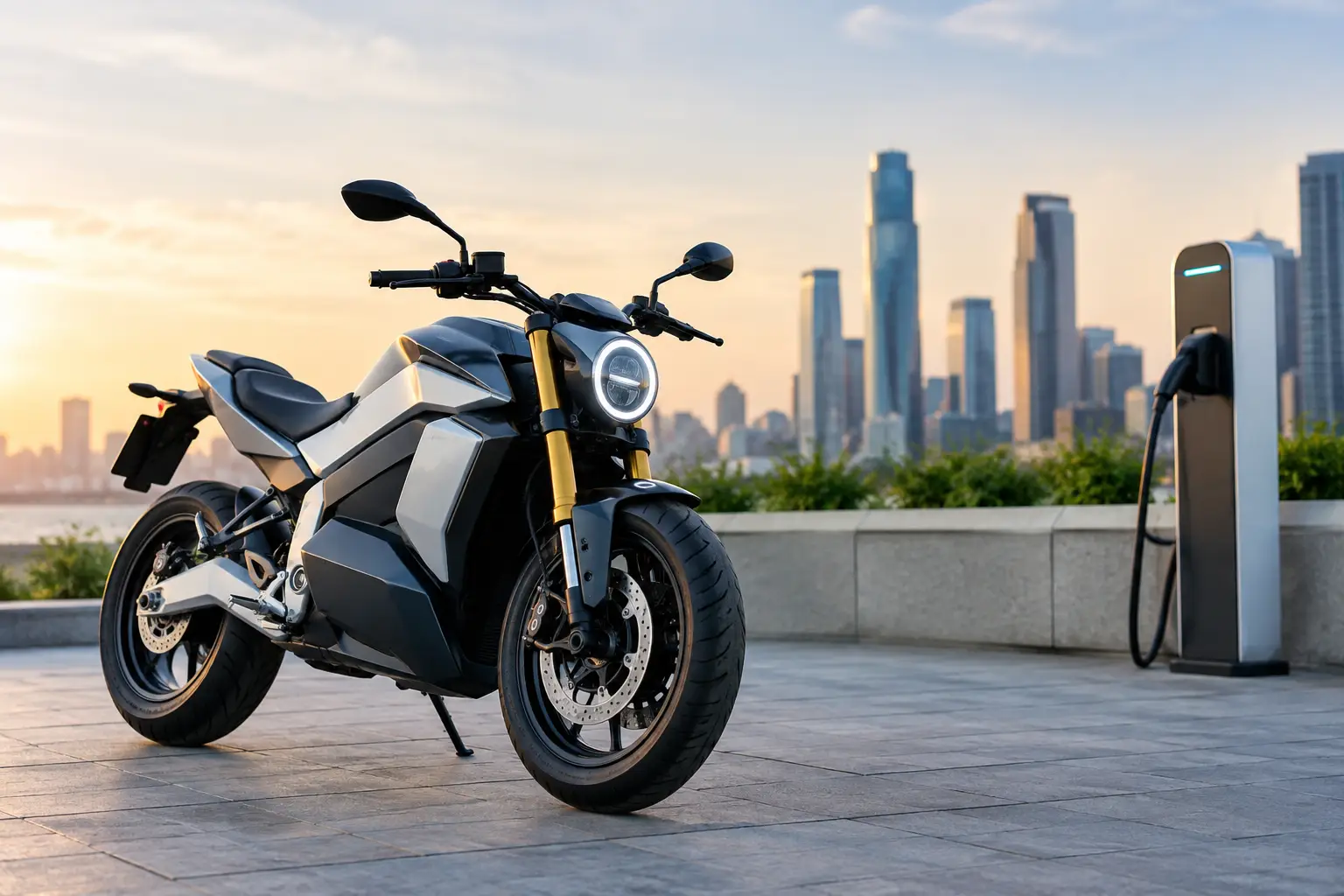
Electric Motorcycle Adoption Trends Gain Speed
The loudest change in motorcycling may be the absence of noise. Electric motorcycle adoption trends are moving beyond early-adopter novelty because urban riders are finding something more compelling than a different fuel source: a better fit for the way they actually move. Immediate torque at a green light. No heat rising from an idling engine. A quiet arrival outside the office, gallery, or late-night coffee spot.
For a growing class of rider, the motorcycle is no longer judged only by engine displacement or exhaust note. It is judged by how it looks parked on the street, how it feels in traffic, and whether the ownership experience suits a fast-moving city life. That shift is giving electric motorcycles a distinct place in the market – not as replacements for every gas bike, but as the right machine for more rides than skeptics once assumed.
Electric Motorcycle Adoption Trends Start in Cities
Dense cities are where electric motorcycles make their strongest argument. Most urban trips are short, repetitive, and stop-start. That is the exact environment where electric power feels at home. Torque arrives without waiting for revs. Regenerative braking can add composure in traffic. And a rider leaves the garage without a stop at the gas station becoming part of the weekly routine.
The practical appeal is only part of it. Cities are increasingly shaped by noise restrictions, congestion policies, and a broader expectation that personal transport should take up less physical and environmental space. A motorcycle already answers the space question better than a car. An electric motorcycle adds a quieter, cleaner presence to that advantage.
This does not mean every city rider has the same needs. Someone crossing a compact downtown area each day has a very different charging and range profile than a rider commuting 70 miles each way on high-speed roads. Adoption is strongest where the daily route is predictable and charging can happen at home, at work, or during regular downtime. In that setting, the battery becomes less of a concern and more like another device charged while you sleep.
Design Is Becoming a Deciding Factor
Early electric motorcycles often asked riders to accept a certain look in exchange for new technology. Sharp angles, exposed components, and an aesthetic that seemed designed to announce its electric status made sense for a niche market. But the market is maturing. More riders want technology that performs without shouting about itself.
That is why modern-classic design is gaining ground. It gives an electric motorcycle visual heritage while leaving room for contemporary engineering beneath the surface. A well-proportioned tank form, a balanced stance, and considered materials make a bike feel like a motorcycle first. The electric heart becomes part of the appeal, not the entire costume.
For design-conscious riders, this matters. A motorcycle is transportation, but it is also a personal object. It waits outside a restaurant, leans against a curb, and becomes part of how its owner moves through the city. The most desirable electric bikes understand that specification sheets do not create attachment on their own. Craftsmanship, silhouette, finish, and restraint do.
This is where premium makers have room to lead. Limited-batch production and close attention to detail are not merely luxuries. They answer a real concern among buyers who do not want a generic appliance with two wheels. The future belongs to electric motorcycles with individual character, not just additional software.
Better Batteries Are Changing the Conversation
Range anxiety remains part of every electric vehicle conversation, but it is becoming a less useful shorthand for how people actually ride. The question is not whether a rider can travel indefinitely without stopping. It is whether the motorcycle covers the day, the commute, and the spontaneous detour with confidence.
Battery technology continues to improve in energy density, charging behavior, thermal management, and longevity. Just as significant, riders are becoming more realistic about their own mileage. Many motorcycles spend most of their lives on rides well inside the usable range of a capable electric model. Once owners understand their pattern, the mental burden around charging often drops quickly.
Charging still sets the boundaries. Apartment dwellers without dedicated parking face a more complicated decision than homeowners with a garage outlet. Public charging access varies widely by neighborhood and building type. Long-distance touring also remains more convenient on gasoline in many parts of the United States, especially where fast-charging infrastructure is inconsistent.
Those are real trade-offs, and pretending otherwise weakens the case for electrification. But urban and near-urban riding does not need the same infrastructure as cross-country travel. For the rider whose week consists of commuting, meetings, errands, and evening rides, home charging is often enough. The best adoption story is not that electric works for every possible motorcycle journey. It is that it works exceptionally well for a large number of the journeys riders already take.
Performance Has Become More Intuitive
Electric motorcycles have another advantage that is hard to understand until the first twist of the throttle. There is no need to build momentum through a gear range before the bike responds. The power is immediate, controlled, and clean.
That changes the rhythm of city riding. Pulling into moving traffic feels decisive. Passing a slower vehicle requires less ceremony. The bike feels alert without needing to be aggressive. For newer riders, this can make the experience more approachable. For experienced riders, it can feel like removing a layer between intention and motion.
The absence of engine noise also changes perception. Some riders miss the mechanical soundtrack, and that preference deserves respect. Motorcycling has always been emotional, and sound is part of that emotion for many people. Others discover that silence reveals different pleasures: the tire on pavement, the rush of air, the architecture of a street passing by. It is not a lesser experience. It is a different one.
Ownership Is Becoming Easier to Justify
The purchase price of a premium electric motorcycle can still be higher than that of some comparable gas-powered alternatives. That is often the first obstacle buyers see. The more complete picture includes lower energy costs, reduced routine maintenance, and fewer consumables associated with an internal-combustion drivetrain.
There are no oil changes, spark plugs, or complex exhaust systems to service. Tires, brake components, suspension, and general care still matter, as they do on any motorcycle. But the ownership rhythm can be simpler. Financing and direct-to-consumer purchasing are also making premium electric ownership feel more accessible to riders who want a considered machine without treating it as an unreachable luxury.
The value calculation remains personal. Riders who cover low annual mileage may not recover an upfront price difference through operating savings alone. Riders who use a motorcycle frequently in an urban setting may see the convenience and lower maintenance burden differently. Then there is the intangible value: owning a machine that feels distinctly aligned with your taste rather than merely practical.
The Silent Minority Is Becoming More Visible
Electric motorcycling is not taking over because riders have suddenly stopped caring about tradition. It is growing because tradition and progress no longer need to be opposites. Classic lines can carry modern power. Hand-built detail can coexist with digital intelligence. A motorcycle can be quiet and still make a statement.
RGNT Motorcycles sits naturally within this movement: Scandinavian craftsmanship, timeless form, and electric performance built for riders who prefer presence over noise. That combination speaks to a market that is less interested in futuristic gimmicks than in machines with a point of view.
The strongest signal in electric motorcycle adoption is not a single sales figure or technology announcement. It is the changing idea of what a desirable motorcycle can be. For the rider who values clean acceleration, considered design, and the freedom to move through the city on their own terms, the next ride may not need to announce itself before it arrives.
-
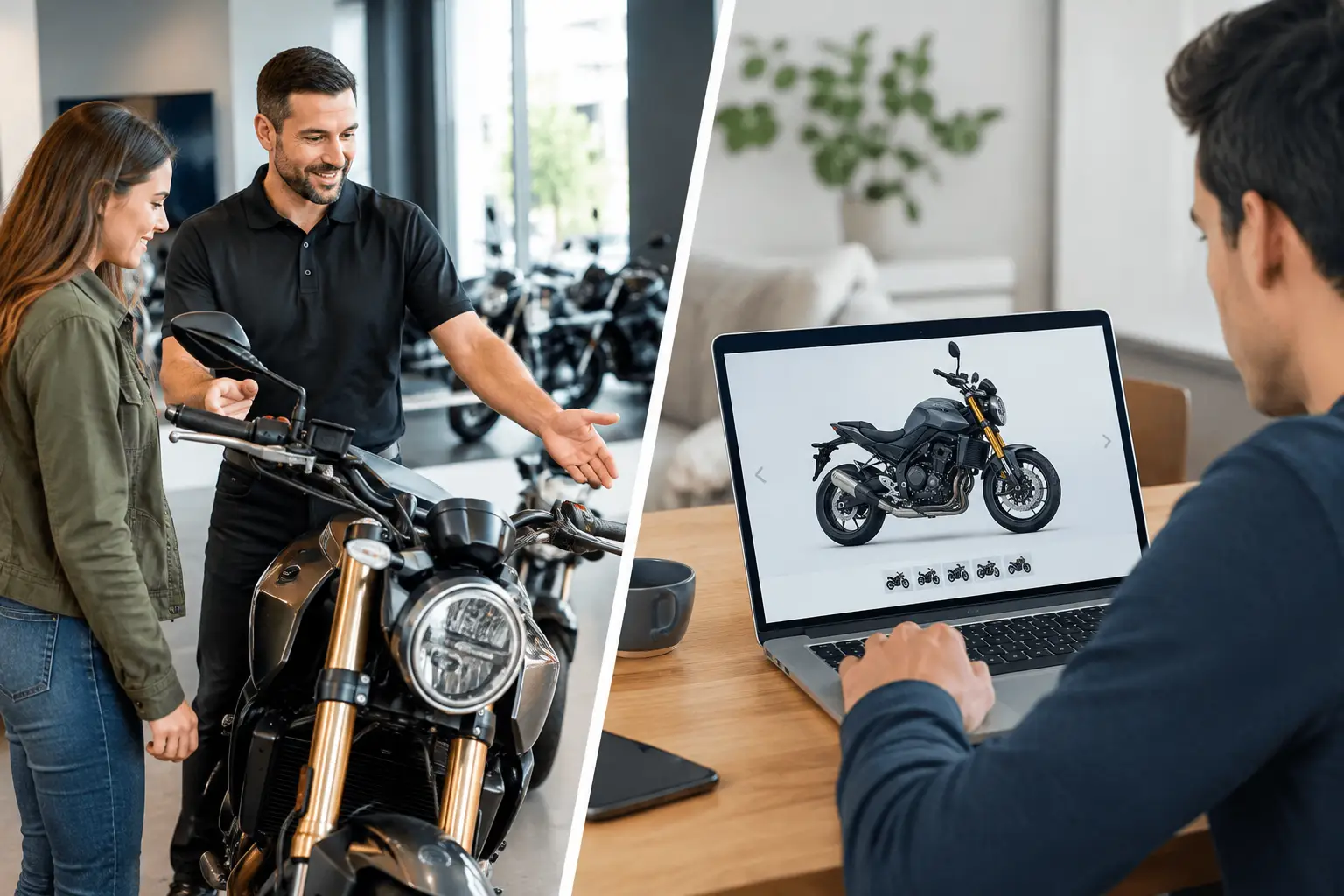
Dealer Purchase vs Online Motorcycle Order
A motorcycle is not a refrigerator. You do not choose one by clicking the cheapest box and waiting for a truck. You choose it by imagining the first clean pull away from a light, the way it sits beneath you, and whether it still feels right after the novelty is gone. That is why the dealer purchase vs online motorcycle order decision matters more than it first appears.
For electric motorcycles, the choice carries a few extra layers. Charging access, delivery timing, registration, service support, and the confidence to buy a new kind of powertrain all deserve a place in the decision. Neither route is automatically better. The right one depends on how you ride, where you live, and how much you value hands-on reassurance versus direct control.
What a dealer purchase gives you
A good dealer makes a motorcycle feel real before it becomes yours. You can see the paint in natural light, judge the riding position, inspect the fit and finish, and ask questions without opening another browser tab. For a design-led electric bike, those details matter. Classic lines, a quiet drivetrain, and instant torque make a different impression in person than they do on a spec sheet.
The test ride is the clearest advantage. Electric power can surprise riders coming from gas motorcycles: there is no clutch work, no vibration at idle, and no waiting for revs to build. The response is immediate. A short ride can tell you whether that calm, direct character feels like freedom or simply unfamiliar territory.
Dealers can also reduce friction around the practical finish line. Depending on the dealer and your state, they may assist with registration, title paperwork, insurance requirements, accessories, and an introduction to local service. If you are a first-time rider or your schedule has no room for administrative detours, that support has real value.
There is another benefit that does not fit neatly in a checkout flow: a relationship. A nearby dealer may become the place you call for seasonal checks, tire advice, warranty questions, or a conversation about the next bike. That relationship is especially reassuring when you prefer service handled close to home.
Still, a dealer experience varies. Inventory may be limited to the colors, configurations, or model years on the floor. A test ride may not be available. Some locations are deeply fluent in electric motorcycles; others are still catching up. Ask direct questions about charging, diagnostic capability, parts access, and warranty work before assuming every showroom offers the same level of support.
Where online motorcycle ordering pulls ahead
An online order is built for riders who already know what they want. You can configure at your own pace, compare specifications without a sales floor around you, review the total purchase process, and place an order when it suits you. For riders drawn to a limited-batch machine, online ordering can also provide access beyond the inventory of their nearest dealer.
Direct ordering tends to make the buying path more transparent. You can focus on the motorcycle, its stated price, available financing, delivery terms, and expected timing. There is less room for the pressure of a busy Saturday showroom or the compromise of buying what happens to be in stock.
It also suits the way many electric-motorcycle buyers research. They have already measured their commute, checked their home charging setup, compared range against their weekly riding, and watched enough road footage to understand the character they want. They are not shopping for an anonymous appliance. They are choosing a machine that reflects their taste.
For RGNT riders, that can be part of the appeal. A hand-built Swedish electric motorcycle is not trying to disappear into traffic. Ordering directly can feel appropriately intentional: select the bike, prepare the space for it, and let the first ride begin on your terms.
The trade-off is that online ordering asks more of the buyer. You need to confirm what delivery includes, who completes final setup if required, how registration is handled in your state, and where authorized service is available. You also need to be honest about the absence of a test ride. Photos can show proportion; they cannot tell you how a seat, handlebar, or suspension feels after forty minutes in city traffic.
Dealer purchase vs online motorcycle order: compare the full cost
The number on the product page or showroom tag is only the beginning. A smart comparison looks at the complete ownership path, not just the headline price.
With a dealer purchase, ask for an itemized out-the-door figure. That should clarify taxes, registration fees, documentation charges, setup, freight, accessories, and any financing costs. A higher price may be reasonable if it includes meaningful local support, but it should never be mysterious.
With an online order, look closely at delivery charges, destination fees, assembly requirements, state taxes, title and registration steps, and any cost to transport the motorcycle for service. Direct pricing can be refreshingly clear, but clarity only helps when you read every part of the process.
Do not reduce the decision to the lowest total alone. Consider time as well. A dealer might have the right motorcycle ready now, while a direct order may involve a production or delivery window. On the other hand, an online order may be the only way to secure the exact model and finish you want instead of settling for what is nearby.
Service should influence the purchase, not spoil it
Electric motorcycles generally have fewer routine mechanical demands than internal-combustion bikes. There is no oil change, no exhaust system, and no clutch to adjust. That does not mean service disappears. Tires, brakes, suspension, firmware, charging equipment, and electrical diagnostics still matter.
Before you buy through either channel, get clear answers to a few practical questions. Where will warranty work be performed? How far away is qualified service? What happens if a replacement part is needed? Is remote diagnostic support available? Who should you contact if the motorcycle arrives with a concern?
This is not pessimism. It is the confidence that lets you enjoy the silent part of ownership. A premium motorcycle should feel considered after delivery, not just before payment.
Choose the buying experience that fits your riding life
Choose a dealer if you want to sit on the motorcycle, take a test ride, talk through ownership face to face, and leave with local support already in place. It is also the stronger route if you are new to electric riding, uncertain about fit, or simply enjoy the ritual of buying from a showroom.
Choose online ordering if you have done the research, know the model you want, value direct configuration and pricing, and are comfortable managing a few details yourself. It can be the better route for riders outside major dealer markets or those looking for a specific build without compromise.
There is no medal for choosing the more traditional path or the more digital one. The better purchase is the one that leaves you clear on the cost, ready for delivery, and genuinely impatient to take the long way home. Before you commit, picture your first ordinary Tuesday ride. If the motorcycle makes that commute feel like the best part of the day, you are looking in the right direction.
-
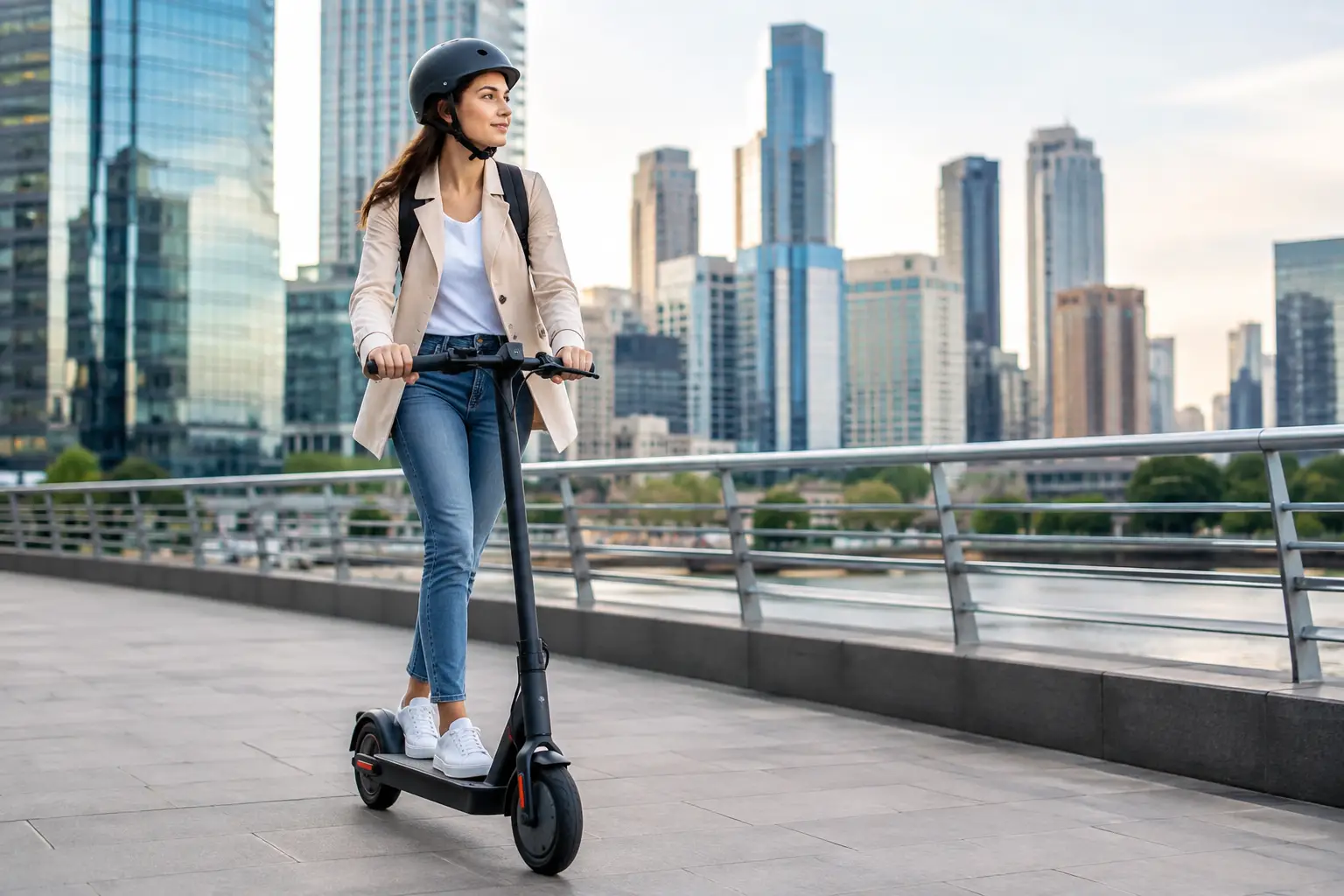
Urban Electric Riding Guide for City Streets
The city sounds different from an electric motorcycle. There is no exhaust note bouncing between buildings, no clutch work at every light, no need to raise your voice at a stop. This urban electric riding guide is about using that quiet advantage well: moving with intent, reading the street early, and choosing a machine that makes the daily ride feel less like transit and more like yours.
Urban riding rewards precision over spectacle. A motorcycle with immediate torque, balanced handling, and classic lines can turn a familiar route into the best part of the day. But electric riding has its own rhythm. Range, charging access, weather, traffic behavior, and secure parking all deserve a place in the plan.
Start With the City You Actually Ride
The right electric motorcycle is not defined by its maximum claimed range alone. It is defined by the miles you make repeatedly: the morning run across town, the ride to a meeting, the long route home when traffic is moving slowly and the evening is too good to waste.
Begin with your real daily distance, then add margin. If your usual round trip is 25 miles, a bike with 50 miles of dependable city range gives you room for detours, cold weather, hills, and the occasional impatient throttle hand. Range figures can be useful, but they are not fixed promises. Speed, rider weight, tire pressure, elevation, temperature, cargo, and acceleration all change the result.
City riding often favors an electric powertrain because stop-and-go traffic puts immediate torque to work. You do not need to build revs or search for the right gear before slipping into an opening. The response is direct, quiet, and clean. The trade-off is that hard launches and sustained high-speed riding consume energy faster. Ride with spirit, but know what it costs.
Range Is a Riding Habit, Not Just a Number
Think of battery percentage the way an experienced rider thinks of weather: always present, rarely alarming when you have paid attention early. Check your state of charge before leaving, not when the route starts to feel uncertain. Learn the energy demand of your regular roads over a few weeks, including the effect of rain, cold mornings, and a passenger.
For most urban riders, the best charging strategy is simple: arrive home, plug in, wake up ready. Workplace charging can make ownership even easier, though it should be treated as a convenience rather than the only plan. A premium electric motorcycle should fit into your life with quiet confidence, not turn every outing into an exercise in charger hunting.
The Urban Electric Riding Guide to Traffic Craft
Silent running is part of the appeal. It also asks more of the rider. Pedestrians, cyclists, and drivers may not hear you approaching, especially in dense traffic where attention is already fractured by screens, delivery vans, horns, and construction.
Ride as though you are invisible until another road user proves otherwise. That means leaving space around parked cars, watching front wheels for the first clue of a turn, and expecting a door to open in every tempting gap. Position yourself where mirrors can find you, rather than drifting into the blind spot beside an SUV or box truck.
At intersections, cover the brakes and look beyond the car directly ahead. A green light is not a guarantee. A driver waiting to turn may be focused on a larger vehicle and miss the motorcycle behind it. Electric acceleration can move you out of danger quickly, but it should never be your only escape plan. Space remains the most elegant form of performance.
Use Torque With Restraint
Instant torque changes the character of a city launch. It is satisfying, especially when the street opens and the light turns green. Yet smooth throttle control matters more on an electric motorcycle because the response can be so immediate.
Roll on power progressively when the pavement is cold, painted, wet, or covered in leaves. Manhole covers, steel plates, and road markings can be surprisingly slick after rain. Keep the motorcycle as upright as possible when crossing them, and avoid abrupt steering or braking inputs.
The same principle applies when filtering or moving through slow traffic where it is permitted. Keep your speed difference modest. A narrow opening can disappear without warning when a car changes lanes to avoid a pothole or chase a parking space. The fast line is rarely the smart line.
Charge Like You Park: Deliberately
Urban ownership is shaped as much by parking as performance. Before buying, consider where the motorcycle will sleep, where it will charge, and how exposed it will be to weather or unwanted attention. A secure garage with regular charging is ideal, but many city riders make apartment living work with a protected parking arrangement and a clear charging routine.
Use the charging equipment specified for the motorcycle and inspect cables regularly. Keep connectors clean and dry. If public charging is part of your routine, build time into your day rather than arriving with the battery nearly empty and the next appointment already calling.
Battery care does not require ritual. It requires consistency. Avoid leaving the bike at an extremely low state of charge for long periods, and follow the manufacturer’s guidance for storage when you will not ride for weeks. Cold conditions can reduce available range, so give yourself more margin in winter. The point is not to obsess over the battery. It is to keep it ready.
Dress for the Ride, Not the Forecast App
City weather changes block by block. A clear morning can become rain behind a line of buildings, while shade and wind make a short ride feel colder than expected. Good gear protects you, but it also keeps your focus where it belongs.
Choose a properly fitted helmet, abrasion-resistant jacket and pants, gloves, and boots that cover the ankle. Ventilation matters in summer. Waterproof layers matter when the sky turns. Reflective details are useful after dark, but visibility is more than a strip of material. Use your lane position, lighting, and movement to stay noticeable.
Do not let retro style become costume. The strongest look is one that works at a crosswalk in the rain, on a freeway merge, and outside a restaurant after sunset. Classic lines and an electric heart deserve gear with the same balance of character and purpose.
Make Parking Part of the Route
A city motorcycle can often claim spaces a car cannot, but parking still needs discipline. Look for legal, visible locations with a solid surface and enough room to maneuver out without backing into traffic. Avoid blocking pedestrian access, ramps, bike lanes, or building entrances. The goal is to arrive with style, not leave a problem behind.
Security should be layered. Use the steering lock, a quality physical lock where appropriate, and a covered or monitored location when possible. Remove loose accessories and keep valuables off the bike. If your motorcycle includes connected features, use them, but do not mistake an alert for a physical barrier.
When you return, do a fast walk-around. Check tires, cables, controls, and the ground beneath the bike before riding away. Urban streets are hard on equipment, and a small issue found early is better than a surprise in traffic.
Choose Character Without Compromise
There is a temptation to treat city transportation as a purely practical decision. It is not. You ride more when the motorcycle calls to you from the curb. You take the longer way home. You notice the architecture, the light, and the rare silence between traffic signals.
That is where design matters. A well-made electric motorcycle should feel composed rather than ornamental, with performance that belongs to the street and craftsmanship that rewards a closer look. RGNT Motorcycles approaches that idea through hand-built Swedish character, classic proportions, and modern electric response – a machine for riders who prefer presence over noise.
Still, emotion should be matched by fit. Sit on the bike. Consider its weight at parking-lot speed, its seat height, its storage options, its charging requirements, and the support available where you live. The best motorcycle is not the one that wins a spec-sheet argument. It is the one that makes you want to put on your helmet on an ordinary Tuesday.
The city will always be unpredictable. Traffic will hesitate, weather will turn, and the route you planned will occasionally disappear behind cones. Ride charged, ride visible, and leave enough margin to enjoy the improvisation. The quietest rider on the street can still make the strongest impression.