
Your cart is currently empty!
Electric Motorcycle Commute Examples That Work
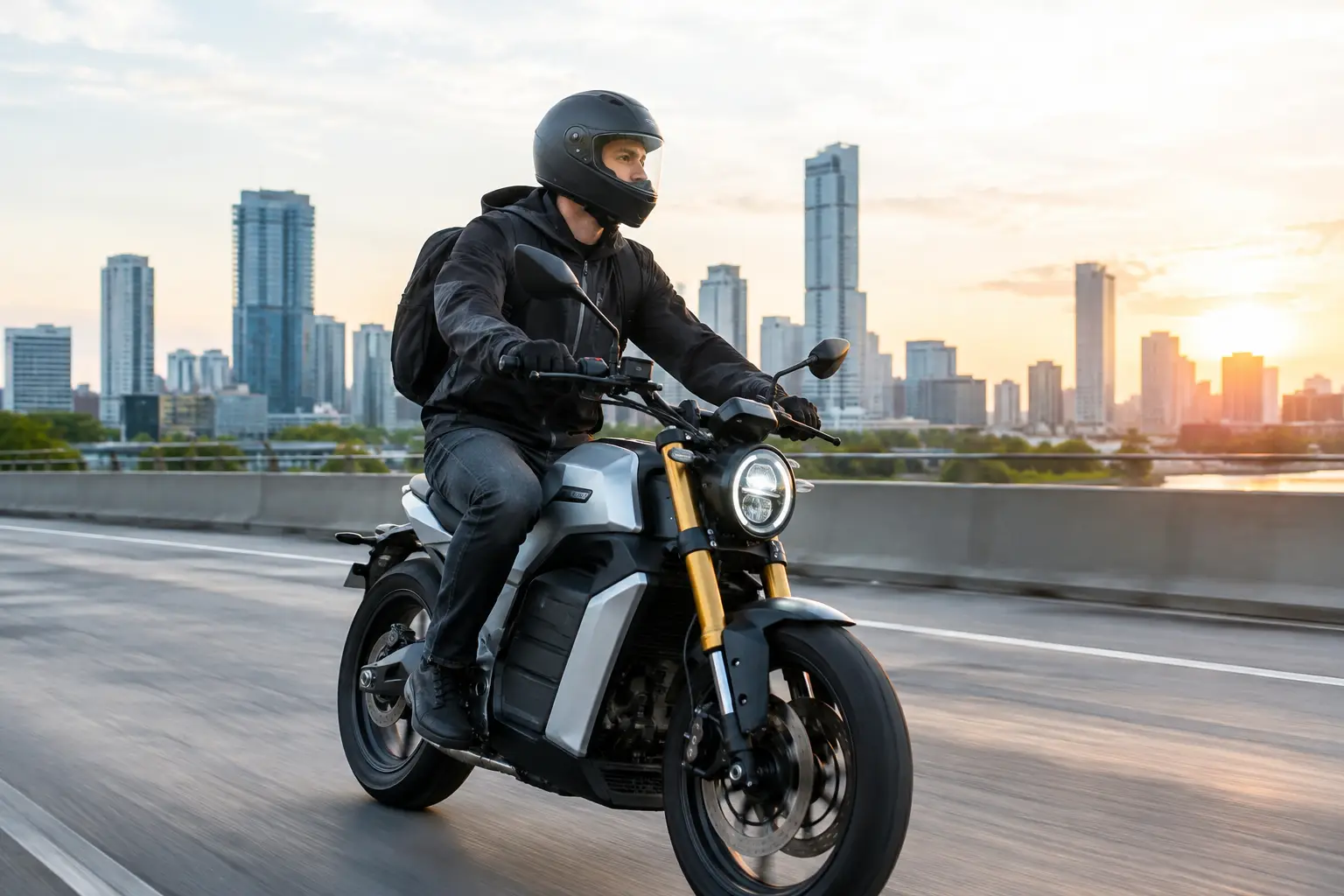
At 8:12 a.m., the usual city soundtrack is already underway: buses pulling away from curbs, delivery vans idling, drivers watching the clock. An electric motorcycle cuts through it differently. These electric motorcycle commute examples are not fantasy rides staged on empty streets. They are the everyday routes where instant torque, compact proportions, and near-silent movement make the strongest case for two wheels.
The right electric commute is not measured by maximum range alone. It is measured by whether the bike fits the distance, pace, parking, and charging reality of your day. For many urban riders, that is where electric begins to feel less like a compromise and more like the obvious choice.
Electric Motorcycle Commute Examples for Real City Rides
The five-mile cross-town run
A design professional lives in Brooklyn, works in Manhattan, and has a commute that looks short on a map but unpredictable in a car. The route is five miles, with lights, traffic, construction, and a bridge crossing. A subway ride can take 35 minutes door to door. Driving means paying for parking before the workday has even begun.
On an electric motorcycle, the trip becomes direct. Immediate power from a stop makes city gaps easier to read, while the absence of clutch work reduces the constant hand-and-foot choreography of dense traffic. The rider arrives alert rather than wrung out. At the office, the motorcycle occupies a fraction of the space required by a car.
This is the electric motorcycle at its most convincing: modest mileage, frequent stops, and a premium placed on time and composure. Range anxiety has little room to grow when the full round trip is comfortably inside the motorcycle’s real-world capability. The important question is not, “Can it go 200 miles?” It is, “Can it own this route every day?”
The 18-mile city-to-neighborhood commute
Another rider leaves a downtown apartment for a studio on the edge of the city. The route begins in tight traffic, opens into a faster arterial road, then finishes among tree-lined residential streets. Eighteen miles each way is substantial enough to make battery range and riding mode worth considering, but still ideal for charging at home overnight.
This rider has a secure outlet in a garage and plugs in after arriving home. That simple habit replaces the weekly stop at a gas station. There is no need to hunt for public charging on a normal workday, provided the motorcycle’s usable range covers the 36-mile round trip with a sensible reserve.
Temperature, speed, and rider weight affect real range. So does the temptation to use every green light as an invitation. A rider who spends most of the route at higher speeds should plan more conservatively than one moving through 25 mph streets. That is not a flaw unique to electric motorcycles. It is simply the difference between brochure conditions and a lived-in commute.
The mixed-mode commuter who refuses to drive downtown
A suburban rider has a 28-mile trip to the train station, then a packed urban final mile to the office. Taking a car all the way downtown is possible, but it means tolls, parking fees, and the kind of gridlock that can make a good morning feel wasted before it starts.
The electric motorcycle handles the first leg, then waits in designated motorcycle parking near the station. This arrangement works best when charging is available at home and the rider has checked parking rules before making it part of the routine. It also demands practical gear: a compact lock, weather-ready layers, and storage for a helmet or a willingness to carry it.
The appeal is not only financial. The motorcycle restores a sense of authorship to the first part of the day. It is a short, clean ride before the train, not another session behind a windshield. For riders who live beyond the urban core but do not want a car to dictate every decision, this is a sharp compromise.
The commute with a lunchtime charge
Not every rider has home charging. A renter may live in an older building, use street parking, and work at an office with a compatible charger. In that case, the commute can still work, but the ownership pattern changes. Charging becomes part of the workday rather than a background ritual overnight.
Picture a 12-mile trip each way, with the bike charged at work two or three times a week. It is entirely workable if the charger is dependable, access is straightforward, and the rider does not routinely leave work with an unexpectedly low battery. It is less appealing if every charge requires a detour, an app, and a hope that the station is available.
The lesson is simple: buy the commute, not the promise. Before choosing an electric motorcycle, test the exact places where it will be parked. Look at outlet access, charger compatibility, security, and whether your daily mileage leaves enough room for unplanned errands. A beautiful machine should make life more fluid, not turn every Tuesday into battery logistics.
Where Electric Commuting Feels Better Than Expected
Traffic is where an electric motorcycle reveals its character. There is no engine heat building beneath you at a long light, no vibration blurring the mirrors, and no mechanical drama before moving away. Twist the throttle and the response is immediate, quiet, and clean.
That quiet changes the mood of a ride. You hear tires on pavement, the city around you, and the subtle feedback that can make urban riding feel more connected. Silence does not make a motorcycle invisible, however. Defensive riding remains essential. Assume drivers have not seen you, use deliberate lane position, and wear gear that makes your presence clear without sacrificing personal style.
Maintenance is another understated advantage. An electric motorcycle eliminates oil changes, spark plugs, and much of the routine engine service attached to combustion ownership. Tires, brakes, suspension, and drive components still deserve attention. Premium riding is not maintenance-free. It is simply free of a great deal of old machinery.
The Trade-Offs Worth Facing Before You Buy
Electric commuting asks for honesty. If your day regularly includes a 90-mile freeway round trip, no reliable place to charge, and winter temperatures well below freezing, a small urban-focused electric motorcycle may not be the right tool. A larger battery, workplace charging, or a different transport mix may be necessary.
Rain deserves equal candor. Electric motorcycles can be excellent in wet weather when designed and maintained for it, but the rider still needs waterproof gear, careful braking, and respect for painted lines and steel plates. The silent minority does not get a free pass from physics.
Then there is the emotional adjustment. Some riders miss the pulse, noise, and ritual of an internal-combustion machine. Others discover that they never needed the noise at all. They wanted the shape, the stance, the freedom, and the feeling of leaving the city behind for a few miles before arriving exactly where they meant to be.
Choosing a Motorcycle Around Your Actual Week
Start with seven days of real movement, not an idealized Sunday. Add up the round-trip commute, regular errands, occasional detours, and the distance to a charging point. Then consider the fastest part of the route, because sustained speed has more influence on energy use than stop-and-go urban travel.
A1-class electric motorcycles make particular sense for riders whose lives happen within the city and its close orbit. They are agile enough for narrow streets, quick enough for confident starts, and easier to live with than a larger machine built for journeys they rarely take. A motorcycle such as an RGNT pairs that practical purpose with classic lines and an electric heart, so the ride still says something before the motor says nothing.
The best commute is not the longest one a battery can survive. It is the route that makes you choose the motorcycle on an ordinary Wednesday, even when nobody is watching.