
Your cart is currently empty!
Electric Motorcycle Adoption Trends Gain Speed
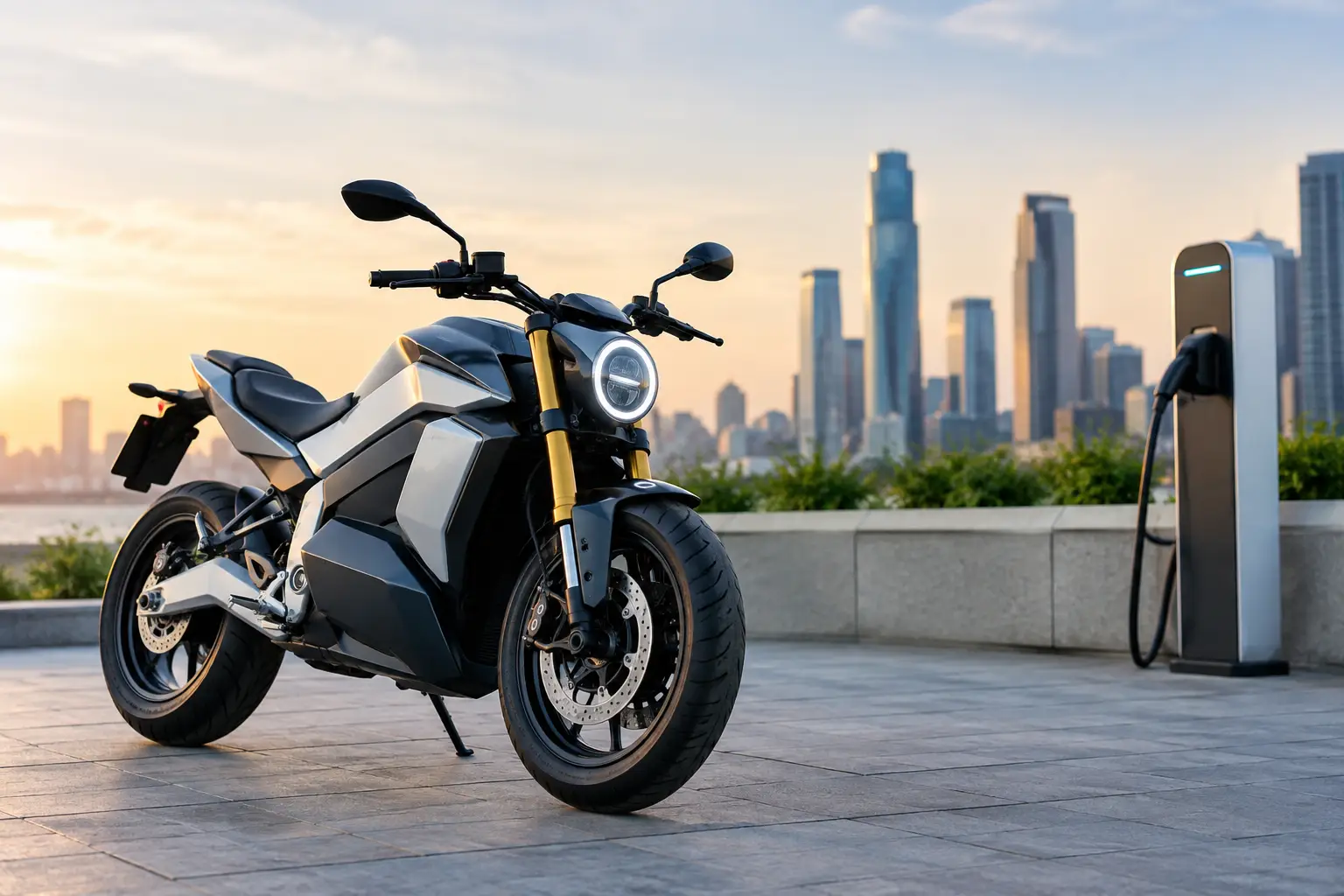
The loudest change in motorcycling may be the absence of noise. Electric motorcycle adoption trends are moving beyond early-adopter novelty because urban riders are finding something more compelling than a different fuel source: a better fit for the way they actually move. Immediate torque at a green light. No heat rising from an idling engine. A quiet arrival outside the office, gallery, or late-night coffee spot.
For a growing class of rider, the motorcycle is no longer judged only by engine displacement or exhaust note. It is judged by how it looks parked on the street, how it feels in traffic, and whether the ownership experience suits a fast-moving city life. That shift is giving electric motorcycles a distinct place in the market – not as replacements for every gas bike, but as the right machine for more rides than skeptics once assumed.
Electric Motorcycle Adoption Trends Start in Cities
Dense cities are where electric motorcycles make their strongest argument. Most urban trips are short, repetitive, and stop-start. That is the exact environment where electric power feels at home. Torque arrives without waiting for revs. Regenerative braking can add composure in traffic. And a rider leaves the garage without a stop at the gas station becoming part of the weekly routine.
The practical appeal is only part of it. Cities are increasingly shaped by noise restrictions, congestion policies, and a broader expectation that personal transport should take up less physical and environmental space. A motorcycle already answers the space question better than a car. An electric motorcycle adds a quieter, cleaner presence to that advantage.
This does not mean every city rider has the same needs. Someone crossing a compact downtown area each day has a very different charging and range profile than a rider commuting 70 miles each way on high-speed roads. Adoption is strongest where the daily route is predictable and charging can happen at home, at work, or during regular downtime. In that setting, the battery becomes less of a concern and more like another device charged while you sleep.
Design Is Becoming a Deciding Factor
Early electric motorcycles often asked riders to accept a certain look in exchange for new technology. Sharp angles, exposed components, and an aesthetic that seemed designed to announce its electric status made sense for a niche market. But the market is maturing. More riders want technology that performs without shouting about itself.
That is why modern-classic design is gaining ground. It gives an electric motorcycle visual heritage while leaving room for contemporary engineering beneath the surface. A well-proportioned tank form, a balanced stance, and considered materials make a bike feel like a motorcycle first. The electric heart becomes part of the appeal, not the entire costume.
For design-conscious riders, this matters. A motorcycle is transportation, but it is also a personal object. It waits outside a restaurant, leans against a curb, and becomes part of how its owner moves through the city. The most desirable electric bikes understand that specification sheets do not create attachment on their own. Craftsmanship, silhouette, finish, and restraint do.
This is where premium makers have room to lead. Limited-batch production and close attention to detail are not merely luxuries. They answer a real concern among buyers who do not want a generic appliance with two wheels. The future belongs to electric motorcycles with individual character, not just additional software.
Better Batteries Are Changing the Conversation
Range anxiety remains part of every electric vehicle conversation, but it is becoming a less useful shorthand for how people actually ride. The question is not whether a rider can travel indefinitely without stopping. It is whether the motorcycle covers the day, the commute, and the spontaneous detour with confidence.
Battery technology continues to improve in energy density, charging behavior, thermal management, and longevity. Just as significant, riders are becoming more realistic about their own mileage. Many motorcycles spend most of their lives on rides well inside the usable range of a capable electric model. Once owners understand their pattern, the mental burden around charging often drops quickly.
Charging still sets the boundaries. Apartment dwellers without dedicated parking face a more complicated decision than homeowners with a garage outlet. Public charging access varies widely by neighborhood and building type. Long-distance touring also remains more convenient on gasoline in many parts of the United States, especially where fast-charging infrastructure is inconsistent.
Those are real trade-offs, and pretending otherwise weakens the case for electrification. But urban and near-urban riding does not need the same infrastructure as cross-country travel. For the rider whose week consists of commuting, meetings, errands, and evening rides, home charging is often enough. The best adoption story is not that electric works for every possible motorcycle journey. It is that it works exceptionally well for a large number of the journeys riders already take.
Performance Has Become More Intuitive
Electric motorcycles have another advantage that is hard to understand until the first twist of the throttle. There is no need to build momentum through a gear range before the bike responds. The power is immediate, controlled, and clean.
That changes the rhythm of city riding. Pulling into moving traffic feels decisive. Passing a slower vehicle requires less ceremony. The bike feels alert without needing to be aggressive. For newer riders, this can make the experience more approachable. For experienced riders, it can feel like removing a layer between intention and motion.
The absence of engine noise also changes perception. Some riders miss the mechanical soundtrack, and that preference deserves respect. Motorcycling has always been emotional, and sound is part of that emotion for many people. Others discover that silence reveals different pleasures: the tire on pavement, the rush of air, the architecture of a street passing by. It is not a lesser experience. It is a different one.
Ownership Is Becoming Easier to Justify
The purchase price of a premium electric motorcycle can still be higher than that of some comparable gas-powered alternatives. That is often the first obstacle buyers see. The more complete picture includes lower energy costs, reduced routine maintenance, and fewer consumables associated with an internal-combustion drivetrain.
There are no oil changes, spark plugs, or complex exhaust systems to service. Tires, brake components, suspension, and general care still matter, as they do on any motorcycle. But the ownership rhythm can be simpler. Financing and direct-to-consumer purchasing are also making premium electric ownership feel more accessible to riders who want a considered machine without treating it as an unreachable luxury.
The value calculation remains personal. Riders who cover low annual mileage may not recover an upfront price difference through operating savings alone. Riders who use a motorcycle frequently in an urban setting may see the convenience and lower maintenance burden differently. Then there is the intangible value: owning a machine that feels distinctly aligned with your taste rather than merely practical.
The Silent Minority Is Becoming More Visible
Electric motorcycling is not taking over because riders have suddenly stopped caring about tradition. It is growing because tradition and progress no longer need to be opposites. Classic lines can carry modern power. Hand-built detail can coexist with digital intelligence. A motorcycle can be quiet and still make a statement.
RGNT Motorcycles sits naturally within this movement: Scandinavian craftsmanship, timeless form, and electric performance built for riders who prefer presence over noise. That combination speaks to a market that is less interested in futuristic gimmicks than in machines with a point of view.
The strongest signal in electric motorcycle adoption is not a single sales figure or technology announcement. It is the changing idea of what a desirable motorcycle can be. For the rider who values clean acceleration, considered design, and the freedom to move through the city on their own terms, the next ride may not need to announce itself before it arrives.