
Your cart is currently empty!
A Guide to A1 Motorcycle Licenses for City Riders
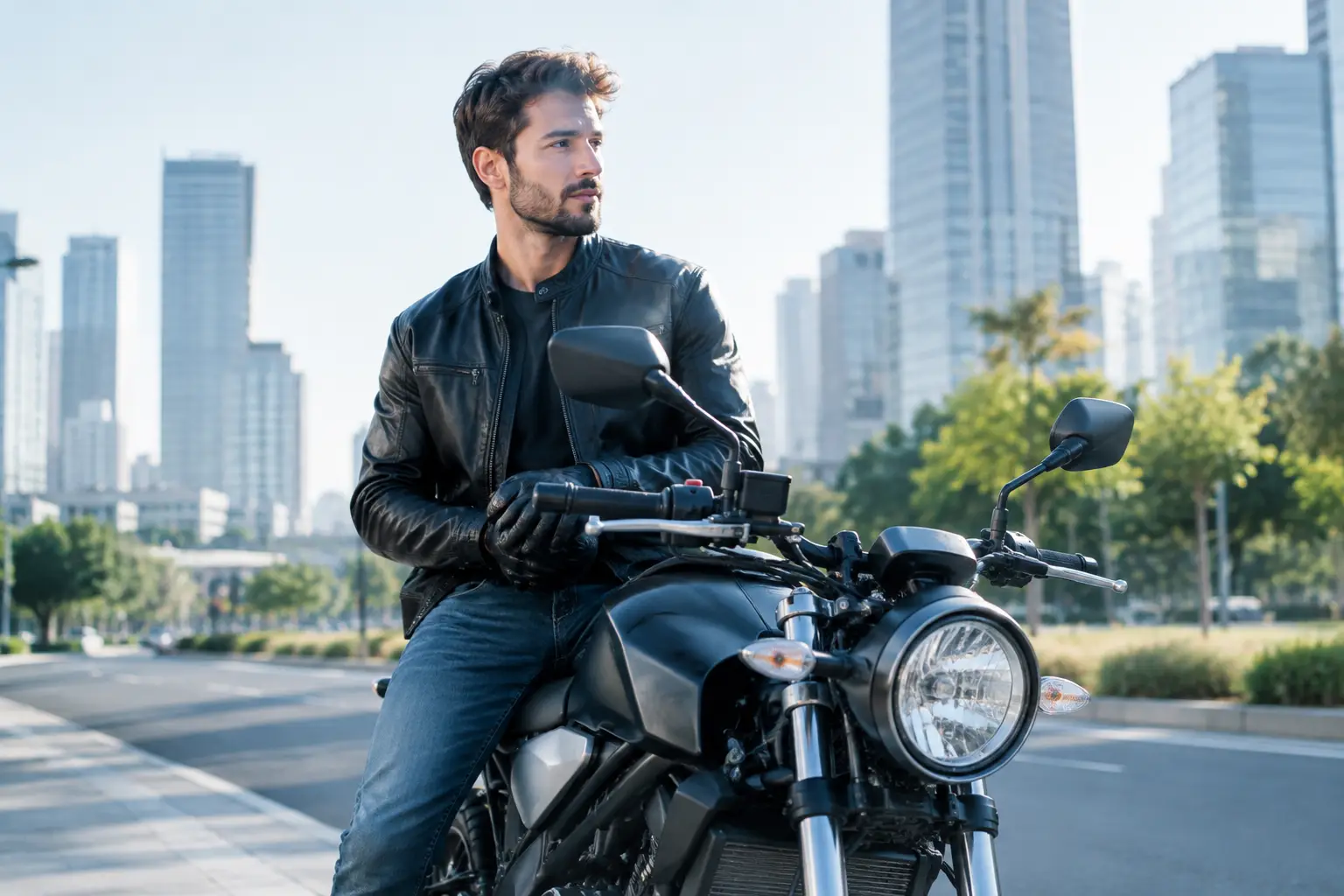
The first twist of the throttle should feel like freedom, not paperwork. This guide to A1 motorcycle licenses cuts through the license categories, power figures, and country-by-country details that can stand between a new rider and a properly chosen machine.
For American riders, one point comes first: the A1 license is not a U.S. motorcycle endorsement. It is a licensing category used across much of Europe and recognized in similar forms in other markets. If you are moving abroad, buying a motorcycle overseas, or comparing an electric bike labeled A1-class, understanding the category tells you exactly what kind of performance it is built to deliver.
What Is an A1 Motorcycle License?
An A1 motorcycle license is an entry-level motorcycle license designed for lighter, lower-power motorcycles. Under the European framework, it generally allows riders to operate motorcycles with an engine capacity of up to 125cc, maximum power of 11 kW, and a power-to-weight ratio no higher than 0.1 kW per kilogram.
Electric motorcycles do not have engine displacement, so power and power-to-weight figures matter most. An electric motorcycle can qualify for A1 classification when its rated continuous power and approved specifications fall within the applicable limits. That distinction matters because electric bikes can deliver immediate torque in a way a small gasoline engine often cannot. The legal number may look modest. The feeling at a green light can be anything but.
A1 is intended as a credible first rung, not a toy category. It is well suited to urban movement, daily commuting, and riders who want the directness of a real motorcycle without stepping immediately into higher-powered license classes.
A Guide to A1 Motorcycle Licenses: The Core Rules
The broad A1 framework is consistent, but licensing is administered nationally. That means the rules in Sweden, Germany, France, the United Kingdom, and other countries can differ on age, training, test format, and whether a foreign license can be exchanged.
In many European countries, the minimum age for an A1 license is 16. In the UK, riders generally need to be 17 to ride an A1 motorcycle after completing the required theory and practical tests. Those age differences are not a technicality. They affect when you can train, what vehicle you may ride during training, and whether a 125cc-equivalent electric bike is legally available to you.
Before choosing a motorcycle, confirm four details with the licensing authority in the country where you will ride:
- The minimum age for an A1 license
- Whether compulsory basic training is required before practice riding
- The theory, hazard-perception, and practical test requirements
- The approved power rating for the exact motorcycle or electric model
Manufacturer specifications are useful, but the registration documents and local vehicle approval are what count. A bike marketed as A1-compatible in one country may have a different homologation, software setting, or registration category elsewhere.
The Numbers That Define A1
The headline limit is 11 kW, roughly 14.7 horsepower. Yet comparing an electric motorcycle and a gasoline motorcycle through peak horsepower alone can be misleading. Some electric motors produce a short burst of peak output above their continuous rating, depending on local approval rules and how the vehicle is certified.
That is why riders should look beyond a single spec line. Check the motorcycle’s official rated power, vehicle category, curb weight, and registration status. The power-to-weight limit of 0.1 kW per kilogram may also shape what qualifies, especially for very light machines.
There is a trade-off here. A1 limits make motorcycles more approachable and easier to manage while skills are still forming. They also cap top-end performance and high-speed passing power. For city riders, that can be a smart compromise. For frequent highway travel, it may point you toward a future A2 or unrestricted A license instead.
How the A1 Licensing Process Usually Works
Most A1 paths combine knowledge, controlled practice, and an on-road assessment. The details change by country, but the progression is deliberately practical: prove that you understand the rules, demonstrate that you can control the motorcycle at low speed, then show that you can read traffic without becoming part of the problem.
Training typically begins with protective gear, motorcycle controls, braking, turning, observation, and emergency maneuvers. A good course spends serious time at walking pace. Slow-speed balance, clean clutch or throttle control, and precise head checks are not glamorous skills, but they are the foundation of confident city riding.
For electric motorcycle riders, the absence of a clutch and gearbox changes the learning experience without removing the need for discipline. Instant torque rewards a smooth right hand. Regenerative braking may change how the motorcycle slows when you roll off the throttle. Quiet operation means other road users may notice you later than they would a loud exhaust. The silent minority still needs to ride visibly and decisively.
Theory testing generally covers road signs, traffic laws, rider awareness, hazard perception, and safe decision-making. The practical test often includes an off-road or closed-course section followed by a ride in traffic. Expect to be assessed on controlled stops, swerves or obstacle avoidance, turns, lane position, observation, and how you respond to real-world conditions.
The right mindset is not to ride perfectly. It is to ride predictably, legally, and with enough space to make a good decision when someone else makes a poor one.
Choosing an A1-Class Electric Motorcycle
An A1-class electric motorcycle makes particular sense when the majority of your miles happen between neighborhoods, offices, studios, cafés, and the roads that connect them. Electric drive removes the vibration, heat, fuel stops, and constant shifting that can make a short urban ride feel like a chore. What remains is the line of the road, the pull of torque, and the clean satisfaction of arriving without noise.
Still, electric ownership asks different questions. Range is not a single fixed number. Cold weather, rider weight, hills, speed, cargo, wind, and aggressive acceleration all affect it. A claimed range may be more than enough for a daily commute, but only if your actual route and charging routine support it.
Charging deserves the same honesty. Consider where the bike sleeps, whether you have reliable access to a standard outlet or dedicated charging point, and how long a full charge takes in your market. Apartment riders should settle these practical details before falling for a silhouette, however beautiful it may be.
Then there is the emotional part, which is no less real. An entry-level license does not require an entry-level presence. A motorcycle can be manageable without looking anonymous. Classic lines and an electric heart make sense for riders who want less noise, less clutter, and more character in the everyday miles. RGNT’s A1-class electric motorcycles are built around that balance: hand-crafted Scandinavian form paired with the immediate response of electric power.
A1 License vs. A2 and Full Motorcycle Licenses
A1 is the beginning of a progression. A2 typically permits motorcycles up to 35 kW, while the unrestricted A license opens the door to higher-performance machines once the applicable age and experience requirements are met. Exact routes vary by country, including whether direct access or staged progression is available.
Choosing A1 should not be framed as settling for less. It is a deliberate choice when your riding is centered on city streets, shorter commutes, and building skills with a lighter performance envelope. But be candid about your future. If you expect long two-up trips, sustained freeway riding, or a move into high-performance motorcycles within a year, the cost and time of stepping through categories may influence your plan.
For some riders, A1 is all they need. For others, it is the license that teaches them what kind of rider they want to become.
What U.S. Riders Should Know Before Riding Abroad
A standard U.S. motorcycle endorsement does not automatically translate into an A1 license. Countries may permit visitors to ride under different rules, sometimes with an International Driving Permit, sometimes only for a limited period, and sometimes not at all for motorcycles. Residency changes the equation again.
Do not assume that being licensed for a large-displacement motorcycle in the U.S. means you can register, insure, or ride an A1-class motorcycle abroad without local documentation. Ask the relevant licensing authority, insurer, rental company, or dealer before you travel or buy. The answer depends on your residency status, issuing state, destination, and the motorcycle’s registration category.
A license category is more than a gatekeeper. It shapes the motorcycle you can ride, the roads that suit it, and the skills you develop from the first mile. Get the legal details right, choose a machine that fits the rhythm of your life, and let the city hear a little less of you as you pass through it.