
Your cart is currently empty!
Sustainable Urban Motorcycle, Without the Noise
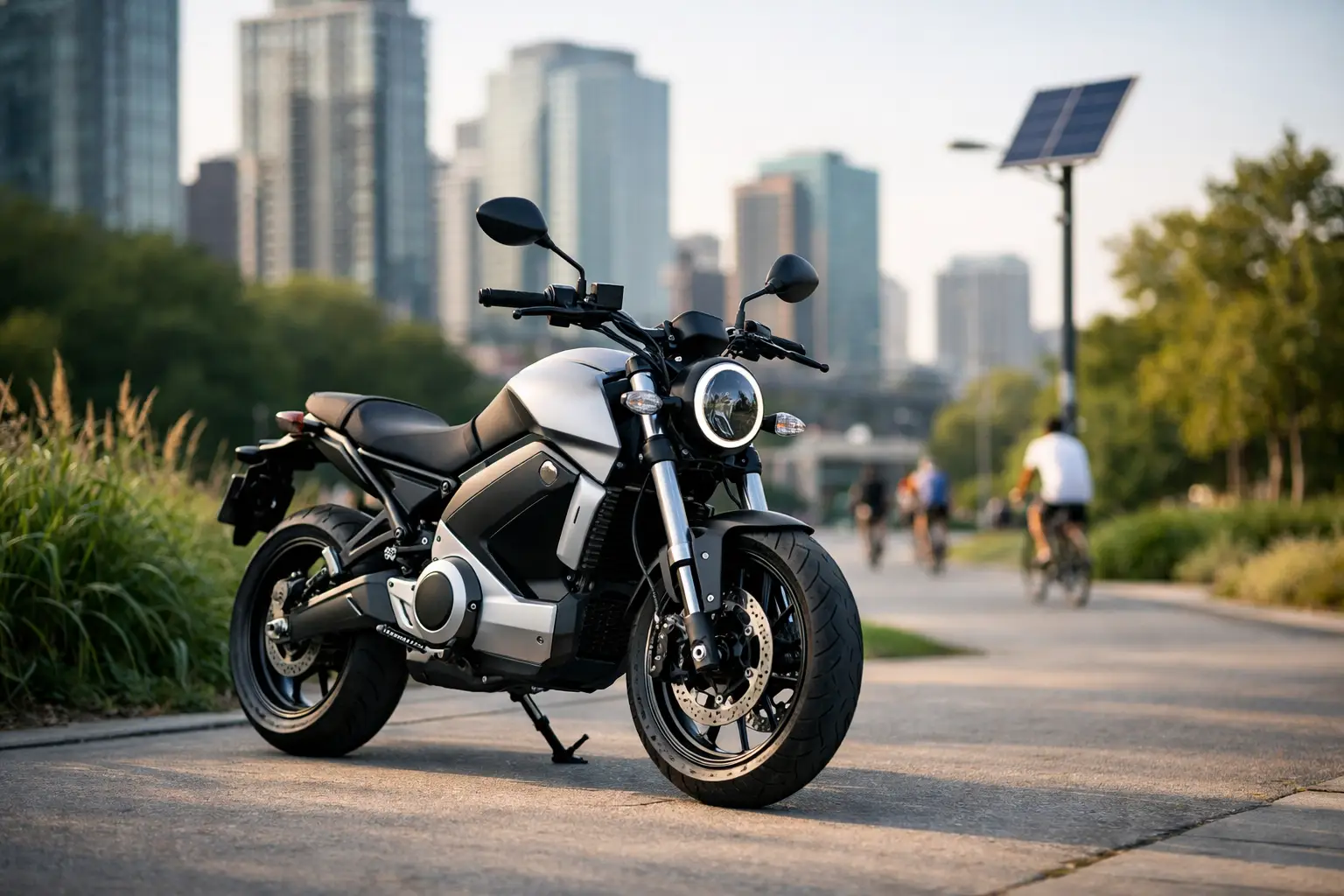
The city is loud enough already. Tires over broken pavement, buses pulling away from curbs, delivery vans idling beneath apartment windows. A sustainable urban motorcycle offers a different kind of presence: immediate electric torque, classic lines, and a near-silent ride that changes the character of the commute without losing the feeling that makes motorcycles matter.
Sustainability, however, is more than swapping a fuel tank for a battery. The most considered electric motorcycles are designed for the real rhythm of city life: short-to-medium rides, frequent stops, limited parking, home or workplace charging, and a rider who expects their machine to look as deliberate outside a gallery as it does at a red light.
What Makes a Sustainable Urban Motorcycle?
A motorcycle earns the sustainable label through the whole ownership experience, not a single component. Electric propulsion is the starting point. With no tailpipe emissions at the point of use, an electric bike avoids the exhaust produced by gasoline engines in the places where people live, walk, work, and open their windows.
For urban riders, the silence matters too. Lower mechanical and exhaust noise can make early departures, late returns, and tight neighborhood streets feel less intrusive. It also creates a more direct connection between rider and road. You notice the surface, the movement of traffic, the city unfolding around you. The motor is not competing for attention.
But the bigger question is lifecycle. Battery production carries an environmental cost, as does the manufacturing of any motorcycle. Responsible design does not pretend otherwise. It aims to make the bike useful for long enough, efficient enough, and desirable enough that it remains on the road rather than becoming a short-lived tech object.
That places durability, repairability, quality control, and timeless styling in the same conversation as battery capacity. A machine built with care and kept for years is a stronger proposition than one built to chase a single season of novelty.
The grid is part of the ride
The emissions associated with charging depend on where the electricity comes from. In many parts of the United States, the grid is becoming cleaner as renewable generation expands, but the mix differs by state and utility. Charging from solar generation, a green electricity plan, or a cleaner regional grid improves the equation further.
Even where the grid still relies heavily on fossil fuels, electric drivetrains use energy far more efficiently than combustion engines. The practical takeaway is simple: charging choices matter, but electric urban riding begins with a meaningful efficiency advantage.
Designed for the City, Not Just Adapted to It
Cities reward compact dimensions, clean acceleration, and composure at low speeds. They do not reward excess weight, unnecessary heat, or a machine that needs a wide-open highway to feel alive. A well-designed electric motorcycle gives its best performance exactly where many riders spend their time: from the first roll of the throttle to the next signal.
Electric torque arrives immediately. That makes a gap in traffic, a steep parking ramp, or a quick move away from an intersection feel decisive rather than dramatic. There is no clutch work in stop-and-go traffic, no gear hunting, and no engine heat building under the rider when the avenue stalls.
Range deserves a more honest conversation. A claimed maximum range is useful, but it is not the only number that matters. Speed, temperature, rider weight, elevation, tire pressure, and acceleration all change real-world consumption. For city riders, the useful question is whether the motorcycle comfortably covers a typical day, with margin for detours, errands, and an evening ride home.
For many commuters, that answer depends less on headline range than on charging routine. If the bike can charge where it sleeps, a daily commute becomes easy to manage. Apartment dwellers may need public charging access, garage permission, or a workplace outlet. Those constraints should be assessed before purchase, not after the first exhilarating test ride.
Compact mobility has a material benefit
A motorcycle uses less physical space than a car, from parking bays to traffic lanes. It can help a rider reduce the footprint of a daily commute without giving up the independence of personal transport. That does not make every motorcycle trip automatically sustainable. Riding alone for a two-block errand may still be unnecessary. Yet replacing regular car journeys with an efficient electric motorcycle can be a practical shift, especially in cities where transit does not cover every route or schedule.
The strongest use case is not escape from the city. It is moving through it with more intention.
Style Is Part of Long-Term Sustainability
There is a reason disposable products so often look disposable. When design is reduced to a trend cycle, ownership becomes temporary. A premium urban motorcycle should resist that impulse. It should carry visual weight without shouting, pairing familiar proportions with modern engineering rather than using technology as a costume.
Classic lines and an electric heart are not opposing ideas. They are a statement about what deserves to endure. A round headlight, a balanced silhouette, carefully finished metal, and an uncluttered cockpit can feel more current than aggressive plastic panels or forced futurism. The bike becomes an object a rider wants to maintain, photograph, and keep.
That is where craftsmanship becomes practical, not decorative. Clean assembly, considered component choices, and limited-batch quality control influence reliability and serviceability. They also create a relationship between rider and machine that is harder to replace. RGNT Motorcycles approaches electric performance from this perspective: Swedish-built character, restrained design, and the confidence to let silence do some of the talking.
Still, premium construction has a trade-off. Better materials and hand-finished details can raise the purchase price. The value lies in considering total ownership, not simply the number on the window. Electric motorcycles can reduce routine maintenance by eliminating oil changes, spark plugs, exhaust systems, and many engine-related wear items. Tires, brakes, suspension, and insurance remain part of the equation, as does battery health over time.
Choosing the Right Electric Motorcycle for Your Route
The right bike begins with your actual week. Map your round-trip commute, your regular detours, and the distance to the charging point you will realistically use. Then consider how you ride. A calm waterfront route and a fast arterial road ask different things from power delivery, range, and chassis stability.
Check charging time against your schedule rather than treating faster as universally better. Overnight charging may be perfectly sufficient for a rider covering 20 or 30 miles a day. A rider without reliable home charging may place more value on charging flexibility and access to public infrastructure. In either case, verify connector compatibility and local charging options before committing.
Pay attention to the details that affect daily ease: seat height at stoplights, storage for a lock and gloves, turning radius in a tight garage, app functions that are genuinely useful, and dealer or service support within reach. A motorcycle is sustainable only if it remains practical enough to ride often.
Licensing and legal classification also vary. Check your state requirements for motorcycle endorsements, registration, insurance, helmet laws, and power restrictions. Performance should feel liberating, not complicated by surprises at the DMV or your insurer.
The Quiet Advantage
The electric motorcycle is often framed as a compromise for riders willing to trade character for conscience. That view misses the point. Silence can be its own form of performance. Instant torque can feel more alive in city traffic than another 20 horsepower that never gets used. And a bike with real visual presence does not need a loud exhaust to announce itself.
A sustainable urban motorcycle is not for every journey. Long-distance riders may need more range, rapid charging access, or a different type of machine altogether. But for the rider whose world is measured in neighborhoods, bridges, office districts, and late-night streets, it offers an unusually complete answer.
Choose the motorcycle that fits your charging reality, your daily distance, and your standards for design. Then ride it often. The cleanest, most compelling machine is the one that makes leaving the car behind feel less like a sacrifice and more like the obvious move.