
Your cart is currently empty!
Best Stylish Motorcycles for Professionals
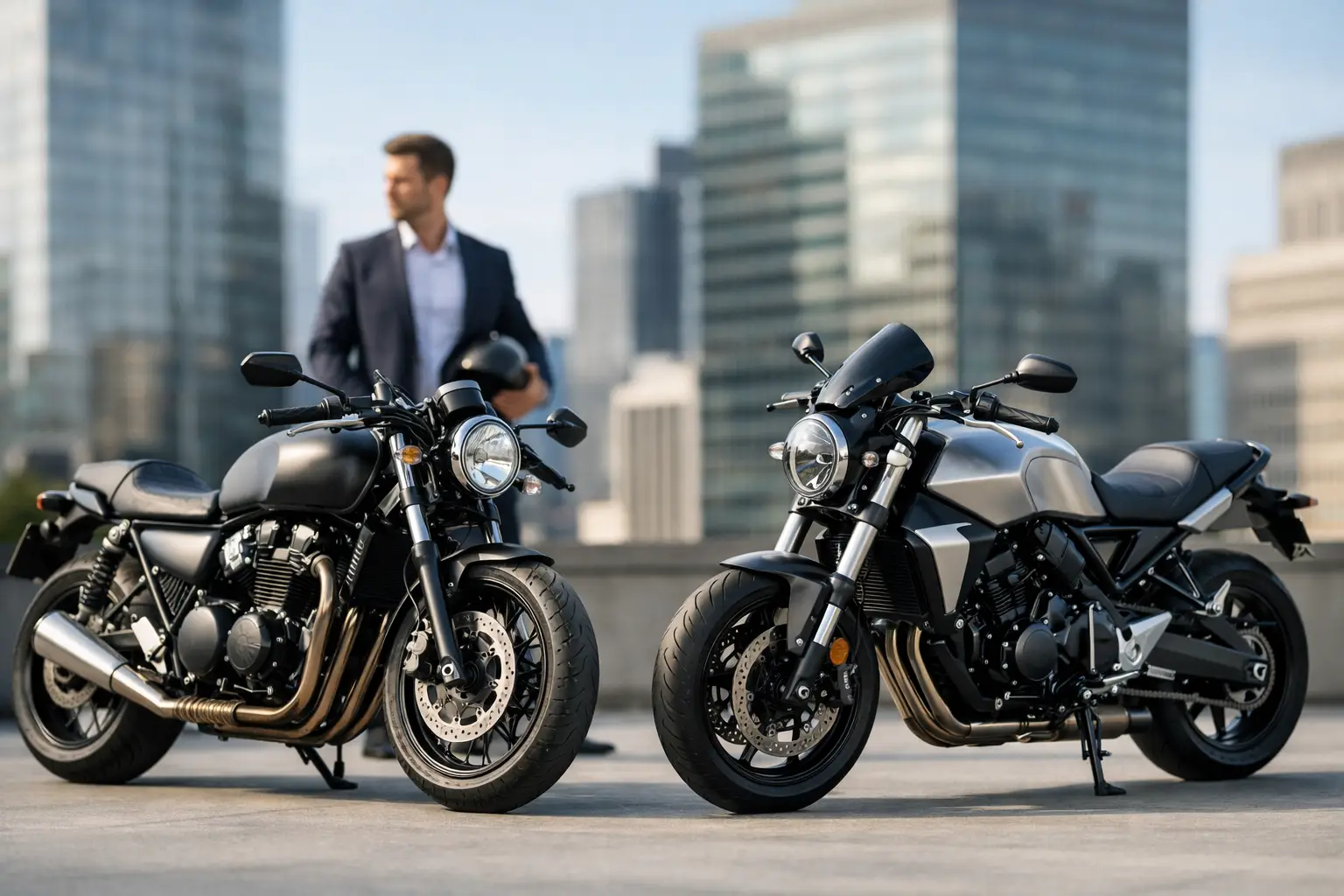
A motorcycle parked outside your office says something before the first meeting begins. The best stylish motorcycles for professionals avoid the usual compromise: they look considered, ride with purpose, and fit real life beyond the weekend photo. They are not loud for the sake of attention. They are the silent minority – distinct because every line, material, and movement has a reason.
For a design-conscious commuter, style is not an accessory added after the engineering is done. It is the result of proportion, finish, performance, and the confidence to leave excess behind. The right bike should feel as appropriate arriving at a client dinner as it does cutting through city traffic before sunrise.
What professionals should demand from a stylish motorcycle
A sharp-looking motorcycle is easy to find. One that remains compelling after six months of commuting is harder. Daily riding exposes weak ergonomics, impractical range, excessive heat, awkward maneuvering, and finishes that do not age well. A professional rider needs more than a beautiful tank or a fashionable badge.
Start with the riding environment. Dense urban streets reward light, controlled handling and immediate response at low speeds. Longer suburban routes put greater value on wind protection, stable chassis behavior, and a comfortable riding position. If the bike will replace a car for most workdays, storage, charging or fueling access, and weather readiness become part of the design brief.
The best choices also feel intentional when stationary. Look for clean cable routing, balanced wheel and seat proportions, high-quality switchgear, and lighting that complements the bike rather than competing with it. A well-resolved motorcycle does not need visual noise to make an impression.
The best stylish motorcycles for professionals by riding character
There is no single perfect professional motorcycle. The right choice depends on where you ride, how far you travel, and whether you want your machine to feel tailored, athletic, traditional, or quietly radical.
Modern-classic electric motorcycles
For professionals who move through cities and value a calmer daily ritual, an electric modern classic makes a persuasive case. The format combines familiar motorcycle posture and timeless silhouette with instant torque, low running noise, and fewer routine mechanical demands. It feels less like adopting a gadget and more like choosing a better-made object.
Electric power changes the character of a commute. There is no clutch work in stop-and-go traffic, no engine heat rising at a red light, and no exhaust note announcing every departure from a quiet street. The trade-off is planning. Range, charging time, battery access, and local public charging availability should be assessed honestly against your weekly mileage.
RGNT Motorcycles occupies this territory with hand-built Swedish machines that pair classic lines with an electric heart. For the rider who wants a motorcycle to be an extension of personal taste, not a piece of consumer electronics, that combination has real appeal.
Premium roadsters
A roadster remains one of the strongest all-around choices for professionals who want a traditional motorcycle experience without the bulk of a touring bike. Its upright ergonomics make city riding manageable, while exposed mechanical elements give it a purposeful, architectural presence. A roadster can look elegant in dark, restrained colors and still feel alive on a winding road after work.
The trade-off is wind exposure. A naked or lightly faired bike is ideal for urban and regional rides, but frequent highway travel can become tiring. Choose one with a seat that supports more than short hops and suspension that remains composed over broken pavement. The polished showroom image means little if the bike beats you up on the way home.
Neo-retro standards
Neo-retro motorcycles are for riders who appreciate heritage without wanting to maintain history. They borrow the visual grammar of classic machines – round lamps, sculpted tanks, visible metal, simple silhouettes – while delivering modern brakes, electronics, and reliability. Done well, this is the most versatile style for a professional wardrobe and a varied riding calendar.
Not every retro-inspired bike is refined. Some rely on cosmetic details while carrying awkward proportions or budget finishes. Pay attention to the negative space around the engine or battery, the relationship between the seat and rear fender, and whether modern components have been integrated with restraint. The strongest designs feel coherent from every angle.
Sporty middleweights
A sporty middleweight suits professionals whose commute is part transportation, part reset button. These motorcycles are typically quicker, lighter-feeling, and more aggressive in stance than a standard. They offer a more focused ride without requiring the extreme posture or social volume of a full supersport machine.
This category demands self-awareness. If your regular ride includes long freeway stretches, business attire, or frequent passengers, a committed sport position may become a liability. But for a solo rider with a short-to-medium commute and a taste for precise handling, a cleanly designed middleweight can be the right kind of rebellion.
Compact premium commuters
Smaller-displacement and A1-class motorcycles deserve more respect than they often receive. In city traffic, manageable weight and usable acceleration frequently matter more than headline horsepower. A compact premium motorcycle is easier to park, less intimidating in tight spaces, and often more enjoyable at the speeds that define urban life.
The difference lies in execution. Choose a compact bike that feels deliberately engineered, with strong brakes, composed suspension, and materials that do not feel disposable. Professional style is not about buying the largest machine available. It is about selecting the machine that makes sense with conviction.
Design details that keep their relevance
Trends are cheap. Good proportions are not. If you want a motorcycle that will still look right several years from now, favor a restrained palette, quality metalwork, and a silhouette that is clear without being theatrical. Black, deep gray, brushed aluminum, rich leather, and carefully used color tend to age better than novelty graphics or oversized logos.
Lighting deserves close attention. A round headlight can be timeless, but only when its size and placement suit the rest of the bike. LED technology can add visibility and precision, yet it should not turn a motorcycle into a rolling light show. The same principle applies to digital displays: useful information belongs in the cockpit, while visual clutter does not.
Fit matters as much as finish. A bike that looks elegant under studio lighting may feel wrong if your knees are sharply bent, your wrists carry too much weight, or your feet cannot reach the ground with confidence. Sit on it in the gear you actually wear. A tailored ride begins with posture.
Make the motorcycle work with your professional life
The most stylish choice is often the one that removes friction from your day. Before committing, think through the unglamorous details: where it will be parked, how you will secure your helmet, whether your laptop can travel safely, and what happens when rain arrives fifteen minutes before your first appointment.
A compact lock, discreet luggage, and a weatherproof overshell can preserve both convenience and presentation. If your workplace has charging access, an electric motorcycle may be especially compelling. If you routinely cover unpredictable distances without reliable charging, a gas-powered roadster or standard may better match the reality of your schedule. Taste includes knowing where compromise is unnecessary and where it is sensible.
Maintenance support should also influence the decision. A limited-production motorcycle can offer exceptional character and craftsmanship, but confirm that service access works in your area. Mass-market models may be easier to maintain, while boutique machines can feel more personal. Neither is automatically superior; ownership should suit the way you live.
Choose presence, not noise
The best professional motorcycle does not need to imitate anyone else’s idea of success. It should move through the city with composure, look right against the architecture of your life, and give you a reason to take the longer route when the day allows.
Choose the bike whose design stays quiet when you are not looking at it – then becomes unforgettable when you are. That is style with mileage.