
Your cart is currently empty!
Best Motorcycle Anti Theft Devices for Urban Riders
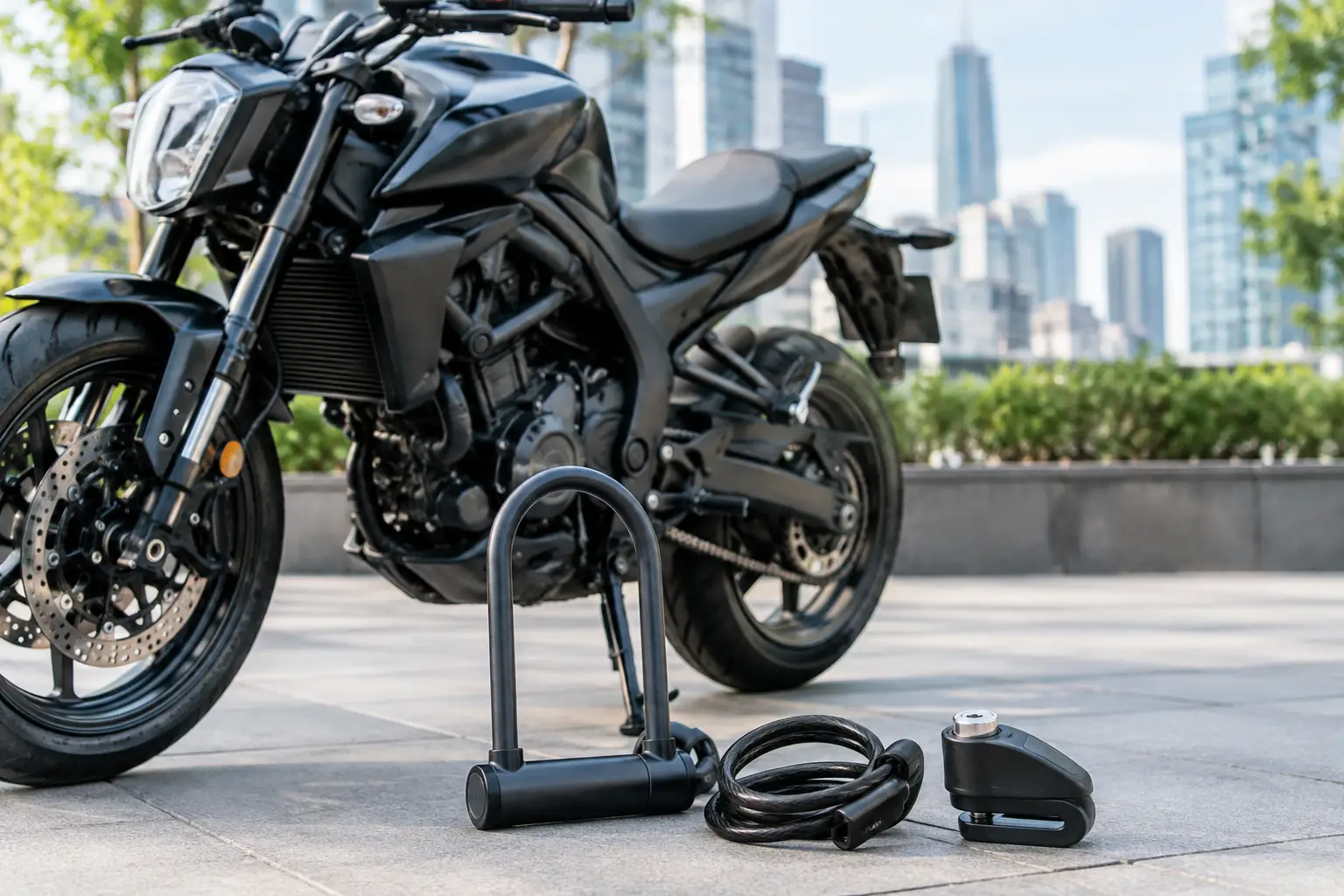
A beautiful motorcycle parked on a city street draws the right kind of attention until it draws the wrong kind. The best motorcycle anti theft devices do not rely on one dramatic deterrent. They make a thief spend time, make noise, use more tools, and take more risk. That is usually enough to send them looking elsewhere.
For a design-led electric motorcycle, security should protect the ride without turning every departure into a ritual of heavy chains, flashing alarms, and cluttered accessories. The right setup is discreet, considered, and hard to defeat. Like the machine itself.
What the Best Motorcycle Anti Theft Devices Actually Do
No lock makes a motorcycle impossible to steal. A determined thief with time, privacy, and power tools can defeat nearly any physical barrier. The goal is to change the equation: increase the difficulty of moving the bike, increase the chance of being noticed, and preserve a way to recover it if the worst happens.
Think in layers. A visible device creates hesitation. A hardened lock resists attack. An anchor prevents a lift-and-load theft. A tracker gives you a location after the event. Each layer addresses a different weakness, which is why a modest combination is often stronger than one expensive gadget.
Your parking routine matters as much as the product. A bike left overnight on a quiet curb needs a different approach than one stored in a secured garage or ridden to a busy office district. Urban riders should prioritize portability during the day and serious immobilization at home.
Start With a Serious Disc Lock
A disc lock is often the easiest security upgrade to carry every day. It prevents the wheel from rotating, making a quick ride-away theft impossible. Models with an integrated motion alarm add a sharp audible warning when the bike is moved or disturbed.
Choose a lock made from hardened steel, with a quality locking cylinder and a pin sized for your brake disc. Measure the holes in the disc before buying. A lock that does not fit properly is not security, it is dead weight in your bag.
An alarmed disc lock is especially useful for street parking because it announces interference early. But it has limits. The alarm may be ignored on a loud street, and a disc lock alone does not stop two people from lifting the motorcycle into a van. Use it as a daily first layer, not your entire plan.
A bright reminder cable from the lock to the handlebar is worth using. It is not elegant, but neither is dropping your bike after trying to ride away with the lock still fitted.
Choose a chain when the bike will be left for hours
For longer stops, a hardened chain and closed-shackle padlock offer a meaningful step up. The chain should be thick enough to resist hand tools and difficult to hold steady for an angle grinder. More importantly, it should secure the motorcycle to something immovable.
Pass the chain through a solid part of the frame or swingarm where possible, rather than only through a wheel. A wheel can be removed. Avoid looping a chain around a component that can be unbolted or cut more easily than the chain itself.
The trade-off is obvious: real chains are heavy. That makes them impractical for some commutes, but excellent for overnight parking. Keep one at home or work rather than carrying it everywhere. A purpose-built chain bag or floor stand can keep it from marking the motorcycle’s finish.
A Ground Anchor Is the Home Advantage
A high-quality lock is only as good as what it is locked to. At home, a floor or wall anchor turns your chain into a far more serious obstacle. Installed into concrete with tamper-resistant fixings, it prevents the simple lift-and-load theft that defeats disc locks and steering locks.
For garage parking, position the anchor so the chain remains off the floor as much as possible. A chain lying flat can give a thief a stable surface for cutting. Keep it tight, elevated, and awkward to attack.
Renters should check their lease before drilling into a garage floor or wall. If permanent installation is not possible, seek a secure structural point, such as a substantial steel post, but inspect it carefully. Decorative railings, lightweight fencing, and many bicycle racks are not worthy partners for a premium motorcycle lock.
A covered, locked parking space is valuable, but it is not a substitute for an anchor. Privacy can give thieves more time to work. The quieter the setting, the more physical resistance your setup should provide.
GPS Trackers Add a Recovery Layer
A GPS tracker cannot prevent theft, but it can turn a disappearance into a location. That distinction matters. Recovery is never guaranteed, and riders should not attempt to confront thieves themselves, but a tracker gives law enforcement and insurers more to work with than a last known parking spot.
Look for a compact unit with reliable cellular coverage, a backup battery, motion alerts, and geofencing. Geofencing lets you create a virtual boundary around your home, workplace, or regular parking area. If the motorcycle moves beyond it, you receive an alert.
Most worthwhile trackers require a subscription. That ongoing cost is part of the ownership decision, along with battery life and app quality. A tracker that is difficult to charge, frequently disconnected, or buried in notifications will not help when it matters.
Placement is equally important. Do not hide it in the first obvious place a thief would check. A professional installer can place a hardwired unit discreetly without compromising weather protection or service access. On an electric motorcycle, avoid improvised wiring. Have any electrical installation approved or completed by a qualified technician, especially near high-voltage systems.
Alarms and Immobilizers: Useful, Not Magical
A standalone alarm can deter casual interference, particularly in a garage or outside a window. Tilt sensors and vibration sensors react when a bike is moved, while a siren draws attention. The weakness is alarm fatigue. In dense cities, many people hear an alarm and assume it is someone else’s problem.
An immobilizer is more meaningful because it prevents the motorcycle from powering on without the correct key, fob, or authorization. Factory security systems are generally preferable to poorly installed aftermarket electronics. They are integrated with the motorcycle rather than added as another potential point of failure.
For electric motorcycles, this is particularly relevant. The silent, immediate response that makes electric riding so satisfying should remain controlled by secure authentication. Choose solutions that do not introduce parasitic battery drain or interfere with charging routines. A motorcycle that will not start after a week away is not protected if it cannot be ridden.
RGNT riders should treat any accessory installation with the same care given to the bike’s hand-built details: clean fitment, qualified work, and no shortcuts behind the panels.
Do Not Underestimate Visible Deterrence
A motorcycle cover is not a lock, but it changes the theft calculation. It conceals the make, accessories, and exact lock setup. It also adds one more awkward, time-consuming task before a thief can assess the bike.
Use a cover that fits closely enough not to flap in the wind, and avoid advertising the motorcycle model across it. At night, park in a well-lit, visible area with natural foot traffic when possible. A camera-facing spot can help, though cameras alone are rarely a deterrent unless someone is actively monitoring them.
Steering locks, parking near larger vehicles, and removing a portable battery where applicable can add friction. None should be treated as a primary defense, but security is often decided by accumulated inconvenience. Thieves prefer easy work.
Build the Right Setup for Where You Park
For a brief daytime stop, an alarmed disc lock and thoughtful parking location are a practical baseline. If you regularly leave the bike outside for several hours, add a portable chain attached to a fixed object where available and use a tracker for recovery support.
For overnight home storage, the strongest balance is a ground anchor, hardened chain, disc lock, tracker, and cover. That may sound excessive until you compare it with the disruption of losing a motorcycle that is part transport, part personal statement, and part escape route.
Notify your insurer about approved security equipment and retain receipts, serial numbers, photos, and tracker details. These records can support a claim and help identify a recovered motorcycle. Check your coverage before assuming accessories or custom parts are included.
The best setup is the one you will use every time. Choose devices with real resistance, make them part of your arrival routine, and let your motorcycle remain what it should be: classic lines, electric heart, and yours to ride when the city wakes up.