
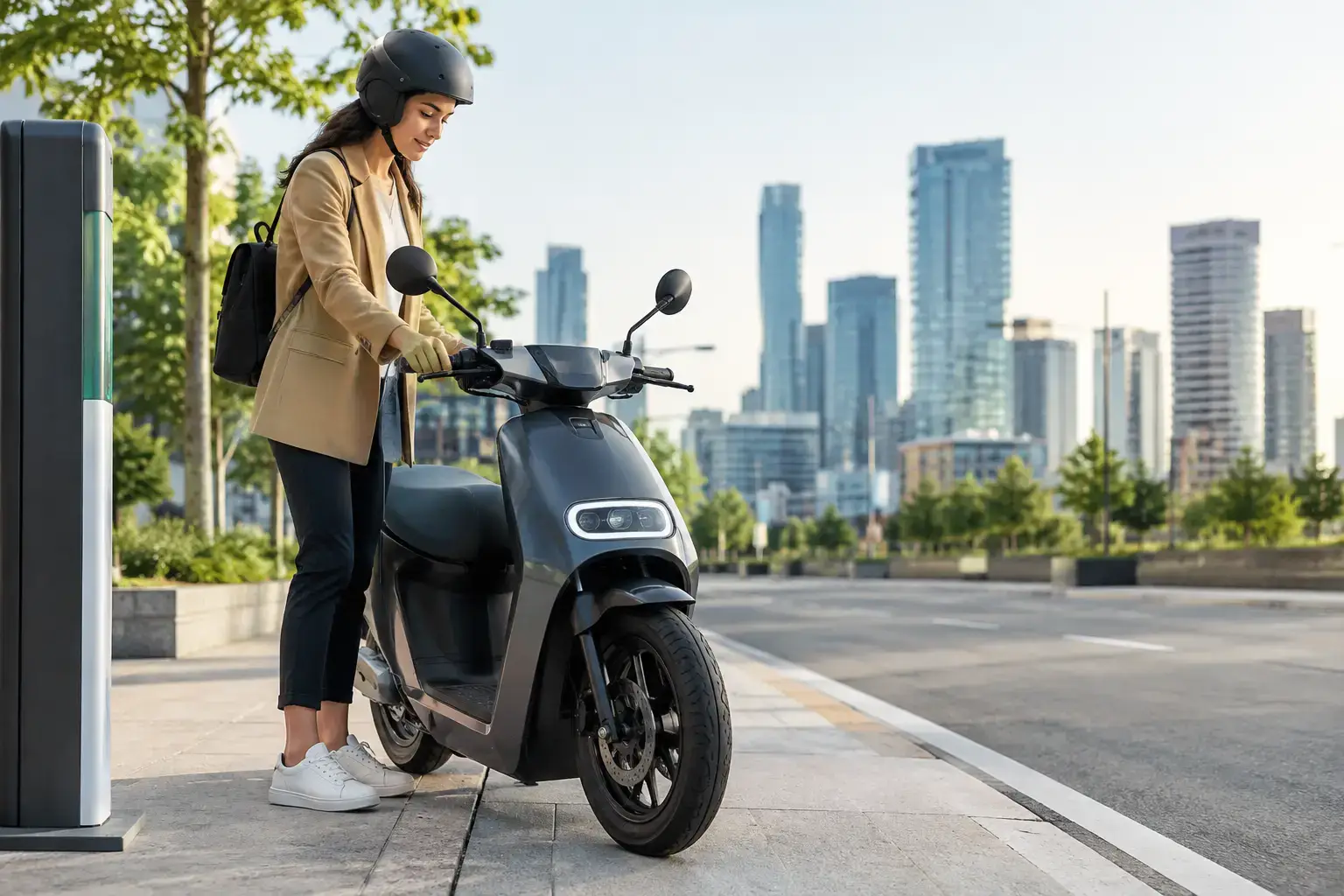
A city motorcycle should not feel like a compromise made for traffic. It should feel like the best part of the day: a clean line through the morning rush, instant response at every green light, and a machine worth looking back at after you park it. Future urban motorcycling is not about covering a bike in screens or making it look like a prop from a distant future. It is about making movement feel more intelligent, more personal, and far more alive.
For riders who care about design as much as destination, the shift is already underway. The next great city motorcycle will be quieter without becoming anonymous, technical without becoming cold, and practical without losing the reason people started riding in the first place.
The City Is Changing the Motorcycle
Cities are asking more from every vehicle that enters them. Streets are denser. Parking is tighter. Noise rules are stricter. More commuters want alternatives to sitting alone in a car, but they do not necessarily want the visual sameness of generic micromobility.
Motorcycles have always had an advantage here. They take up little space, move decisively, and turn an ordinary trip across town into something tactile. Electric power strengthens those advantages. There is no clutch work in stop-and-go traffic, no heat building beneath you at a long light, and no fuel stop interrupting a short weekly routine. Twist the throttle and the response is immediate.
That does not mean gasoline motorcycles disappear overnight. Long-distance riders, remote routes, and certain performance traditions will keep internal combustion relevant for years. But for the repeated pattern of urban life – home, studio, office, gym, dinner, home – electric motorcycles make a persuasive case. The route is predictable. Charging can happen while the rider is doing something else. And the experience feels tailored to the pace of the city rather than inherited from the open highway.
Future Urban Motorcycling Needs Quiet Confidence
Silence changes more than the soundscape. It changes the character of a ride.
An electric motorcycle leaves a light with a direct, almost private sense of momentum. There is no exhaust note asking the entire block to pay attention. There is only the measured whir of the motor, the contact patch, and the city moving around you. For some riders, that is a loss. For others, it is a return to the essentials: balance, line, speed, and presence.
Quiet does not have to mean invisible. A motorcycle can still carry authority through proportion, materials, and detail. A well-shaped tank, a considered seat, machined controls, and a frame that looks intentional will always speak louder than decorative aggression. Classic lines and an electric heart are not opposing ideas. They are a more convincing answer to a culture that has grown tired of technology shouting for attention.
The best urban machines will treat sound as part of good citizenship, not an afterthought. A calmer street benefits pedestrians, residents, cyclists, and riders themselves. It also lets the motorcycle belong in places where loudness has become less welcome: early-morning neighborhoods, café-lined districts, and dense residential blocks.
Performance Will Be Felt, Not Announced
Spec sheets matter. Range, charging time, top speed, battery life, and vehicle class all shape a buying decision. But city performance is not defined by a top-speed number alone.
It is defined by the gap you can safely take, the hill you climb without hesitation, and the way the bike responds when traffic begins moving again. Electric torque is particularly suited to this kind of riding because it arrives without delay. The result is not merely quicker acceleration. It is less effort between decisions.
There are trade-offs. Higher performance can reduce range when used relentlessly. Larger batteries can add weight. Fast charging infrastructure is improving, but it is not equally available in every neighborhood or apartment building. A rider with a private garage has a different relationship with charging than someone relying on public stations or shared parking.
That is why the future will not belong to one oversized battery or one universal format. It will favor honest engineering: enough real-world range for the rider’s routine, sensible charging options, and a chassis that remains enjoyable when the road turns imperfect.
Design Will Become a Form of Utility
The old division between beautiful and practical is fading. In a city, good design is practical because it makes a vehicle easier to understand, easier to live with, and more likely to be used.
A clear display should give a rider what matters at a glance, then get out of the way. Storage solutions should be integrated without making a motorcycle look like a delivery appliance. Controls should feel physical and precise, not like an unfinished app. The best technology will serve the ride quietly.
This matters because urban riders do not park in a vacuum. Their motorcycle sits outside an office, beside a restaurant, in a shared garage, or in front of an apartment building. It becomes part of their visual language. For a design-oriented rider, the machine has to earn its space even when it is switched off.
Handcrafted details and limited-batch quality control have a role here. They are not nostalgia for its own sake. They are a refusal to treat every city rider as a data point in a production forecast. A motorcycle with care in its finish, fit, and silhouette can hold its value emotionally long after novelty fades. That is a different kind of sustainability: buying less disposable, and choosing with intention.
Ownership Has to Fit Real Life
The future rider may not own a suburban garage, a truck, or a complete workshop. They may live in a high-rise, rent their parking space, and need a motorcycle that works around a full calendar. Ownership needs to become simpler without becoming generic.
For many, that begins with home or workplace charging. A bike that replenishes while its rider sleeps or works removes the weekly ritual of fueling. For others, access to charging will remain the deciding factor, and cities, employers, landlords, and parking operators need to catch up. Electric motorcycling cannot become truly urban until charging is treated as regular infrastructure rather than a premium amenity.
Service will change, too. Electric drivetrains have fewer routine mechanical demands than combustion engines, but they are not maintenance-free. Tires, brakes, suspension, software, and battery health still deserve serious attention. The difference is that ownership can become more predictable, with fewer messy consumables and fewer surprise visits tied to traditional engine maintenance.
Financing and insurance will matter just as much as hardware. A premium motorcycle is an emotional purchase, but it is also a monthly decision. The brands that understand this will give riders transparent options and clear support rather than expecting enthusiasm to solve every practical question.
The Silent Minority Will Set the Tone
There is a temptation to frame electric motorcycles as a future for everyone, immediately. That misses the point. Motorcycling is not a single culture, and it should not become one. Some riders want cross-country range. Some want dirt under their boots. Some will always want the mechanical ceremony of an engine.
But in cities, a growing group wants something else: a motorcycle with identity, modern performance, and a lighter footprint on the streets they share. They do not need their vehicle to imitate the past or cosplay the future. They want it to feel right now.
That is where machines such as RGNT have room to matter. Swedish-built electric motorcycles with classic proportions make a quiet argument that technology and character can occupy the same frame. The appeal is not only that they are electric. It is that they preserve the emotional pull of a motorcycle while removing much of the friction that makes urban riding harder than it needs to be.
A Better Ride Begins With Better Choices
The city of the next decade will not be designed around a single way of moving. It will be a mix of walking, transit, cycling, shared vehicles, cars, and motorcycles, each used where it makes sense. Motorcycles earn their place when they are compact, considerate, and genuinely desirable.
For riders, the useful question is not whether electric is inevitable. It is whether an electric motorcycle suits the roads, distance, parking, and charging access that shape your actual week. If the answer is yes, the reward is immediate: less noise, less routine maintenance, instant torque, and a sharper connection to the street.
Choose the machine that makes you want to take the long way home, but make sure it also makes Monday morning easier. That is where the future becomes real.